Bishkek to Kashgar – 25th/26th March

I woke refreshed.  Unfortunately the sky was not so clear this morning and the mountains could only just be seen.

We left Bishkek at 8.30 and started our journey towards the Chinese border.  The road followed the Ushi River, which forms the border between Kyrgyzstan and Kazakstan.  A razor wire fence and lookout towers decorate the other side of the river.  Bizarrely the road briefly crosses the river into Kazakstan for about a quarter of a mile before it crosses back.

Burana Tower

En route, we visited historically interesting Burana Tower, an open museum in the site of an ancient Kyrgyz settlement with a fort and mosque.  There is nothing left of the fort other than the mound on which it was built and the minaret has been rebuilt, now looking more like the leaning tower of Pisa rather than a minaret.  There was an incredibly narrow, steep spiral staircase to the top giving expansive views over the surrounding countryside.  Back at ground level there was a yert, which acted as a shop, where I bought a typical Kyrgyz hat as worn by men.  The fact that it only cost £3.50 was a bonus.

Continuing our journey, we stopped in the village of Kochkor for lunch, not in a restaurant but in a home stay.  The house was immaculate inside and, remarkably, all of us were able to sit around one table heaving with food, not the meal but the accompaniments to the meal.  The first course was a plate of salad with a fennel dressing.  This was followed by noodle soup with potato and pieces of tender lamb.  Thinking that was it, you can imagine our surprise to receive a plate of beef, rice, buckwheat and vegetables.  Not surprisingly everyone fell asleep in the buses in the afternoon.
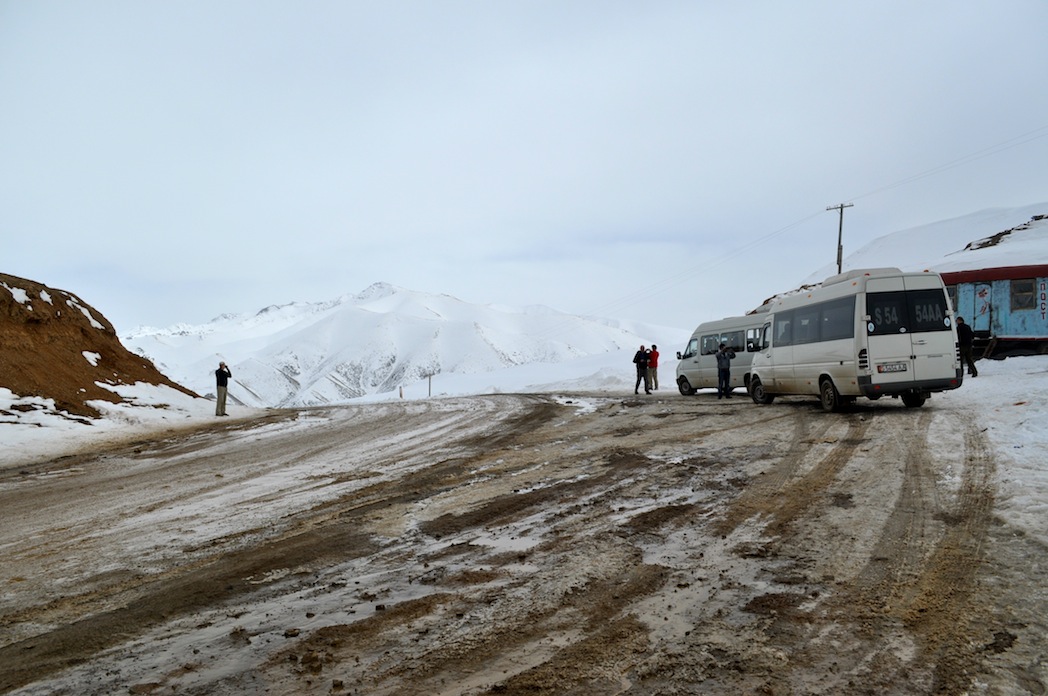
The bleak and cold Dolon Pass

The post lunch journey saw us climbing further until we reached to top of the 3030m Dolon Pass.  Deep snow lay all around us.  From the pass it was downhill to Naryn, a former Russian military town which now seems to have little going for it.  Until the Russians left it was a ‘no go’ area as it had military significance and things were happening here that they did not want the rest of the world to see or know about.

Naryn

Having settled into our guest house, we took a stroll around the town, which only confirmed that it is not a pretty place, even with lots of snow.  Like the lunch we had had earlier in the day, the dinner was excellent and the vodka also went down very well.

The next day was a day of snow and check points.  We left Naryn at 7.30 and climbed out of the valley to an aptly named Red Pass.  This led on to a wide, high plateau with a mountain chain on either side.  Here the snow was deep in places, piled high on either side of the road.  It was cold and bleak, and anybody who lives up here really does live through a long, harsh winter.  Summer probably only lasts three months.
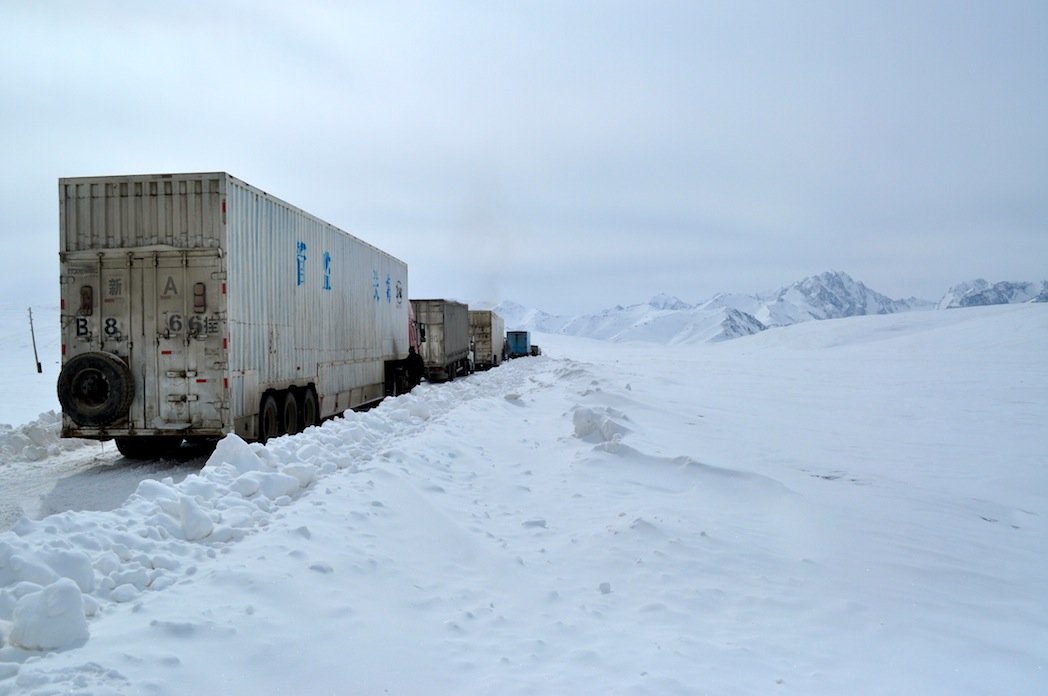
Blocked road leading up to the Tourogat Pass

At about 10.00 we came to our first checkpoint.  We could stay in the vehicles but Maria, our Krygyz guide, had to take our passports to be scrutinised.  This done, we continued towards the border. We soon came across a stationary convoy of lorries blocking our way.  The front bus, driven by Vladimir, known as ‘Vlad the Impailer’, took the cavalier approach and decided he could drive past this convoy where there was clearly not enough room.  Sure enough, the front of the bus plunged off the road and into deep snow, leaving it leaning precariously to one side.  Thankfully our driver, Mikael, did not attempt to follow.
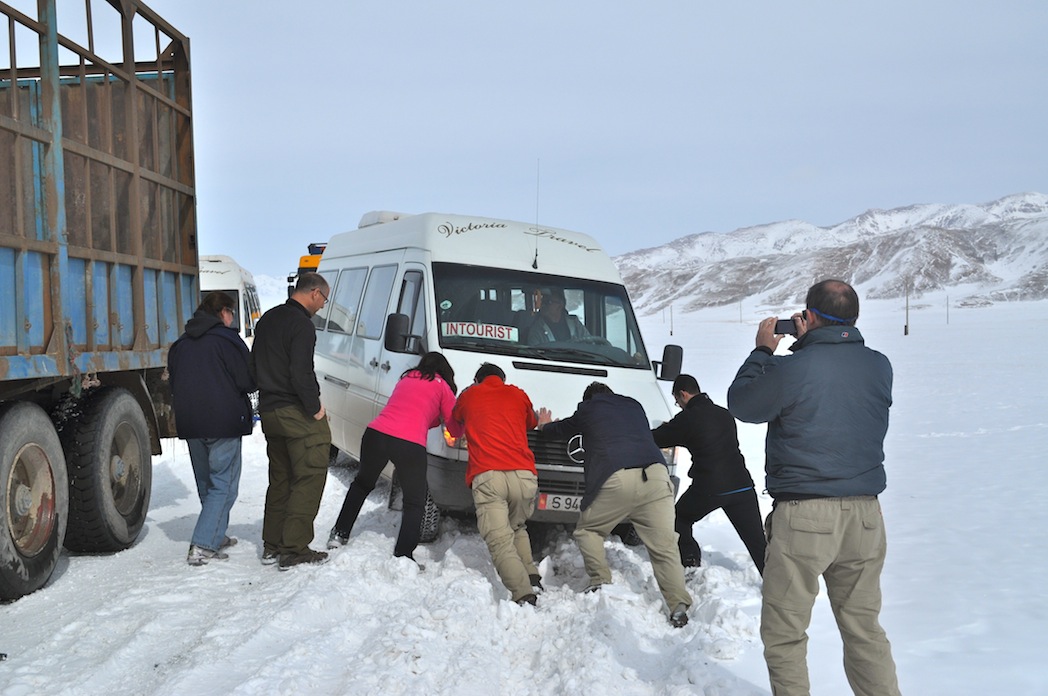
Releasing Vlad's bus from the snow

In his cavalier haste, Vlad managed to dig the bus deeper into the snow.  Our bus positioned itself to attach a tow strap but it did not have the power for the job.  With thirteen English, Vlad, Mikael, Maria and an assortment of Kyrgyzstani and Chinese lorry drivers all chipping in with ideas we did not get very far, particularly as everything the English suggested was ignored.  The line was now attached to the front of a lorry but with the front wheels firmly entrenched it was not long before the line snapped.  The simple solution was to dig out the snow behind the front wheels but it was hard to get the message across and nobody understood what we meant.  The now shortened line snapped again, as did the steel wire used next.  Eventually we found a shovel and cleared the snow.  The combined strap and steel wire then did the job and the bus was pulled free and back on to the road.

Before we went any further snow chains were fitted to our vehicles while the lorries obligingly moved over enough to give us room to pass.

Our next stop was at the Kyrgyzstan border post where we had to leave our vehicles and go into a fridge of a building.  The marble floor had a layer of ice on top, making it lethal.  We queued up to have our exit stamps, which took a while, and by the time that was done we all needed the loo.  Unfortunately the loo was on the Kyrgyzstan side and we were now on the Chinese side and could not go back.  At the first opportunity we created some yellow snow patterns at the side of the road!

We had now entered ‘no man’s land’ and it should only have taken us twenty minutes to reach the Chinese border but delays behind stationary lorries, or one in particularly who decided to move off just as we approached and slewed across the road, blocking it entirely for at least fifteen minutes while the driver, realising he was going nowhere, put chains on.  We need not have worried because by the time we reached the border there was no sign of our Chinese crew.  There were problems on the other side of the Tourogat Pass.  The snow on the top of the pass was several feet deep and despite the sunshine there was a cold breeze.  After, maybe, half an hour or so, word came that our Chinese takeover crew had arrived.  Everybody leapt out of the buses, got their kit bags out, put them down and headed for the border guard who wanted to see their passports.  When they reralised that they were in China and their bags were in ‘no man’s land’ it was too late, they couldn’t go back.  Those of us who were left ferried the bags to the border where they were loaded on to a pick-up truck before we finally crossed the border.

Our bus was not able to reach us, being stuck behind lorries, so we set off to walk down the road to meet it.  The scenery was stunning with white mountains as far as the eye could see.  It was good to stretch our legs, unfortunately it did not last for long as our bus had crept closer than we expected.

All aboard, the bus turned round and took us down the hill, past a lorry who’s trailer had toppled off the road into a ditch on a hairpin bend, which had caused many of the problems on the Chinese side of the pass.  We soon pulled in to a check point where our passports were scrutinised yet again.  At least officials, like all those we encountered during the day, were pleasant and smiled.  We discovered that we were the first tourists this year to cross into China via the Tourogat Pass, so, I guess, they were quite pleased to see us as we broke the monotony of lorry driver after lorry driver.  The scenery on the Chinese side of the pass suddenly became more spectacular.  The other side was beautiful but it had a bleakness about it and lacked the ‘wow’ factor.  This side had everything, vertical faces, pointed peaks, snow fields, the lot.

100km inside China we came to the custom post where we had to have our entry stamped and our bags checked.  This was the bit I was worried about because of all the cash we were carrying but I should not have bothered.  As we lined up we had our temperatures taken and they also wanted to give Katrina and Mo a polio vaccination!  Anybody entering China who was born after 1978 has to have it.  They refused so had to sign a disclaimer.

The only thing that concerned customs was food.  They confiscated the remains of our packed lunches and seemed convinced we had sausages!  Sigg bottles look like large sausages on the x-ray machine.  Satisfied, they let us go, but not before checking that our passports had been correctly stamped, before they let the bus out of the compound.

An hour later we were in Kashgar.  We had been on the road, stuck in snow or having our passports checked for thirteen hours.

Mao overlooking the Peoples' Square in Kashgar

We stayed in the Tianyuan International Hotel.  We were not supposed to be here but the hotel where we should have been had plumbing problems.  This is a 4* hotel and, reportedly, one of the best in Kashgar.  It is right in the centre of town, adjacent to the Peoples’ Square, lit up lavishly at night and overlooked by a giant statue of Mao.

Having a headache from the travelling, I skipped dinner and retired to bed early.  It was good to briefly see Hira, Bishnu and Tendi before I disappeared.

Starting the journey in Bishkek, Kyrgyzstan – 23rd/24th March

Here we go again! It has taken me about six days to recover from the journey home from new Zealand and now I am off again.  This time the flights are a little more acceptable with 3.5 hours to Istanbul and a further 5 hours to Bishkek.  I managed to sleep (loose term) for most of that five hours.  It was still dark when we landed at 5.35am but it was very light by the time we emerged from the airport with our newly acquired, $100 visa.  A thirty minute journey from the airport took us into Bishkek.  A fiery, orange sun blazed just above the horizon to the east, casting a warm glow on to the snowy mountains to the west.

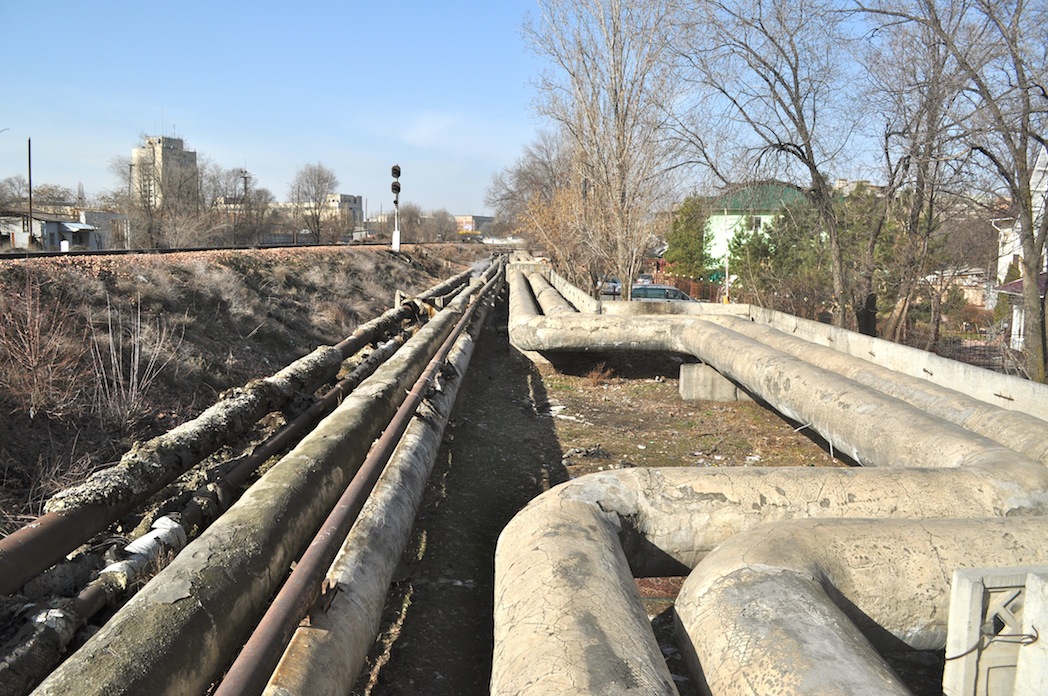
State central heating

The hotel, Asia Mountains, is very reminiscent of hotels in Austria during the 60s – lots of pine furniture and artwork made of leather adorning the walls.  We had a breakfast of cold meats and cheese in the dining area, whose centre piece was a huge, unlit, open fire with chimney above.  Opposite the hotel is the only railway line in Kyrgyzstan.  Hardly anybody uses the railway, just the very occasional freight train taking coal to the nearby power station.  Running along the side of the tracks are some huge pipes encased in decaying asbestos.  These carry and distribute the state central heating from the power station to all the properties in Bishkek.

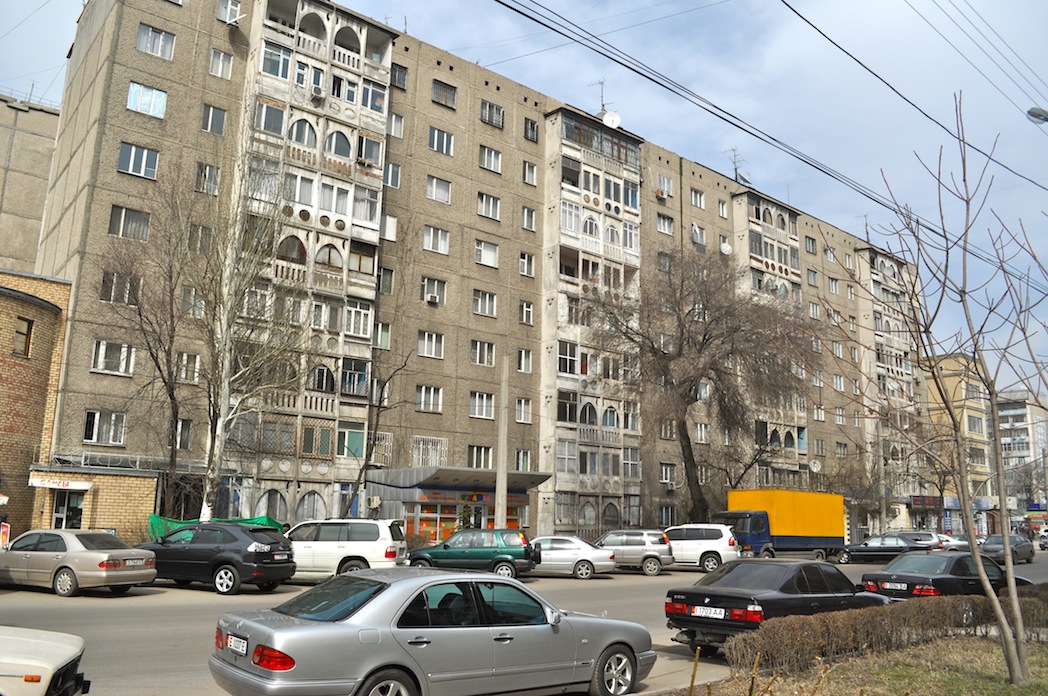
The old Russian style housing block

After a brief rest we met at 10.00 for a stroll into town. We had each been given a city map. The city is built on the grid system so is quite easy to get around.  The roads are wide and tree lined.  The trees help to hide our view of large Russian housing blocks looking bleak and run down.  I soon released I was seeing Bishkek at just about the worst time of year. Nature was still asleep after the winter, but the snow had gone, leaving everywhere looking bland, dirty and colourless.  I would not describe Bishkek as dirty though.  People were out in front of their houses and shops sweeping, clearing up the autumn leaves and making things look tidy.  There is very little litter at the sides of the roads.  Exploring the city it soon became clear that there are large areas of parkland available for public use and just behind the presidential palace there is a fun fair, not in great demand at this time of year but I suspect a family favourite in the summer.  Throughout the city there are irrigation pipes to water the grass and flowers during the relatively brief, but hot, dry summer.

Today is a celebration day of the first revolution which took place on the 24th March 2005. Kyrgyzstan is a new country, created following the break up of the Soviet Union.  The first president had already had two terms in office when he changed the constitution to allow him two further terms.  The people did not like it so they held a revolution.  It was peaceful and the president left and went to Russia.  Sadly there was a second revolution in 2010 which was not so peaceful and many people were killed, not particularly in Bishkek but in the city of Osh in the south.

Walking around Bishkek I got the feeling it is a reluctant capital city.  It is quiet.  Any noise is quite muted.  It has not been overwhelmed with consumerism; shops do not stand out and hit you in the face but are hidden behind fairly dull facades, almost embarrassed to show themselves.  Perhaps people do not have the money to spend and I am not sure what people do to earn a living.  When the Soviet Union lost control, many of the Soviet run factories closed down and remain, today, as a derelict symbol of the past.  Other factories have fallen into decline because they were owned by friends of the first president and people power has influenced their downfall.  Taxis line the streets but nobody seems to use them very much so taxi drivers hang around waiting for custom, looking bored and dejected.

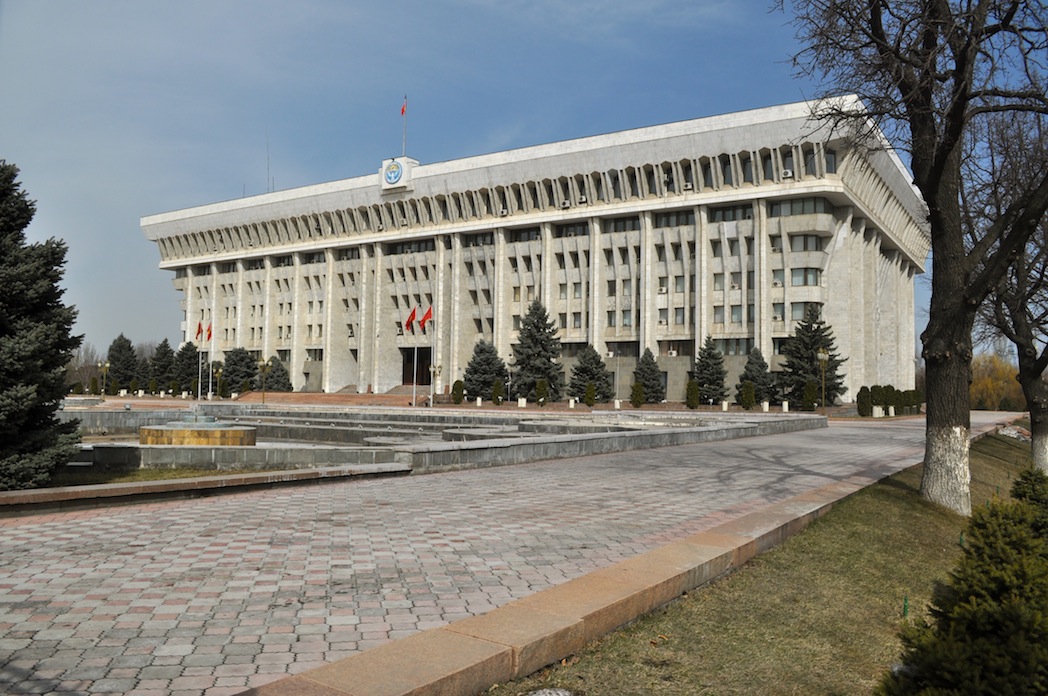
Government House, Bishkek

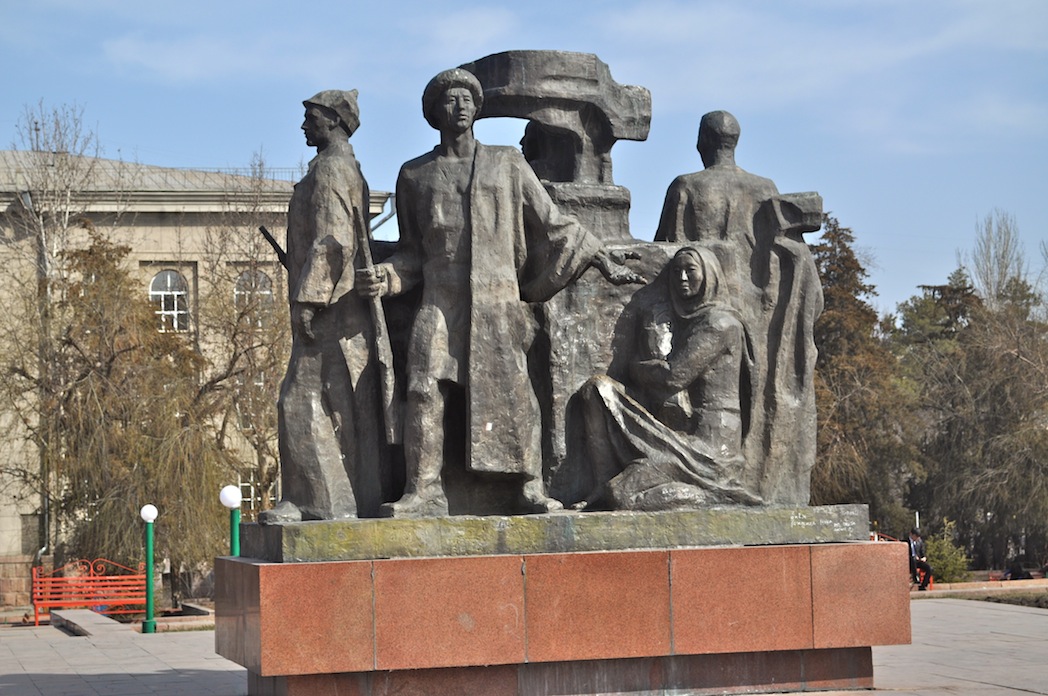
On either side of the main street, Chui Avenue, there are some large, stolid buildings left over from the Russian era.  They cannot be described as beautiful but imposing monuments to power over people.  In front of these buildings are dramatic statues depicting heroic struggle.  At least the sun was shining, casting a warm light over these austere buildings under a clear blue sky.  I expect when we return towards the end of April we will notice a difference; nature will have woken up and there will be more colour.

One of the many statues in Bishkek

Towards the end of our stroll, when tiredness was beginning to set in, Chris suggested we take a look at the ruins of the wattle and daub Pishkek Fort, destroyed by Russian artillery in 1861.  That is what it was, destroyed!  There was nothing to see.

By the time we returned to the hotel we had been walking the streets for almost six hours.  It was time for a rest before dinner, followed by a long night’s sleep to catch up.

Richard Parks visits King’s

Ex Welsh International and Barbarians flanker, Richard Parks, visited King’s School, Worcester last night and spoke to an audience of his 737 Challenge.

Three years ago Richard had the conversation with his doctor, which all who lead an active life dread, telling him that his rugby playing days were over.  When you have spent all of your adult life doing something you love, it is a bitter pill to swallow.  He had a huge void in his life, which needed filling.  He decided to fill it with mountains and the outdoors and it was not long before he came up with the 737 Challenge, climbing the highest peak on each continent, trekking to the Geographic North and South Poles and Everest, often considered to be the world’s third pole, all within seven months.  If successful, this would set a new bench mark for such challenges.

Having made up his mind to do it, Richard embarked upon 18 months of hard training, something he was used to as a top flight rugby player, but this regime was gruelling.  That 18 months also allowed him time to put together a team to support him throughout, to raise funds in a difficult economic climate and to focus on raising £1,000,000 for Marie Curie Cancer Care.

During his 90 minute presentation he held us captivated as he told us of each stage of his challenge from battling with very negative temperatures at the poles to the steamy jungles of Papua, from the glorious sunrises and sunsets to the progress hindering storms, from the elation of achievement to the fear of losing a big toe through frostbite, from sharing treasured moments with team members to the solitude of falling down a crevasse.  Richard has experienced it all.

It is a remarkable story told by a humble man from the valleys of South Wales.  Beneath that humble exterior is a man with an iron will and determination to succeed, not just for himself but for all those who have given him support and for all those in the future who may need to call upon the services of a very valuable service, Marie Curie Cancer Care.

Final Days

Leaving Rotorua we headed north towards Auckland.  Before leaving we emailed our new Kiwi friends in Cambridge to see if they were around for a quick visit.  Unfortunately we caught them when they were away so nothing could be arranged.  Nevertheless we stopped off briefly in Cambridge and strolled among the Sunday street market before continuing our journey.

Again we were tempted by a deviation to Raglan on the west coast.  The journey was very pleasant through varied countryside but Raglan turned out to be a bit of a disappointment.  It has a reputation for being a surfer’s paradise but we could not find our way to the coast, other than that of the large inlet, which struggled to muster a ripple, let alone a wave.

Reaching Auckland, we found our chosen motel without any difficulty and, once settled, wandered into the Newmarket district to find food.

Round the World yacht maintenance

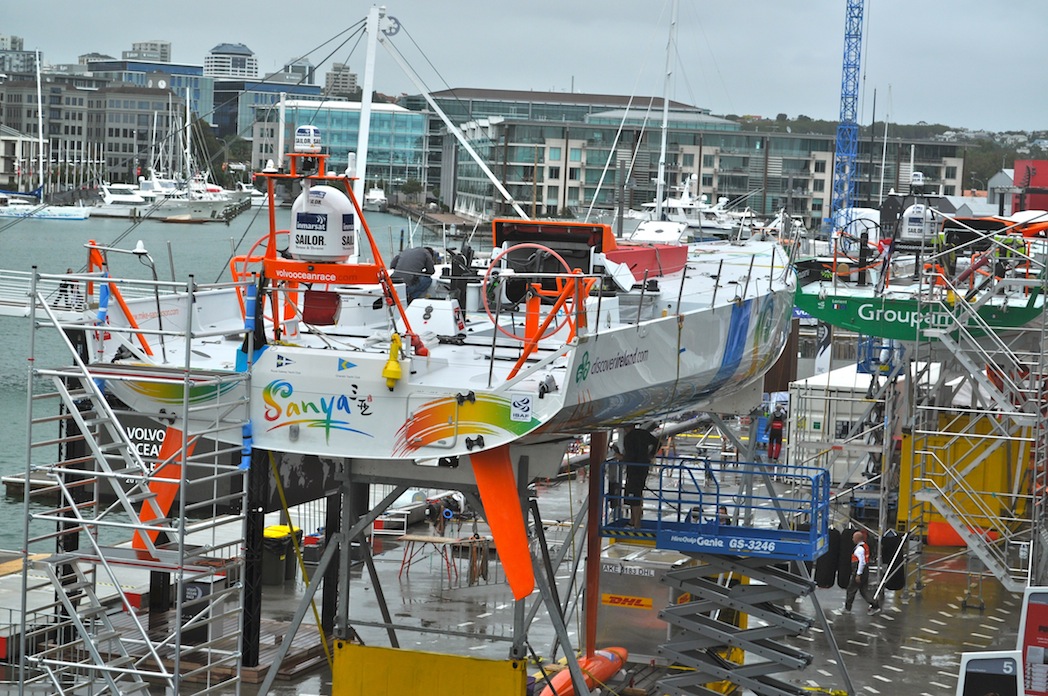
The Volvo Round the World yacht race arrived in Auckland on Saturday night so we decided to start the next day by heading down to Viaduct Quay to soak up the racing atmosphere.  It is all a bit of a circus, with various attractions to entertain and educate us about the race.  All the yachts were out of the water and stripped down to the hull so that maintenance crews can work on every inch of the hull and the rigging in preparation for the next stage of the race, which recommences next weekend.  In addition to the yachts involved there were some superb vessels in port, all oozing money.

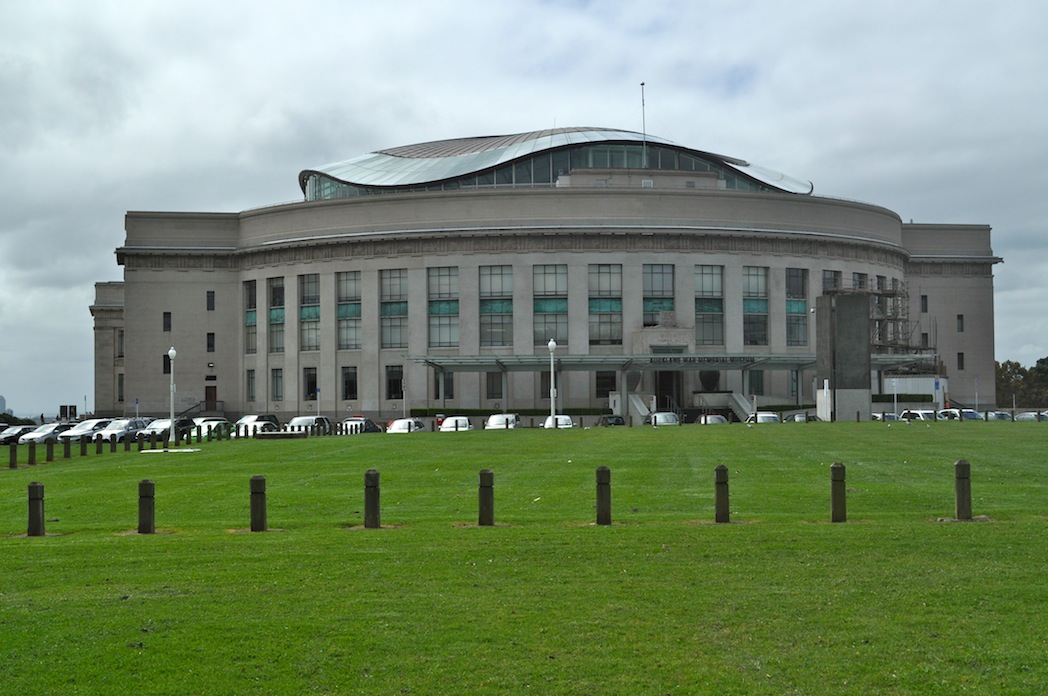
The impressive War Museum in the Auckland Domain

Angela was keen to visit some galleries and museums while I wanted to have a go at the New Zealand Coast to Coast, a mere 16km urban crossing.  I enquired at the i-site for details and they were only able to give me a very basic photocopied map, which lacked a lot of detail and was of such a minute scale, it proved useless.  We split up and I set off full of hope but soon, not only found the map very inadequate but also realised the path had not signage at all.  I also, quite soon, found myself going wrong and receiving duff information from well-meaning people I asked.  I spent rather too long wandering around an area called the Domain, a mixture of parkland and woodland.  After over three hours, I had walked quite a distance but had only achieved a fraction of my target and knew that I was going to run out of time.  I went back to the motel and waited for Angela.

In the evening we went down to Viaduct Quay for dinner.

Our last day in New Zealand proved to be a scorcher so we decided to escape the city and take the ferry over to Waiheke Island, a forty-minute ride across the Hauraki Gulf.  It is a beautiful island with many quiet bays, vineyards and stunning houses belonging to affluent Aucklanders.

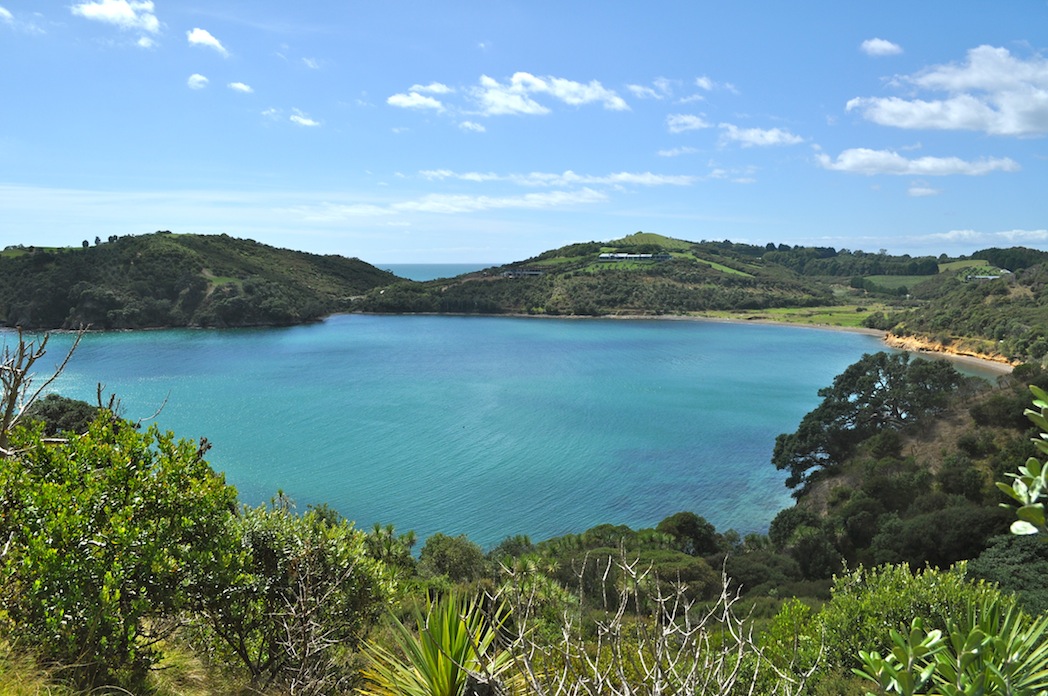
Owhanake Bay

We walked up grassy track, through woodland and down grassy tracks to Owhanake Bay, a stunning inlet with a narrow deserted beach.  One or two of the rather special houses overlooked the bay.  It was hot.  I was hot.  It was too good an opportunity to miss.  Not having really planned this trip, or given it enough thought, I did not have anything to swim in.  The temptation was too great and, what the hell; I skinny dipped.  The water was beautiful.

Refreshed, we walked over to Oneroa Bay, a sweeping sandy bay, which was a little more populated and overlooked by a number of shops and cafes.  We found one that offered wine tasting.  Another opportunity too good to be missed.

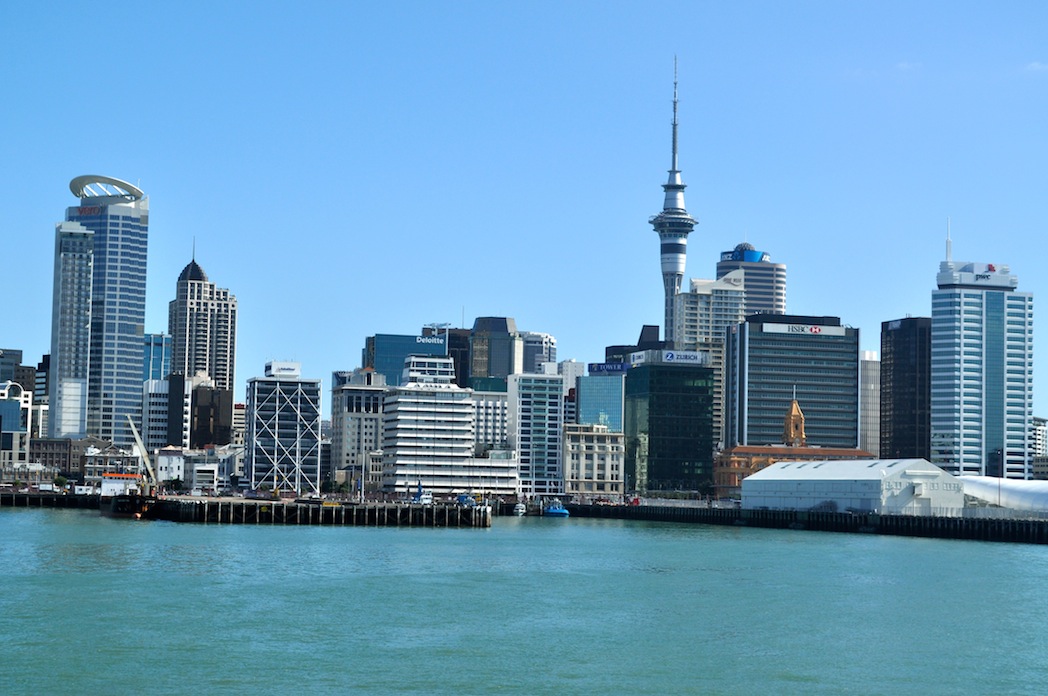
The Auckland skyline

Catching the ferry back to Auckland we relaxed in a bar in a quiet square still bathed in warm sunshine despite being surrounded by city centre tower blocks.  Before returning to our motel for last minute packing we found a superb gastro pub for our final gastronomic Kiwi delight.

All good things must come to an end!

Angela’s Bit

Auckland always appeared, in my imagination as a modern, magic mix of cultures and true enough we have found it such.

I spent 2 hours at the Art Gallery, which is a renovated building, re-opened in Sept. 2011.  It is something of an exhibit in itself.  The roof throughout is held up by beautifully carved wooden ‘trunks,’ which spread out above to mimic palm trees.

A charming art student, Katie, gave 4 of us an introductory tour.  There are just enough galleries to last an afternoon’s visit.  I was keen to see the home-grown art from the recent past; Victorian classic oil paintings thru to Maori tattoos and sketches.

I visited the Sky Tower and marvelled at those who want to jump from the top!

Finishing the day with a bit of souvenir shopping I was ready to flop at the motel.

Our last day has been a memorable one from all angles; wonderful weather, a ferry trip to a quiet beach, wine and great food.  We fly out tomorrow having had a remarkably varied visit and the lure of a return is alive and well!

A very full day

The day started brilliantly with clear blue skies and sunshine glistening off the lake.  What wasn’t quite so brilliant was having to say goodbye to Stephen.  Despite the fact that we have done it many times it does not get any easier.  We breakfasted at the i-site and while waiting for his bus Angela and I booked Te Puia for the evening.  Then it was time to wave him off.  Stephen gone, we quickly had to find something to do to take our mind off his departure, the last of many farewells we have had with our children in recent days.

We drove back towards Taupo to Waimangu, the youngest geological event in New Zealand.  Waimangu means black water and refers to the dark waters of Lake Rotomahana, meaning warm lake.  On 10th June 1886 Mt. Tarawera erupted violently, opening up a series of craters from the northern end of the mountain, all the way up the Waimangu Valley.  All life in the valley was destroyed and it became a steaming, bubbling wasteland.  There have been subsequent, smaller eruptions since, the last being in 1917.  Since then, life has returned to the valley, except to those areas far too toxic to support life, but there is always the threat that the area could succumb to another period of more violent volcanic activity.

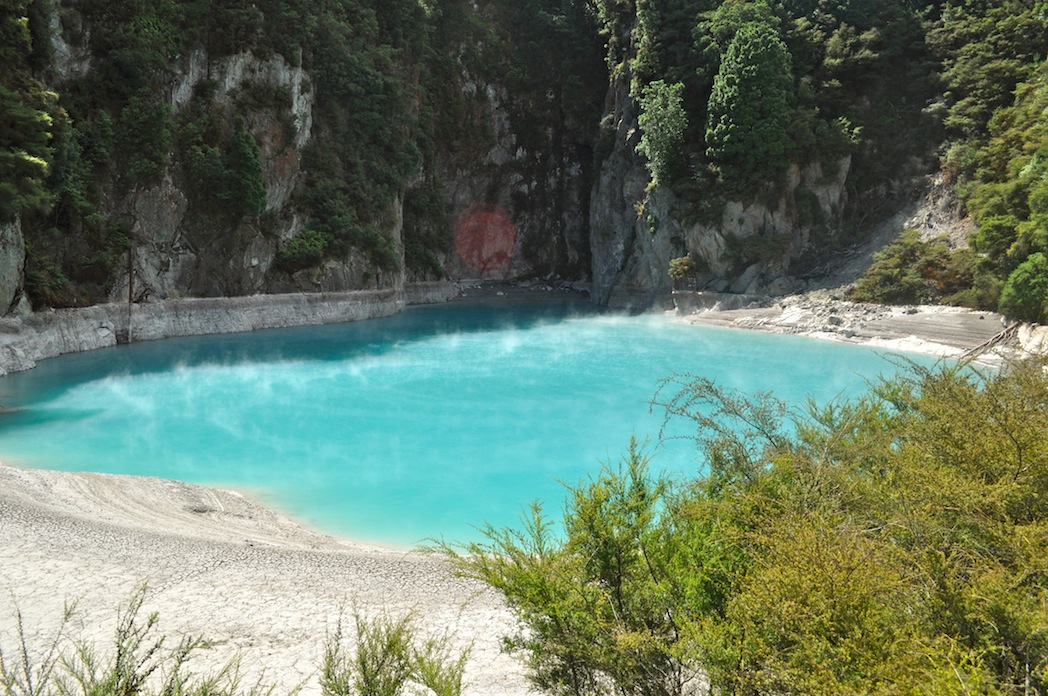
Inferno Lake

We followed a trail with markers showering points of interest and where we could refer to the ‘wander’s guide’ for information.  There are several steaming pools with sulphurous edges or silica stained edges and bubbling cauldrons, but the most impressive were the blue waters of Inferno Crater.  At the far end of the small lake are little shelves cut into the mud showing the varying levels of the water.  This fluctuates on a regular timetable; at the moment the level is low.  Gradually, over a period of several days the level will rise until the water spills over the edge and flows into Frying Pan Lake below.  Remarkably, when this happens the discharge of water from Frying Pan Lake decreases and only rises again when Inferno Crater Lake stops overflowing.  A geothermal conundrum.

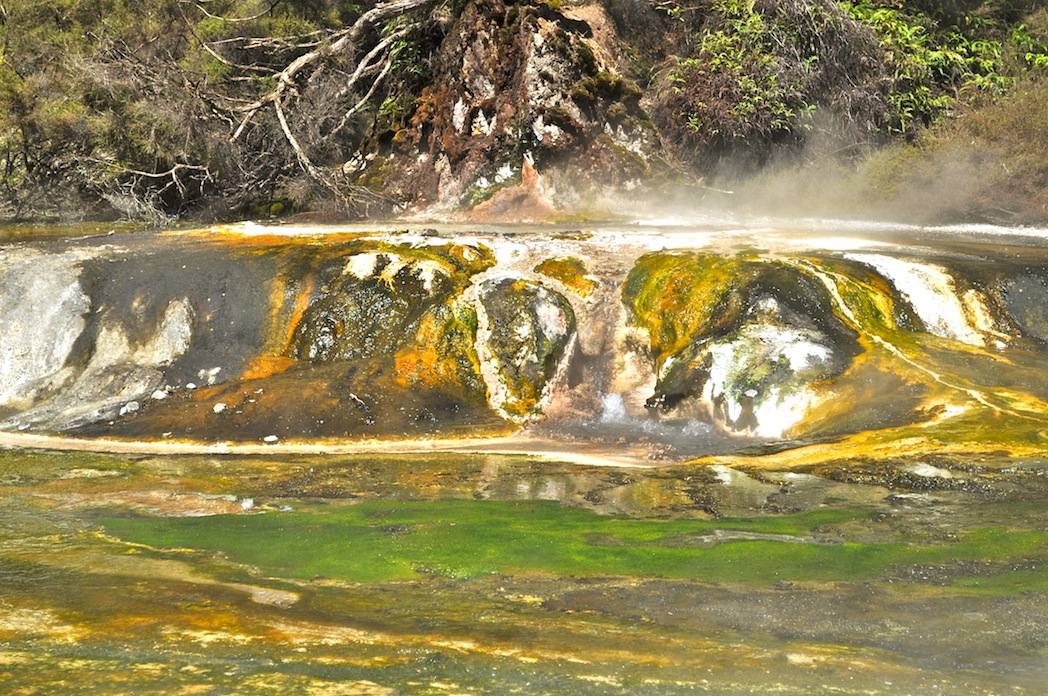
Geothermal silica terracing

From Crater Lake we took the Mt. Haszard Hiking Trail, which proved to be less interesting than the more popular valley route where most of the geothermal features could be seen.  The hiking route eventually brought us back to the valley and some interesting terraces of silica.  These were not huge due to their young age but are developing well.  There are some vivid greens, yellows and browns.

Rather than walk back up to the centre we took the bus back, not because we are lazy but because we were in danger of running out of time before the next exciting event for which we had to be back at our lodgings for 4.00.

At 4.00 a bus came to pick us up and take us to Te Puia, a Maori centre on the outskirts of the town.  It is centred on a geothermal area, which carries some significance for the Maori culture and also gives them an opportunity to perpetuate the culture through a number of programmes.

Carved Maori face

On arrival we were given a guided tour.  Our guide was typically quite a large man but he had a most magnificent voice with really rich tones.  We were soon to realise that most Maoris have rich voices, both in their speaking and also in their singing.  Until westerners started to arrive in New Zealand Maoris did not have a written language; all their stories and legends were depicted in carvings.  Many of the stories involved evil demons.  Hence the rather scary tendency in their wood carvings.  Te Puia has a wood carving school for young Maori men to learn the craft and perpetuate the culture.  Similarly there is a weaving school on site to perpetuate the skills involved in weaving New Zealand flax.

The tour then took us to some of the traditional buildings, the food store and the meeting house, which we would go in to later.

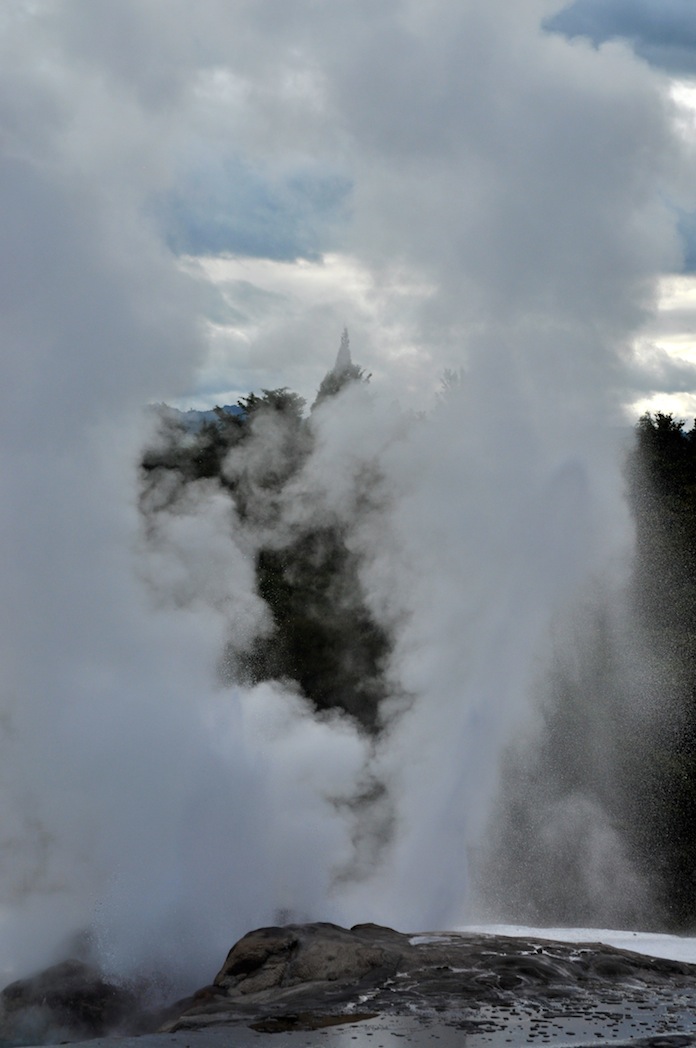
Te Puia Geyser

We were then taken around the geothermal features, the mud pools and, more impressively, the geyser with two spouts shooting out at different angles.  This geyser tends to emit jets of steam most of the time but there are periods when it is more active than others.  We were lucky and the jets were shooting several metres into the air.

Before we went into the meeting house we had a look at the Hungi, the underground oven where our food had been cooking for three hours on hot rocks.  In metal trays there were sweet potatoes, potatoes, lamb and pork joints and a number of whole chickens.  It now had to be prepared for serving so we returned to the meeting house where we were given a traditional Maori greeting. All greetings start out with a degree of suspicion, until it is verified that we come in peace and mean them no harm.

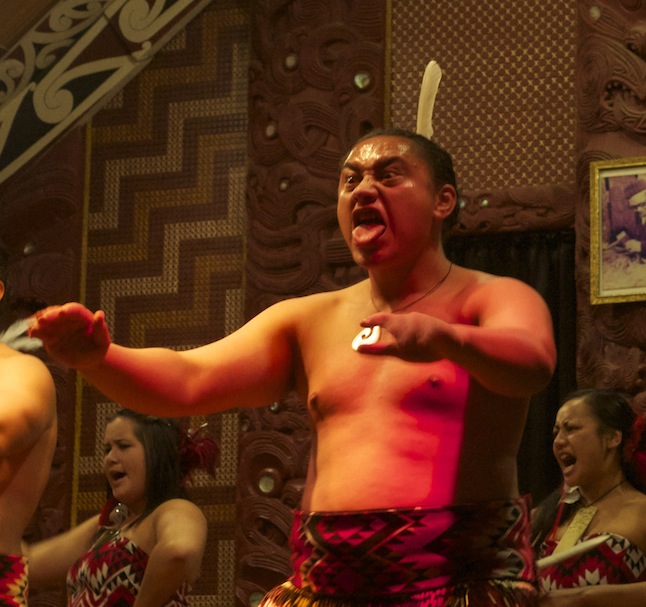
The Haka

Taking our shoes off we entered the meeting house where we were given a display of Maori singing and dancing.  The singing has a definite operatic style to it.  The music was good but the performance is also given with plenty of facial expression.  This is so important in the Haka.  When Maoris prepare for war they face their enemies and perform the Haka.  The idea is to undermine the confidence of the enemy and fill them with fear.  The enemy perform similarly, but eventually one side will out perform the other and will take a definite advantage into battle, if it goes that far.  The Haka, as performed by our hosts did not intimidate but it was an impressive display and in a more hostile situation I think I would have run.  They are big men and can look very fearsome.

Entertainment over, we went into the dining room for our feast.  It was really good and there was much more food than just that cooked in the Hungi.  By the time the meal was over it was dark and we again had the opportunity to go up to the geyser and watch it perform in the night sky with a couple of lights playing on it.

The finale to a good day

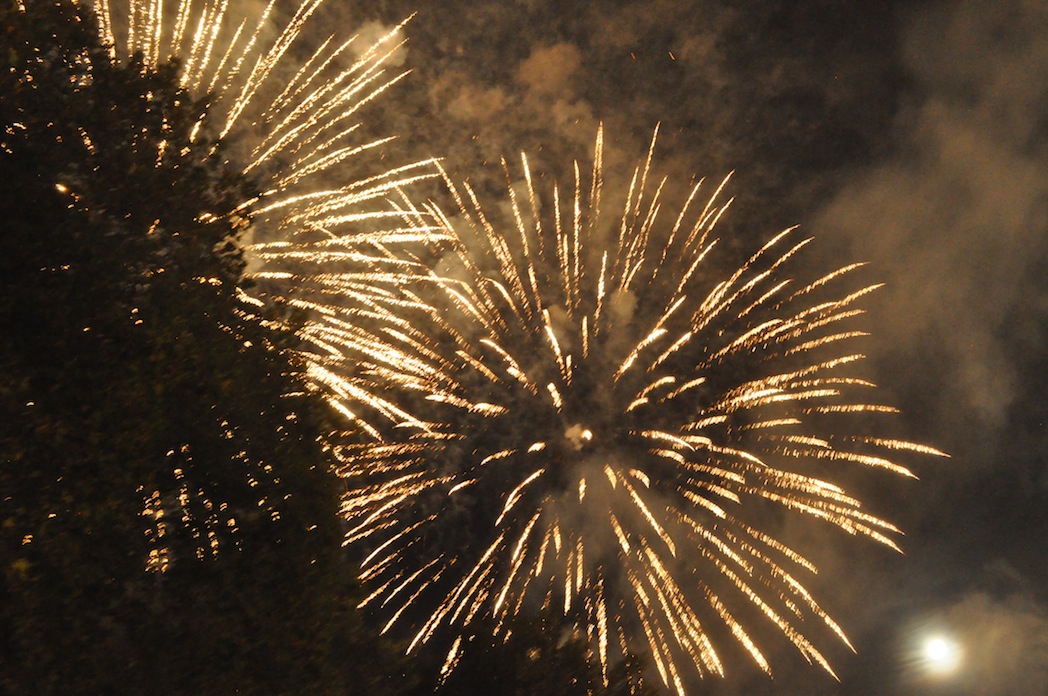
At 9.00 we returned to our motel and for the pop concert taking place on the open space opposite.  There were several thousand people there and there was a really good, family atmosphere.  It was a free concert, except for those who chose to buy seats in front of the stage.  What we saw was very impressive.  We only caught the last half hour as it finished at 10.00 with a spectacular firework display, bringing to an end a very good day.

Angela’s Bit

Our stay in Rotorua is characterised by the aroma of the sulphur from the hot springs which bubble and steam throughout the area.  Our motel has under earth heating!

We said “Goodbye”, to Stephen as he boarded the ‘Naked Bus’ to Auckland, no not what you think just a stripped price!

Then we were off to Waimangu to cheer ourselves up with a walk through the newest geothermal park in NZ.  It was very impressive and a hot sunny day too.

Later we were treated to a Maori experience at Te Puia.  I loved it all, carving, weaving, a traditional concert (with Haka) and a hungi meal.  To top it all we saw the geyser blow TWICE, once in the afternoon and again at night.  My yearned for glimpse of a kiwi in the gloom was rather insignificant by comparison.

Lastly we enjoyed the last half hour of the pop concert by the lakeside.  We had a little bob too! Then marvelled at the fantastic fireworks, which brought it to a finale.