Swimming with Dolphins (almost)

We left our cottage just before 8.00 and drove down to Akaroa for our swim with dolphins experience.  Following a brief introductory chat we, along with six fellow travellers, suited up in very thick wet suits.  I hoped swimming would be easy in mine because walking was not.  I felt like one of those animals that is very elegant in water but ugly on land.  Despite the fact that it is summer the air temperature this morning was only 11°C and the water slightly higher at 14°C.  It was cloudy and while I was initially optimistic that the cloud was going to burn off, it proved that the opposite was going to happen and we were hit with squally showers.  There was also a stiff breeze blowing.

All suited up, we waddled aboard and set sail, immediately heading out towards the mouth of the inlet.  The further we went the rougher the sea became.  We spotted a pod of Hector’s Dolphins, the smallest a rarest breed of dolphin.  There are now only 7,500 of them left and the numbers are still declining despite the valiant conservation work being done at Akaroa.  The problem is that they get caught up in a set net, which drowns them.  Those nets have been banned around Akaroa but are still used in other areas of New Zealand.  So, while the numbers are improving around Akaroa, they are declining at a faster rate elsewhere.
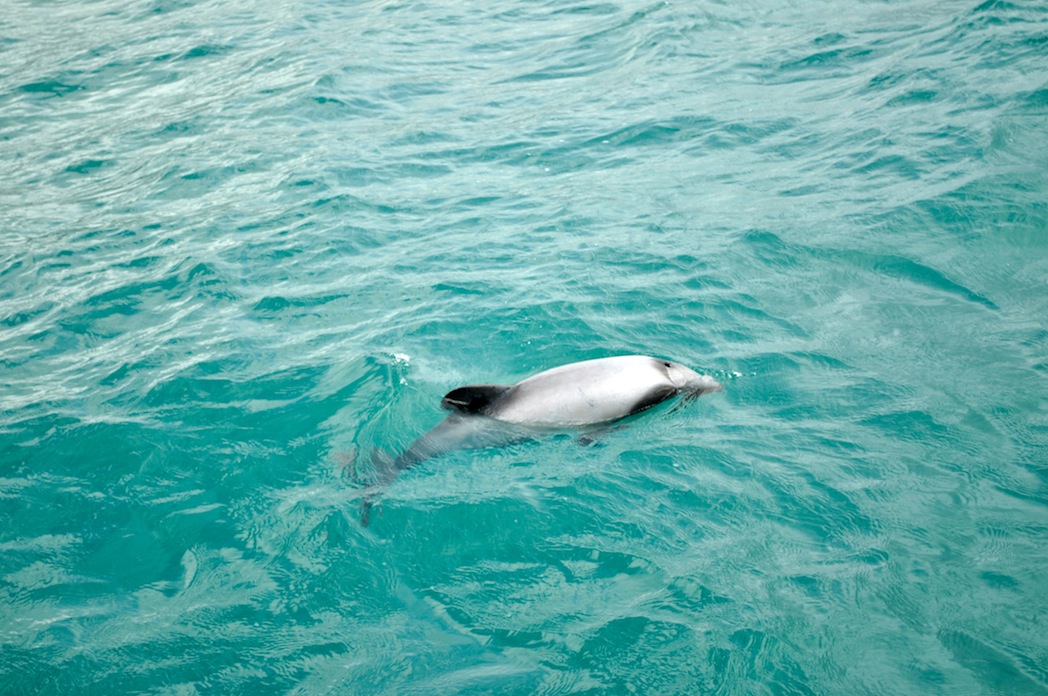
Hector's Dolphin

This first pod included a mother and baby, which meant we could not swim with them.  The baby spends two years closely bonding with its mother and nothing must happen to disrupt that bonding.  The baby drinks mother’s milk approximately every three minutes, so you can imagine the disruption eight human swimmers might cause.

We moved further out to sea, between the two headlands and the swell increased to about 12 feet.  Angela was finding it a bit difficult to cope with but managed to concentrate herself through it.  We found another pod, which swam around the boat but now the sea was too rough for us to get into.  We headed over towards the northern side of the inlet where there was a chance the water would be calmer.  However, before we got too far we came across a third pod of five dolphins.  They seemed reasonably curious so we gently lowered ourselves off the back of the boat into the water.  I was expecting to have to take a sharp intake of breath but, in actual fact, it was not necessary.  The swell was still about 12 feet but now the waves were regular.  We bobbed up and down, treading water, and making noises to attract the dolphins.  Singing down a snorkel tube was recommended, so I tried ‘If you’re happy and you know it clap your hands’.  Maybe the dolphins did not like my singing but they clearly did not want to play and while they made a couple of approaches to us, we did not really have the interaction we were hoping for.  It was exhausting in the water and after about 15 minutes we decided to get out.  Our captain and dolphin guide both decided it was not going to happen today and took us back to the wharf at Akaroa with the promise of a partial refund.

It was still a pleasurable experience and we did at least see dolphins swimming around the boat and we also saw the world’s smallest penguin swimming by the boat.  Angela mistook it for a duck to begin with!

Following a warming cup of coffee we headed back to Christchurch, not by a direct route but by a scenic one.  We climbed up our of the crater and took a road that skirted around the rim, giving us stunning views down to Akaroa on one side and similarly stunning views down to bays set between lava flows on the ocean side.  They were tantalisingly beautiful so we took the opportunity to drive down to Le Bon Bay for a picnic lunch on the beach.  It was 10km down to Le Bon Bay through a beautiful valley with lava flow ridges down each side.  At the end of the valley, behind the beach, is a small community living in an idyllic setting.  To make it even better the sun came out, rewarding me for my optimism of earlier in the day.  The beach was deserted and we had it all to ourselves, and a few optimistic gulls that thought we might give them a crumb or two.  There was one who was particularly aggressive towards it fellow gulls and would do anything to keep them at bay.  If food was on offer he was going to get it first.

After a relaxing and entertaining lunch we continued with our drive to Christchurch.  Our accommodation in a house in the suburb of Papanue is superb in every respect.  We were made to feel very welcome and the facilities are outstanding and really good value for money.  Half way up the stairs there is a large case on its side.  It has fallen over so many times during quakes that it now cannot fall further.  There are very few ornaments in the house, all having fallen from their shelves during the big quake or one of the thousands of aftershocks Christchurch has experienced since.

Kate Richardson came to pick us up at 5.30 and take us to their house.  Kate and her family emigrated from Worcester two years ago and their house fell victim to the earthquake, so are in temporary accommodation until their house can be rebuilt.
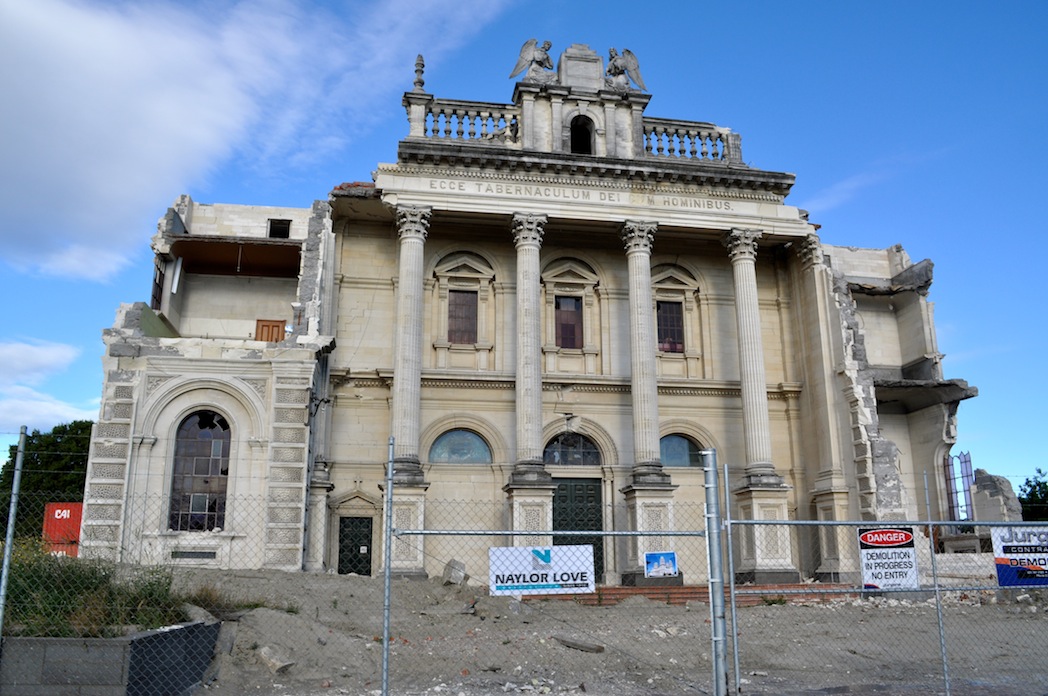
The damaged Catholic Cathedral in Christchurch

After meeting them we were taken on a tour of Christchurch, starting with their house down the road.  Remarkably, it can be rebuilt and made earthquake proof.  The city centre is a scene of devastation.  Much of it is fenced off and out of bounds as the whole of the centre is being demolished, block by block.  Many people have not been able to return to their properties to retrieve their possessions as the buildings are too dangerous to enter.  Stone built buildings faired worst as they are too rigid and lack the flexibility of wooden and modern structures.  Hence, churches, including the Catholic and Anglican cathedrals came off really badly.  We could not get any where near the Anglican cathedral where the spire came crashing down.  Many buildings were fenced off and the fallen masonry still lay on the ground as it had fallen a year ago.  The whole experience really brought home the devastating effect that an earthquake has on a community and the infrastructure.

Following a very pleasant evening, sitting around the garden table, eating a lovely meal and catching up on each other’s news, Angela and I strolled back to our lodgings for the night, well satisfied with our day.

Angela’s Bit

Naturally I had some misgivings about our sea trip but in retrospect I am thrilled to have done it and more than a little proud that I swam and sailed in 12ft swells and wasn’t seasick!  The dolphins were very cute, small and beautifully coloured in tones of blue/grey.

Back in Christchurch we settled into another immaculate and well equipped B & B, before being scooped up and taken on a guided tour by the Richardson Family who moved here from Worc. 2 years ago. Their house was badly damaged in the quake a year ago so they are in rented accommodation nearby.  They drove us into the city and the devastation is shocking.  They have had 10,000 quakes, 20 of which have been significant!!! But they are philosophical about it and still happy with their lot.  We had dinner with them and were made very welcome.  Kate (who I taught when she was 7 is now 21 and going off to Uni in Auckland soon)

The Singing Detective goes to Somes Island

Those of you of a certain age may remember ‘The Singing Detective’ on TV.  I cannot remember anything about the story but I do remember that the main character had a terrible skin affliction where it fell off in chunks.  Well, that’s now me.  The heat has gone from my head but it is falling off in great flakes.  Where it has flaked away the skin is red.  Where it has yet to flake it is brown.  Children run screaming for their mothers when they see me.  The only consolation is that I am losing weight.

After a leisurely start to the day we walked into town rather than catch the bus. The sun was shining and it was a pleasant day.  From the house we walked up a gentle hill to Brooklyn.  From there we left the road and took a path through Central Park (No we are not in New York.  This is still Wellington.)  Central Park is an area of natural woodland with massive trees and ferns.  When in the woodland it is hard to imagine you are so close to the city centre but when you emerge you are almost there.

Our target for the morning was Cuba Street, a mixture of street cafes, a diverse range of ethnic restaurants and retro shops selling everything from vinyl record albums to 1950s frocks.  In places it looked a little seedy but it was worth a visit.

We met Ben for lunch, during which we discussed the possibilities for the afternoon.  I fancied taking the ferry out to Somes Island.  Angela preferred to spend more time in the city, so we split up.

Twenty two dollars buys you a twenty minute return trip to Somes Island, sitting out in the middle of Wellington Harbour.  It has had a number of uses over the years; it started out a, as prison, during the two world wars it was used to hold mainly Italian prisoners of war, and it was used as a quarantine centre for immigrants coming to New Zealand.  Now it is a wildlife sanctuary attracting a great many birds, which flourish in the absence of rodents.

Kakariki

On landing I, along with my fellow passengers, was taken into a room for a brief chat about maintaining the status quo on the island.  We had to check our bags to make sure we hadn’t brought in any stowaway spiders, and make sure we hadn’t brought any soil onto the island via our shoes.  This was a little frustrating as it was already 2.40 and the last boat back to Wellington left at 3.25.  This was not going to give me much time to explore and take photos of birds.

Once released, I shot off up the hill to the cemetery (some who arrived on the island, never left) where I knew I would get some good views and maybe a photo opportunity or two.  There were black backed gulls sitting on the hillsides, obviously looking after young but it was impossible to photograph the gulls flying by. Similarly the kakariki, a type of parakeet, were impossible to photograph in flight; they were far too quick.  I did come across quite a tame robin, which allowed me to photograph him/her.  Not quite as obvious as our own robins back home.

Conscious of the time I headed back towards the quay and came across a kakariki in a tree by the path.  My trip to the island was not wasted as I was able to get a number of decent pictures.  At the water’s edge I went to watch the boat coming in when I spotted a black bird with a very long beak and red rings around its eyes.  It was a little perturbed by my presence but did nothing more than make a lot of noise.  More good photos.

Back on the mainland, I met up with Angela and we made our way back to the house.  In the evening we went out with Ben and Kelly to a super little restaurant just off Cuba Street.

Angela’s Bit  

Another memorable day…… sightseeing, shopping and socialising.

I am very pleased that my foot has carried me a long way today without too much complaint.

Whilst John went island hopping I shopped in Wellington’s Harrods (Kirkaldie & Stains).  It is a dept store struggling to be 20th century let alone 21st.  However I succeeded in my quest to buy something for our hosts and the service was excellent.

I visited the National Portrait Gallery in Shed 11 on the Quayside. As the venue suggests it is a world away from Trafalgar Square but has a charm all of its own.  Ed Hillary is featured…..I recognised him from a distance especially as he’d been painted in 1992, just 6 years before he came to tea with us in Lobelia Close!

Family Matters

Slept really well in a massive bed belonging to our absent hosts Shane and Kay.  Head much improved.

Today, February 6th, is a bank holiday – Waitangi, celebrating the occasion of the signing of the treaty between the English and the Maoris.  There is usually some form of demonstration on this bank holiday because, the treaty, when translated had a different, less favourable, version for the Maoris than for the English.  Resentment is still harboured by some for the way in which the Maoris were duped into signing the treaty.

Ben and Kelly picked us up at 10.00 and took us to the café at the Botanical Gardens where we met Jim, Kelly’s father, for the first time.  Jim is a lean six-footer who, despite having lived in New Zealand since 1960, has not lost his Irish accent, or the Irish twinkle in his eye.  Chatting over coffee, with sparrows begging for crumbs, it soon became clear that he is the sort of bloke you relish at dinner parties for the tales he can tell.  It was wonderful, just listening to him recount events during his past with a richness of language and character.

After an hour or so we separated.  Ben and Kelly took us to the viewpoint at the top of Mt. Victoria, which overlooks the city and the extensive waters of the safe harbour.  Unbelievably, there was hardly a breath of wind, but there was a Wellington version of the Beaufort Scale on a sign board involving a woman holding an umbrella, or not, depending on the force of the wind.

We then drove around the coastline to the area where Kelly was brought up on small beaches and rocky outcrops, with neat wooden houses hugging the coastline with a steep verdant backdrop behind.

Angela, Ben & Kelly on Mt. Victoria


I was, perhaps, a little rash in my comments yesterday regarding natural garden landscaping in preference to neatly manicured gardens.  We saw quite a few extremely well presented gardens on our travels today.  However, it goes without saying that if the terrain does not make garden landscaping a sensible option, the natural approach is preferred.

Following our morning explorations we drove a little way out of town to Kelly’s aunt Kay and Uncle Jim’s house at Tawa.  Cousin Fiona also lives there.  Ben was providing the ingredients for a Kiwi barbeque, steak, chicken skewers and sausages along with salads.  Jim, Kelly’s father was also there for the feast.

Introductions over, we sat and chatted in the lounge.  Uncle Jim has lived in New Zealand for fifty years, yet has still retained his strong Peebles accent.  The conversation flowed well and we were made to feel most welcome.  Ben and Kelly went to prepare the food and we joined them in them a few minutes later when the smells started to drift up to the lounge.

As the lunch progressed the conversation centred on aunt Kay and she came out with story after story while the rest of the family got quieter and quieter. It wasn’t a case of drink loosening the tongue, as neither Kay nor Jim drink.  Uncle Jim is a very fit looking seventy-two year old who keeps fit by going for a two hour walk each morning, usually with a stop for coffee along the way.  He does not walk into the surrounding hills but just along the streets of the village.  I was amused, later, to discover that he used to be a postman.  Old habits die hard.

By four o’clock the party began to wind down so we said our goodbyes and went out to a lookout at the top of the ridge just to the north of the town.  The woodland was varied and some of the trees were huge.  Some trees were in full flower and there, usually, could be heard were Tuis, a large(ish) black bird with a white, second voice box on its neck.  It makes a variety of unusual sounds and lives off the nectar of the flowers.


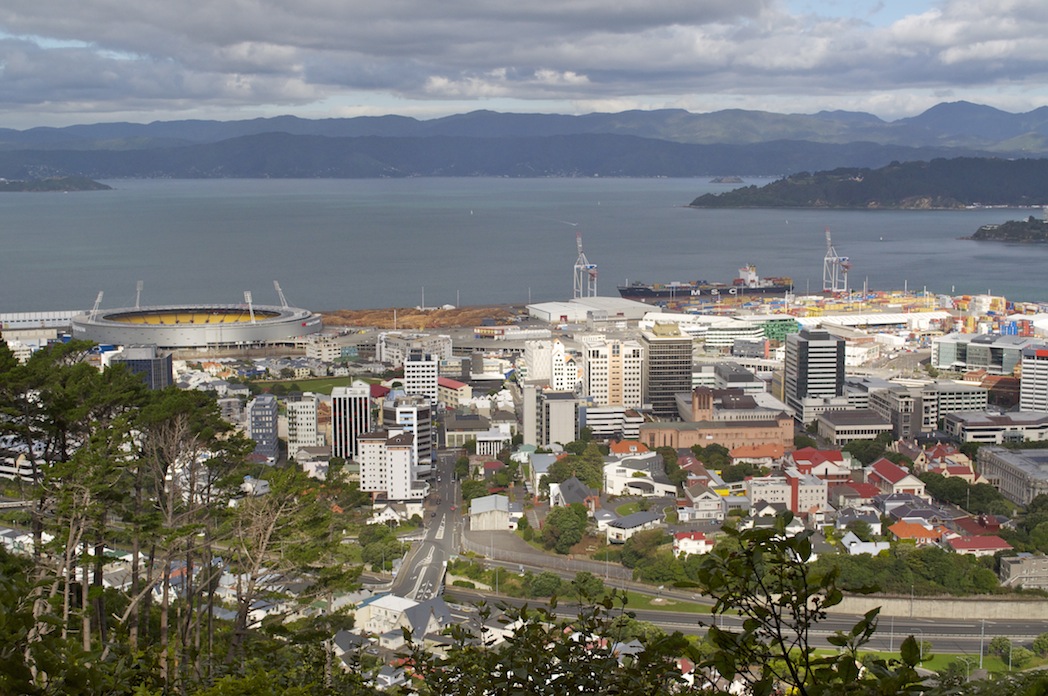
Wellington

Angela and I decided to walk down the North Walk Way, through the trees, back to the flat.  Below the ridgeline the trees had been cleared, leaving a lush hillside of bushes.  The benefit to us, walking down, is that we had clear views over the city and the harbour all the way back to the flat.


After so many years of hearing Ben and Kelly talk about Kelly’s family, we had actually begun to meet them today.

The Girlie Perspective

A busy and sociable day enjoyed by all.  There was lots of sunshine and laughter.  Ben manned the barbecue, which gives an indication of how readily the Maguire/Kilner family have welcomed and accepted him.

Wherever we went we were treated to magnificent views of the bay and surrounding hills.  The birdsong and abundant flowers convince us that it is Summer and we are on the other side of the world.

Bonita Norris Speaks at King’s

On Wednesday 18th January Bonita Norris, the youngest British female to climb Everest told an audience of young people and mountain enthusiasts about her fantastic achievement.  Having been inspired by Kenton Cool at the RGS, Bonita set her heart on climbing Everest.  She trained hard on the mountains of this country and Europe before encountering her first 8000m peak, Manaslu, which fuelled her determination further.  Within two years of setting her sights on the world’s highest point, she stood on the top. Her story was full of enthusiasm and emotion, giving possibly a clearer picture of what it was really like than many of her male counterparts.

Community projects

Project for the summer of 2016 – Naryn, Krygyzstan

Gardening at Aruu Telek

Gardening at Aruu Telek

The King’s School Himalayan Club  travelled to Kyrgyzstan during the summer of 2016. To satisfy our need to have a community project embedded into the itinerary, we  developed a link with two centres in Naryn supporting children with disability, families and single mothers. The first, called Aruu-Telek, is a government run home where children stay for short spells and where victims of assault can seek refuge. There are 15 children and 14 women in the centre. They received a carpet, mattresses, a treadmill, ball pit, a television, and a washing machine. While we were there we worked in three groups, gardening, making up the items we had brought and making flags to adorn the entrance to the centre.

With the children and staff at Kadan

With the children and staff at Kadan

The second home we visited was Kadan, a day care centre where children with disability go to study each day. The children have a variety of disabilities from cerebral palsy, Down’s syndrome  as well as a variety of other disabilities. The centre caters for about 100 children and relies entirely on donations from from NGOs and humanitarian projects. They received  a projector, a sensor TV and kitchen equipment, shelving, toilets, mattresses and a carpet. As well as playing with the children we divided ourselves into working teams and built the kitchen units and shelving. With hardly any tools and all the instructions in Russian made it all the more interesting but the group rose to the occasion and did an excellent job.

One project that is on-going is “Share the Vision”. Below is a brief description of what it involves.

Share the Vision, a project enabling blind and visually impaired young people to venture into remote mountainous regions, was formed in 2006. I made an approach to NCW, a college for the blind in Worcester, and suggested that some of their students might benefit from teaming up with sighted students from King’s School Worcester and going trekking in Morocco. The idea was welcomed and we set about finding students from both schools who could work together and all benefit from the experience.

What followed proved to be a voyage of discovery for everybody concerned; the blind and visually impaired discovered that there was more they could achieve than they appreciated, given the opportunity, the sighted students discovered that disability is not a barrier to friendship and that with their eyes their partners could achieve a great deal, and the staff were inspired by the work, attitude and achievements of the young people in their charge.

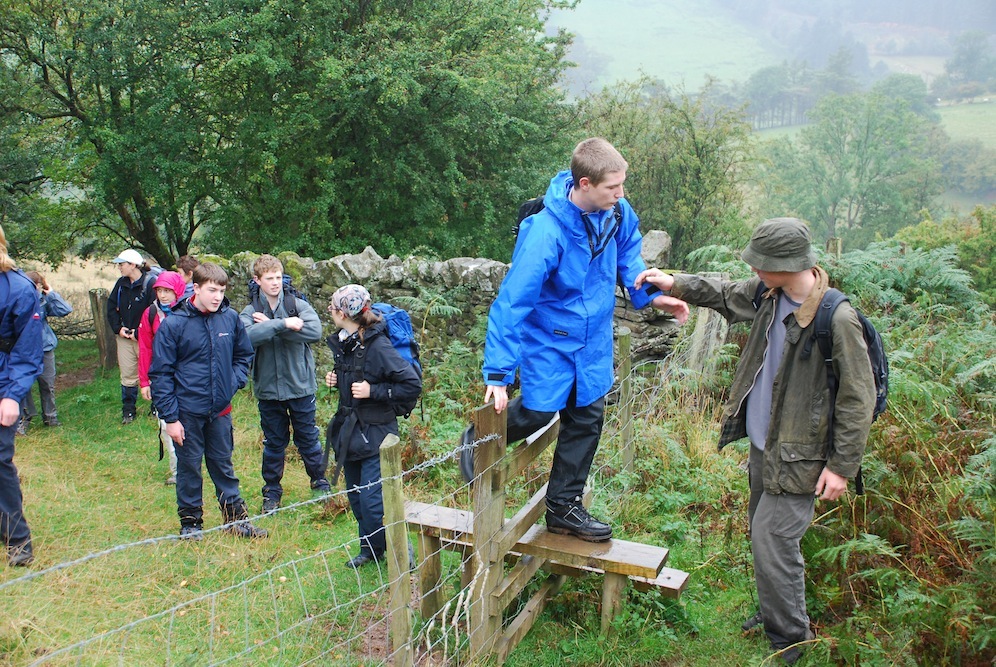
Training in the Black Mountains

Training in the Black Mountains

Before we could go to Morocco we had to put everybody through a very varied training programme. The sighted students had to learn how to guide. The blind students had to learn to trust their guides in an otherwise hostile environment. The sighted students had to learn to understand the individual and specific needs of their charges and to understand that they did not have to do everything!

The blind students had to learn to cope with the confinement of living in a tent. The staff had to create a structured training programme, gradually increasing the physical demands so that they were well prepared for the mountains of Morocco, which are significantly higher than anything we have in the UK. Dotted between the physical, outdoor training were visits to restaurants and other social occasions so that the two sets of students got to know each other in a variety of situations.

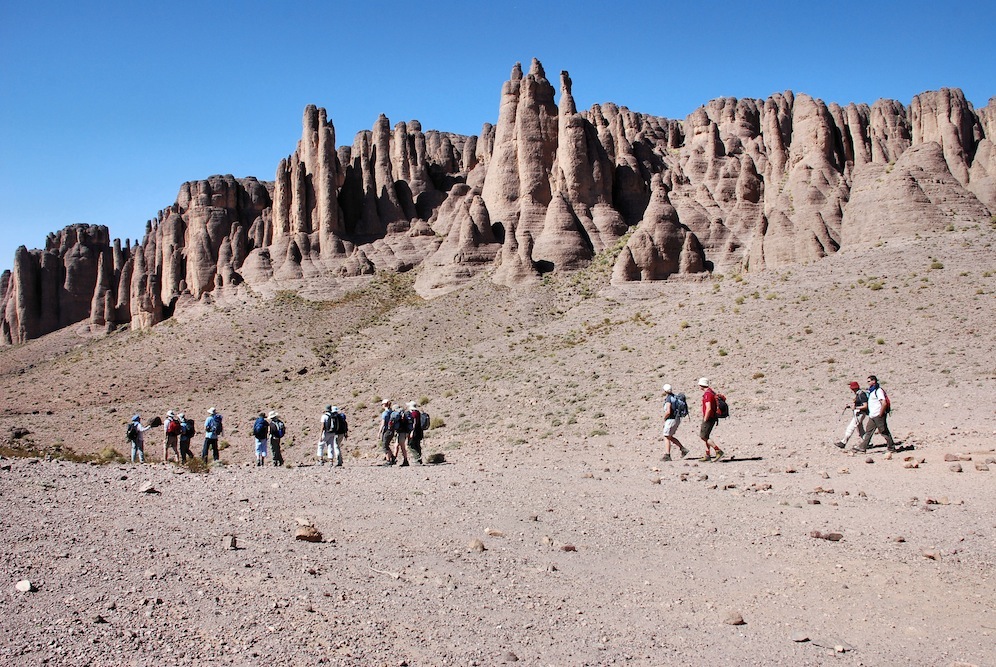
Trekking in the Jebel Sahro

Trekking in the Jebel Sahro

That first trip to Morocco in 2007 involved a significantly difficult trek in the Jebel Sahro, achieved by all, and this was followed up with a trek in the Sahara Desert where the opportunity to ride camels was experienced. In both environments it was important that the sighted students used their linguistic skills to create pictures in the minds of their charges. The scenery and landscape was so different to anything we have in the UK, it was not that difficult. The most dangerous aspect of the whole trip was coping with the rather lax adherence to the rules of the road in Marrakech, particularly in relation to pedestrians.

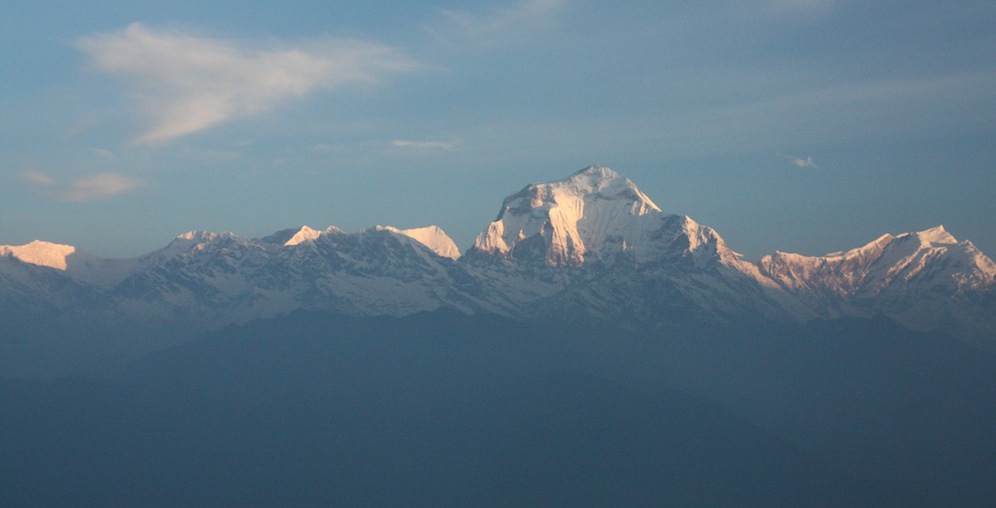
Dhaulagiri sunrise

Dhaulagiri sunrise

The overriding outcome of that first trip was that it had been a huge success and that it was worthy of repetition, not to Morocco on the next occasion, but to Nepal in 2009.  Here, we were embarking on a trek in the Annapurna region. While our highest point was to be 3200m, we would have a wall of snow-capped peaks in front of us rising, in some instances, to more than 8000m.  This was a hugely rewarding experience and listening to the descriptions of the sunrise over the Himalaya being relayed to the blind students on top of Poon Hill on a chilly April morning is something to be treasured.

Close encounters with a baby elephant

Close encounters with a baby elephant

It is important on these trips that other senses come into play to compensate, in part, for the loss of sight. That is why, having completed the trek, we travelled to the hot, sticky south of Nepal, to the Chitwan National Park, to encounter elephants, to ride on their backs looking for other giants of the jungle, rhino and the ever elusive tiger. Sadly the tiger remained elusive but we did see rhino. The highlight, though, was going down to the river with the elephants to bathe them. Here, all students could get involved in throwing water over these wonderful animals, stroking them, appreciating their leathery skin, feeling their wrinkled trunks and being sprayed by them, understanding how gentle these giants are and feeling confident in such close proximity. Sighted or not it is a fabulous experience and one that will remain with us forever.

Kathmandu traffic was even more scary than Marrakech but we found a safe haven in medieval Bhaktapur, a traffic free city to the east of Kathmandu where the students enjoyed touching many a statue and mixing with the local people who were very welcoming and sympathetic.

DSC_0248In 2011 we returned to Morocco for a trek in the Anti-Atlas Mountains where we successfully climbed a peak of 2900m. This was a remarkable achievement in extremely difficult terrain, considering the nature of the group, a steep slope of loose and wobbly rocks the size of dinner plates, but the guides approached it with optimism and enthusiasm while the blind and visually impaired approached it with determination and grit. Everybody dug deep and all made it to the summit.

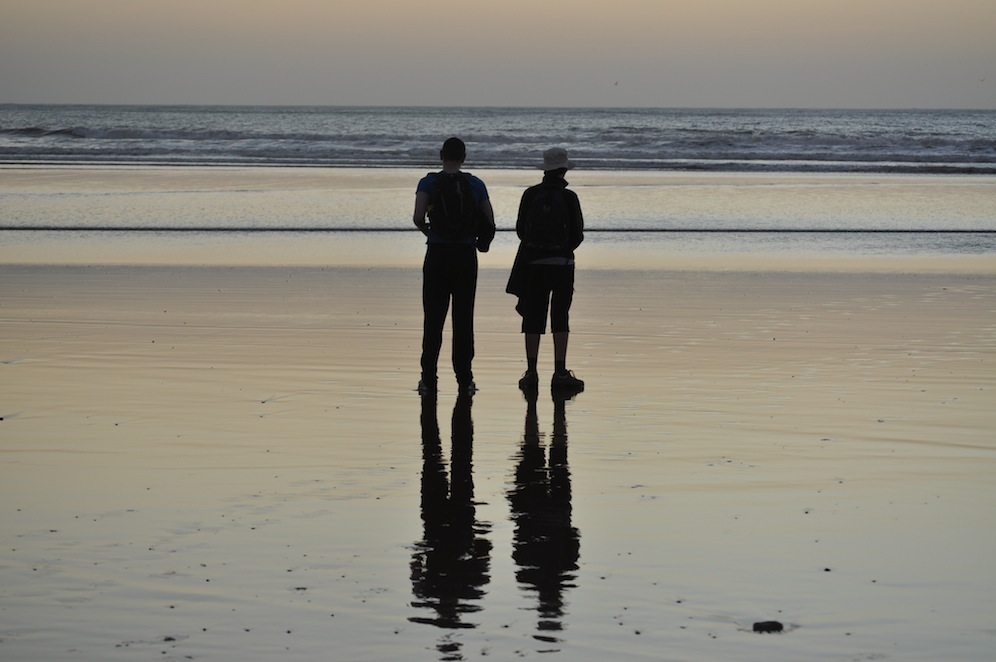
DSC_0464Learning from our experiences in Nepal, we included a proper camel trek this time, not in the Sahara, but through the Argon Forest and along the Atlantic coast of southern Morocco.  To feel the camel, to learn of its features through touch was important, but it was also a relief to dismount occasionally, to let somebody else learn and understand the discomfort of riding a camel. Camping on the beach with Atlantic waves crashing on the shore, of students playing freely at the water’s edge, songs round a campfire are treasured memories, not just for me but for all involved.

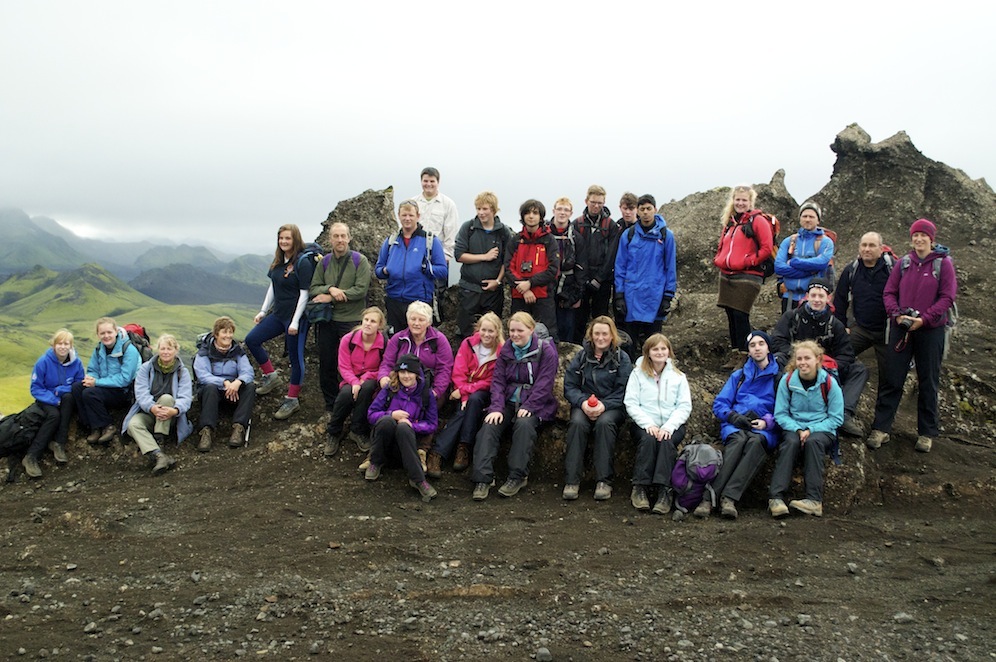
Enjoying the summit of an Icelandic peak

Enjoying the summit of an Icelandic peak

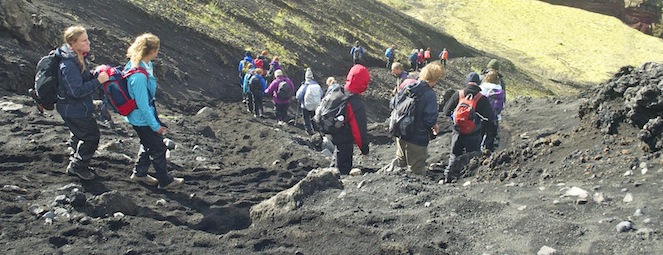
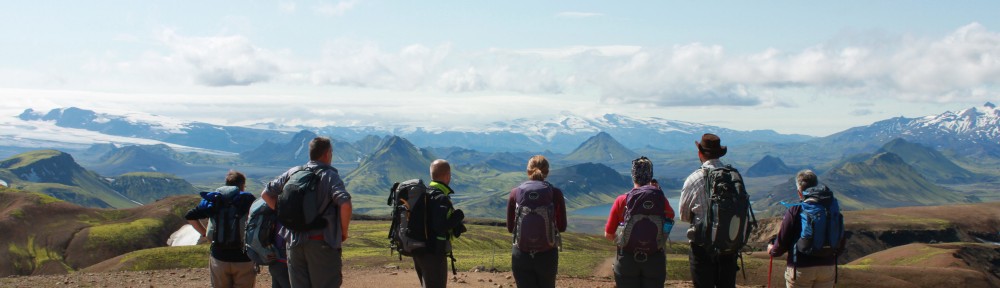
The more we did this the more we wanted to try. With this in mind we travelled to Iceland in 2013. This trip lacked that personal experience with animals but more than made up for it in other ways. Here we had thunderous waterfalls, geysers, pools of sulphurous, bubbling mud, hot springs to wallow in when the outside temperature struggled to reach double figures, glacier walking, white water rafting which included a ‘leap of faith’ from the top of a 7m cliff into the river below. And then there was the trek, an unbelievable experience walking over lava fields, across volcanic deserts, wading across roaring rivers, feeling the wind and the rain on our skin and, oh yes, climbing a mountain or two. Iceland has it all and that is why we are going back there in 2015 to do it all again and to add caving to the list.

DSC_0524In an age of risk assessment and risk aversion you might ask why we do it. Yes there are risks involved and that is why we plan and prepare thoroughly. However, the rewards far outweigh the risks.  The reward is a blind student telling me that they never realised just how much they could achieve and now they want to do more. The reward is a visually impaired young man telling me that he has been able to see stars for the first time in his life because the air is so clear. The reward is seeing friendships develop and blossom beyond the trips. The reward is achieving the seemingly impossible.

Although I am no longer directly involved in the trips, I am optimistic that the two schools will find a way of making this work, and that they continue to push the boundaries for blind and visually impaired young people through adventure.