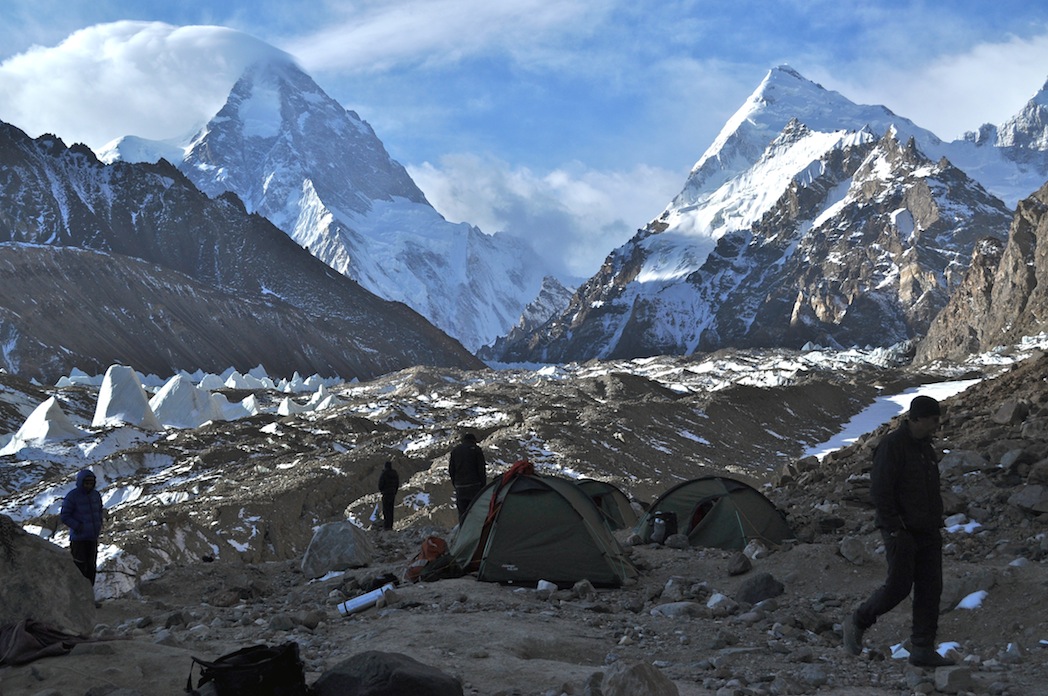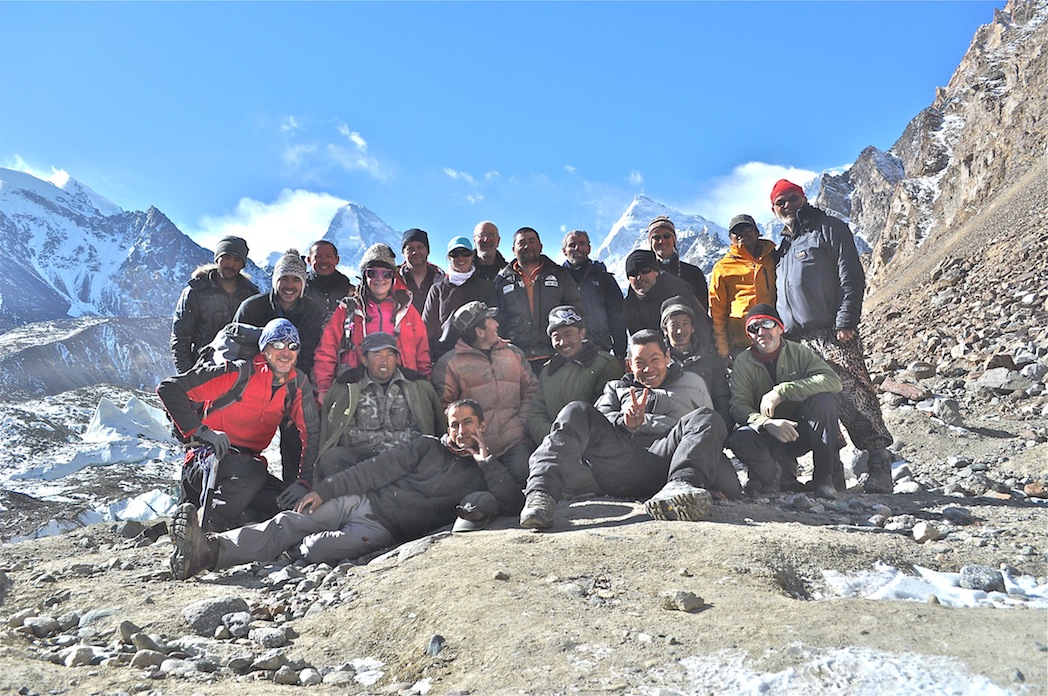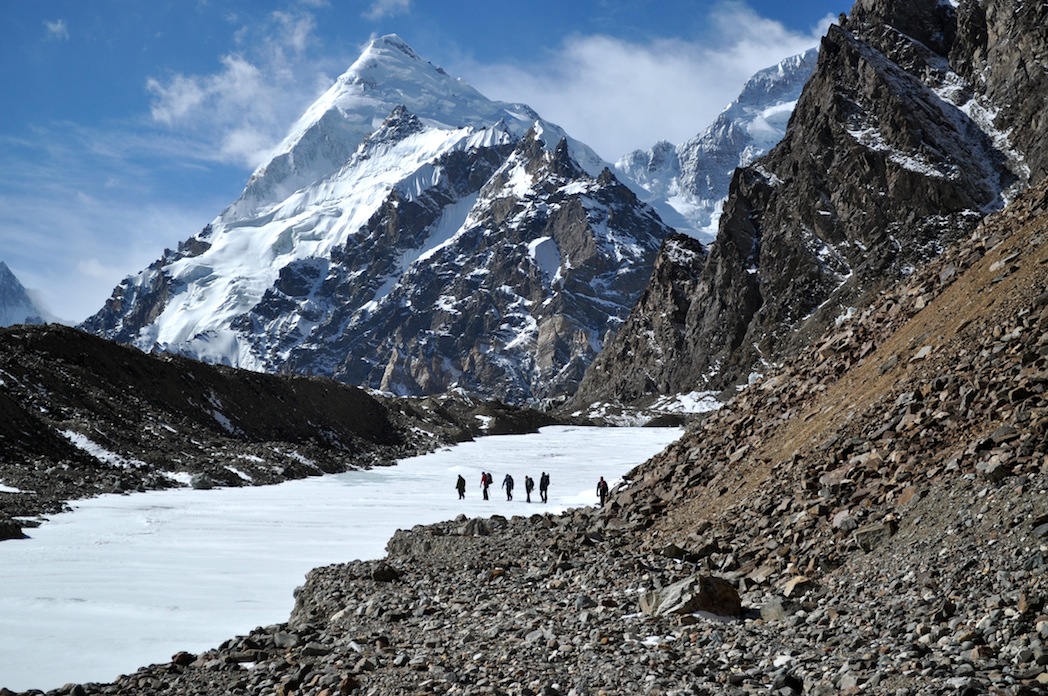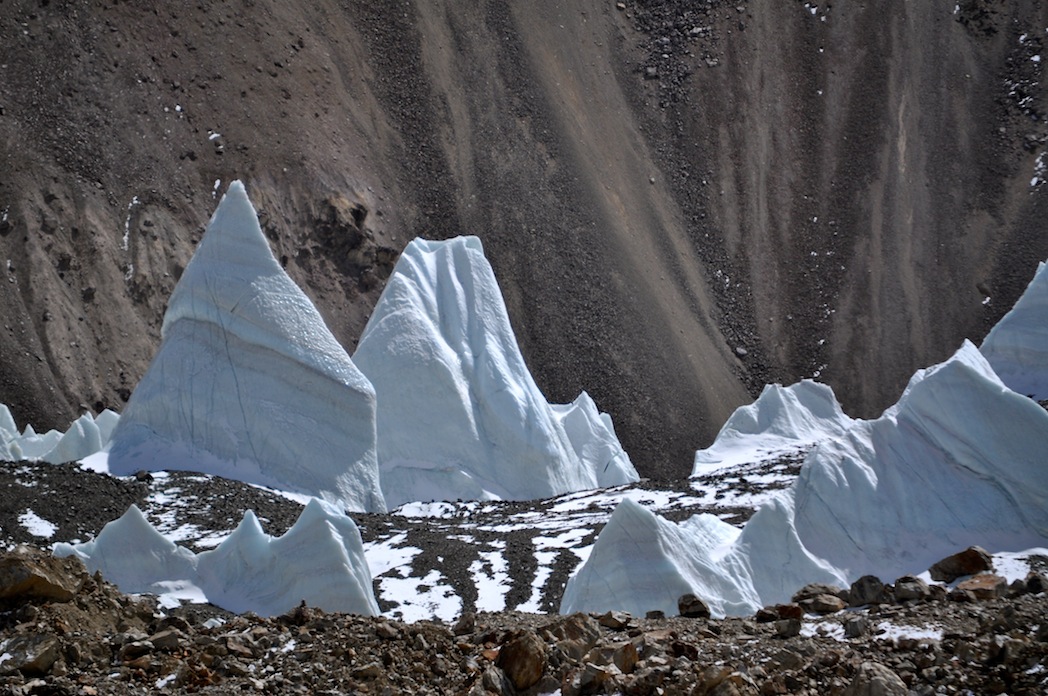
The trek out – 9th – 13th April

Before we left Chinese Base Camp we discussed whether we wanted a rest day, before going back over the Aghil Pass, or to continue through without a rest day and have an extra day in Kashgar.  Surprisingly, everybody preferred to finish early and have the extra day in a hotel.  As it turned out this was the best decision that could have been made.

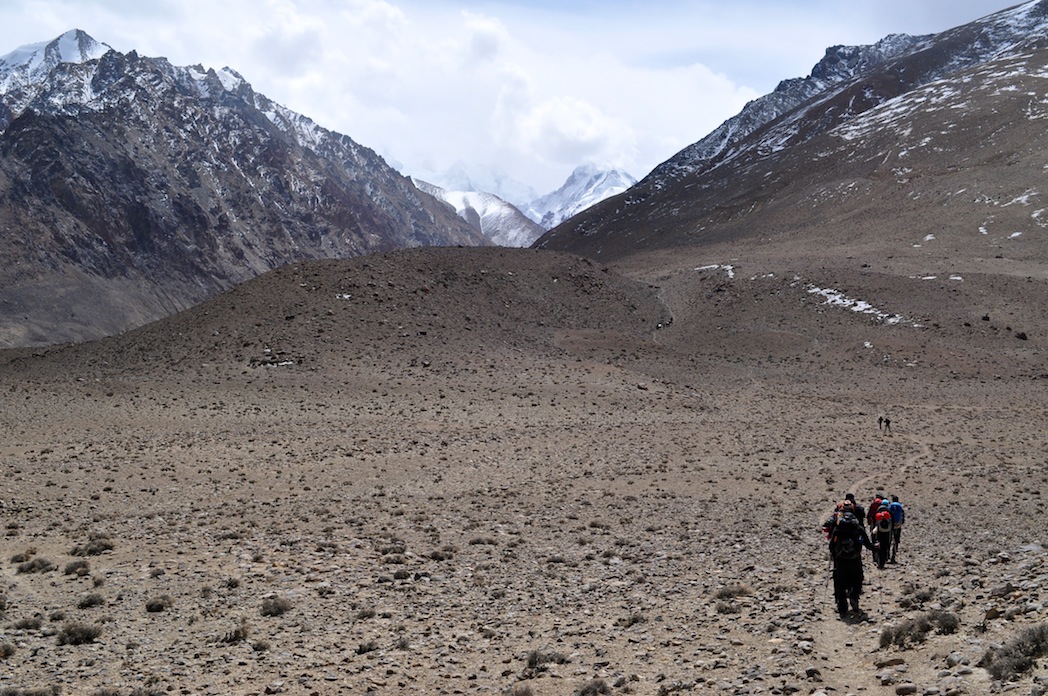
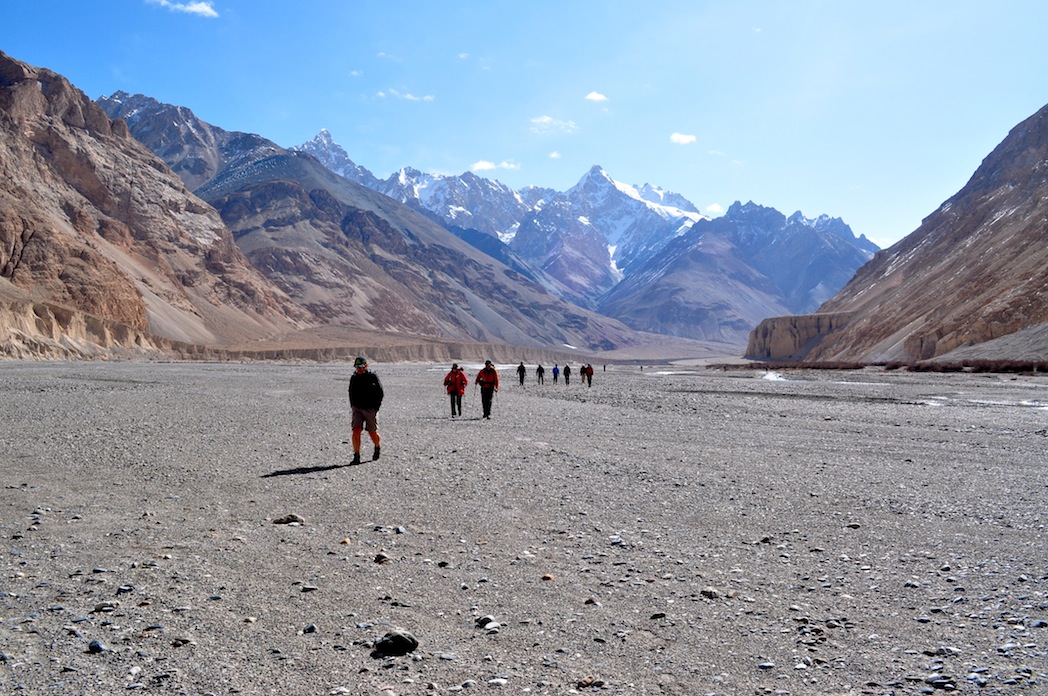
Given the freedom to leave camp when we were ready, before the crew were properly organised, we set off, retracing our steps.  I don’t enjoy this aspect of linear treks and prefer circular routes, so I put my head down and strode out.  When we came to the K2 River we approached cautiously, in case there were any visitors to the dead kiang on the ice.  There were none, but it was interesting to note that in the time we had been on the mountain the level of the ice had dropped about a foot, except where the kiang lay, which was now raised on an ice plinth.  Crossing the frozen river I was lucky to pick up the camel track across the stones, making walking that much easier.  I wish I had found it on the walk in.  However, walking on the stony riverbeds becomes tedious after a while and a number of us chose to leave the river at the point where we had lunch the other day.  The sand held a number of snow leopard prints suggesting they had been sniffing the remnants of food.
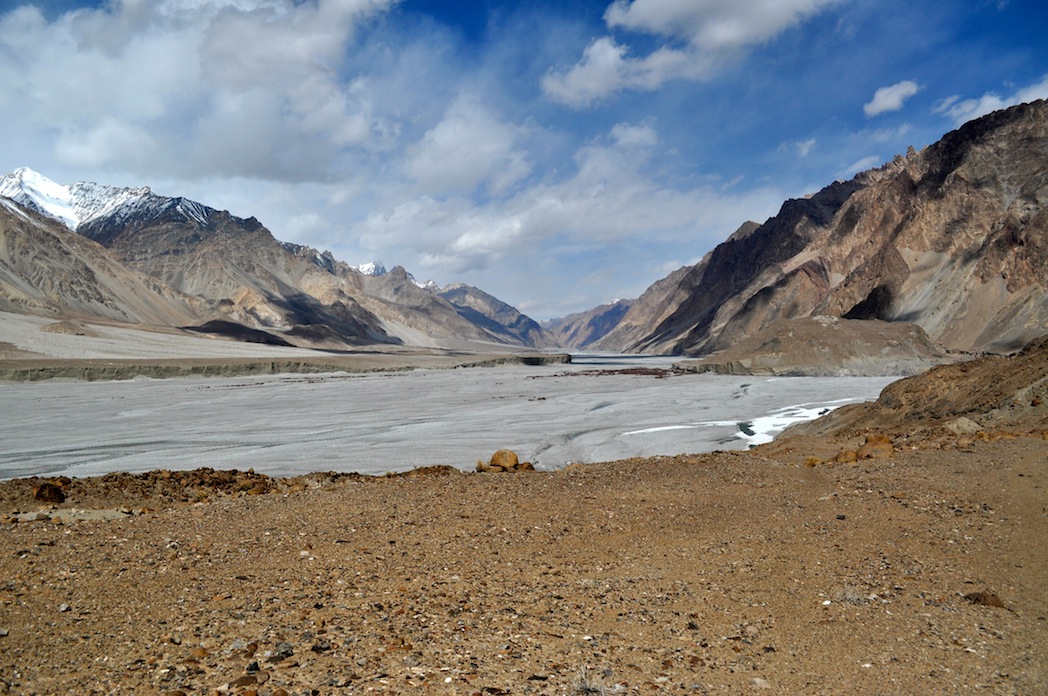
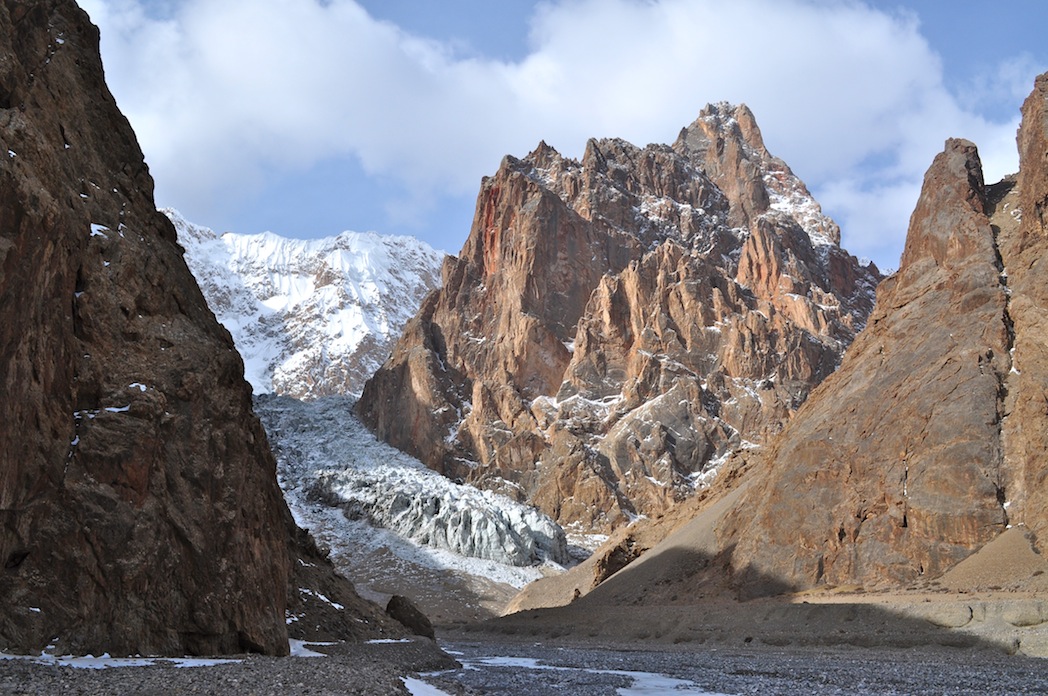
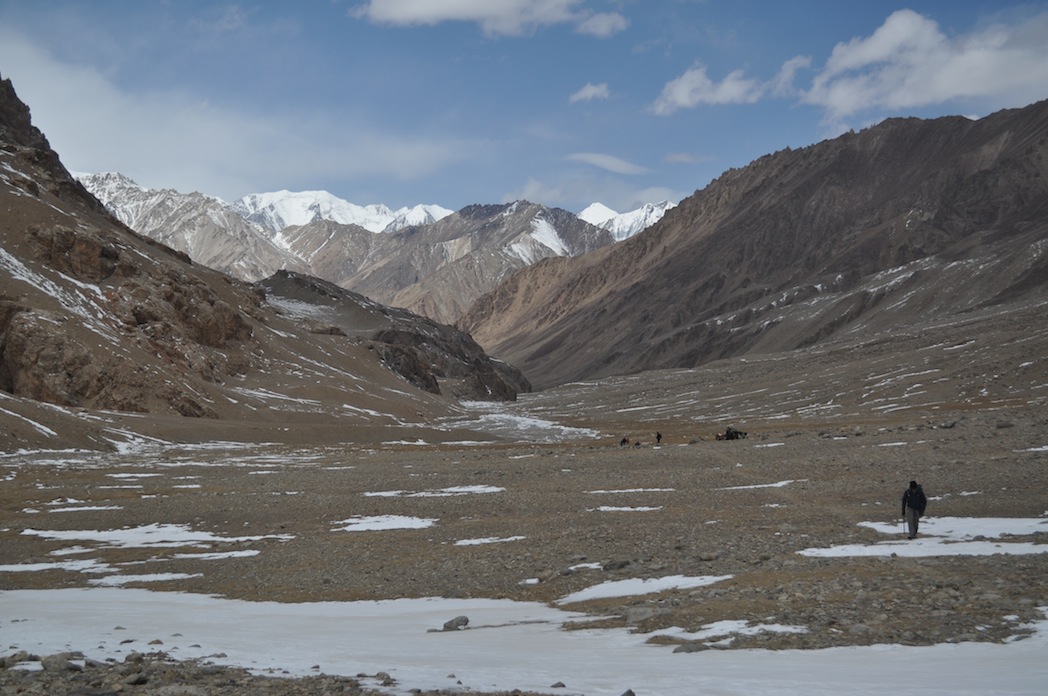
The Sarpo Lago River Valley flowing into the Shagskam River Valley

Climbing up the hill to take the short cut we followed no path in particular but our prints were clear in the very sandy, dusty soil.  Others would follow easily.  It soon became apparent that we were going much higher on the hill than we did on the outward journey.  While some wanted to go higher still in the belief that a shoulder above would give them access to the next valley, I was not convinced and dropped to where I knew we would gain access.  Indeed, I was right and, having entered the Shagskam Valley, waited for the others to appear.  After 45 minutes the only person to appear, not from the hills but from around the corner, was Tendi.  He wasn’t sure where the rest of the group was so we had lunch and waited a further 20 minutes.  Still no sign so we headed off.
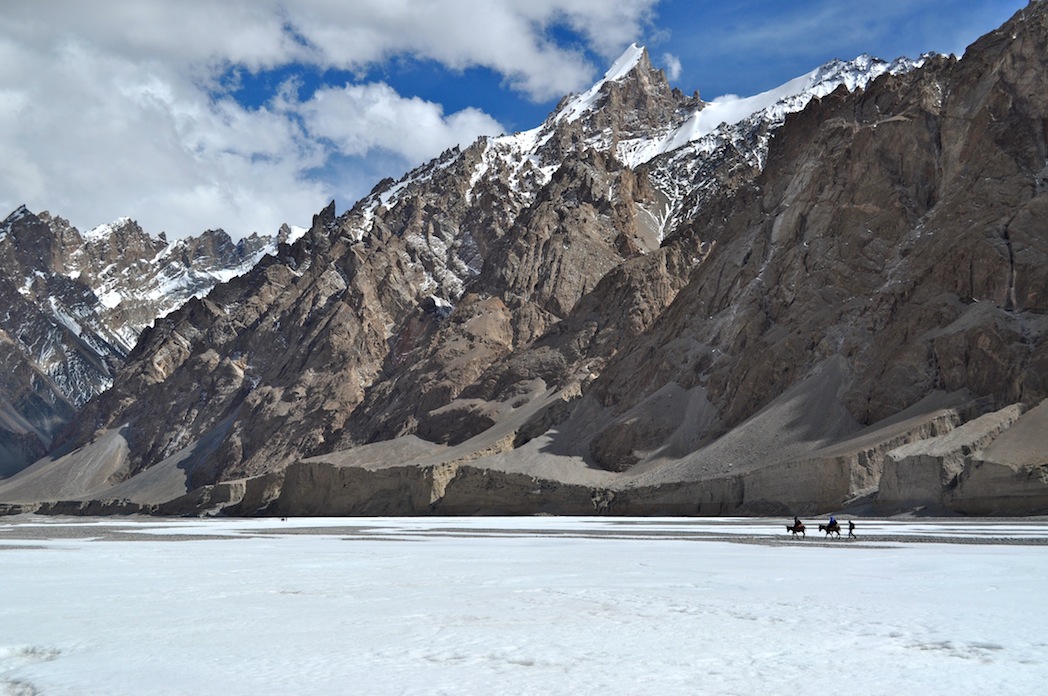
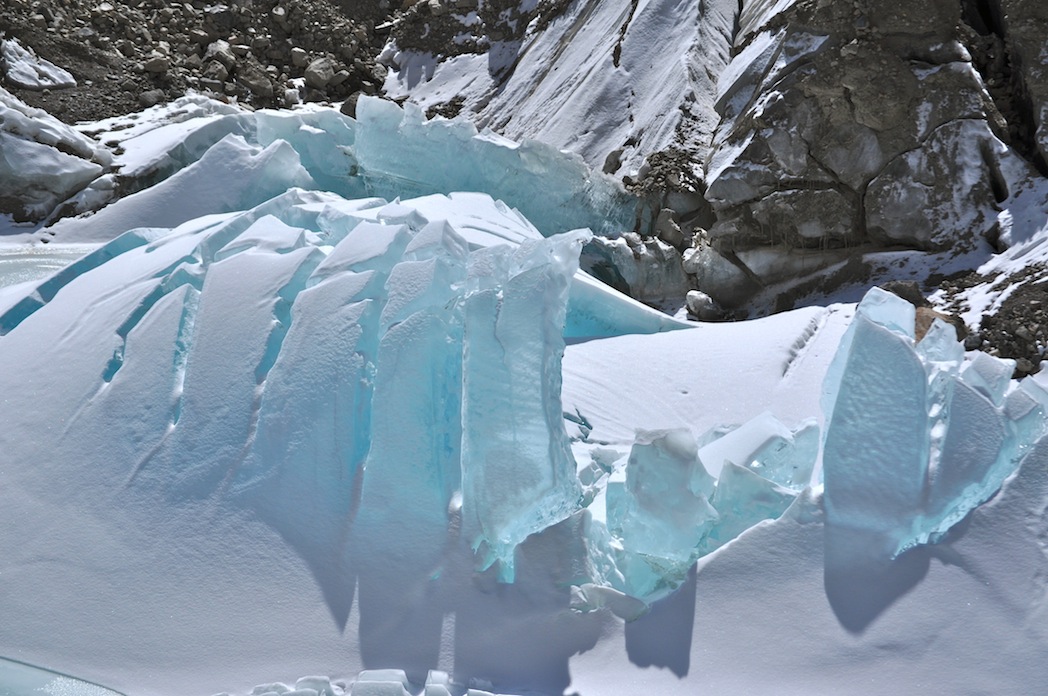
Making use of the ice to speed up the walk

Very close to where we camped on the way up was a large rock sticking out into the valley.  I decided to climb to the top to give me a good view to where the others were coming from and so that they could see me.  Eventually they all began to filter along the valley and join me.  Those that had earlier chosen to climb higher were full of excitement; they had not found a route through but had found a cave with lots of remains and huge bird pellets.  What could have been a trudge over a familiar route had turned into a bit of an adventure.
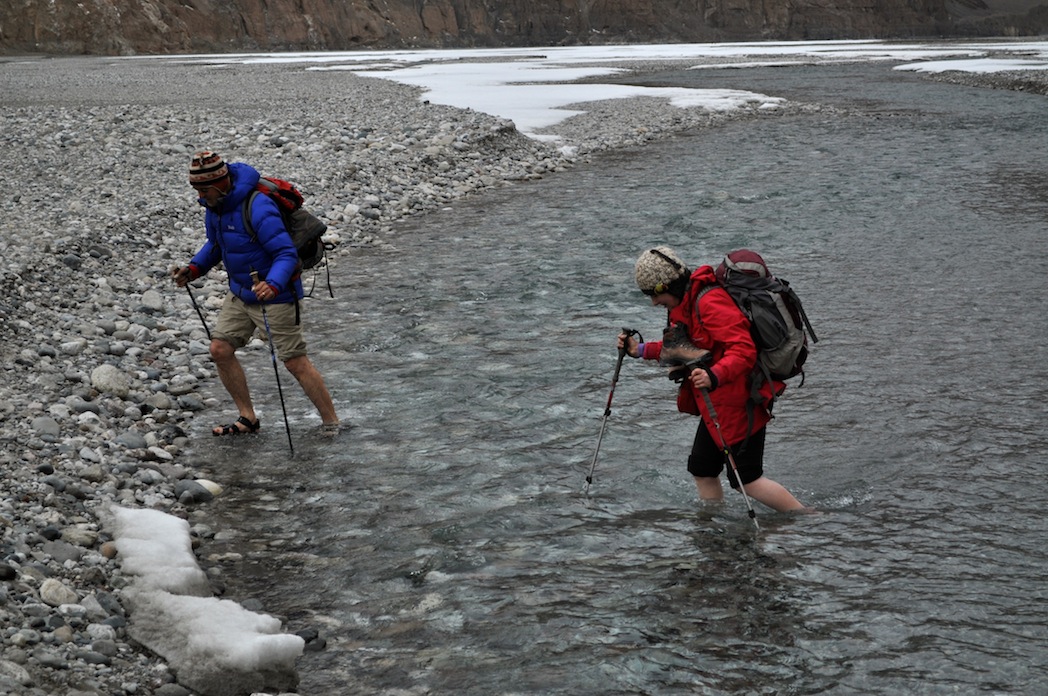
River crossing

Along the Shagskam River there had been a noticeable reduction in the ice and we were faced with a number of river crossings during the afternoon, where  only a few days previously we had been able to cross on the ice.  Fortunately the river was never more than knee deep where we chose to cross.  I don’t think I would have wanted it much deeper as it was still extremely cold.  As it was, our feet felt very refreshed and had a much needed wash!  We were well equipped this time with our water footwear, all except Rob who hadn’t packed any in the first place.  Nigel was feeling either sorry for him or generous towards him and, having crossed the river himself, offered to throw his shoes across for Rob to wear.  Unfortunately, Nigel used a girlie underarm technique with the first shoe and it plopped right in the middle of the fast flowing river and disappeared at a rate of knots.  Those around were so busy rolling about laughing that they were not able to even attempt a rescue.  Perhaps Nigel was just teasing Rob.

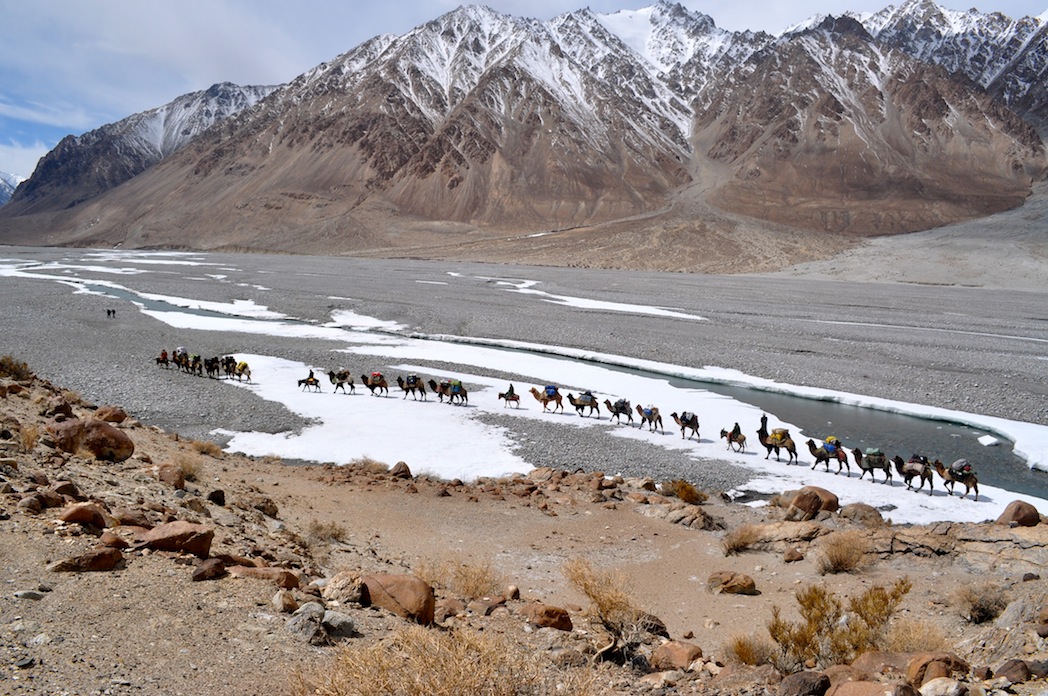
Later in the afternoon, just before we reached camp, there was one final river crossing.  For this the camels came back to carry everyone.  I chose not to take advantage of the camels but to walk through the river as I was already wearing my water shoes, and I wanted to be in a position to film the crossing.  I am so pleased I took that decision.  David had grown very fond of a particular camel, a blond leggy specimen with long fluttery eye lashes.  He eagerly climbed aboard and Robin joined him on the back of the animal.  The camel had a fiery personality and bucked from side to side causing both David and Robin to hang on for dear life.  I have never seen David look so frightened.

However, David and Robin got off lightly compared with Simon and Chris who rode their placid natured camel with confidence.  That was until the camel started to climb up the bank, having crossed safely.  Its legs gave way and then it began to slide back down the bank, into the river, dumping Simon into the water, giving him wet feet and, more worryingly, wet boots.  Chris managed to save himself and maintained his dignity.

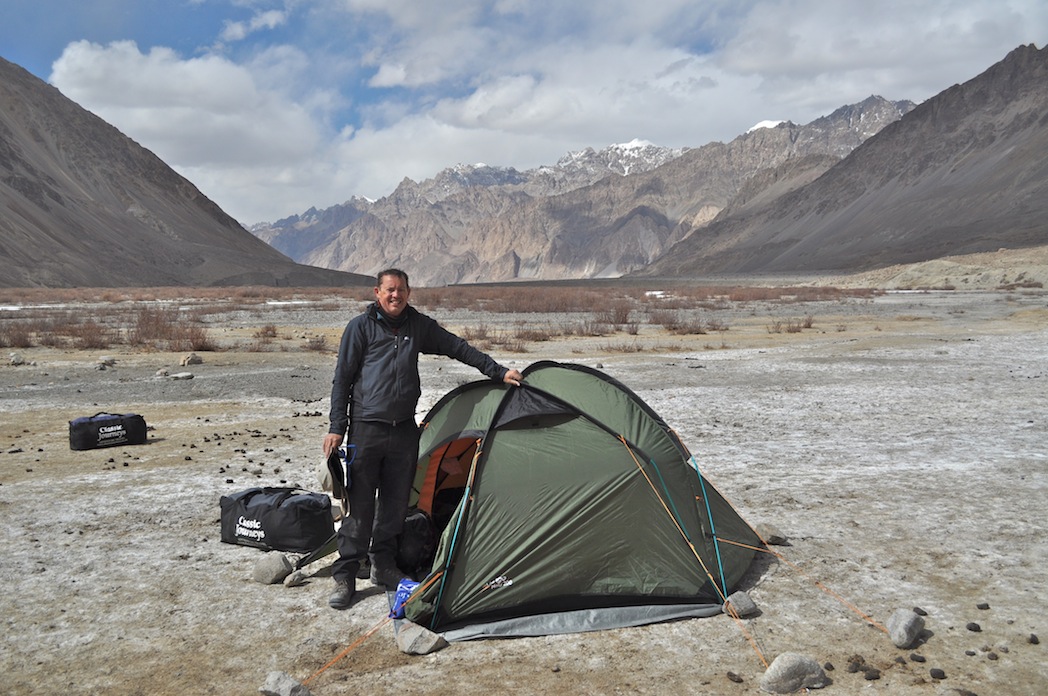
Our camp for that night was further up the valley and on the opposite side from our corresponding outward camp.  The camel men advised us that it was a much better camp and would be sheltered from the strong winds that swept through the valley late in the day.  It would also make the next day’s walk quite short, giving us some rest before crossing the Aghil Pass.  It was certainly an attractive place to camp but because of the stony nature of the ground we could not use pegs, but anchored the tents with large rocks.  That evening the wind was so strong we had to lie in our tents to make sure the wind did not carry them away and the mess tent was in serious jeopardy until the wind died during the course of the night.

The weather was now not as clear or as bright as it had been on the way up and it was not getting any warmer.  We were only walking for about three hours and, understandably, we arrived at camp before the crew.  It was while waiting for the crew to arrive that we realised just how cold it was becoming.  Layers were going on to try to maintain body temperatures. The tents could not come soon enough and once they were there they were rapidly erected and people disappeared into them for warmth and shelter from the strengthening wind.  As the day progressed the weather continued to deteriorate and by evening snow began to fall.

By morning we had two to three inches of snow and it was still falling.  The flakes were incredibly fine and it was a dry snow.  Thankfully the fineness of the flakes had limited the depth but we knew it might be a different story on the Aghil Pass, which we still had to cross.

Setting off we first had to cross the mile wide river bed to the mouth of the gorge.  It was a steady climb up the boulder strewn gorge bed with the occasional scramble up the still dry waterfalls.  We kept a wary eye on the cliffs above just in case a boulder should free itself from its fragile sandy bed.  We kept the noise down to a minimum, just in case sound should dislodge a rock.  Also, temperature rises can affect the stability of such fragile landscapes so we wanted to pass through this area as quickly as we could.  Forty five minutes saw us scrambling out of the gorge and the danger had passed.  Fortunately the temperature was not noticeably rising, rather the opposite, in fact.
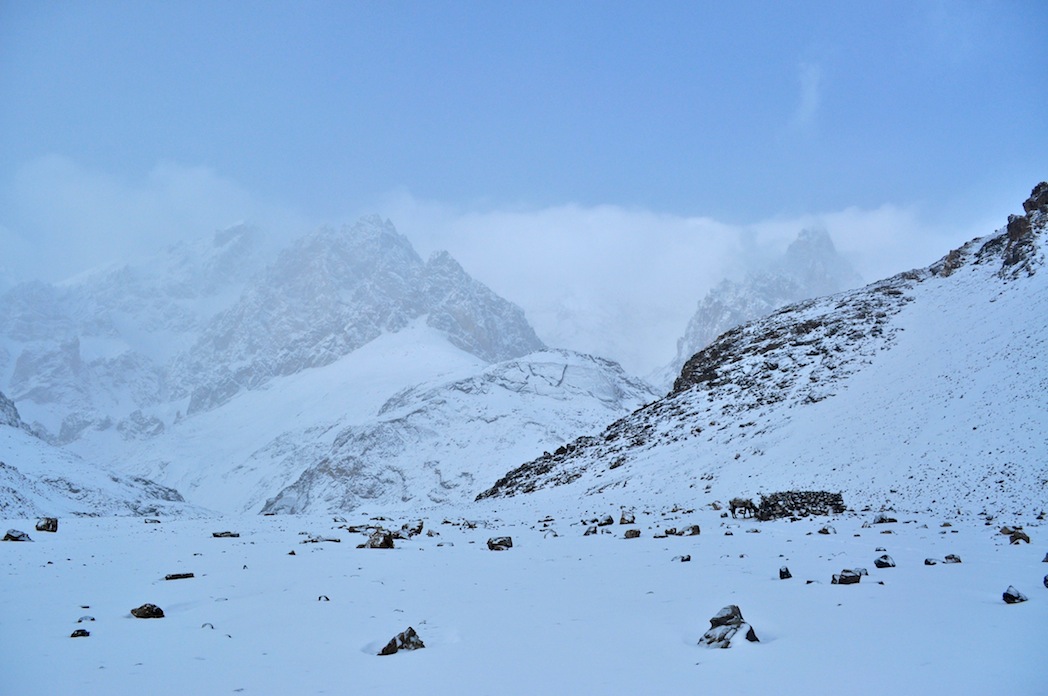
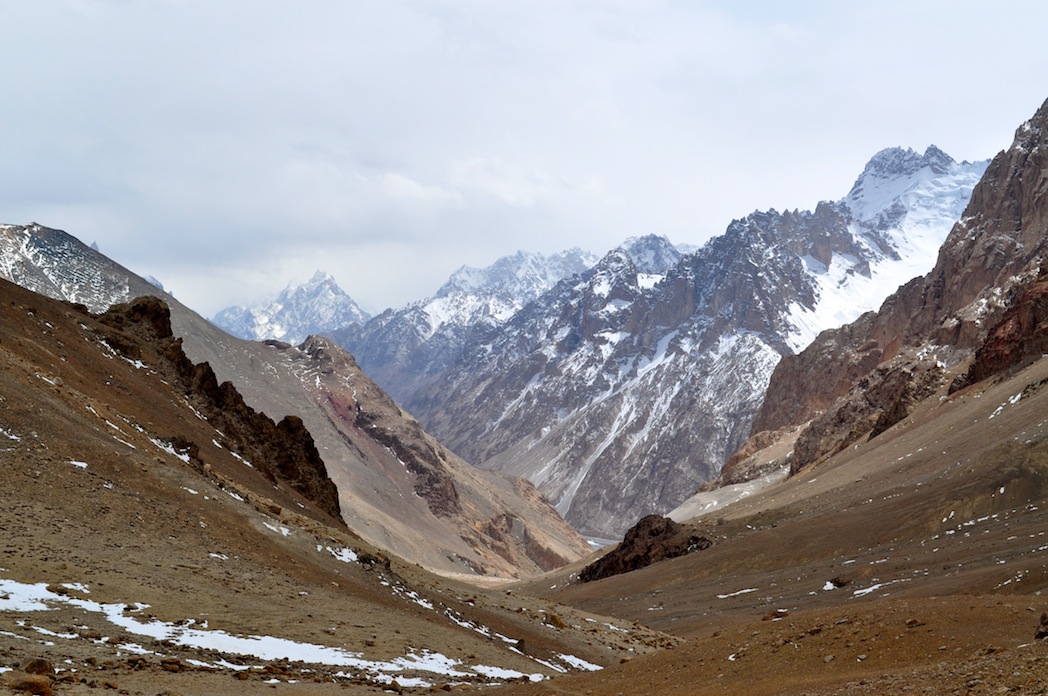
Looking down from the Aghil Pass

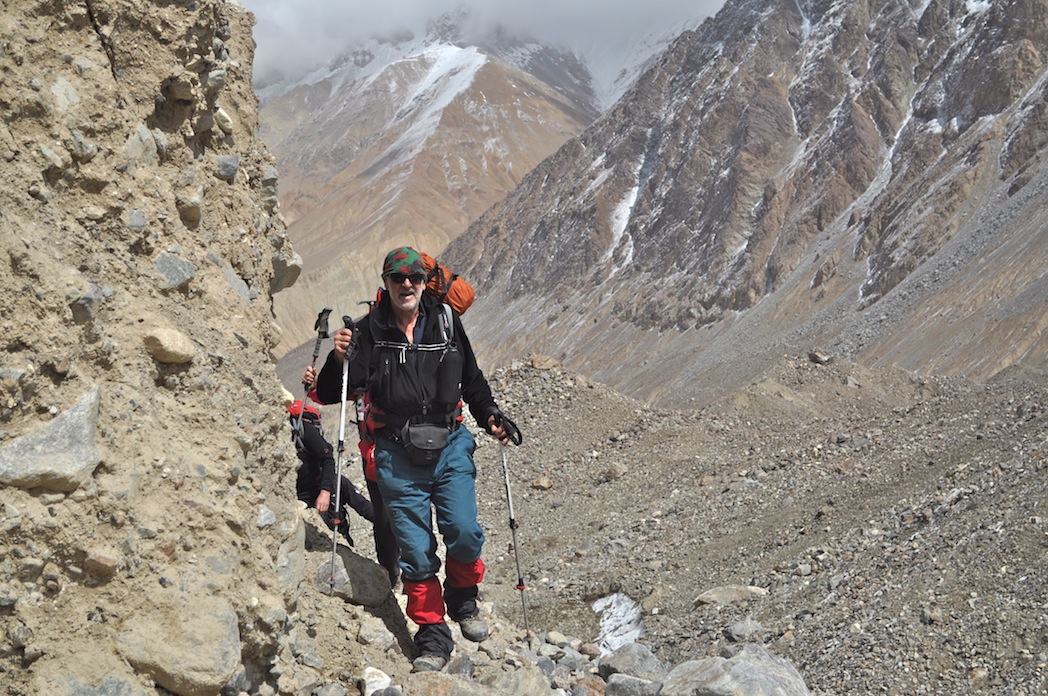
We now had to pick our route through a maze of rocks and gullies towards the pass.  With height gained the snow deepened and Akbar became less comfortable.  It was clear he was being affected by the cold and altitude.  He borrowed a pair of gloves off Ann, sunglasses off Hira.  He lost interest, focus and direction and it was left to us to route find our way to the top of the pass.  While this was happening Mo also began to suffer; lacking energy etc. so we fed him dextrose and I took him to the top doing the ‘Walton plod’.  Once on the top he perked up, as did Akbar, and we began the long descent down the other side.  This time the wind was not such a factor in our crossing the pass but, instead of being at our backs, as expected, it was in our faces.  This meant that there was much more snow gathered on our downward slope and for much of the time it was knee deep, with many dips and tussocks for us to twist an ankle beneath the surface.
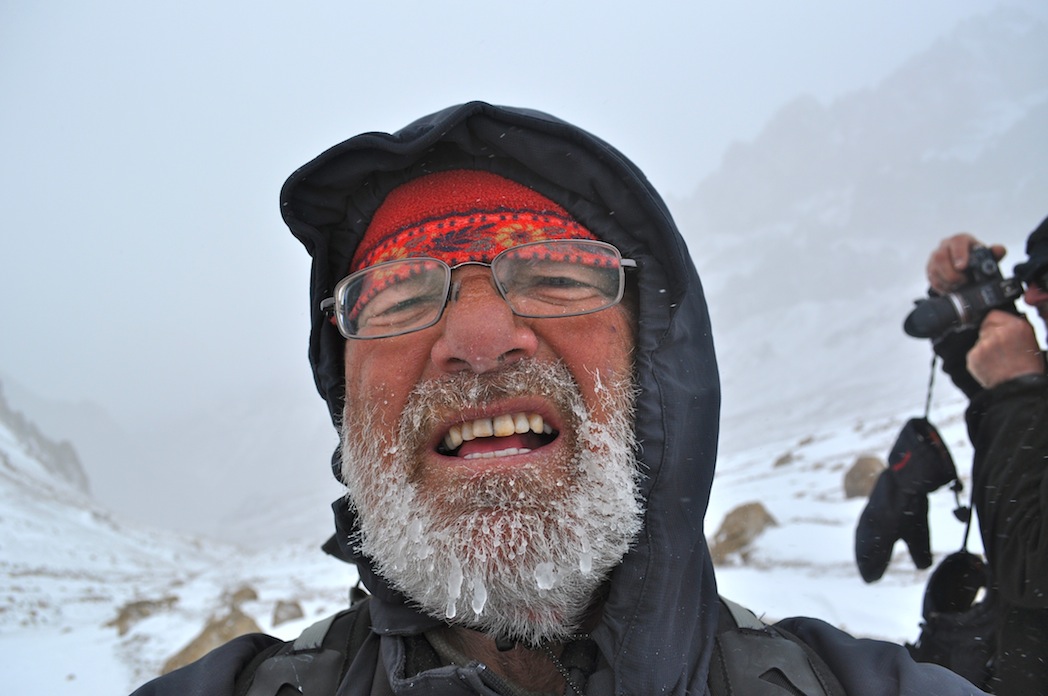
Frozen beard

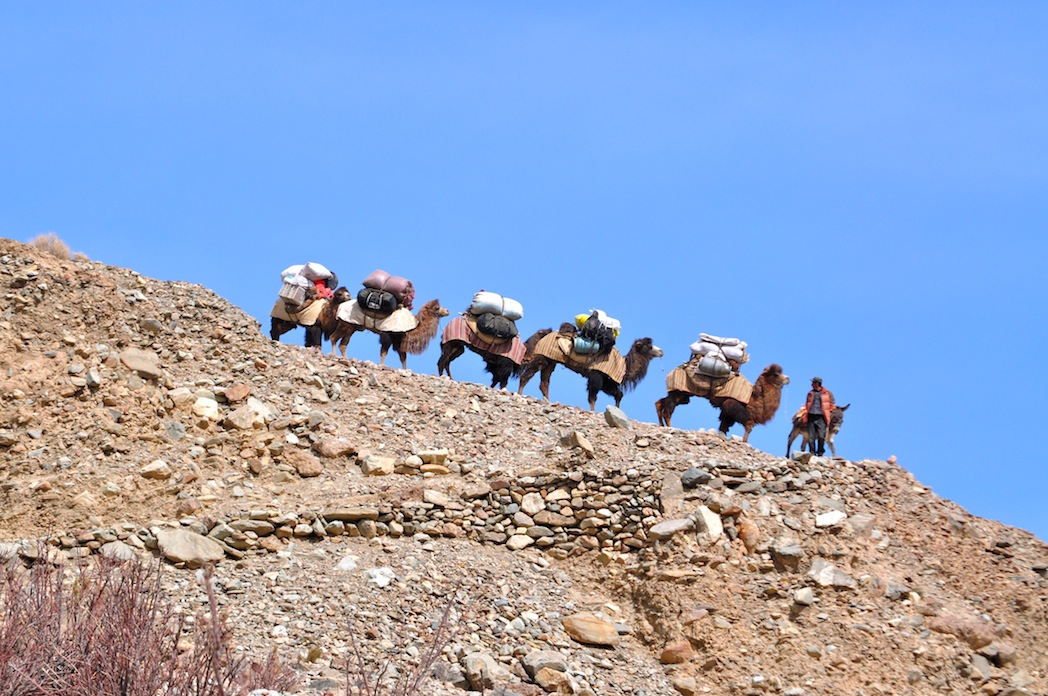
Taking time for the camels to catch up and overtake we paused for lunch.  My beard was a frozen mass of icicles.  The camels, now ahead of us, paved the way, flattening the snow and making walking much easier and safer.  It was a long descent, about three hours, and just before camp I caught up with the camels.  I was intrigued by how quiet and placid they were.  They required no instruction or encouragement, they just plodded on their dinner plate sized feet, flattening the snow for me to follow.  It was the same when they reached camp.  A little click of the tongue instructed them to sit so they could be unloaded and a second click told them to stand again.

Camp at Kotaz

As we arrived in camp it started to snow more heavily, making the putting up of tents a miserable affair.  Once up, we snuggled down to keep warm.  We did not bother with the mess tent and our food was brought to us.  Spending so long (14 hours on this occasion) in a horizontal position was not doing my back any good.  It had been the same on the glacier a few days previously

It snowed all night.  When we woke up we realised just what a good decision it had been not to take a rest day before the Aghil Pass.  Had we done so we would not have been able to cross.  The snow would have been getting on for waist deep, and while we might have been able to exhaustingly plough our way through, the camels and donkeys would not.  We would have been stuck on the wrong side of the pass, certainly for another day, probably more, with diminishing supplies of food and gas.
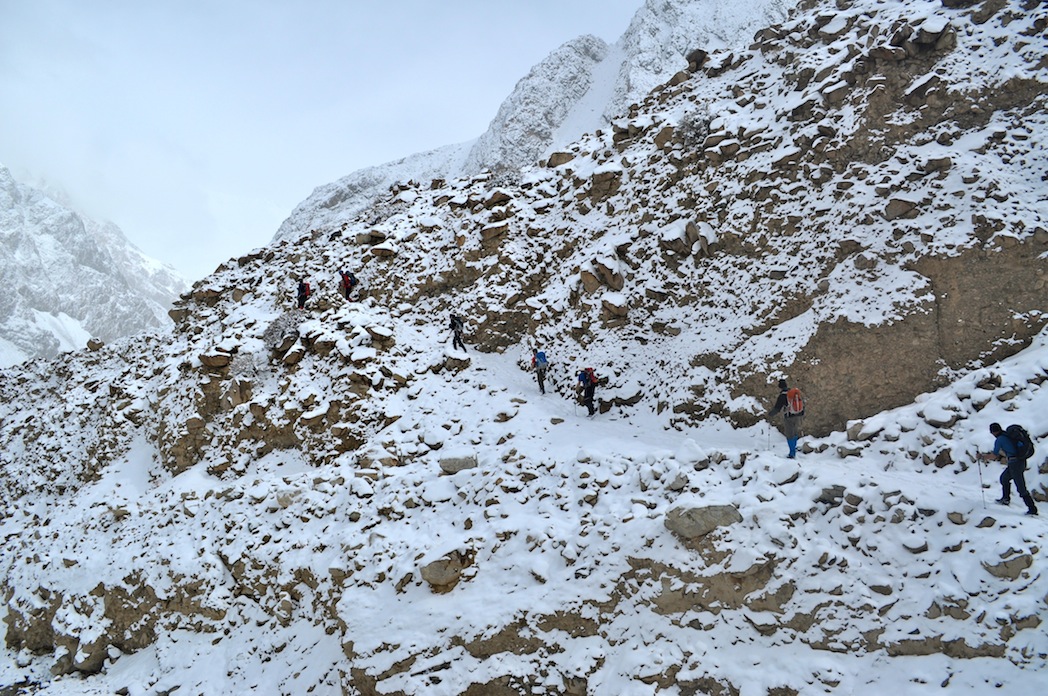
Rising above the valley

Now that we were over the pass our journey over the next two days should be easier.  We just had one more obstacle to overcome in the conditions.  Travelling down from camp the valley narrows to such an extent that the river, when not frozen, flows through a notch only a few feet wide.  It is impractical for the path to follow the river, so it climbs above and undulates on a narrow path some distance above on the cliffs.  In the snowy conditions the path proved quite treacherous and care had to be taken not to tumble to the rocks and ice below.

Bypassing the narrow cleft in the valley

Successfully negotiated, the valley opened out again and we were able to enjoy the walk to camp at Sarak.  Towering cliffs rose on either side and our path hugged the left bank of the valley.  The likelihood of a rock dislodging from the cliff as we walked by was slim but there was plenty of evidence of rocks having fallen on to the path.

By the time we reached camp all the snow had gone, not melted, but evaporated, leaving the ground as dry as it had been before any snow had fallen.  There had been a mist hanging over us all day and I can only assume it was brought about by this evaporation process.

In the morning more snow had fallen but it did not last long as the sun soon cleared it away.  We only had to walk the short distance to Yilik, estimated to be about four hours.  In fact it only took some of us three hours as we put our heads down and got on with the job. Once we entered the Yilik Valley we were faced with a strong, cold wind but after, what seemed an endless trudge to the village, we reached the shelter of the house that was hosting us.

When we had left Yilik two weeks previously there were signs that some building work was going to take place a short distance from the village.  On our return a crane was in place and the shells of several buildings had been erected.  This is all part of the Chinese policy of rehousing communities out of their mud constructed houses and into more modern, but less individualistic houses.  Whether there is any choice in the matter I do not know.  I doubt it!
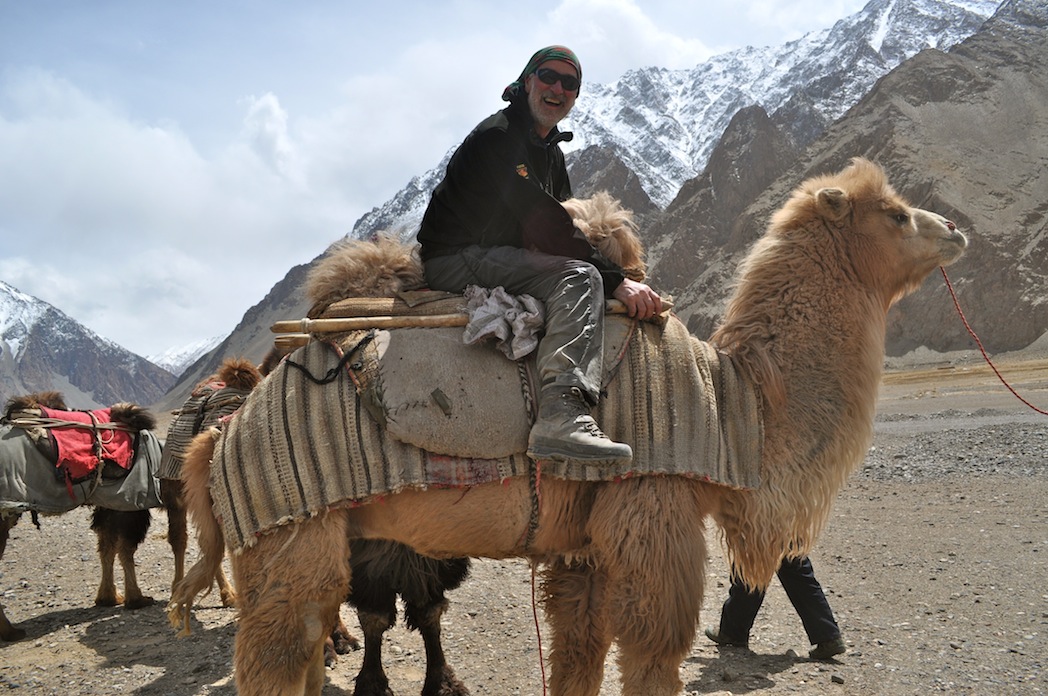
David cements his relationship with 'Blondie'

When everybody finally arrived at Yilik we all had an opportunity to  ride the camels briefly. David, determined to make amends for his girlie screaming three days previously, girded his loins and mounted Blondie.  She was far more accepting this time.

Related Images:
Life above base camp – 5th – 8th April

Before we set out on our journey above Chinese Base Camp, we checked again that we had everything we needed for the next few days and that we were not carrying anything unnecessary.  It was a tight fit to get everything into our 35 litre rucksacks but life was made a little easier, and lighter, when Hira suggested we let the donkeys carry our sleeping bags.

The good path up from Chinese Base Camp

Our original plan had been to trek to the Italian Base Camp, several kilometres up the glacier but, despite the fact that the distance was not excessive, it would take too long and too much out of us if we did so.  Therefore, our first day above Chinese Base Camp would take us as far as the Pakistan Base Camp at the snout of the glacier.  It was lovely to be walking on a proper mountain path as we climbed out of camp.  The path took us to a pass and a traverse around a spur into the K2 valley.  We were surrounded by stunning peaks but, as yet, the elusive K2 had not shown herself.

Pakistan Base Camp

In order to reach Pakistan Base Camp we had to descend into the valley via a loose soil path down a very steep slope, a remnant of when the glacier had reached this far down the valley.  The only ice now was the frozen K2 River and we could see the snout of the glacier just beyond where our planned camp.  As we got closer to camp and the glacier the air cooled significantly.  Camp was a dry platform on the edge of the very fragile cliff down to the river.  As we arrived the crew were collecting water in a barrel, having first made a hole in the ice, to get at the water below.  The barrel was then hauled up the cliff with a rope.

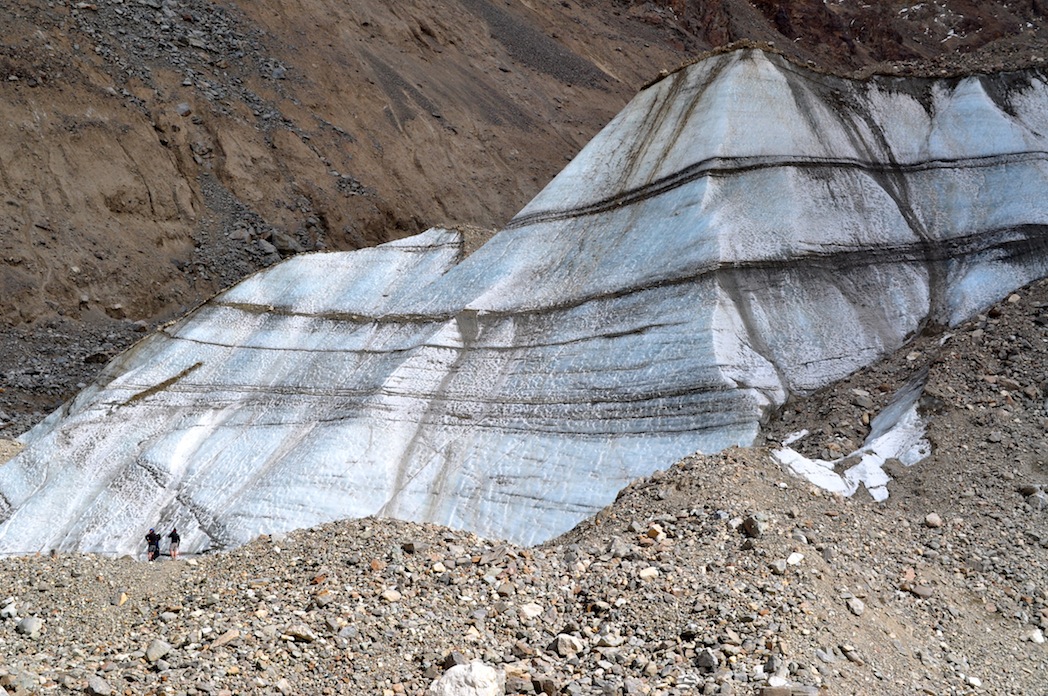
The snout of the K2 Glacier

From just above Pakistan Base Camp we should have been able to see K2 but she was still being elusive so we went to explore the snout of the glacier.  We had to be careful and be aware of the stones, some quite sizeable, hurtling fifty or so feet down the icy snout to the ground below.  To be hit by one would be curtains.

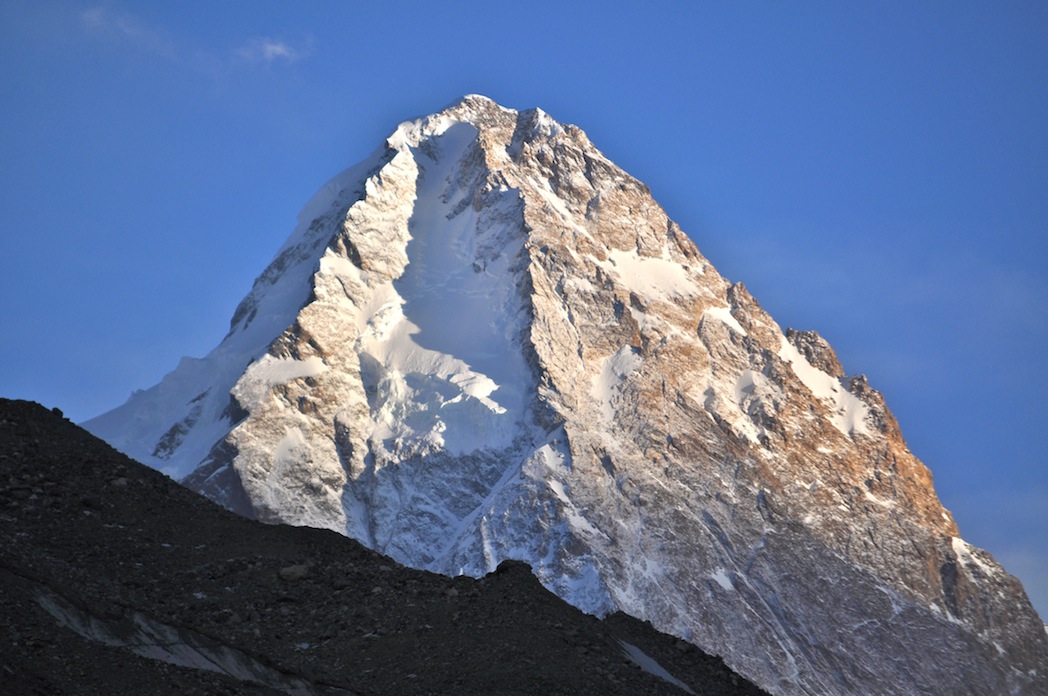
As the afternoon progressed into the evening the clouds cleared from K2, giving us some superb shots in the evening light.

Evening sunlight on the upper slopes of K2

Dinner was served in our tents as we were now minus a mess tent.  To be honest our tents were the best place to be as the temperature plummeted.  Despite the cold it was well worth vacating our tents for a second spell of photography as the last rays of the setting sun faded from K2s upper slopes.

The night proved not to be quite as cold as expected for cloud rolled in and dumped a couple of inches of snow on us.  It was still snowing, although only lightly, when we emerged from our tents for breakfast. The sun soon forced its way through the cloud and we were able to proceed to Italian Base Camp, several kilometres up the glacier and a few hundred metres higher at around 4800m.

David negotiates the tricky path between PBC and IBC

Our journey took us through an area of extremely fragile landscape, which brought imminent danger from rock fall, landslide and possible avalanche.  If yesterday’s path had been pleasant, today’s was anything but.  We were constantly having to watch where we put our feet on the rocky, stony surface where there was hardly a discernible path.  All we could do was link a series of small cairns (only two or three stones in height) to be sure we were on the right track.  After seven ankle twisting, foot bruising hours we reached Italian Base Camp.  It is situated at the side of the glacier in a very barren, rocky landscape.  A few relatively stone free platforms have been created for tents, which had to be held down with rocks rather than tent pegs.  Despite its barrenness it was a most amazing place.

Looking up valley from Italian Base Camp

Now that we were in camp, and not having to concentrate on each footstep, we could take in the scenery around us.  Further up the valley, head and shoulders above anything was the beautiful and spell binding K2.  On either side it was flanked by lesser, but none the less beautiful, peaks.  Descending from the foot of K2 snaked the glacier, in the main covered with rocky debris out of which, soared pure white pinnacles of ice.  Other glaciers tumbled from smaller side valleys to interfere with the downward flow of the main glacier.  This place is special.

During the night we expected to hear lots of complaining cracks and groans from the glacier, but there were none.  I can only assume that the glaciers on the north side are less active than those on the south.

The team at Italian Base Camp with K2 showing top left

The following morning we could choose what we wanted to do.  We were not going to camp any nearer to K2.  The terrain was much too difficult for the donkeys and camel men to carry the kit and suitable camping places were minimal.  Also, the further up the glacier we went the more technical the journey would become. Going from Italian Base Camp we could explore further up the glacier.

Heading off to explore the glacier and upper valley

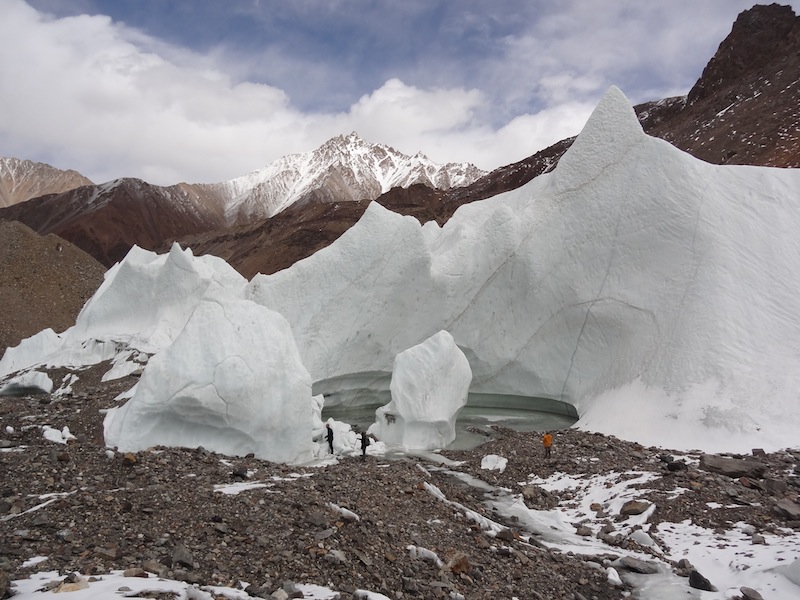
One group went with one of the camel drivers as a guide to get a closer look at the awesome pinnacles on the glacier. Others, including me, preferred just to potter about on the glacier and enjoy its features and those of the surrounding peaks.  We ambled up to a point where a hanging glacier tumbled into the main glacier.  Here there was more activity with occasional ice falls entertaining us.  We sat in very pleasant sunshine for some considerable time chatting while, all the time, taking in the scenery.  Gradually people drifted apart while Ann and I continued to absorb our surroundings.  Eventually I guided Ann back to camp avoiding the many crevasses.  Dropping off the glacier we walked down the frozen river running by the side before climbing back to our rocky camp.

The majestic ice pinnacles of the K2 Glacie

The sun began to lose its power as some cloud drifted in and the temperature dropped.  Soon after lunch I stuck my cold feet into my sleeping bag and contemplated what to do.  I had not brought my diary, my kindle nor my MP3 player with me in order to reduce weight.  I could have done with something.  Gradually others returned with their tales of excitement on the glacier and they were all tired from their effort on such terrain at such altitude.  Glacier walking is not an easy exercise.

I didn’t really get out of my sleeping bag for the rest of the day; it was far too cold to stand around for long.

The following morning was particularly cold, with an in tent temperature of -15C recorded.  The outside temperature would be a few degrees lower.  Our breath had condensed on the walls of the tents and turned to frost.

Fascinating ice features

We were given the freedom to head down as soon as we were ready, rather than wait for our guides.  I needed to get my feet warm, so I set off as soon as I was ready.  I felt energised to be going down and set a good pace to utilise my new found energy and to warm my feet.  Occasionally route finding proved interesting when it was difficult to pick out the small cairns in a sea of stones.  In order to help those coming behind I enlarged some cairns and created others so that the trail became more obvious.

As we left K2 the clouds began to envelope her.

As we descended whips of cloud, like fingers, encircled K2.  She had revealed herself to us throughout our time at the high camps.  Now that we were leaving she was covering herself up again as a sign of farewell.

The journey down to Pakistan Base Camp took four hours and although faster than our ascent it required maximum concentration.  Robin, coming down some way behind, lost his footing and took a tumble, hitting his head on a rock, cutting his arm and shin, hurting his wrist and little finger and denting his pride.  Remarkably, the bump on the head was the least of his injuries.  Patched up by nurse, David, he was able to continue.

From Pakistan Base Camp we had to climb up the steep, precarious path out of the valley and from there on it was a delightful romp back to Chinese Base Camp.  The weather seemed to be deteriorating so those of us who made it to camp first put up all the tents.  Remarkably, as soon as they were up, the skies cleared and nothing untoward happened.

Mo & Katrina

In the evening, after dinner, there was an announcement made.  All the crew joined us for it.  While on the glacier Mo asked Katrina to marry him.  She said ‘yes’, of course.  It was such a surprise and the first engagement to occur on a Himalayan Club trip.  Good luck to them.  Perhaps they should get married on the Mustang trip next year.

Related Images:

The trek in – 30th March – 4th April

Our first day of trek got off to a very slow start.  We were ready by 8.00 but the crew, and the camels in particular, were not.  To save us hanging around we wandered into the village and then headed in the right general direction to a group of stones, which provided us with seats in the sun.  Akbar, Hira and Bishnu finally joined us at about 10.30 and we properly started our trek.

Descending to the Yarkand River

Despite the fact that it was a good path and any gradients were easy it was still a bit of a struggle.  First days often are and after a week of travelling, walking at 3500m is always going to be difficult.  Having come over the shoulder at the end of a ridge separating  the valley with Yilik and the Yarkand River, the walk became more interesting, especially when we dropped down to the river for lunch.  The river cut valley is fabulous with a braided river on the flat bed with steep cliffs on either side.  Looking up towards the head of the valley there were beautiful snowcapped peaks.

The camels finally catch up

Another point of interest lay on the river bed where there were huge lumps of jade.  One rock, Hira estimated, would be worth about a £1,000,000!  Having found one we found lots.  It is hard to imagine that the Chinese have not taken advantage of such a treasure at their feet.  Soon after lunch we reached camp situated in a beautiful part of the valley and bathed in glorious sunshine.

The following morning we continued up the gorge with spectacular cliffs on either side and hardly any sign of vegetation.  As the path, at times, was very close to the fragile cliffs, we kept a wary eye on them in case any rocks chose to dislodge themselves as we passed beneath.  We stopped for lunch where the river cut through a narrow cleft in the rock and where we had to leave the river bed and negotiate our way across the cliffs before descending to the riverbed again.  It made a nice change from picking our way over the stones of the river bed, which you constantly had to watch to make sure you put your foot down safely.  The stones were so varied, and many were beautiful works of art.

It is very difficult to judge distances in this environment.  We can see our target along the valley, or the next bend or rocky outcrop, but it takes ages to reach.  In places the valley, river floor, may be a mile or more across with mountains rising vertically on either side for several thousand feet.

By mid afternoon tiredness was beginning to set in with the feet suffering most from continually being pummelled by stones.  Simon was struggling and Rachel had taken to riding one of the donkeys.  We eventually arrived in camp, a summer grazing area for sheep and goats.  Now there was no grass to be seen and the area was covered in pellets from last year’s flocks.  It was also very windy and not the most pleasant place to pitch a tent.  We were also warned not to pitch too close to the valley edge because of potential rock fall.  During the evening the loo tent blew away, leaving us with only the alfresco version for the rest of the trek.

A slight diversion gave us this view of a glacier

Later that evening the wind died down and we had a peaceful night but as soon as it got light the wind picked up again and the wind chill made it extremely cold.  Rather than wait around in camp and get cold we decided to set off without the crew, some of us taking the slight detour to have a look at a nearby glacier with an impressive snout.  This required us to cross the river which was fortunately frozen at this point.

Approaching the top of the Aghil Pass

Having visited the glacier we set about the task of climbing and crossing the Aghil Pass.  It was expected that it would take us about five hours to reach the top.  With the wind blowing fiercely in our faces it actually took about five and a half hours.  By the time I reached the top I was feeling exhausted.  The wind had made my eyes run and my tears had frozen on my cheeks.  It was stunningly beautiful with rocky, snowy mountains to either side.  We alternated between walking on stony paths and snowfields.  On one of the snowfields we came across the paw prints of snow leopards, two adults and a young one.

Looking down the other side of the Aghil Pass

I had hoped to have lunch on the top and admire the view.  It gave a superb panoramic view of the Karakorum mountains to the south with Gasherbrum 2 and 3 being the most spectacular.  Unfortunately it was too windy and there was nowhere to shelter.  It was disappointing that the conditions did not allow for us to linger and make the most of the situation.  Instead, we focused our attention on getting down out of the wind.  Going downhill I suddenly found renewed energy and soon found a sheltered spot for lunch.

A short cut took us down this gorge

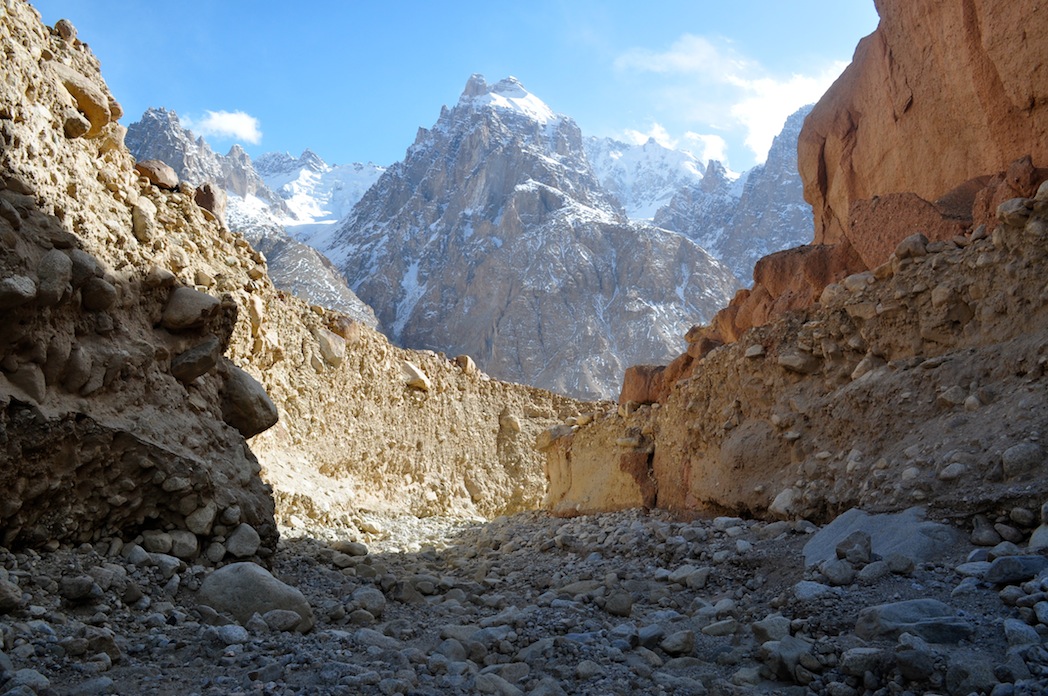
The path down was good and as I was walking on my own I was able to make good progress .  However the lower I got the more complicated it became.  There was no sign of a clear path and it was simply a case of picking my way through a boulder field.  Eventually, I had a choice to make.  The river bed descended into a gorge with steep cliffs on either side.  Should I follow that or stay above it?  Akbar suddenly showed up and directed me into the gorge as it was a short cut avoiding a three hour detour, which the camels had to make.  The river bed in the gorge was strewn with huge boulders and the cliffs looked very dangerous with rocks defying gravity and clinging to the loose material in between.  Sometimes we had to scramble down dry waterfalls, making our descent more interesting.  All the time we could hear rock falls on the slopes above and it felt it was only a matter of time before boulders came crashing down into the gorge.  I felt a little annoyed that we were being subjected to this towards the end of a long day when everyone was tired and, therefore, more likely to make a mistake.

The stunning Shagskam Valley

Eventually we emerged from the gorge into the magnificent Shagskam River valley, with mountains towering above.  Here the river was about a mile across and it seemed to take ages to pick our way across it to our camp on the other side.  It was a super spot for camping among some low bushes with a spring emerging from the rock wall adjacent to the camp.  Over dinner we discussed the merits of having a rest day or continuing to base camp.  The weather continues to be very good and seemed settled so we decided to continue and make the most of it before it decides to break and turn nasty on us.

Walking along the Shagskam Valley

The next day was spent entirely walking along the Shagskam river bed across a mixture of stones and large areas of frozen river.  It was much easier walking on the ice as the stones again proved very tiring on the feet.  It seemed to go on for ever and while we were walking we had to concentrate on our feet and not take in the beautiful scenery around us.  It was very dispiriting to not appear to make any progress.  At one point in the morning we had to de-boot in order to cross the river.  We all had water shoes in our kitbags but Akbar had told us in the morning that we would not need them today.  The water was extremely cold as it was flanked on either side by snow and ice.  Negotiating the pebbles without shoes protracted the crossing.

By lunch time we had only covered half the distance to camp.  Those of us who were the first to leave after lunch were instructed, for some inexplicable reason, to climb above the river and drop into a gorge to avoid the river close to the left bank.  Obediently, we followed instructions only to find Akbar and the rest of the group following by the water’s edge.  The bonus for us was that we saw some fantastic fossils.

We reached camp late in the afternoon and pitched our tents in the strong breeze, which seems to be a feature of each afternoon.

During the evening I had discussions with Hira, Akbar and the camel men about what we might achieve on the glacier.  Hira was very optimistic and determined while Akbar seemed less enthusiastic.  It turns out he has never been above Italian Base Camp because he has not encouraged it and groups have turned back.  The truth of it seems to be that Akbar does not like the cold and does not fair well at altitude so he encourages groups to turn back at the first opportunity.

The camel train walking up the Sarpo Lago Valley

The next morning we continued along the river to the junction with the Sarpo Largo River where we climbed up on to a shoulder above the river for our first view of K2.  By the time we got to the viewpoint the cloud had begun to build up and although the outline was visible it was not very clear.  The mountains around it were pretty spectacular but K2 stood out head and shoulders above them.

Dropping back down to the river we continued towards Chinese Base Camp, stopping for lunch on the way.  After lunch we had a further three hours of sole destroying trudge into camp.  Along the way we had to cross the frozen K2 River, the most dangerous to cross in the summer when the waters thunder off the glaciers above.  On the frozen river lay the corpse of a Kiang, a wild ass, which had fallen victim to a snow leopard, the stomach and the heart being the only meat taken.

Robin at Chinese Base Camp

Chinese Base Camp, at 3900m, proved to be a very cold place at night and it was necessary to wear my down jacket for dinner.  Taking ourselves off to bed fairly early we were woken at 9.45pm by a stampede of camels through the camp.  It was all to do with sex!  As they ran at full tilt through the tents, the guy ropes were ripped out.  The crew were called to deal with the rampant animals and it took them a while to round them up and lead them well away from camp.  Those who witnessed the camels said that they were jumping over bushes and could easily have jumped over the tents, which they looked upon more as rocks to run round.  It was quite worrying for them, less so for those of us who remained in our tents.

The next day was a rest day, a day for washing body and clothes, sorting kit to take on to the glacier and relaxing in the glorious sunshine.  Bliss!

The food on this trek has been amazing and some of the best and tastiest I have had on any trek.  We do not miss the cooked lunch, nor the puddings in the evening.  It was such a relief after the concerns we had before we left home.  All the extra provisions we brought out with us, comfort treats, soups and pasta sachets were all unnecessary.

Trekking up to Chinese Base Camp has been fantastic and one of the things, I think, that makes it a bit special is the remoteness of it.  When Shipton explored this area he wrote the book, ‘Blank on the Map’.  That is exactly what this is.  There are no villages, no people; we were the only ones there with nobody else in the world within at least 35 miles in any direction.

On the afternoon of our rest day, John Leeson took himself for a walk in the direction of Pakistan Base Camp in the hope of meeting Hira and Bishnu returning from their recce on the glacier.  Just before they met, John needed the privacy of a rock for a few minutes.  Hira, on approaching the rock, spotted two snow leopards about 200m below where John was.  By the time John had pulled up his trousers, the snow leopards were gone and he missed them!

That night we held a quiz in the mess tent with Charles as the compiler of the questions and quiz master.  We all had to dress for the evening, the theme being ‘the boat club’.  I simply wore a bow tie but others went to great lengths to dress up for the occasion.  David acquired some cardboard from the kitchen tent and made himself a boater, as did Chris using reeds from the river bank, but Charles went one stage further turning his silk liner into a 1920s style dress with flexible boobs.  We had a great evening, even if we found the questions hard.  The brain does not function very well at altitude.


Related Images:
Heading for the mountains – 28th/29th March

This morning there were some gun shots near the hotel but we did not find out what had happened.  The fact that a SWAT team was permanently camped in the lobby of the hotel with good views of the square did not really alarm us but raised our curiosity.  Every so often they would go out into the square, armed to the teeth with shields, bullet proof vests, batons and automatic weapons to put the fear of God into the indigenous population.  It was noticeable that all the SWAT team were Chinese.

After a leisurely breakfast we vacated our rooms and boarded our land cruisers for the journey to Kargilik (YeCheng).  It gave us an opportunity to see the extent of growth and development of Kashgar, with massive housing projects on a scale unprecedented in the UK.  The speed and scale of development is phenomenal.

Motorway services!

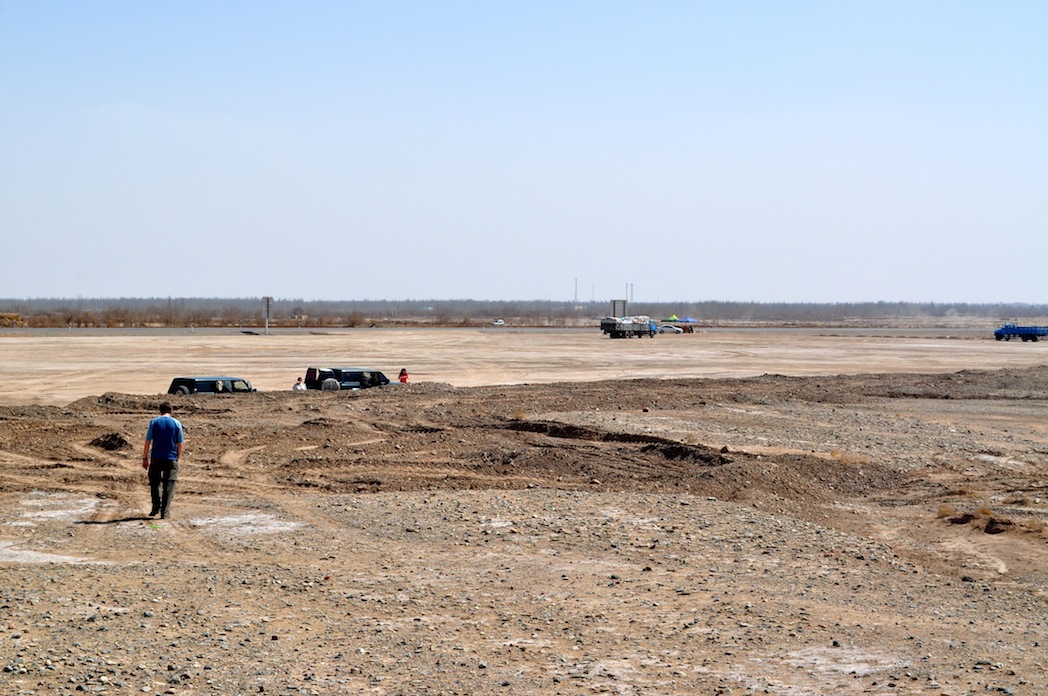
The landscape throughout the journey was flat.  I doubt there was a fluctuation in height more than 10m all day.  To begin with, once we had left the urbanisation of the city, we passed farmland of small fields.  The road was brilliant, brand new and in places cut right through the middle of these farming communities, not providing them with anything but destroying their community and environment.  Where there wasn’t farmland, there was a barren, stony, infertile wasteland, the Taklamaken Desert, the second largest desert in the world.  Gradually white, snowcapped peaks  came into view on our right, although we did not venture much towards them but ran parallel with them.  The further we went the more barren the landscape became.  We stopped at a ‘services’.  I use the term loosely as it was nothing more than a flattened area of desert awaiting development.  Soon, a railway ran parallel to the motorway linking Kashgar to the cities 5000km on the other side of China.  These new transport communications help speed up the colonisation of the west by people from the east, given financial incentives from the government. It is so easy for the Chinese to move huge numbers to the west and swamp the indigenous muslim population.  It is hardly surprising that the Uygars are unhappy and feel the need to make their feelings known from time to time.  Hence the need for the Chinese to make their presence felt with SWAT teams and over zealous police surveillance. I think the Chinese philosophy of ‘progress at any cost’ was summed up when the motorway we were travelling on,  scythed through the middle of a cemetery with no regard for the feelings such action might produce.

Electricity Hotel

On reaching Yecheng, our vehicle took us to the strangely named Electricity Hotel.  Having disembarked our driver received a call to say we had to go to the police post to have our passports registered.   This took quite a while as our names were carefully written into a register.  Job done, we returned to the Electricity Hotel, got out of the vehicles and planned settling in when Akbar told us we were staying in another hotel.  Returning to the vehicles, we drove the other hotel, a cavernous, empty place which we discovered had no water.  Akbar decided we could not stay there so we returned to the Electricity Hotel and settled in.  It is not very clean.  The walls have damp and peeling wallpaper and there is a musty smell about the place.  One room had dried vomit down the wall adjacent to the bed.  Most people rearranged the furniture to avoid coming into contact with anything unsavoury and, just in case the beds were infested, many of us used our sleeping bags.  Part of the problem was that the tourist season has not really started yet, so most hotels are not open and those that are have a certain aroma of being shut up for several months. It is a shame that they have not learnt to do maintenance work during the off-season.

Having settled in as best we could we decided to go for a walk and explore the town, which was much bigger that I imagined.  I thought it was going to be a bit of a one-horse town but it has a population of several hundred thousand – not bad for a city built out of nothing in the desert.  We noticed a lot of soldiers and police on the street corners as we drove around and were warned not to go too far from the hotel as a couple of weeks previously there had been a bomb, hence the military presence.  It was not unpleasant walking around, although it was as though the circus had come to town and we were it!  We were the only white faces in town and we appealed to the children coming out of school.  We also appealed to a member of the Chinese Secret Police whom we spotted following us.  He was wearing a brown leather jacket and kept speaking into his lapel. There were five in our little group and when we got together with others we discovered that they too had been followed and in each case the followers were wearing brown leather jackets.  Hardly very secret!

In the evening we went to a restaurant for another banquet!  Realising we were not getting enough exercise we played on an exercise park, putting off the inevitable return to the Electricity Hotel for as long as we could.

Looking south from the top of the first pass

We left Yecheng after breakfast and drove south across the desert, eventually reaching the foothills.  From now on we steadily climbed up a series of hairpin bends to the 3150m summit of a mountain pass.  The view over the other side was superb and extensive.  A huge wall of snowcapped mountains on the horizon with orange and red mountains in the foreground.  From the pass the road, still a very good one, dropped dramatically to the valley floor below to follow the Kudi River.  We stopped for lunch in a village, which preceded a lengthy stop at a checkpoint.  All the time there were lorries thundering up and down the road, those going up empty and those down full of iron ore.

Having passed through the checkpoint we began to climb for the second time.  We stopped to view the line of the original silk road half way up a cliff face.  It was hard to believe that anybody would consider travelling on such a route.  One of the vehicles failed to join us at this stop as it had had a puncture.  This delayed us a little.  Simon went on walkabout and when we left we were all convinced that he was somewhere ahead of us on the road.  In fact he was behind us.  Unfortunately, one of the other vehicles picked him up and he was soon repatriated with us.  We tried to lose him and give ourselves more room, but failed.

The road 'work in progress' running alongside the frozen river

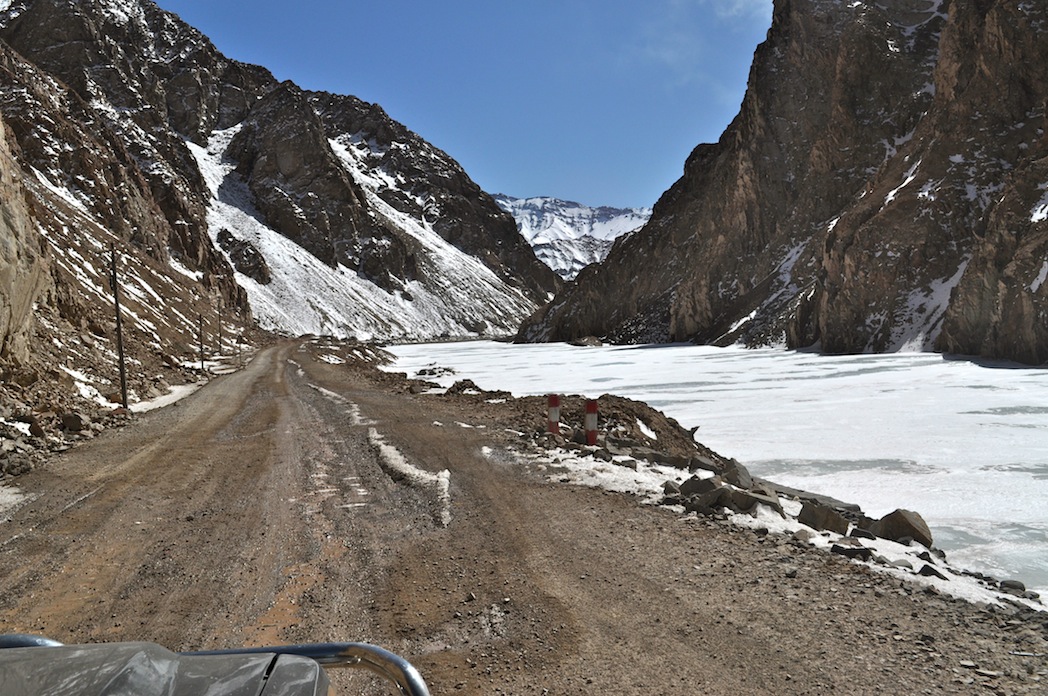
Soon the good road turned into a ‘work in progress’, which slowed us slightly.  One of the other vehicles kept having power problems and overheating so our progress became very stop/start for the remainder of the journey.  We eventually reached the top of the next pass at about 4900m but it was far less impressive so we did not bother to stop.  The scenery close to the road was much more interesting with the frozen river running alongside the us.

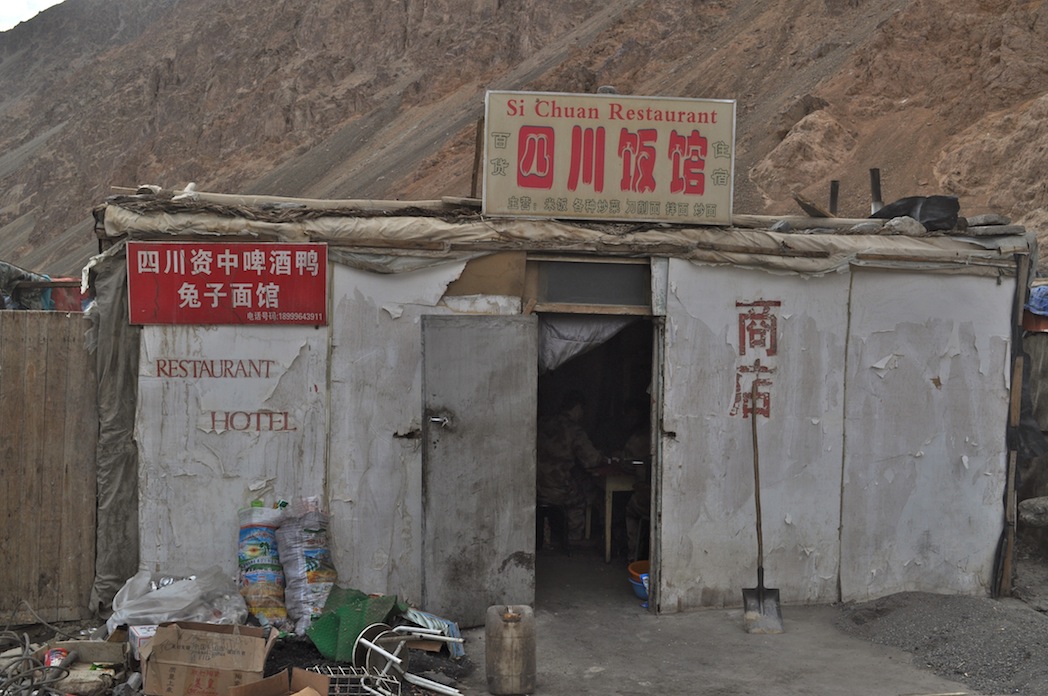
A Hotel! You were lucky. When I was a kid we stayed in.....!!

Eventually we reached the village of Mazar, which is nothing more than a junction in the road and a few shoddily built shacks. If you turned left you followed the iron ore trucks, or right you followed the Yarkand River to Yilik where there was another checkpoint.  Having successfully passed through the checkpoint we travelled a few more kilometres to the village of Yilik and our first camp.  It had been a fantastic, if not rather long journey and because our arrival was quite late some of the group were able to sleep in a village house, while the rest of us pitched tents nearby.  It was a beautiful, if chilly, starlit night.


Related Images:

Kashgar – 27th March

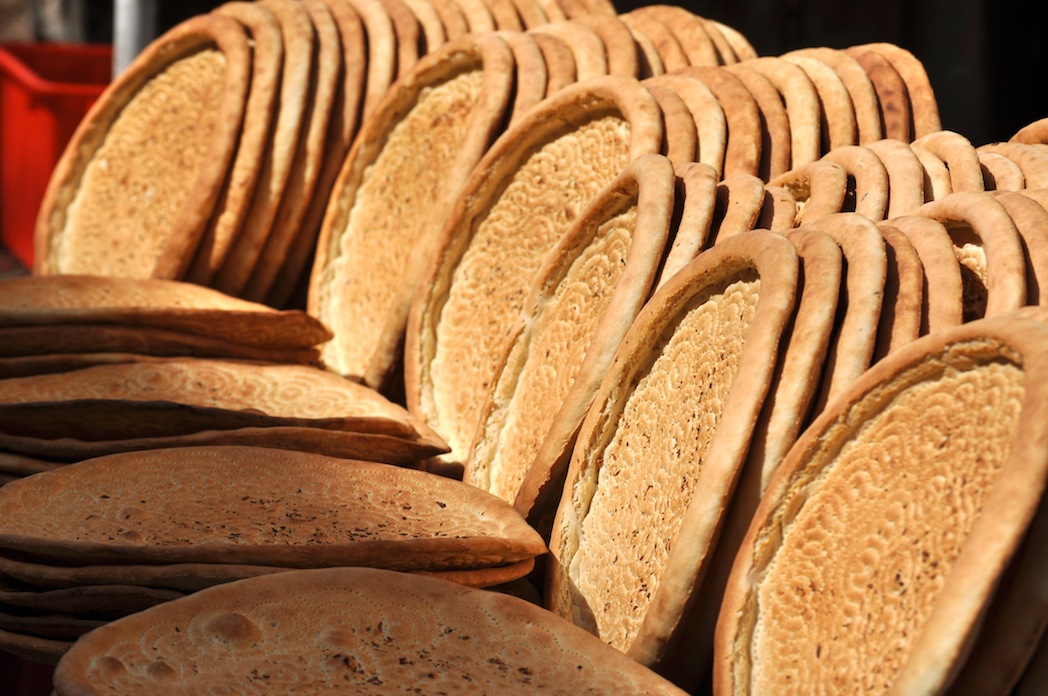
Daily bread

Waking refreshed and headache free, I took myself down to the restaurant for breakfast.  There was hardly anything that I would call breakfast fare and as all the labels were in Chinese, no idea what most of it was.  What I had was quite tasty but also quite strange.

The hotel is comfortable and clean but has some features, which cause amusement and intrigue.  In the bathroom of each room there is a basket by the wash bowl, which contains a variety of products.  I don’t think I have stayed in a hotel before where such products are so readily available – condoms, arousal oils and creams for ‘him’ and ‘her’ with very clear instructions as to which part of the anatomy they should be applied and for how long, and cream to prevent premature ejaculation.  Nothing was left to the imagination.  Needless to say, it all remained unused!

In the room’s information pack there was a price list for every item of furniture and every fitting and every item not fitted, including condoms, so that if you liked anything sufficiently, you could pick it up and take it with you, providing you settled up with reception first.  I did not see anybody leave the hotel with their mattress under their arm,

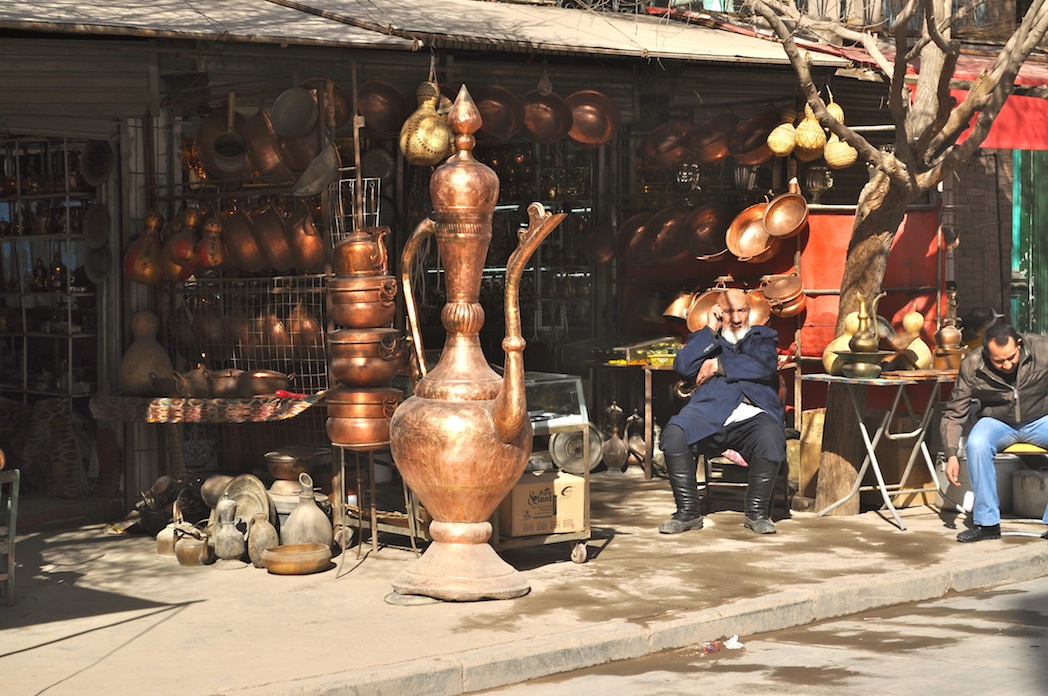
Copper craft work shop

Today we explored Kashgar, a bustling, vibrant city of 4.5 million.  As we walked about the streets we took our lives into our hands.  Nearly everybody has an electric scooter, which is fantastic for keeping the city’s noise levels down but also means we do not hear them as  they aim straight for us from behind.  It is necessary to have your wits about you at all times, even if you think you are safe on the pavement – scooters can and do go everywhere.

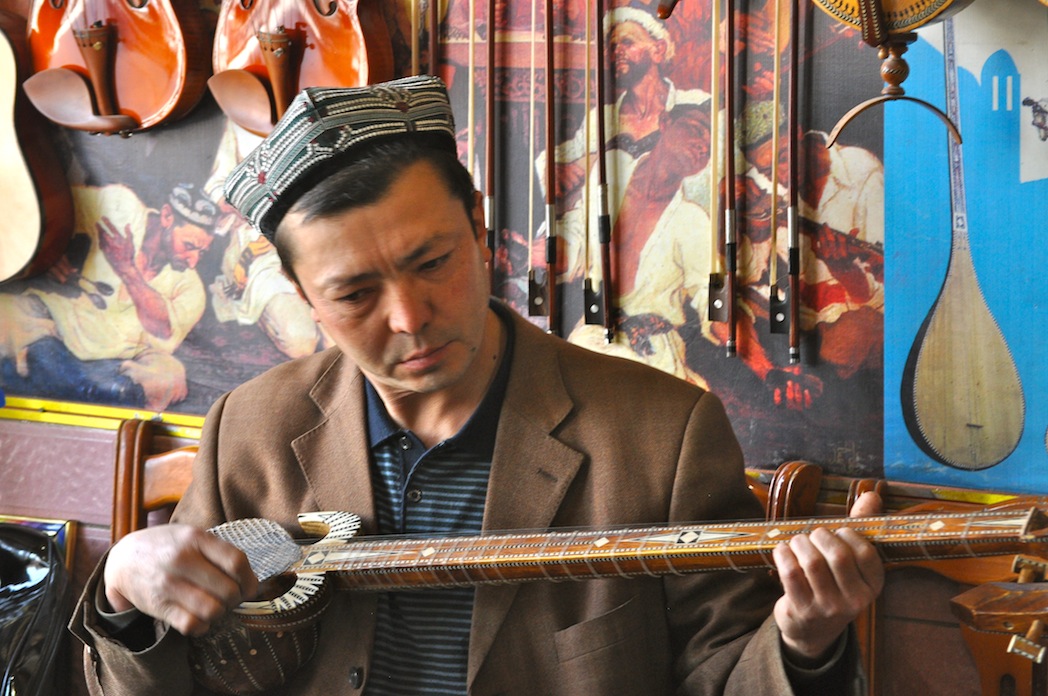
Musical interlude

We focused our attention on the older and more interesting Uygar area of city, calling first at Cotton Traders Road.  This road might have been known for cotton trading in the past but now it holds a variety of handicraft shops, which seem to bunch together according to craft skills.  The first group we came across were copper and tin workers who create vessels of every size and shape and then hammer them to give them texture.  There were jewellery shops, bread shops, carpet shops, hat shops (I bought another, a Uygar hat), wooden crafts and musical instruments.  The latter was particularly interesting as we were given a recital while we were there.

The Idkah Mosque

Around the corner we visited the yellow tiled Idkah Mosque before going on to the old town built on a hill of dried mud.  The majority of the houses were made of wattle and daub, although some are being replaced using more modern materials.  We were led to believe that this would be very interesting and photogenic but, in fact, it was disappointing.  It was a series of alleys with little colour and not a lot going on.

For lunch we went to a very elaborately decorated restaurant, although we were given a plainer room to ourselves.  We sat around a huge round table with a turntable in the middle.  We understood we were having a light lunch but the food just kept coming!

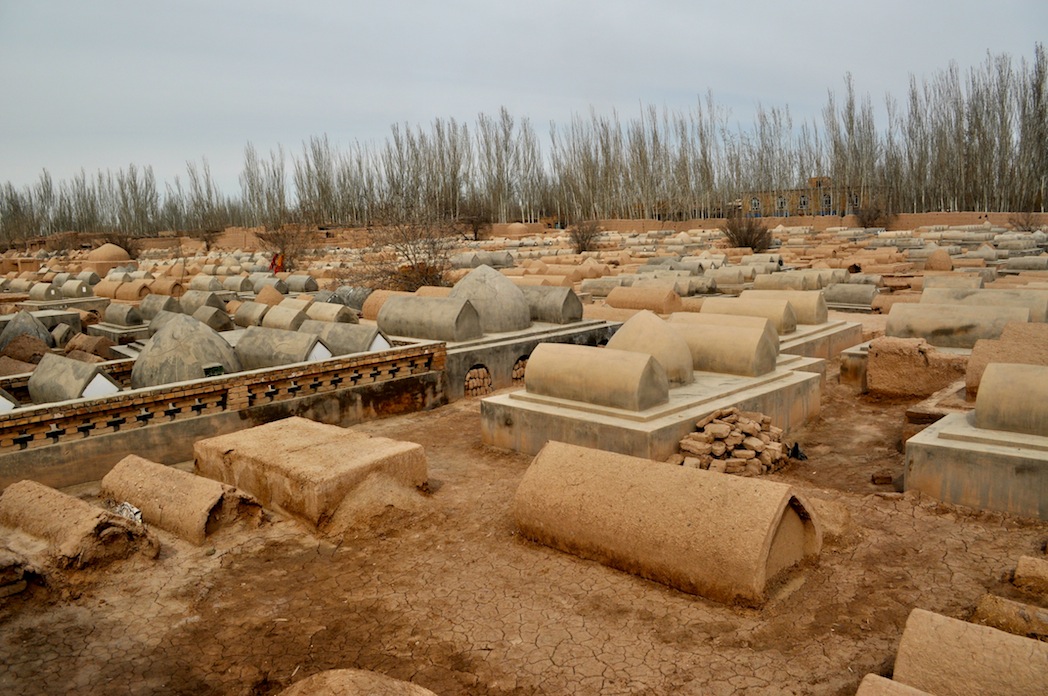
The cemetery by the Aba Khoja Mausoleum

After lunch we travelled a little further afield, using a bus which picked us up from the restaurant.  We went to a jade and carpet centre where there was a workshop for each craft.  Nobody really wanted to go there and it proved a little embarrassing as everything was incredibly expensive.  I guess Akbar, our guide, could not miss out on the chance of a bit of commission.  We did not stay long.  Much more interesting was the Aba Khoja Mausoleum, the final resting place of the Fragrant Concubine, Xiangfei.  There were casks from five generations in the mausoleum, which, with their colourful silk drapes, would have made an interesting picture had photos been allowed.  The cemetery next door for more ordinary mortals was impressive.

Sunday Market stall

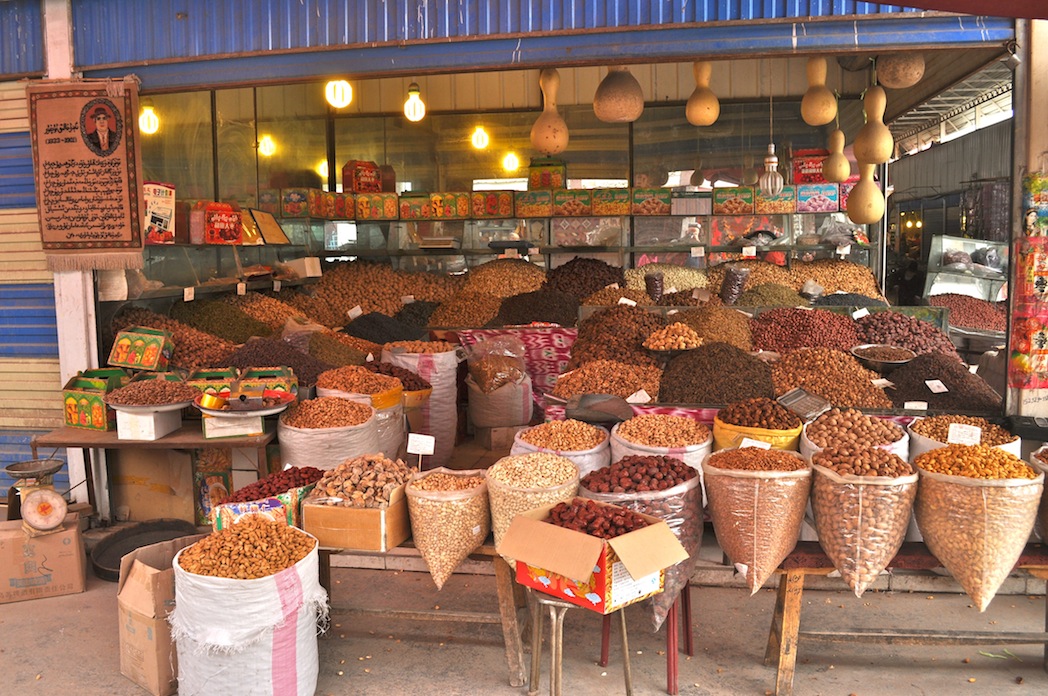
Finally we went to the Sunday Market (open every day but called as it is because that is the main market day) where there was an array of things on sale from shoes to materials, from nuts to stockings, from electrical goods to toys.  I was hijacked from my wanderings to speak to a young man running a pashmina and scarf stall.  He did not want to sell me anything but just wanted to improve his English.  A couple of his mates joined us, who did not speak English, and the questions flowed.  It was an enjoyable way of spending 20 minutes.  Continuing my wanderings I came across a chap who was determined to sell me some binoculars.  I showed him mine but he was not deterred.  He was very persistent, showing me some Japanese and then Russian binoculars.  The price kept dropping to ridiculous levels.  Eventually I just walked away.

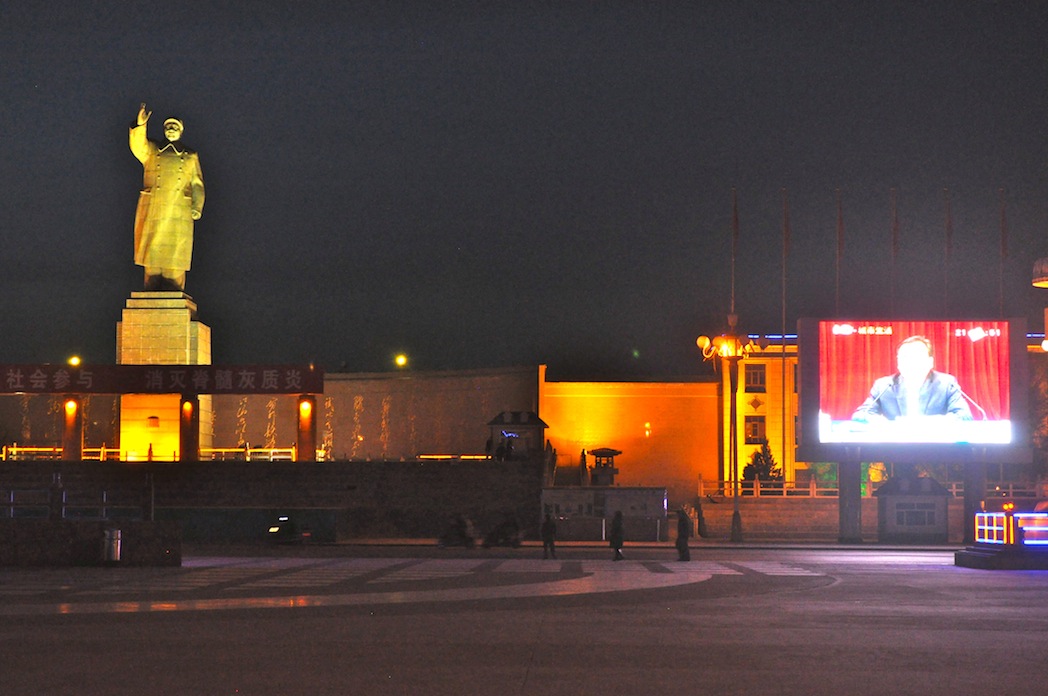
The square at night with a more modern form of indoctrination on the right

In the evening we went to a restaurant which, unfortunately, was not very good.  The food was not very warm, and to make matters worse we could not make the bill fit.  It turned out that they had added Akbar’s meal on to our bill despite telling him his was free.  We also discovered that, because we were in a room on our own, they had also charged us for the use of the room, by the hour.  We won’t be going back there again.

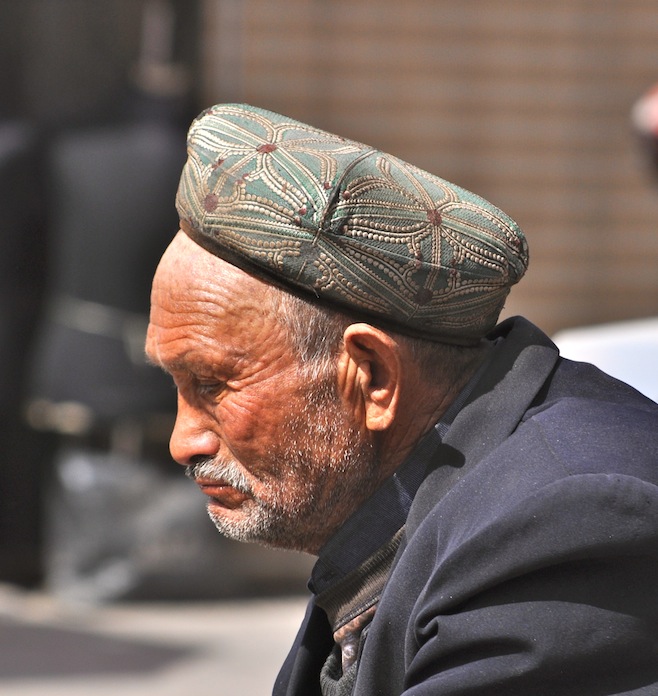
Uygar man

One thing that struck me today was the ethnicity of the people.  The Uygars are not at all Chinese but are very closely linked to Turks from the days of the Ottoman Empire.  The Chinese are all settlers from the east who have come to inhabit the area relatively recently. The Uygar men tend to be very traditional in their dress, particularly the older generation, while the women seem to love big hair and high heeled boots.  Traditionally the women partially cover their big hair with some form of head scarf.

Observing the comings and goings through the hotel reception as we returned from our evening out, I have come to the conclusion that the hotel is a rather expensive knocking shop for businessmen.  There is a night club on the fifth floor where businessmen pick up young girls, take them to their rooms and make use of the facilities and products on offer, so long as, according to the rules, visitors are gone by 1.00am.