Category Archives: News
Old Chapel Training 27th-31st Aug.
Having worked with a group for 18 months and brought their training to a conclusion with a fabulous trip to Turkey, I am inevitably concerned that a new group so soon may prove more difficult to work with. This last week I need not have worried for the Indonesia group are already a fantastic group of young people. I could not have asked for a more positive and responsive group.
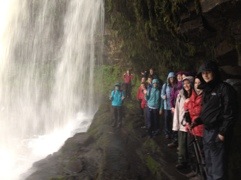
The week started wet, in fact very wet, so I decided they needed to get even wetter and took them to the series of waterfalls in the Dinas Gorge. As we drove over the Brecon Beacons from Crickhowell it became clear that the weather was much worse the further south and west we travelled. Parking the bus at Pen-y-Porth, we walked south along the Afon Mellte, bypassing some of the higher falls to first visit Sgwd yr Elra. Recent rain had made them quite impressive, particularly for the time of year. I don’t think I have ever seen the paths so waterlogged at any time of year as they were this week. Sgwd yr Elra has quite a large lip to it allowing us to walk behind it without getting too wet, other than from the fine spray.

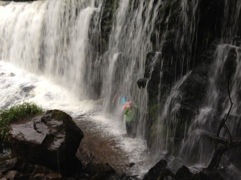
Briefly retracing our steps we next visited Sgwd y Pannwr before walking up stream to Sgwd Isaf Clun-gwyn, which you can also go behind but not without walking through the fall. This was optional for the group but I was pleased that some took the opportunity to take full advantage of the experience.

It was a wonderful half day walk in some fairly horrible conditions.
The weather was much better the following day so the group was split into two for an orienteering exercise on the hills above the Old Chapel on the eastern side of the Grwyne Fechan Valley. This course involves a photograph being taken at each checkpoint. Points are awarded for originality and composition. Depending on how long the groups spend taking photographs the circular course can take anything from three to five hours. Both teams coped well with the clues, took some well thought out pictures and the final results were very close.
By the time they returned from the orienteering they needed to cool down so I took them on a river walk. This involves walking up stream in the Grwyne Fechan river for about 300m just below the Old Chapel. The recent rain meant that the river was running quite full and fast. To ensure that they all got properly wet they had to negotiate a number of obstacles in the river.
The next day was all about team development through problem solving. They had a number of exercises to achieve, often against the clock and with red herrings thrown in to confuse. Everybody had an opportunity to lead and all performed superbly well. Having been doing these for many years I can genuinely say they this group has performed better than any other I can recall. They completed the web in record time, also the Kingdom of the Blind exercise in a staggeringly quick time of 24 minutes. They were so fired up by it that they requested to do it again, changing the roles and still did it in a quick 34 minutes. I have known groups take as long as three hours! Every exercise they tackled they tackled with optimistic enthusiasm, calmness and determination. They gave the leaders the chance to lead, they listened to each other and they made decisions wisely. It was a joy to see them all working so well together. During the day they managed to break a number of records. Their achievements were made all the more remarkable by the foul weather we experienced most of the day.
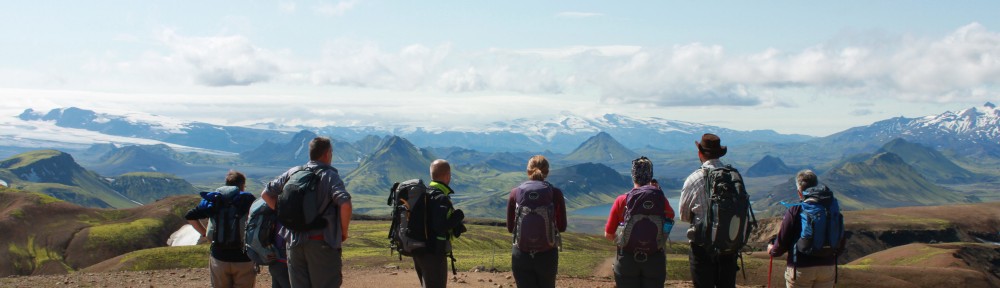
Thursday was a full day out on the hills. The weather improved significantly and we focused our attention on the western edges of the Grwyne Fechan Valley, walking up McNamara’s Road to the col, south along the ridge to Pen Allt-mawr and Pen Cerrig-calch, before descending and heading back to the Old Chapel.
In the evening the group worked on an entertainment for each other and the staff. It never ceases to amaze me how readily they rise to the challenge and produce something worthwhile in such a short time.
The last day was spent working on more team building exercises before a short walk over Sugarloaf from Forest Coalpit to Mynyyd Llanwenarth and the Friday evening journey home.
I think we are going to have fun in Indonesia and they are going to get a great deal out of the experience. Roll on the next training exercise, a two day/one night orienteering exercise on the Malvern Hills.
Leaving China – 17th – 20th April
In the morning Simon greeted me with the news that Rob was suffering badly with D & V, not really surprising after the excesses of the previous day.
Saying farewell to Hira and Keyoum again, we boarded our bus for the border. Occasionally stopping for Rob, we arrived at the customs post after an hour and a half. Rob was in a bad way and Simon seemed to be going down fast. For the rest of us the process seemed far less arduous than on the way in but it still took us an hour and a half to pass through. In that time I had to visit the toilets once and that was enough; they were some of the worst toilets I have ever seen and it was nothing to do with Rob and Simon. How they coped I shall never understand. Before we left the compound our passports were checked again, and again a few hundred metres up the road, on the way up to the actual border.
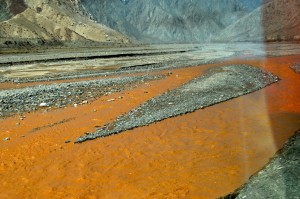
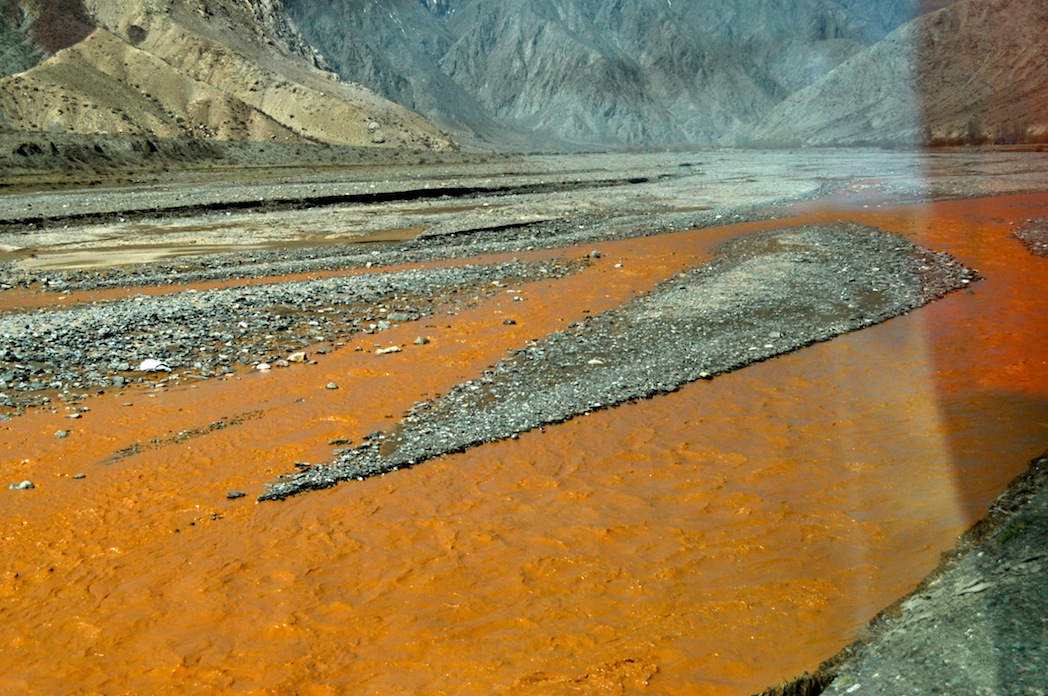
In the main the slopes were clear of snow, certainly on the lower hills, and the rivers were running with orange water, a sure sign that spring was on its way in these hills. There was much less snow and hardly a lorry in sight as we approached the top of the Touroget Pass and the actual border. Fortunately the two buses from Asia Mountains were waiting for us and the transfer was painless, particularly important for Rob and Simon who were really suffering.
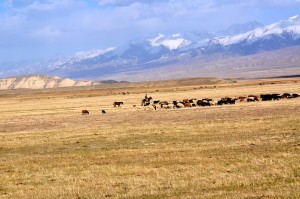
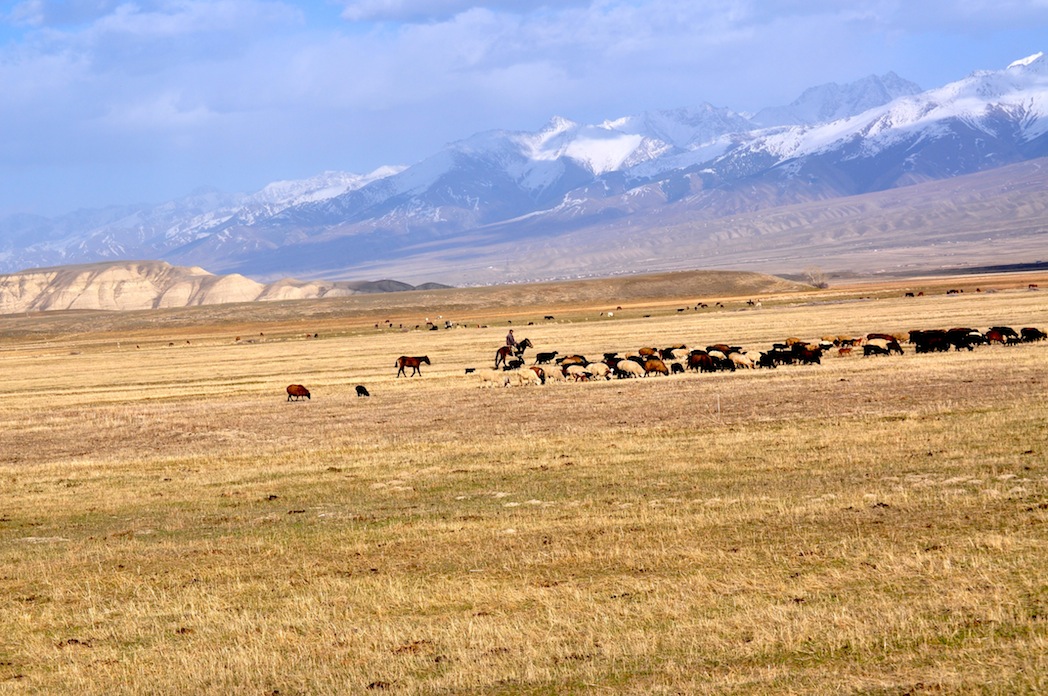
Without the snow the road was unmade and uneven, making the journey to Naryn a long, bone rattling affair. Bring back the snow. The high altitude plateau was now alive with life. Where, three weeks ago there had been a white scape, there were now herds of horses, cattle and flocks of sheep and goats grazing and tended to by farmers on horseback. Woken from their winter sleep, marmots gambolled in the warm sunshine. It was an idyllic scene, always with the backdrop of snowcapped mountains.
Naryn looked very different without snow but the hospitality was as warm as ever, even if the room temperature was lower: the state heating was turned off on the 1st April. We put Rob and Simon to bed and I gave them my Sigg bottles for hot water bottles.
The following morning they felt much better and much more able to cope with the remaining journey to Bishkek.
Leaving Naryn, we crossed one more pass before we started our descent to the plains below.
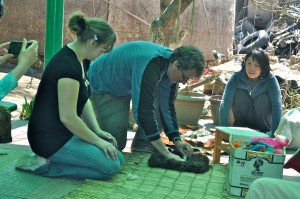
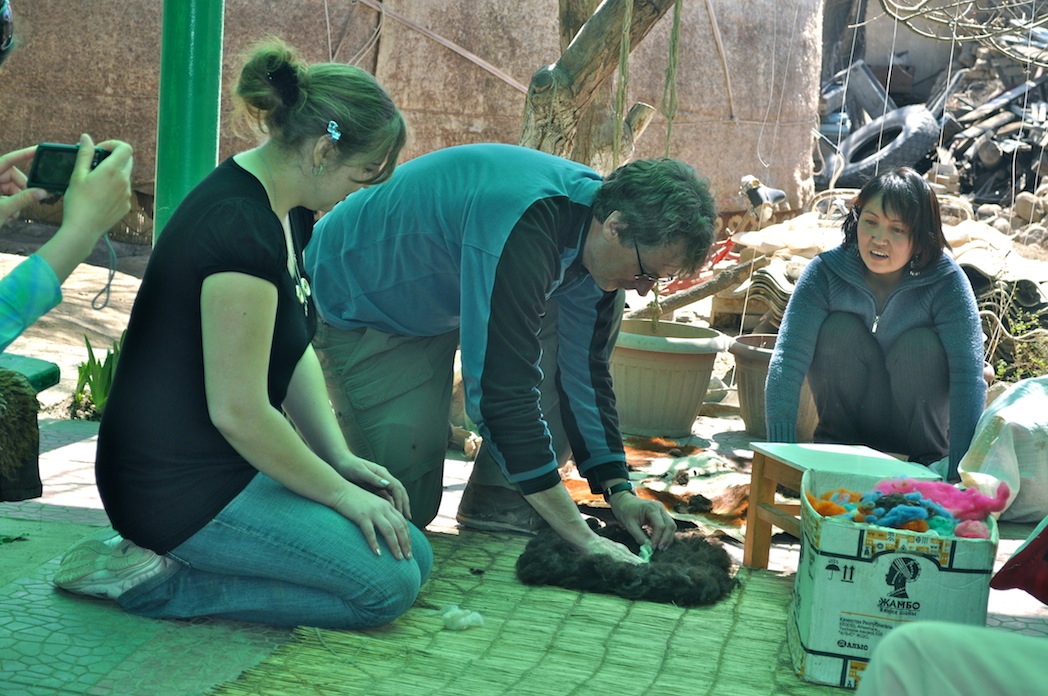
After a couple of hours we stopped at Kochkor again, this time to visit a women’s cooperative felt making cottage industry involving 200 of the village women, and for lunch. We were shown the processes involved, the beating of the unwashed wool, the laying in layers, the creation of a design (Charles had a go at this), the rolling into a reed tube and tying a cloth around it, pouring hot water on the tube and then dancing or jumping on it for about 20 minutes. We all had a go at the various stages. Once unwrapped, soap was applied to both sides and the felt thoroughly washed. It proved to be really resilient and could be pulled and wrung out without fear of it falling apart. The fibres had, remarkably, all knitted together.
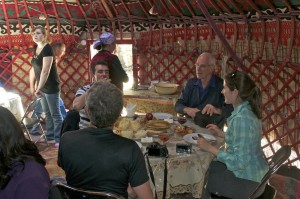
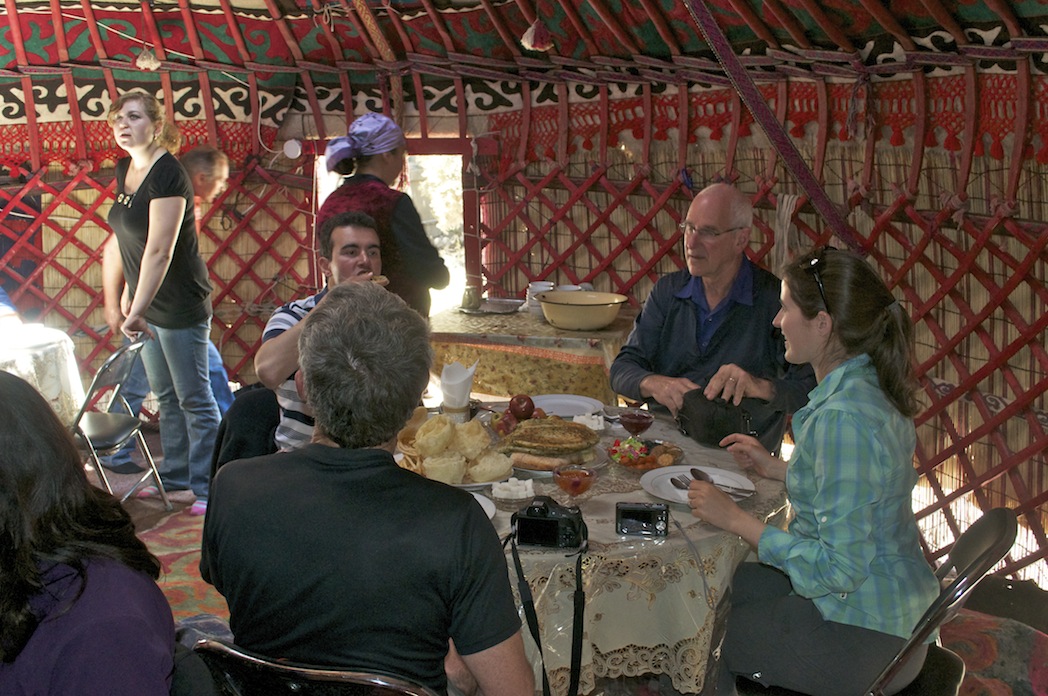
Process completed, we had lunch provided in a yurt in the garden. For a temporary structure it was incredibly firm and was extremely comfortable inside, with carpets on the floor and four tables laid for lunch. As with most meals we had experienced on this journey, the food just kept coming. There was far too much for our shrunken stomachs.
After lunch we visited the shop and most of us were well disposed to spending some money on presents and souvenirs, partly, I suspect as a way of thanking them for the hospitality but also because we were not put under any pressure to buy anything. The products themselves did the hard sell.
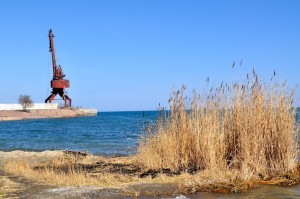
Carrying on with our journey we took a detour to Lake Isyk-Kol, a huge expanse of water (the second largest mountain lake in the world after Titicaca) where the Russians had a torpedo factory and carried out tests on the lake. Typical of most industrial sites in Kyrgyzstan, it now lies derelict and testimony to a past under Russian control. The situation of the lake is superb with snowcapped mountains all around. It has a much better future as a tourist destination, once the economy can allow investment.
The final leg of our journey took us to Bishkek. The sunshine was warm, leaves out on the trees, fruit trees in blossom, men fishing in the river running parallel to the road and marking the boundary with Kazakstan, and couples picnicking on the river bank. Such a different picture through the window of the bus to the one we had only three weeks previously. In just three weeks Kyrgyzstan has been transported from winter to summer.
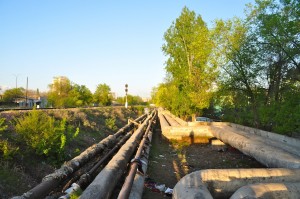
In Bishkek the tree lined streets were green, people wore summer clothes and the hotel garden was bathed in the perfume of lilac. Bishkek looked a lot more attractive.
We had come full circle and it was time to go home.
Related Images:
Richard Parks visits King’s
Ex Welsh International and Barbarians flanker, Richard Parks, visited King’s School, Worcester last night and spoke to an audience of his 737 Challenge.
Three years ago Richard had the conversation with his doctor, which all who lead an active life dread, telling him that his rugby playing days were over. When you have spent all of your adult life doing something you love, it is a bitter pill to swallow. He had a huge void in his life, which needed filling. He decided to fill it with mountains and the outdoors and it was not long before he came up with the 737 Challenge, climbing the highest peak on each continent, trekking to the Geographic North and South Poles and Everest, often considered to be the world’s third pole, all within seven months. If successful, this would set a new bench mark for such challenges.
Having made up his mind to do it, Richard embarked upon 18 months of hard training, something he was used to as a top flight rugby player, but this regime was gruelling. That 18 months also allowed him time to put together a team to support him throughout, to raise funds in a difficult economic climate and to focus on raising £1,000,000 for Marie Curie Cancer Care.
During his 90 minute presentation he held us captivated as he told us of each stage of his challenge from battling with very negative temperatures at the poles to the steamy jungles of Papua, from the glorious sunrises and sunsets to the progress hindering storms, from the elation of achievement to the fear of losing a big toe through frostbite, from sharing treasured moments with team members to the solitude of falling down a crevasse. Richard has experienced it all.
It is a remarkable story told by a humble man from the valleys of South Wales. Beneath that humble exterior is a man with an iron will and determination to succeed, not just for himself but for all those who have given him support and for all those in the future who may need to call upon the services of a very valuable service, Marie Curie Cancer Care.
Christchurch and giving up the car!
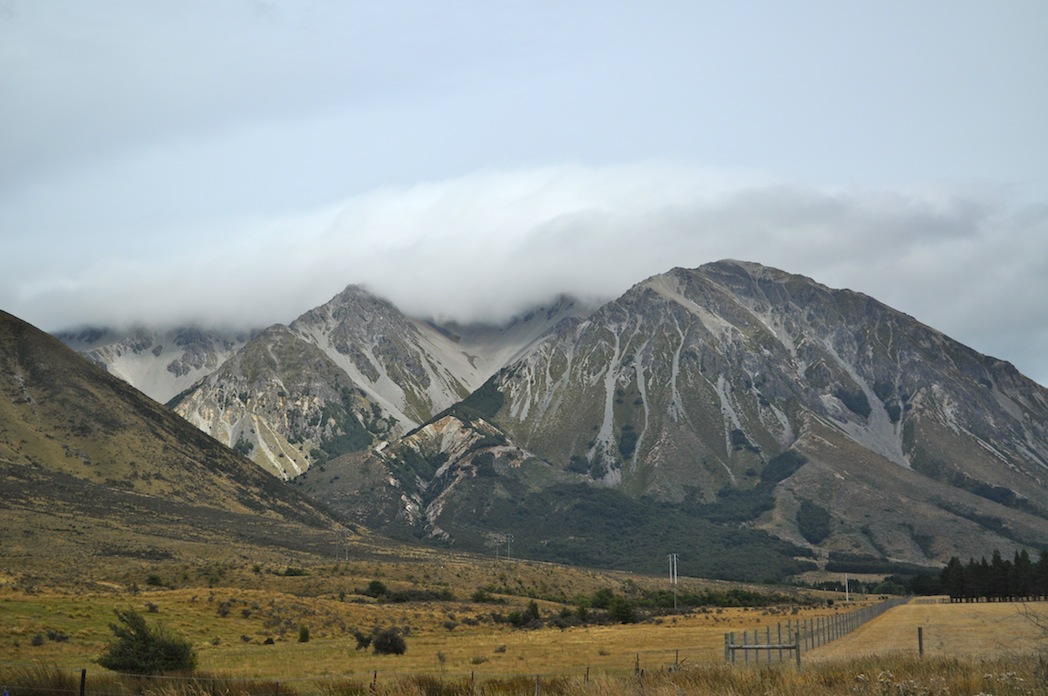
We lazily drove east through the mountains back towards Christchurch, taking diversions to either side of the main road to have a look at anything interesting. The weather was not so good this morning but gradually improved as we headed east and out of the mountains
The mountains in this area are not as attractive as those we encountered further south. There are fewer trees and many of the open slopes are of scree, rather like a quarry. In the winter skiing is a popular activity and I guess the mountains look much better with a covering of snow. There was no evidence of it being a popular ski area; no drag or chair lifts, no alpine styled villages. I don’t know how significant an area it is but the skiers must have to work hard without lifts.
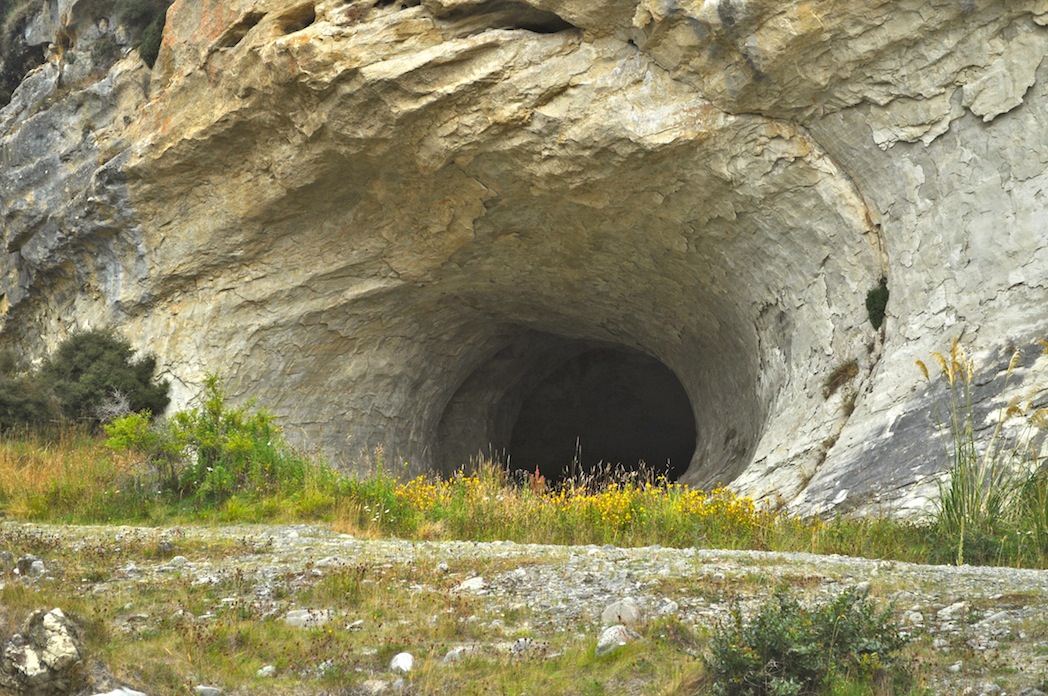
One of the detours took us to some caves with groups of school children all geared up to go caving. The Broken River has carved its way through a band of limestone allowing groups of pot holers and cavers to start at one end and emerge an hour or so later out of the other. I suspect there are other cave systems in the area, perhaps of a more serious nature and not suited to school groups.
Reaching Christchurch around lunchtime we still had some time to kill before we could check in to our accommodation and return the car, so we spent some time at the Antarctic Exhibition near the airport. Entry is quite expensive but, like the other museums we have spent time in, it is well worth it. There is a lot of information to absorb but also a number of fun activities. What is it like to be in an Antarctic storm? Donning rubber overshoes and a padded jacket you can experience a storm in a special room. The ambient temperature in the room is -8. Once the storm starts the winds go up to 42kph and the wind chill drops the temperature to -18. I don’t think they make it as bad as it gets. As I was wearing shorts, I found it a little chilly around the legs.
Quite a lot of the emphasis is on penguins. Did you know that the name penguin comes from the Welsh pen gwin (I think that is the correct spelling) meaning white head? In the penguin enclosure they have blue penguins. Today we could see them clearly, unlike the other evening when we watched them come ashore on Pilot Beach in the dark. They are really small. These at the Antarctic Centre have all been rescued and have some physical defect, a damaged flipper or impaired vision. In the wild they would have perished.
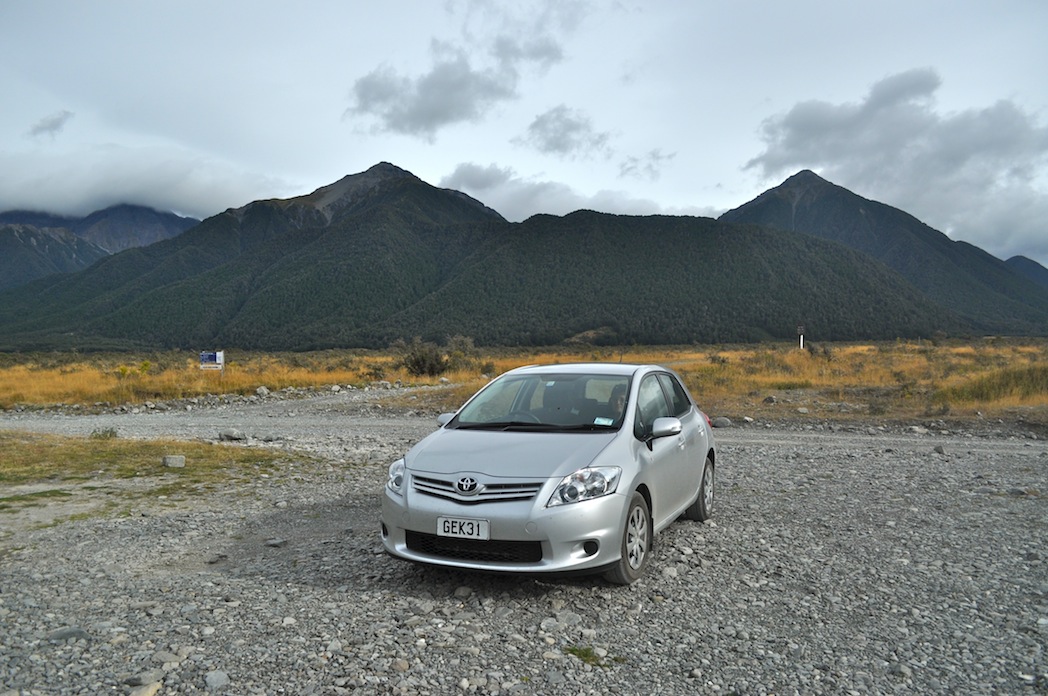
Having checked in to our motel it was time to return the car. There was something symbolic in doing this. It not only took away our freedom but signified an end to our travels around South Island. It isn’t the end as we take the scenic train to Kaikoura in the morning and have some more adventures to experience before we leave the island. I have said it before but driving here has been a pleasure. The other thing that has been most noticeable while travelling around is that there is no litter at the sides of the road, in picnic areas, anywhere. It is not in the culture here to drop litter. I wish it were the same at home. Handing the keys over, nobody wanted to check I hadn’t pranged the car or check that it was full of fuel. I felt guilty that it was not very clean and that I had put nearly 3000km on the clock. It is very pleasant to feel trusted.
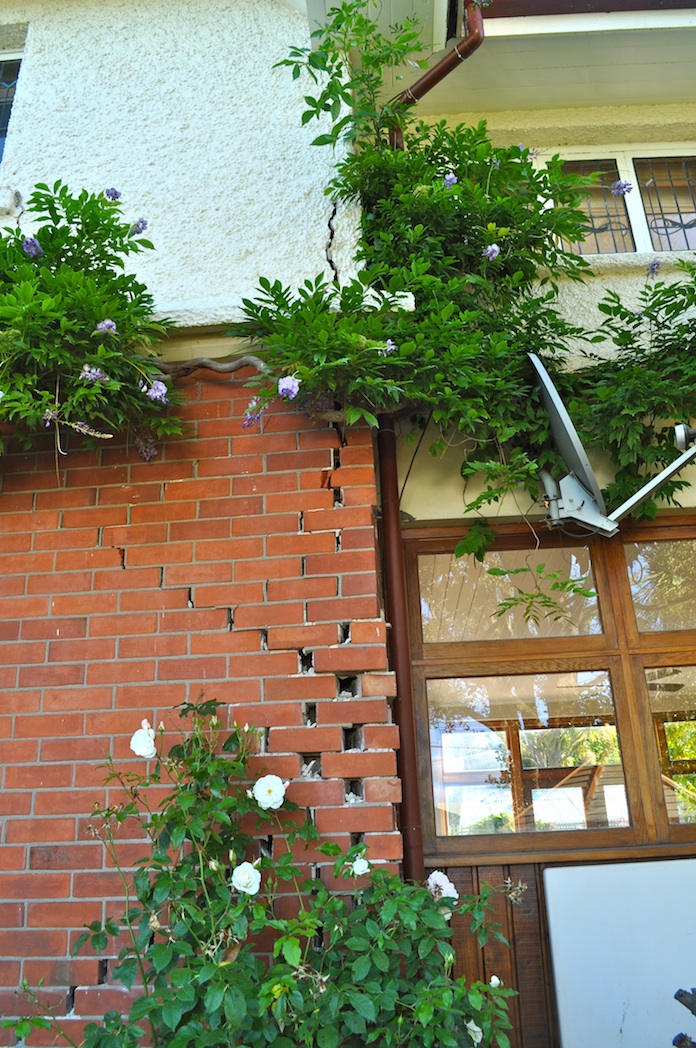
Without the car we found ourselves buying a Thai take away from the most bizarre establishment. We ordered our food from a small caravan and the food was prepared in a converted shipping container. There had been a building there but the earthquake had destroyed it, so they used their initiative and have made it work for them. Driving earlier, and subsequently walking in the area around our motel, there are very few properties that have escaped any sort of damage. Many properties appear to be abandoned and gaps appear where buildings once stood. Travel is disrupted around the city as new sewers and drainage systems are being installed. It is going to take years for Christchurch to recover.
Angela
The full significance of the Christchurch earthquakes is only just beginning to register with the anniversary recently celebrated. We saw part of a new DVD showing the devastation at the time and the ongoing suffering and repairs. Our taxi driver had been forced out of his previous carpet import business in the city centre and his home had been destroyed too. Consequently he is taxi driving to make a living. The heart of this city has certainly been ripped out.