Sardines

Our transport - the sardine tin

Our transport – the sardine tin

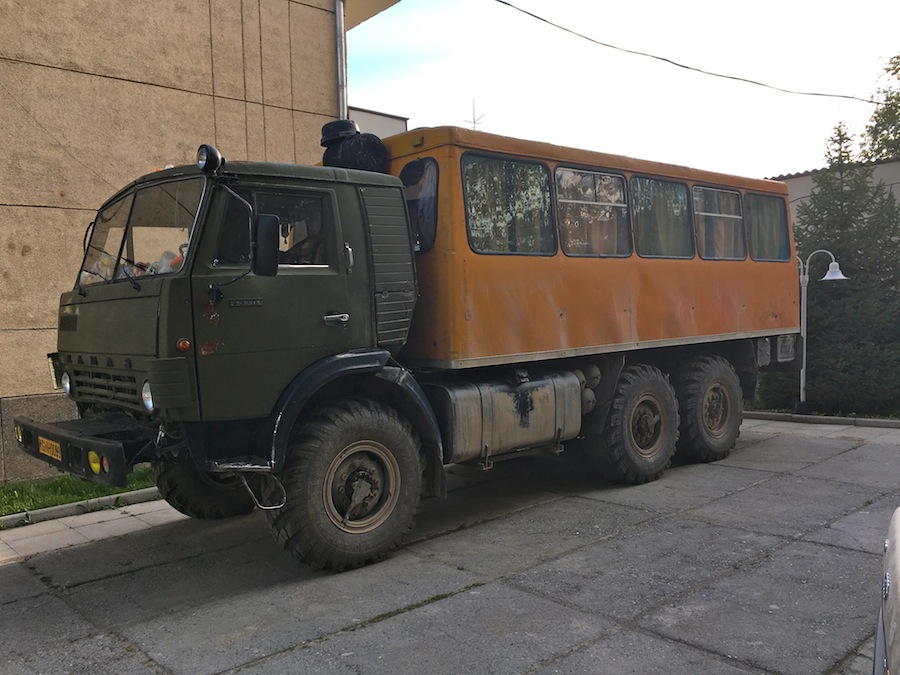
During breakfast Alex disappeared to do something indecipherable with the permits and we were to meet him at a petrol station on the edge of town. When we emerged from breakfast we discovered the blue lorry had gone and there were 26 kitbags stacked on the ground next to the orange truck with just enough seats for us and no room for luggage. Phone calls to the office in Bishkek provided no help and calls to Alex’s mobile remained unanswered. There was nothing to do but get everybody aboard and then stack the bags three high down the aisle and across the front of the cabin. A health and safety issue. We consoled ourselves with the fact that it was only a short journey to the garage where we would be able to transfer the bags into the blue lorry. That was the plan, anyway. What actually happened was, there was no room in the blue lorry, so we had to undergo the whole journey in very cramped conditions.

In terms of kilometres it was not a huge journey but these vehicles did not travel quickly (just as well in the circumstances), particularly up hill, and we had two passes to cross. The road was not metalled and in the latter stages of the journey it was really off road.

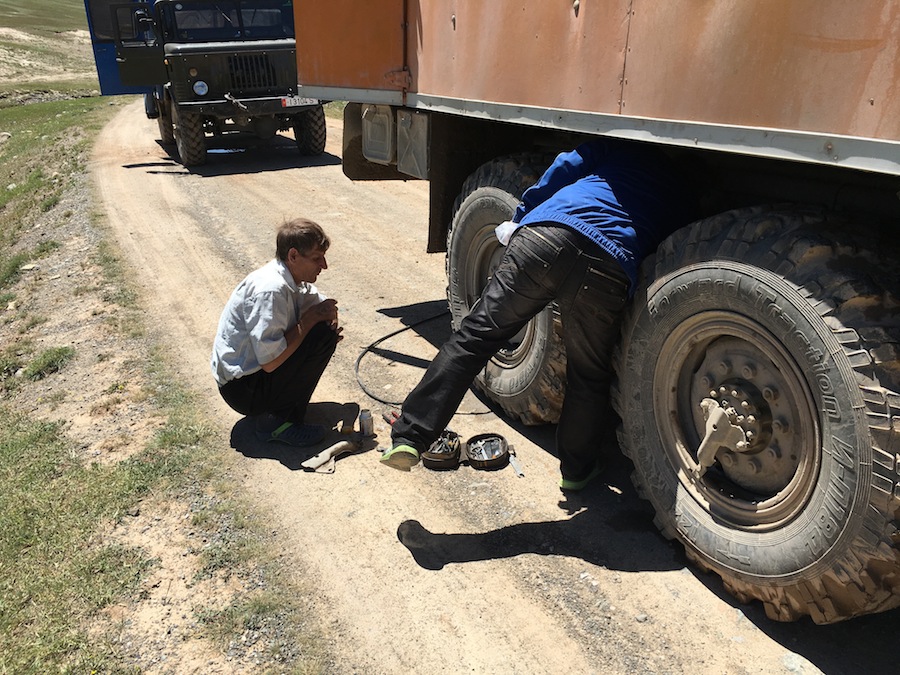
Sasha and Igor deal with the first breakdown

Sasha and Igor deal with the first breakdown

As we were entering an area close to the border with China, we had two passport controls to go through, 10km apart, where they very closely scrutinised our passports. This added at least an hour to the journey. Another hour was added by breakdowns, first to our vehicle that seemed to have a problem with one of its wheels, and then to the other, which had a huge dark stain of black oil on the road beneath the engine.

After seven hours we reached a place to camp, not the original place but that was still a further hour’s rough travel away. The chosen camp took the first day of trek away, giving us an extra day some time later in the itinerary.

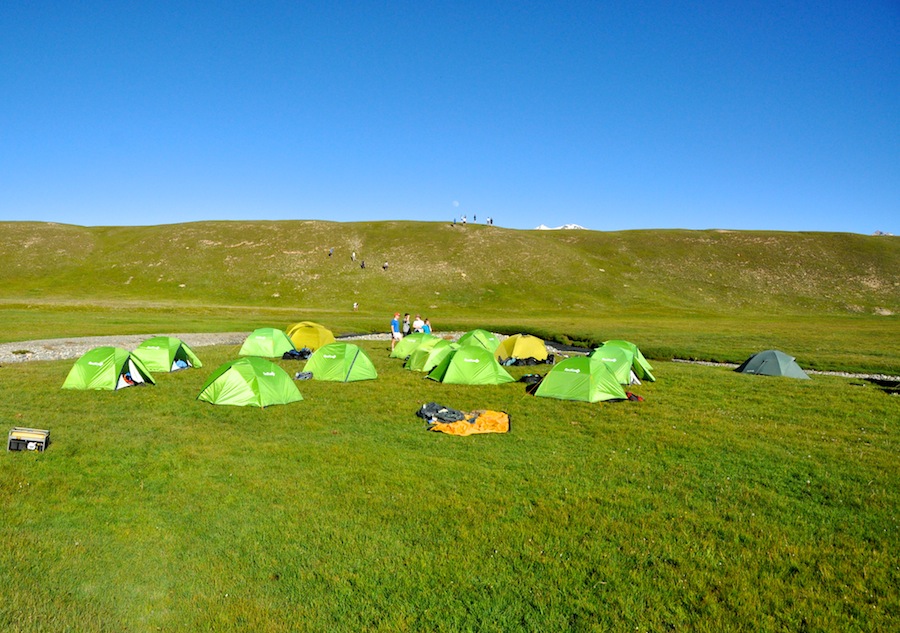
Our first camp

Our first camp

We pitched our tents in a beautiful spot adjacent to a river with mountains all around us, many of them snow capped. Beautiful warm sunshine shone from a cloudless sky. A perfect spot.

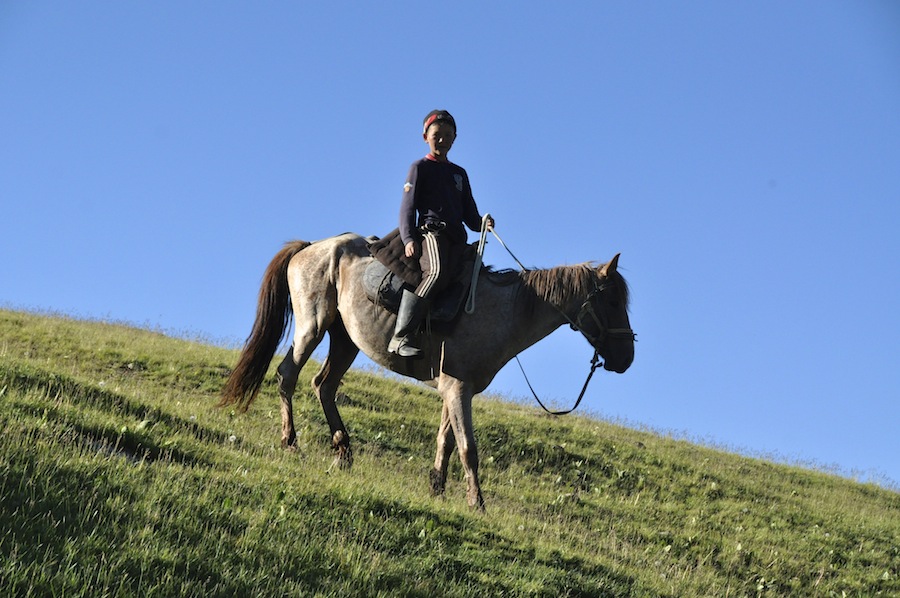
A little way downstream was a yurt where nomadic shepherds were living during the summer months. A man and several children came to see us, the children, all bar the youngest, able to speak some English. One of the children came into camp on his horse and allowed some of the group to ride his horse if they so wished. He was able to tell us that his home is in a village near to Naryn and that he is here helping his his family. He rode his horse from Naryn over two days, a journey that took us seven hours in a lorry.

Nomadic boy on his horse

Nomadic boy on his horse

The man clearly wanted to practice his English. His story was interesting. At the age of nine months his parents brought him to his grandparents living in the yurt. They could not look after him as they both worked. He remained with his grandparents in this remote yurt until he was six when he went to school in Naryn. He obviously did well at school and went on to university. He then went to Ankara and obtained a Masters in Turkish, returning to Bishkek to teach Central Asian Language. At the moment he is doing a PhD in the comparison between The Kyrgyz language and Turkish. From humble beginnings…. He was here to visit members of his family still living in the same yurt, living the simple life looking after their sheep and horses.

As the sun went down, the temperature dropped dramatically.

Naryn – Aruu Telek

Today we focused our attention on Aruu Telek, a home and a refuge for children and mothers. We had delivered a number of items to them yesterday but today we were to get involved, in much the same way as we did yesterday at Kadan.

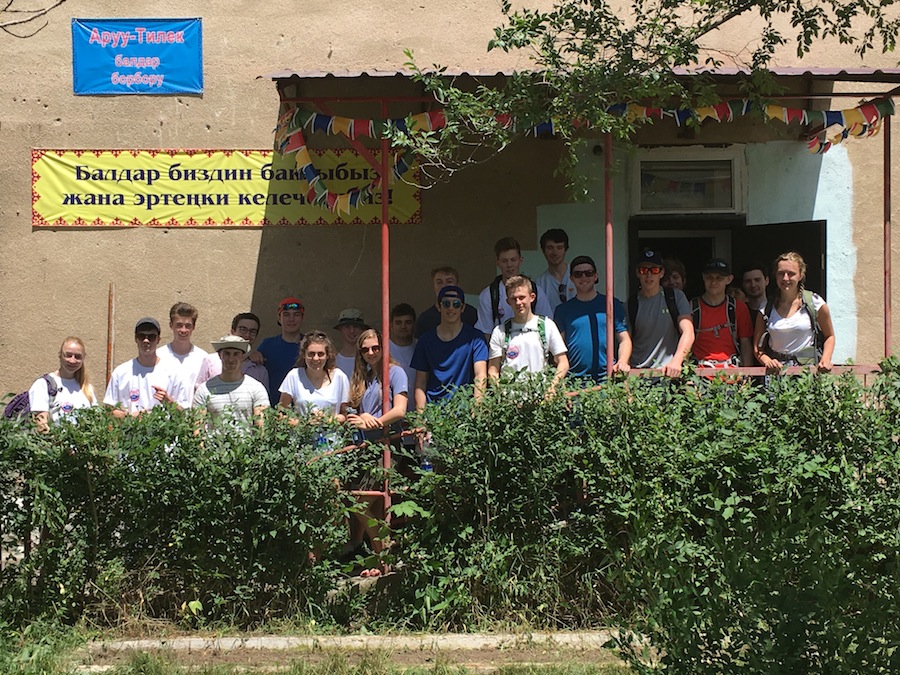
The team at Aruu-Telek

The team at Aruu-Telek

When we arrived we were ushered into a room where the director gave us an introduction to the work of the hostel. It has been in operation for two years and relies very heavily on public donation from home and abroad, as it receives no government funding. The people that use the centre, mothers and children, come from far and wide and tend to stay there for a relatively short period. Problems they encounter that makes it necessary for them to seek refuge are the obvious abuses, but also alcoholism, an inability to cope with the responsibilities of parenthood, a wide range of circumstances. She expressed her gratitude to us and then asked if we could work on three things for the centre:

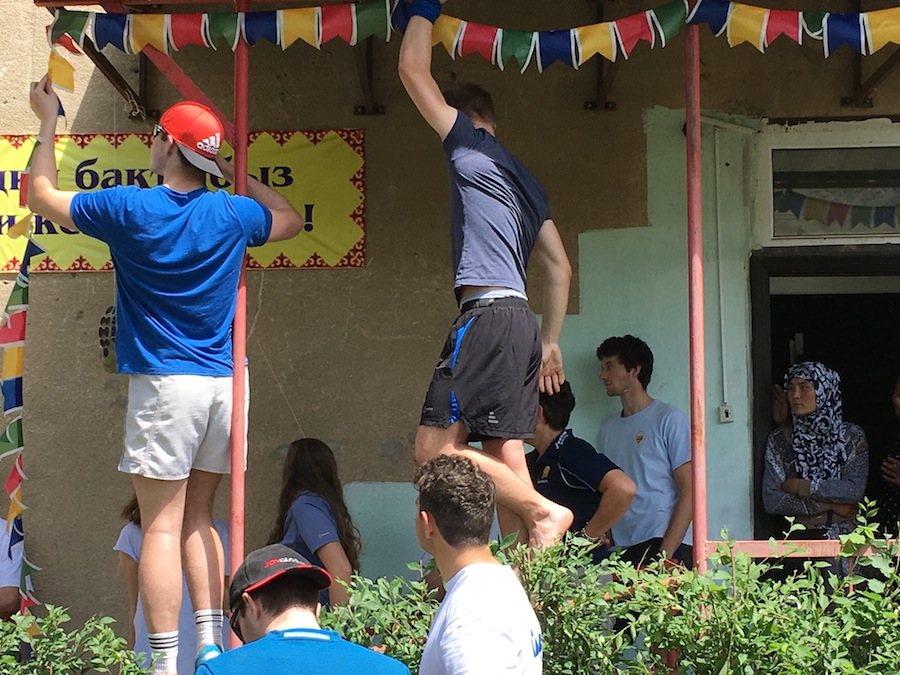
The flags being hung around the entrance to Aruu-Telek

The flags being hung around the entrance to Aruu-Telek

Group 1, she wanted them to make flags to go around the entrance,

Group 2, to set up the play room by laying the rug, making the ball pool and running machine, setting up the TV and washing machine, while

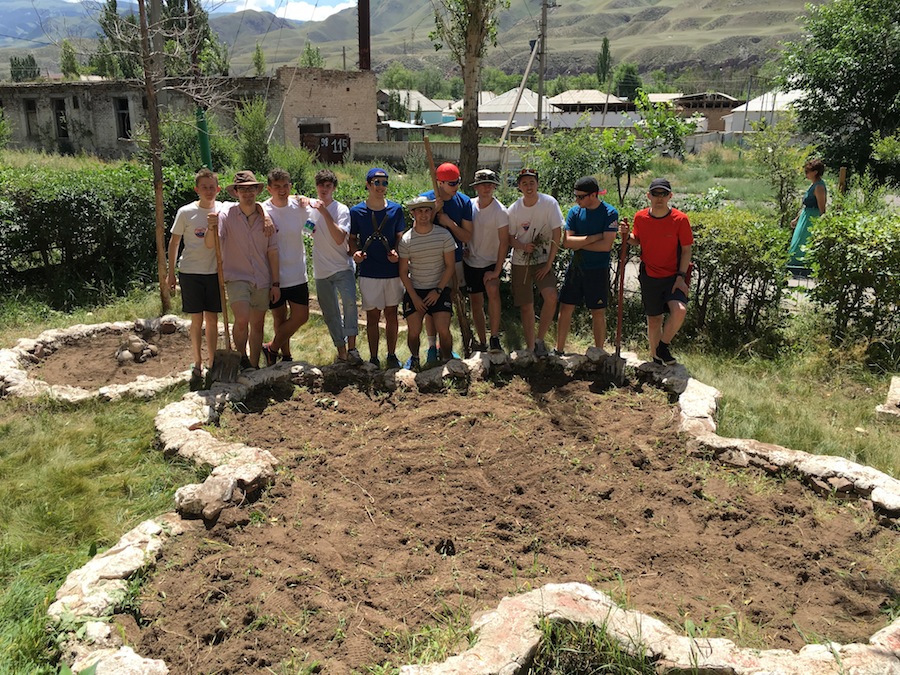
Group 3 worked to tidy up the garden.

The tidied garden and team

The tidied garden and team

All the materials were provided for the flag making, the setting up of the play room was easy, but the gardening had to be done with only two shovels, a pair of sheers and a wheel barrow. All three teams worked exceptionally well and by lunchtime all was done. To be honest, if we had had more tools and appropriate tools we could have done a better job in the garden, but it was not to be. I did offer to buy some plants to add instant colour to the garden in the newly revealed flower beds but Alex, our guide, suggested they could do that for themselves.

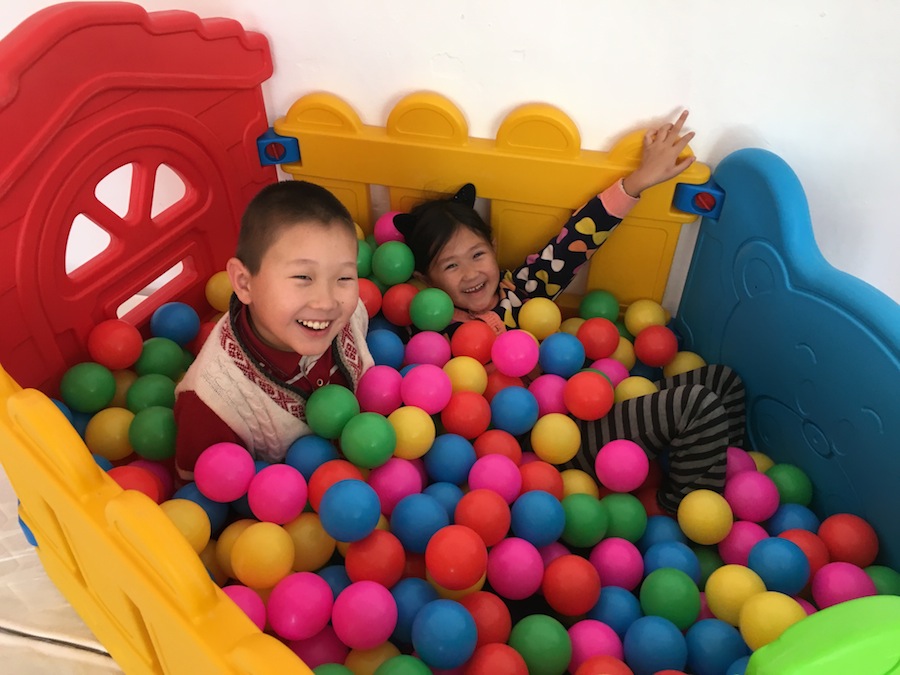
Enjoying the new ball pit

Enjoying the new ball pit

There were a number of mothers and children in the hostel and it was good to see the instant joy on their faces as they played with the new equipment.

After lunch we said farewell to out two minibus drivers as, tomorrow, we head off deeper into the Celestial Mountains in large trucks for the start of our trek. Bring it on!

Naryn

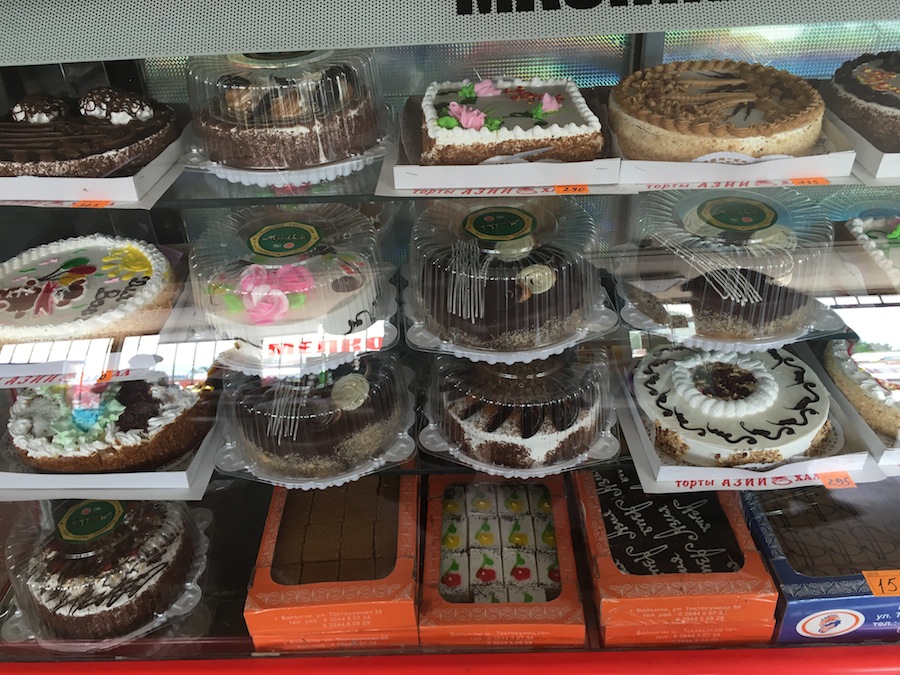
Cakes!!

Cakes!!

Leaving Bishkek after breakfast, we drove to Naryn, a journey of about seven hours. Firstly, we headed east following the Kyrgyzstan/Kazakstan border, briefly entering the latter for about a quarter of a mile. We then headed into the mountains, climbing steadily and stopping in Kochkor for lunch. Just before we reached the home stay where we were lunching we had a chance to explore the busy market town, a hub for the surrounding countryside. Cakes galore in the small supermarkets and I rued the fact that nobody in the group had a birthday. I did find a small bakery with its tandoor style oven producing delicious flatbread, far to delicious not to buy some to devour just before lunch.

Another three hours of steady climbing brought us to Naryn and Celestial Mountains Guest House, our accommodation for the next three nights while we embark on projects in two homes for disabled children.

Wandering around Naryn it soon became clear that there is not a great deal here beyond a fast flowing river, a few small supermarkets in a row selling identical products with independent fruit and veg stalls outside. We were keen to find a bar but none were apparent. Giving up I went back to the house. Shortly afterwards Chris and Alice came back with the news that they had found one.

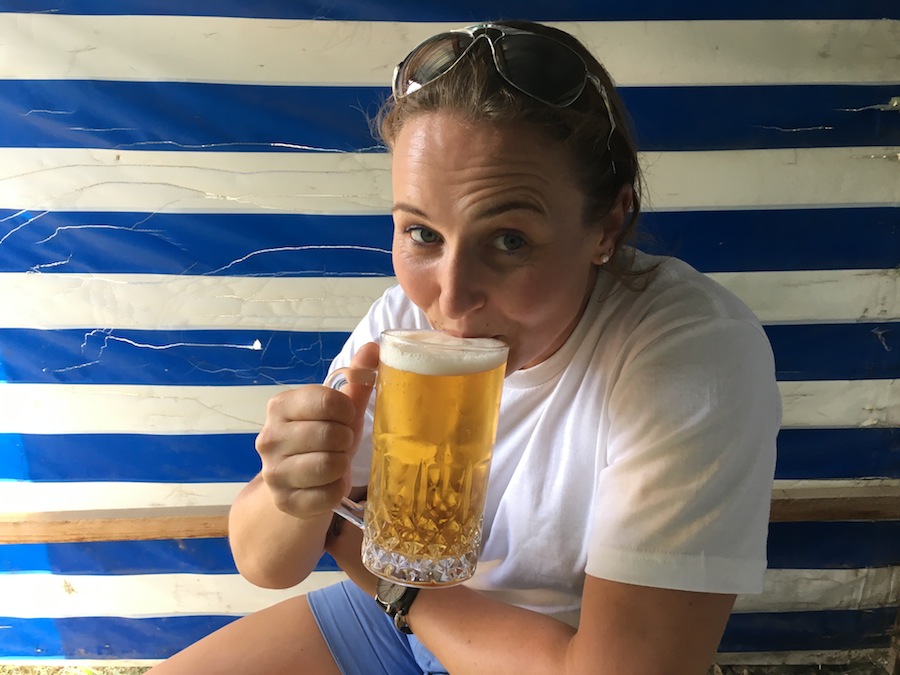
Alice's first ever beer

Alice’s first ever beer

This proved to be a fairly surreal experience. Entering a yard we were faced by two inflated palm trees. Around the edge of the yard were booths with shower curtains across the doorways. Plastic clothed tables with basic wooden chairs were in each booth. Having been ushered into a booth we had some difficulty getting the message across that we wanted beer. Alice, not being a beer drinker, wanted something else but it was impossible to make ourselves understood, so Alice had to have beer.

As we began to enjoy the drink a microphoned announcement introduced a singer to recorded backing music. Conversation was rendered almost impossible but it all added to the quirkiness of the situation.

The following morning we set about achieving our Naryn objectives by visiting two homes/schools/support centres for disabled children. A van full of items we had funded had followed us from Bishkek. I have to confess that I was a little nervous about what to expect. Was it going to be too upsetting? Were we going to be faced with severely disabled children in dire conditions? I was prepared to withdraw if it turned out to be too distressing.

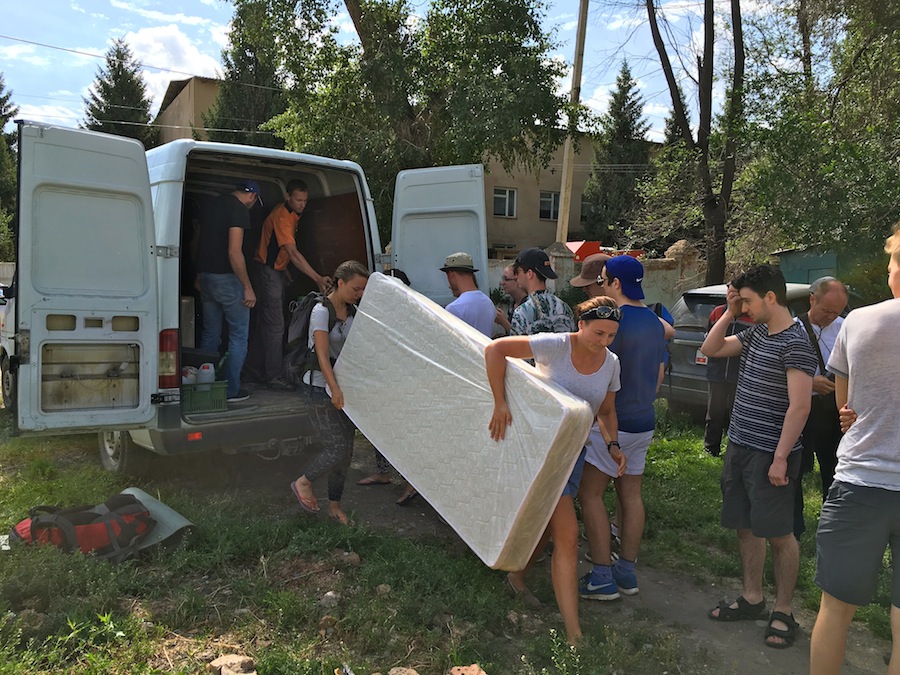
Unloading the van

Unloading the van

The first centre, Aruu Telek, was delightfully decorated but no children. None are resident but there is opportunity for both children and their mothers to stay in times of need. Here we delivered mattresses, a ball pit and a sack of balls, a large rug, a television and a washing machine. During our conversation with the director, she requested that when we returned the next day we might like to tidy up the garden, cut the shrubs and bushes and generally make the place look tidier and more welcoming.

We then moved on to the second centre, Kadan, where we delivered lots of flat packed kitchen units, flat packed shelving units, a huge rug, a music centre, projector, mattresses, and lots of toilet pans.

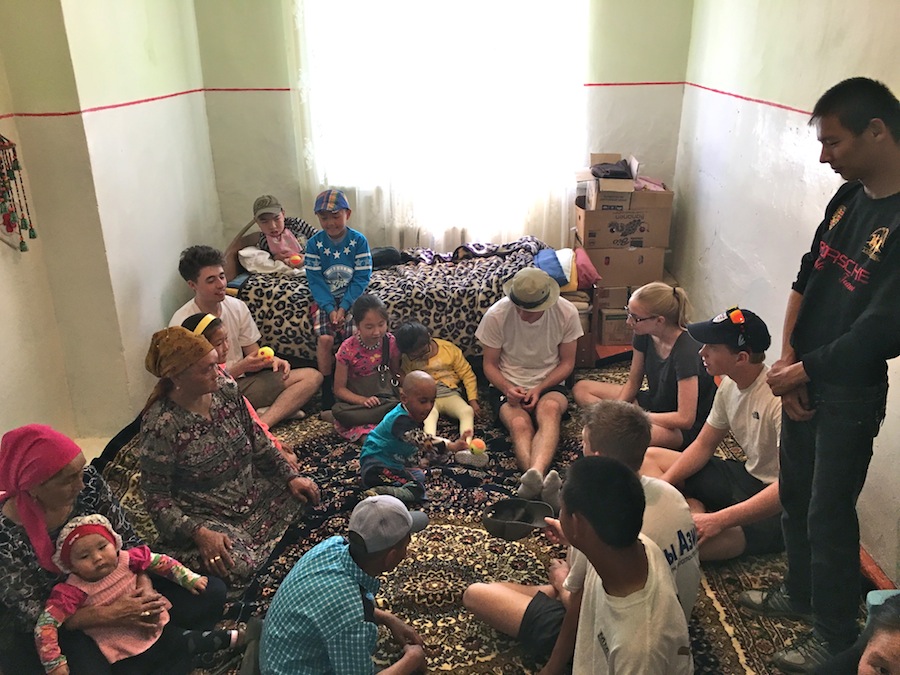
Playing with the children at Kadan

Playing with the children at Kadan

The children, with varying degrees of disability, and the staff were there to meet us. I immediately felt comfortable. Despite their disabilities the children were a joy, so happy to see us, to play and have fun. The King’s students waded in, got down to their level on the floor and played. It was great to watch.

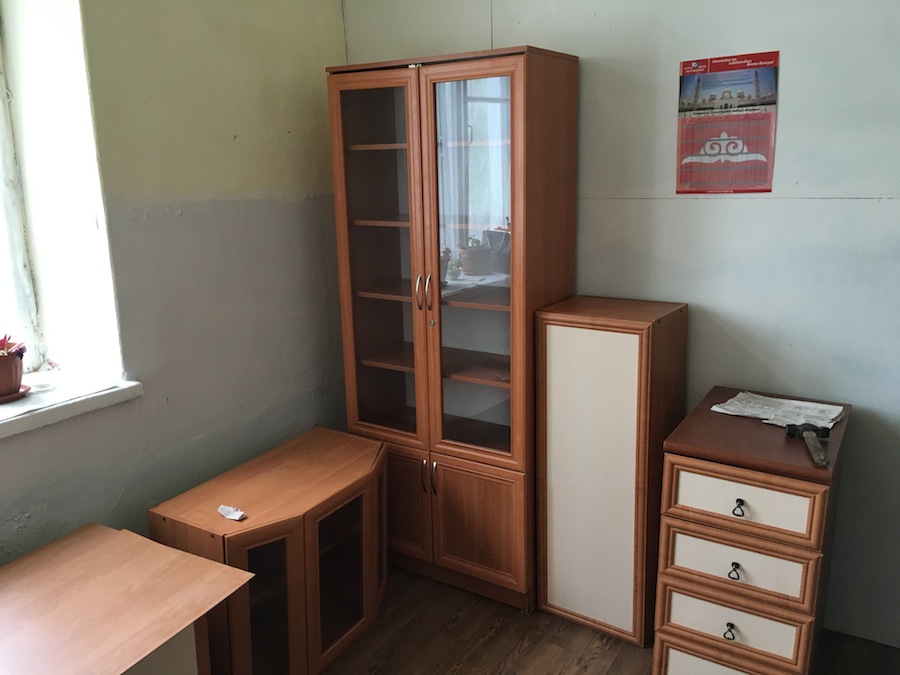
It was decided that our task for the day was to build all the flat packed units, a mammoth task as the instructions were in Kyrgyz and impossible to understand. Organising themselves into teams they set about it with very limited tools. A Sigg bottle made a very good hammer! Each team planned their approach, laid out all the various components in order and worked superbly well.

Some of the kitchen units

Some of the kitchen units

By lunch time they had broken the back of the work. But before we could go for lunch the director wanted to thank us for everything. Part of the thanks included an eighteen year old boy with cerebral palsy singing a song for us. He sang beautifully. This was followed by another boy, again with cerebral palsy but more severely so, performing a sitting dance. It was really enjoyable, yet very moving, to hear and see their appreciation.

When we returned after lunch many of the children had gone home and it was not long before all the units were completed and put in place. They had done a fantastic job. I was really very proud of their achievements and the wholehearted way of their approach, a real credit.

Tomorrow, gardening.

Arriving in Bishkek, Kyrgyzstan

I don’t know how Magda does it. What is it about her that makes people fall ill on a flight, not just on one flight, but two? I have flown with many doctors over the years but it only happens to Mags. First, on the flight from Birmingham to Istanbul one of the flight attendants was taken ill and an appeal went out for a doctor on board to make themselves known. It was a genuine case and the poor girl had to be met by an ambulance and medics to be evacuated before we could disembark.

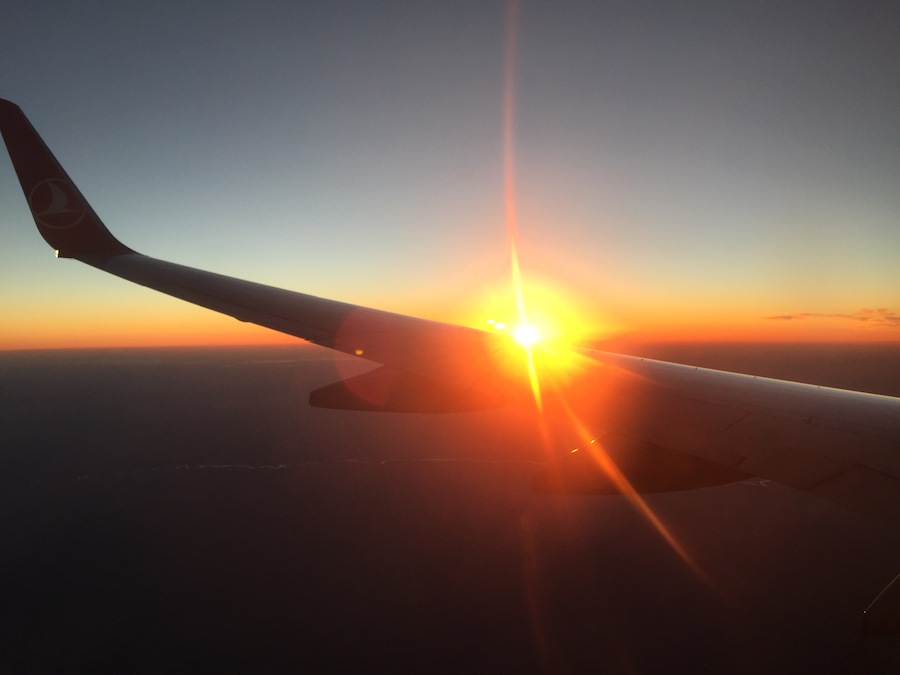
Sunrise en route to Bishkek

Sunrise en route to Bishkek

Then, after a few relaxing hours in a spacious restaurant/bar, we flew on to Bishkek , where Mags was called for again to help a woman who was probably nothing more than overcome by the heat on the plane. It was uncomfortably hot. Remarkably, the woman was married to the man sitting next to her, a doctor, but she did not want to disturb him.

Arriving in Bishkek, a little bleary eyed at dawn we passed through the airport efficiently into pleasantly warm sunshine, to be met by our guide, Ramil. The forty five minute drive into town took us along a tree lined road, behind which stood half built houses in scrubland. As we neared town the density of the trees increased and I was struck by just how green Bishkek is. There are lots of shady avenues, tree filled parks and colourful flowerbeds well tended and irrigated.

Arriving at the hotel we were made most welcome and, despite it being only a few minutes after 7.00am, our rooms were ready. We could also enjoy a good breakfast before resting for a couple of hours.

While the rest of the group enjoyed some rest, I went to the Asia Mountains office in the basement to meet Natalie, my Kyrgyz contact and pay her the money for the wide range of items we had bought for the two orphanages in Naryn and the children’s cancer ward in Bishkek. Our US$5267 had bought a ball pit and balls, child massage mats, furniture, carpets, kitchen equipment, 2 televisions, a projector, bed pans, various picnic outings and 10 air conditioning units for the children’s cancer ward. We achieved so much with our money, and it will make a difference to the lives of so many children.

At 10.00 a money changer came to the hotel and then we went on a tour of the city with Ramil, our guide.

The sun shone and the temperature was rising rapidly.

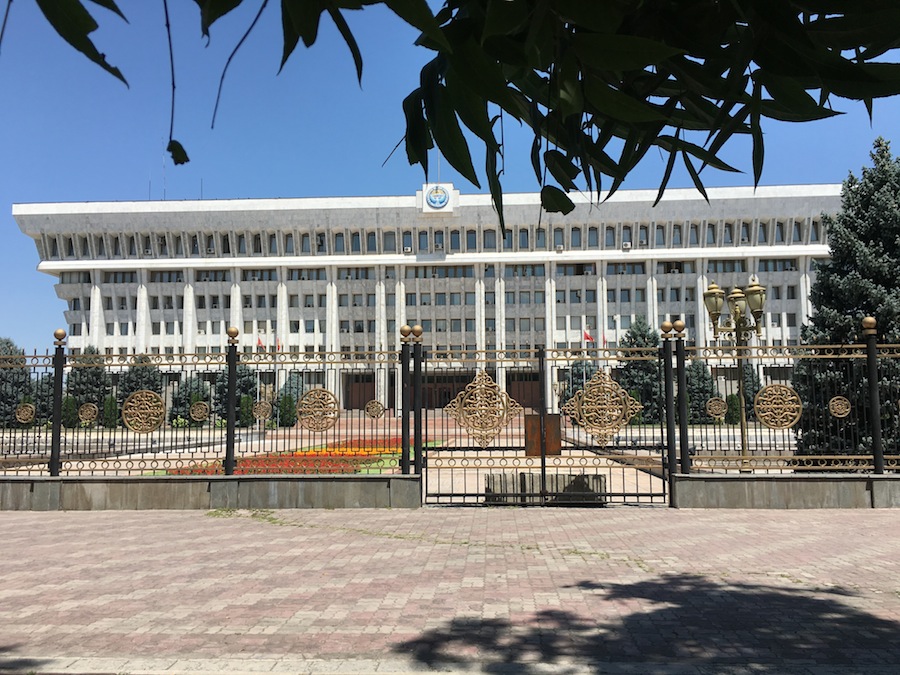
Parliament Building

Parliament Building

Bishkek is s city with very little history attached to it. It was first established in 1825 as Khokand Fortress to protect and oversee trade routes. In 1860 Russian forces helped destroy the fortress and so began Russian involvement in Kyrgyzstan, although the capital at that time was known as Pishkek. Russian control continued to increase over the next decades and in 1926 Pishkek was renamed Frunze, after a Bolshevik military leader that was born there.

When the Russians finally left Kyrgyzstan with the collapse of the USSR in 1991, the Kyrgyz renamed their capital Bishkek.

To the south jagged white mountains, the Kyrgyz Ala-Too range, rise steeply from the plain to heights of nearly 5000m. They create a stunning backdrop to Bishkek.

Victory Arch

Victory Arch

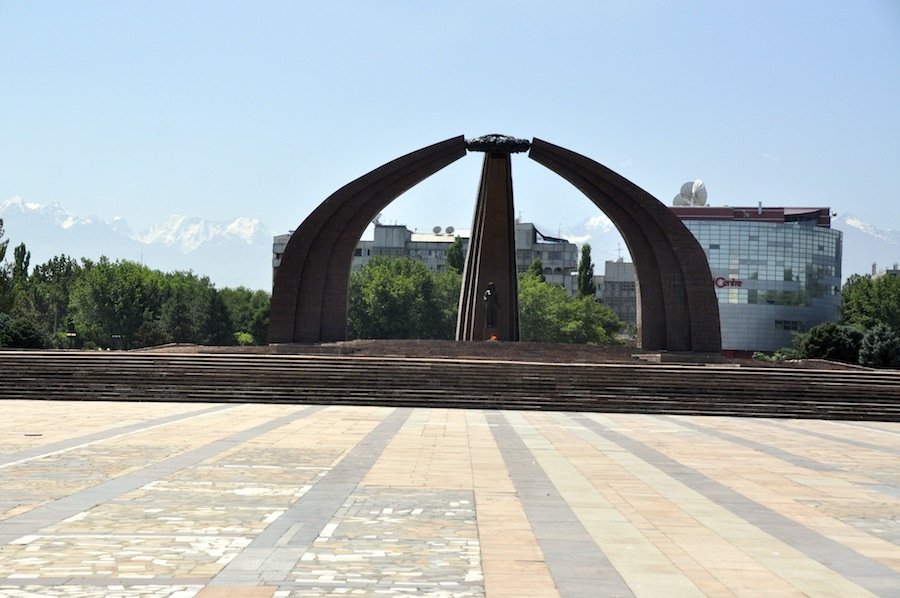
We visited first the Victory Arch, a design based on a yurt, which commemorates the end of the Second World War. 500,000 Kyrgyz fought alongside Russian troops. 200,000 died, which is quite a high proportion considering the modern day population of the country is six million. To one corner of the arch is a statue of men in conflict, to another the joy of their return, while in the middle burns a perpetual flame. Today, it is a place that wedding parties go to for photographs.

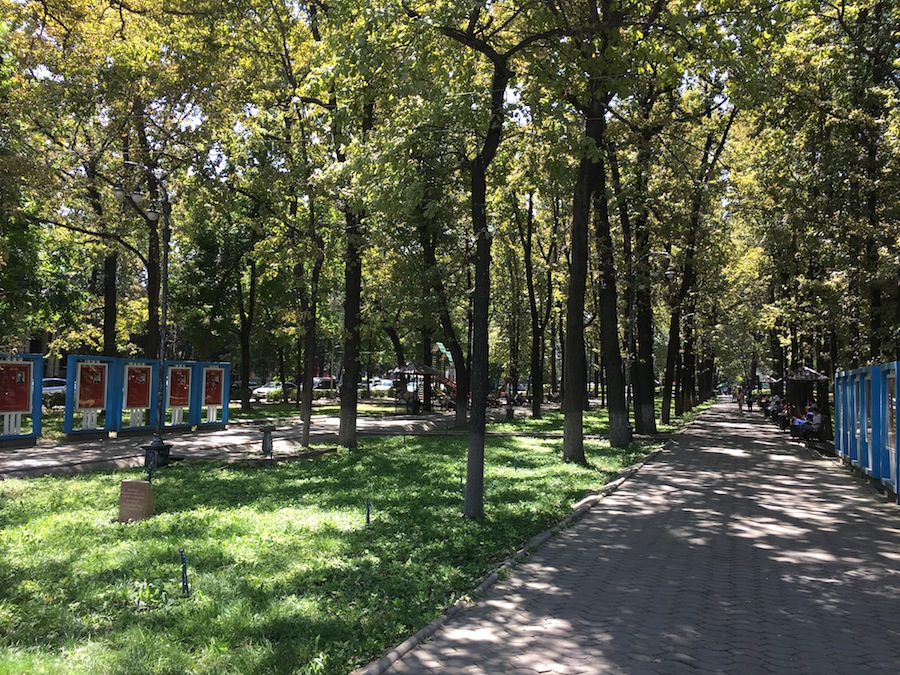
IMG_2201Moving on we walked through wooded parks and avenues to a variety of solid looking buildings, the opera house, art gallery, government building etc. Walking round highlighted the fact that Bishkek is a very green city with many flower beds, fountains and statues. All this greenery hides ugly Russian tenement blocks. These are gradually being replaced by more modern, architecturally more pleasing developments. There is certainly more development here than when I last visited four years ago. What I struggled to get used to was the way the traffic stopped as soon as I stepped on to a crossing.

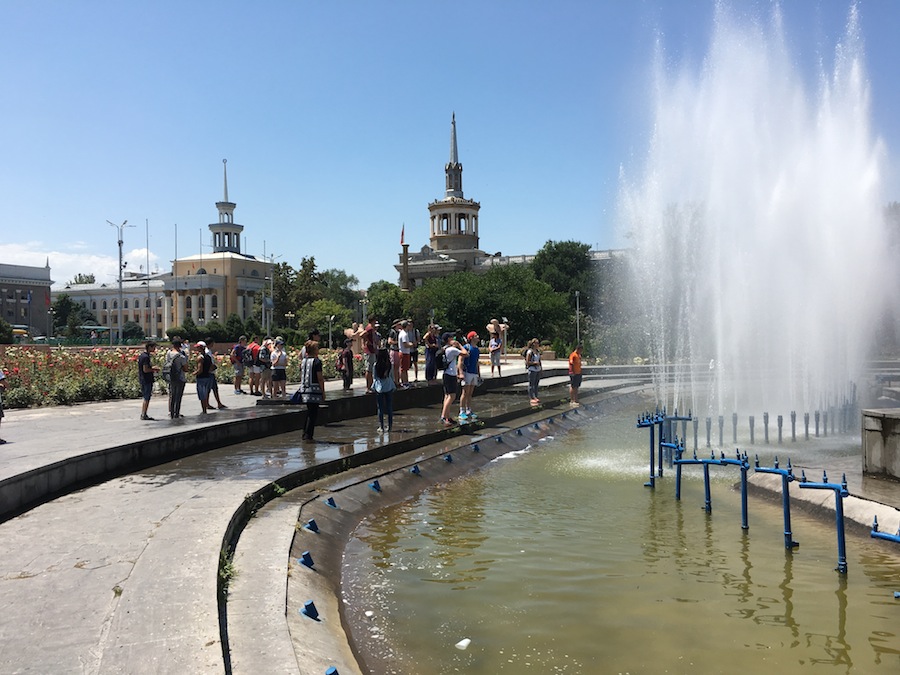
Philharmonic Square

Philharmonic Square

I don’t know whether it is because it is summer but the people seem much more affluent; the women dress elegantly and with style, the men less so. Cars appear to be bigger, newer and cleaner. There are more people about, in shops and restaurants. It has a much better feel about it, although it would be fair to say, from my limited experience, it is a city with no heart, there is no high street, no thriving street with illuminated and enticing shop windows. Everything is hidden behind unattractive facades that are shopping malls with little more than upmarket market stalls inside. I guess, that it needs to be all under cover to keep people out of the extremes of winter and summer.

Having had our tour, lunched and shopped we returned to the hotel, struggling to keep going with the combination of a lack of sleep and temperatures we were not acclimatised to. A restful evening and an early night was needed by all.

St Cuthbert’s Way 12th – 18th June

Under leaden, rain filled clouds, we met at the Tesco car park in Worcester and loaded the kit bags of personal gear into the van we had rented from Evesham Self Drive. While the team travelled up in relative comfort the kit went on ahead so that a start could be made on the setting up of camp. Fortunately the rain had ceased and we were able to put the tents up dry. Highburn House Country Park is a delightful site, uncrowded and with excellent facilities. Rabbits freely bobbed around the site, showing little fear, except when Dodja, a wire-haired Jack Russell decided to give chase. The owner’s ducks regularly hovered around our tents offering more combative opportunities for Dodja. Even the Robins and blackbirds came into our mess tent to rummage for scraps, showing little fear. It was really beautiful.

During the night the rain returned and this was the start of a very wet week with little evidence of sunshine.

Starting in the centre of Melrose, we had a brief look at the abbey, and time for a quick coffee (or in Kevin’s case, time to knock Guy’s coffee out of his hand in an attempt to give me a playful hit). How he did not receive custody of Cuthbert Bear for 24 hours is a travesty of justice.
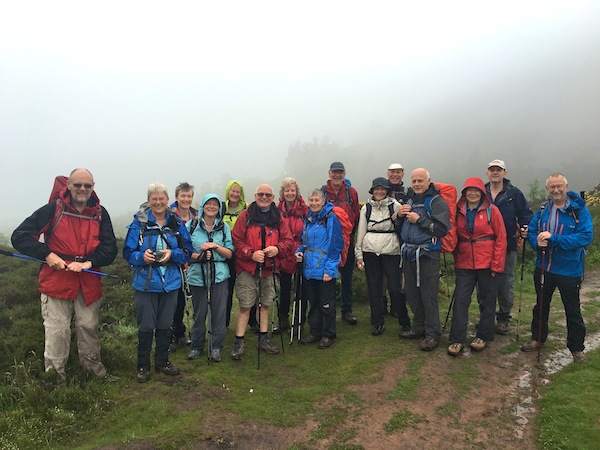
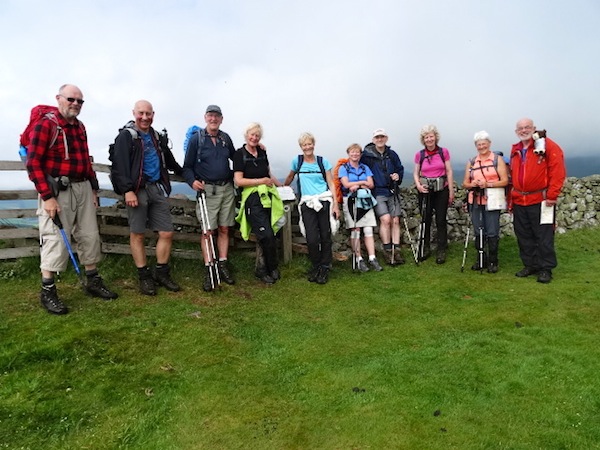
A 'cleavage' moment in the mist on the Eildon Hills

A ‘cleavage’ moment in the mist on the Eildon Hills

Climbing steeply out of Melrose, up the soggy slopes of the Eildon Hills, aiming for the cleavage between the twin peaks, we found ourselves shrouded in low cloud depositing light, but wetting, rain on us. For the group photo I asked them to shout “cleavage” rather than “cheese”, a shout that embarrassed a couple of walkers so much that they scuttled past without ever glancing at us.

Descending below the heavy blanket of cloud we headed for St Boswells and the River Tweed. Sadly flood damage prevented us from taking the riverbank route until much later. A shame as the Tweed is a particularly attractive river. At least by now the rain had ceased and we were eventually able to sit on the riverbank for lunch.
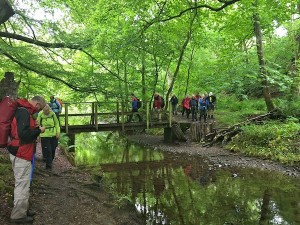
Woodland glade

Woodland glade

Leaving the river we soon picked up the old Roman road, a dead straight gash of a path running parallel to the busy A68. This took us all the way to Harestones, not in time to catch the cafe open but Angela was waiting ready to take us back to camp in Wooler.

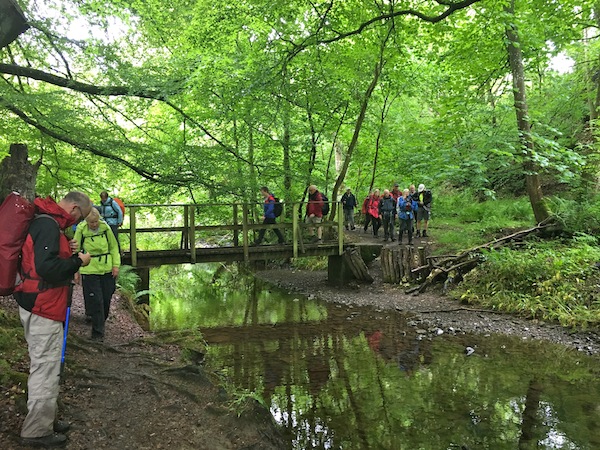
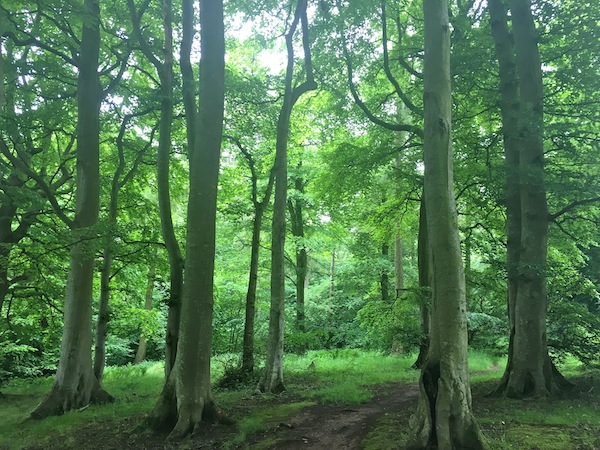
Tuesday started wet again for our longest walking day, approximately 17.5 miles. The route, once it had crossed a tributary of the River Teviot, on a wonderful wooden suspension bridge, tended to weave its way around field boundaries, following ridges and taking in some wonderful stretches of beech woods.
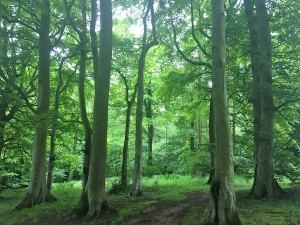
Beautiful beech woodland

Beautiful beech woodland

At one point we stopped for a break in the hamlet of Cessford, not far from Cessford Castle, built during a period of Borders conflict. Adjacent to where we were resting was a telephone box. The phone rang, Gill answered and asked if anybody was interested in claiming their PPIs.

By now the constant rain had reduced to showers so our progress was delayed by the regular putting on and taking off of waterproofs. We reached Morebattle during such a shower and all crowded welcomely into the vestibule of the church, now a small cafe raising funds for the restoration of the church into a community centre and church. We were made most welcome by the volunteer on duty that afternoon, a Danish man by birth but having lived in Australia for forty years but now in Morebattle where his ailing wife hails from.

Morebattle sounds like a relic of the border clashes but, in fact, means dwelling place by the lake. It also seems more appropriate in Toy Town with street names like Teapot Street leading to Teapot Bank.
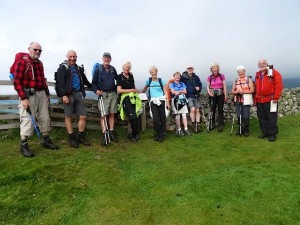
Wideopen Hill (368m) half way

Wideopen Hill (368m) – half way

Refreshed, and pleased that the rain had stopped, we set off again, the group splitting so that a few walked the four miles to Kirk Yetholm along the road while the remainder, relishing the thought of no more road walking, followed the designated route over Wideopen and Crookedshaws Hills. Wideopen Hill marks the highest point of the trek (368m) and also the halfway point of St Cuthbert’s Way. This was a beautiful section of the route in improving weather conditions. The altitude, although not particularly high, gave us far-reaching views north, further into Scotland, while to the south the higher peaks of the Cheviots and north Pennines drifted in and out of cloud.

When we reached the Border Hotel in Kirk Yetholm there was no sign of the minibus or the five who had taken the shorter route. We learned from the publican that they had just left, returning the first tranche to camp. Brilliant! That gave us at least forty minutes of rehydration time. While we were relaxing a young Swiss walker arrived, having completed the 268mile Pennine Way in fourteen days. He deserved his free half pint, although when I did the walk back in the early 70s you got a free pint upon completion. Eventually, Angela returned with the minibus and we reluctantly dragged ourselves away from the pub and headed back to camp.
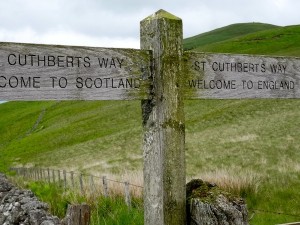
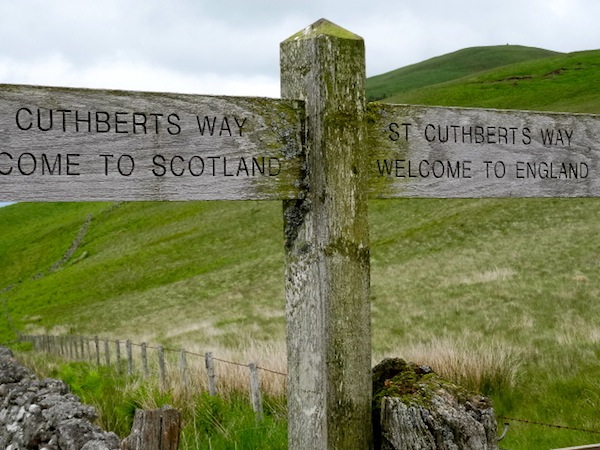
A touch of irony in the composure of this picture in the light of the referendum

A touch of irony in the composure of this picture in the light of the referendum

Wednesday dawned dry and much brighter, with the promise of it staying dry. This was good news because Day 3 of this walk is by far the best. It largely steers clear of roads and maintains a higher altitude on open moorland for much of the day.

To begin with we shared the route with the Pennine Way, but not for long as the PW headed south we veered off to the east. Soon after the split we crossed the border, waving goodbye to Scotland. However, from our lofty position we could still see the Eildon Hills over thirty miles away near the start of our trek.
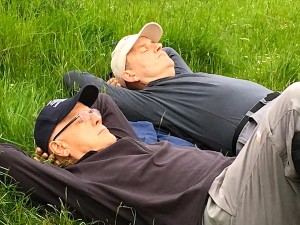
A rare moment of sunshine and rest

A rare moment of sunshine and rest

The day was superb. There was warmth in the sunshine, and because the distance was only twelve or so miles, we were able to enjoy it and not feel we had to rush to get to the end. All too soon Wooler came into view and the end of a glorious day’s walking was in sight. Then, so was the pub, so rather than rush back to camp, many of us went to the pub and ambled back to camp a little stiff legged.

That evening the rain returned and never really left us for the next forty-eight hours. As we walked through Wooler, nearly everybody we saw made comment about our walk in the rain. Old ladies smiled knowingly at us. Low cloud hung over the hills and when we walked over Weetwood Moor, a mere 150m above sea level, we were well shrouded in cloud. It was also cold with temperatures struggling to get into double figures. Is it really the middle of June?
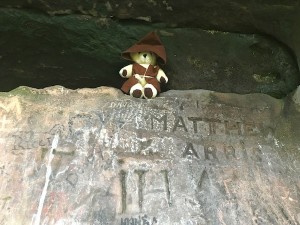
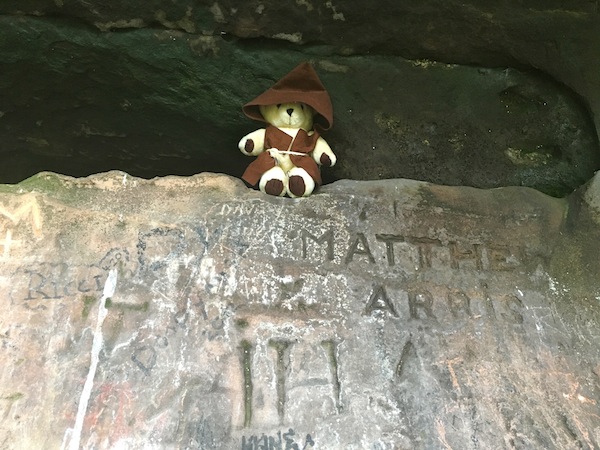
Cuthbert in his cave

Cuthbert in his cave

After the beauty of the route the day before, this was a huge disappointment. Long stretches of the route were either on metalled lanes or wide, dull farm tracks. The highlight was visiting St Cuthbert’s Cave, a dramatic sandstone overhang, where his bones were hidden from marauding Vikings.

Finishing at Fenwick couldn’t come soon enough and it was with some relief that Angela picked us up and took us back to camp.

The campsite, while it was well manicured and drained well, was beginning to look a little soggy. Everything was getting a little damp in the mess tent. We only had one more night after this and the dinner table conversation kept everybody’s spirits up.
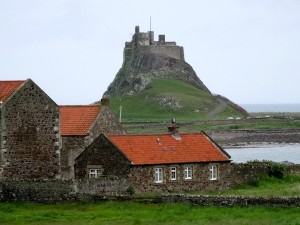
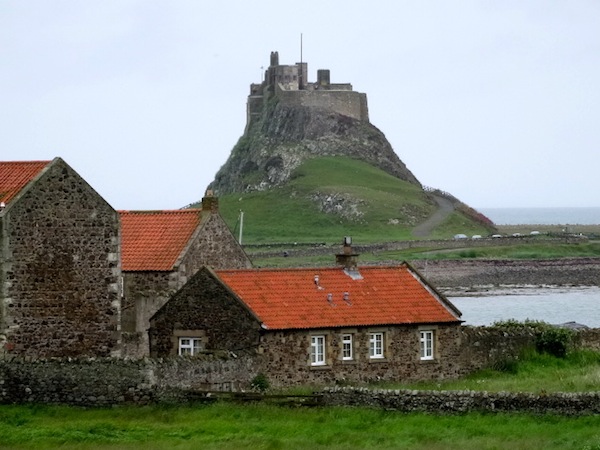
Lindisfarne Castle

Lindisfarne Castle

On Friday morning the rain still fell, heavier and more persistently. So we did not become marooned on Lindisfarne in the wet for several hours while the high tide turned it into an island, we chose to walk from east to west, crossing the causeway on to the mainland before the sea engulfed it. This gave us about an hour to wander around the ruins of the abbey, to look across at the castle on its rocky outcrop and perhaps enjoy a coffee. Mercifully, as we set off the rain stopped and the walk across the causeway was very pleasant. To the north we could see impressive breakers on the shore, expecting them to get closer quite quickly on the flat expanse of sand, but not realising that the water was actually making a sneaky approach from behind.

All that was left to do now was to walk the last two and a half miles back to Fenwick, a not particularly impressive walk but a necessary one, despite the fact that it had started to rain again.

Having finished we drove south taking a brief look at the imposing Bamburgh Castle, now private apartments, before spending a couple of hour in Alnwick.

In the evening we celebrated our walk with a tapas meal at No. 1 in Wooler – good food, good atmosphere, good drink and good company.

After a coordinated, sterling effort from everybody to strike camp on Saturday morning, which included me having a little altercation with an antique motor cycle and an angry biker, we began the journey south at 9.15.

How do I rate St Cuthbert’s Way? My opinion may be slightly influenced by the poor weather we experienced but that apart, it is a series of pleasant walks linked by stretches of quiet lanes. Sometimes those stretches were too long and too often. The best day was easily the third from Kirk Yetholm to Wooler. That day alone has inspired me to want to return to explore the Cheviot Hills more thoroughly, hopefully in sunshine.