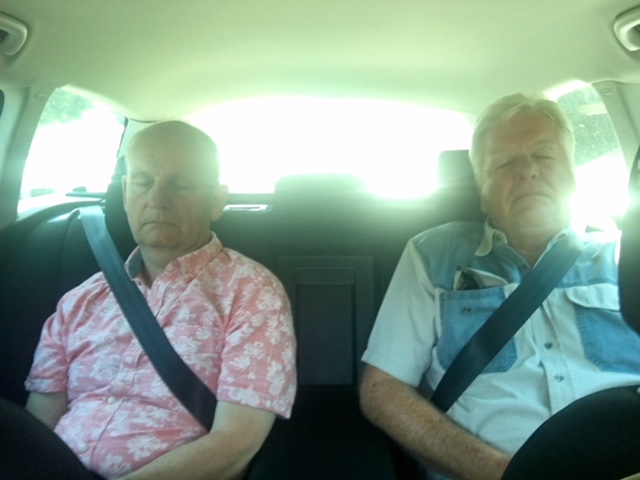
Lads on the Gower

Tired already?!

Having filled ourselves with bacon butties, Rob, Ian, Stephen and I drove down to Llanmadoc on the north western corner of the Gower Peninsula. It was a beautiful morning of cloudless skies criss-crossed with many vapour trails.

It was my intention that we should park in the village car park for three days, but I noticed a rather old and faded sign warning that no overnight parking was permitted. I wanted to find out if this was still the case. Enquiries led me to the village community shop/cafe where I found the owner of the field. She was fairly brusque in he response and told me that under no circumstances could I or anybody else park there overnight. If she allowed it the council would be on her back immediately. Before I could ask my next question, another lady, volunteering in the shop, offered me her drive. What a kind and generous lady. I offered to make a donation to a charity of her choice but she said it was not necessary. She asked for my mobile number just in case she needed to contact me so I gave her my card. Arrangements sorted, we parked in the drive of The Old Rectory before returning to the cafe for a coffee. It was 11.30am by the time we set off for our walk.
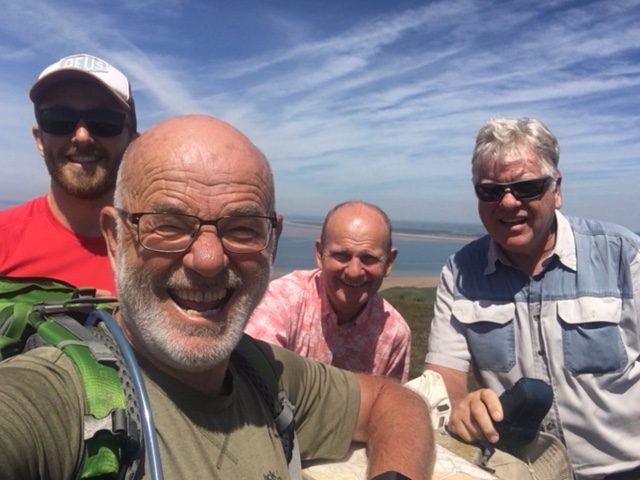
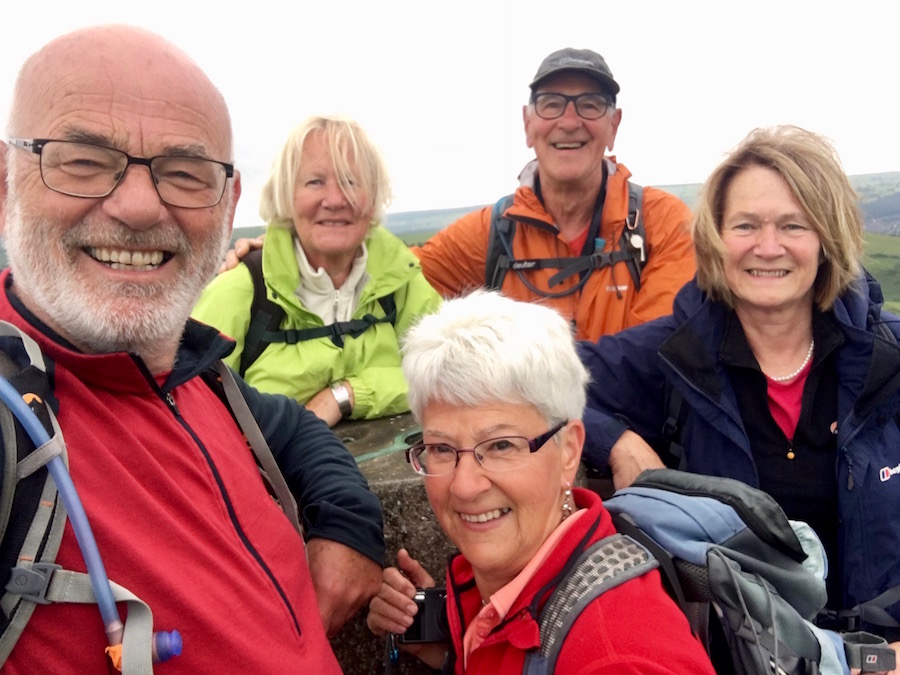
Trig point selfie

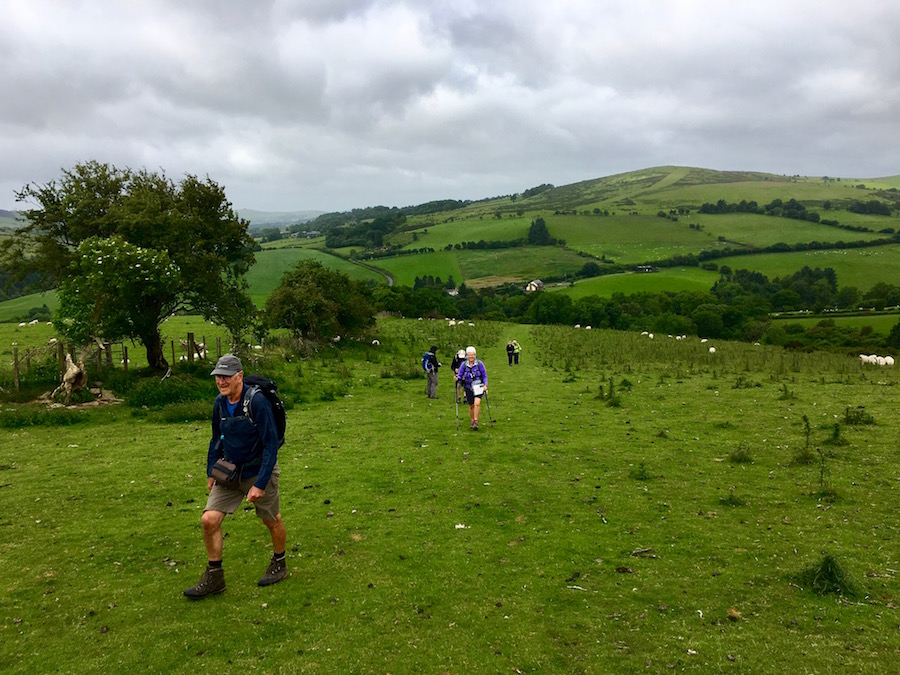
We immediately climbed out of the village on to the hillside above with a thick layer of fresh, green bracken either side of the path. Horseflies kept making little pin pricks in our arms and legs, which would then swell. Rob was affected most by them and his hands swelled badly, making his wedding ring very tight.

From the trig point at the top of Llanmadoc Hill we looked out over the grassy sand dunes immediately to the west and then nothing but a very placid sea. To the south we looked over the village of Llangennith towards our next hill, Rhossili Down.

We made our way into Llangennith and deliberated briefly as to whether we needed to take some refreshment. Having only been walking for an hour, we decided it was, perhaps a little soon, so we pressed on. It took us a while to pick our way, haphazardly across fields to the foot of Rhossili Down.

The climb up is steep, and it was noticeable that, with about 15kg on my back, it required a little more effort than normal. As we climbed the beauty of Rhossili Beach was gradually revealed. Beautiful, largely deserted, golden sands stretched out all the way up to the headland with Worms Head stretching, monster like, out to sea.
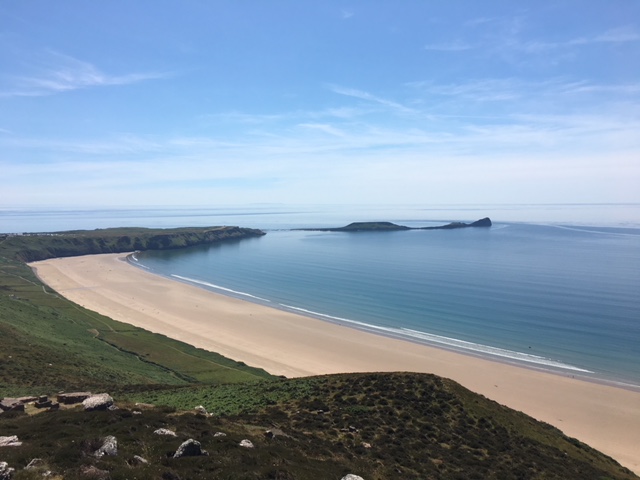
Worm’s Head and Rossili Beach from Rossili Down

At the top of the first climb we sat enjoying the view. For a long time a kestrel sat on a rock a little below us, unperturbed by our presence. Once it had flown Stephen sent his drone up to do some aerial video. All was going well until a Border Collie joined us and took exception to the drone, so much so, that Stephen guided it home and put it away. The collie belonged to a group who joined us at the summit cairn and, after the peace had been restored, sang gently and rhythmically. It was fascinating to listen to but I did not feel brave enough to enquire of them what they were doing.
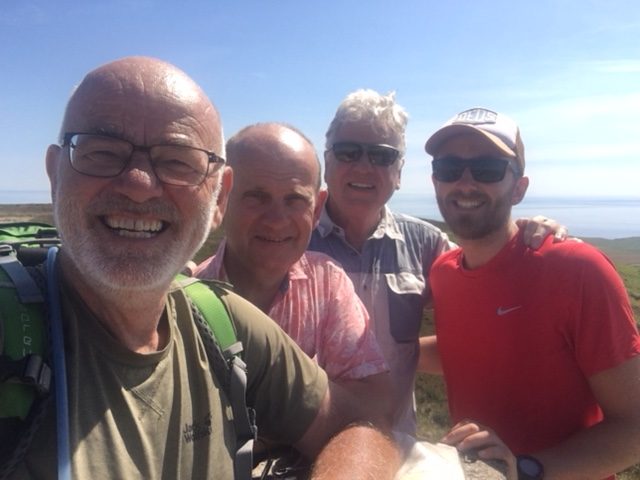
Another trig point selfie

Shortly afterwards we left them to their summit singing, passing the remnant foundations of a Second World War radar station, before climbing again to the trig point towards the southern end of the Down. Below the beach was a little busier as this end was accessible via a steep path from the car park. We were in no rush and were enjoying the moment when we were joined, once again, by our singers. This time I engaged them in conversation and learned that they were a group from ‘Dreaming the Land’, www.dreamingtheland.com. They were a non secular group on a pilgrimage, visiting ancient and interesting sites on the Gower Peninsula. Despite it being a bit hippie and alternative, I found their idea interesting and it added a new dimension to walking in beautiful countryside on a glorious summer’s day. They removed themselves from the conversation for a group improvised interlude, which, although being quite bizarre, seemed to be natural. I think I might have felt rather self conscious. We eventually parted company and we headed down to Rhossili where Ian decided he needed a pint. He suggested he would catch up but I insisted we were in this together – ‘all for one and one for all’. So we all had a pint.
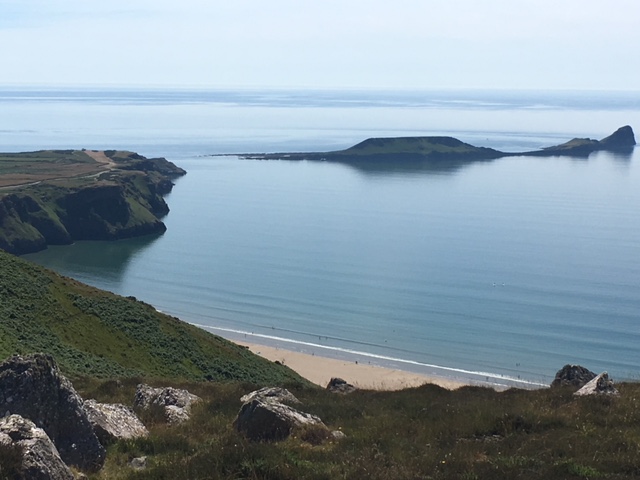
Worm’s Head from Rossili Down

Had circumstances been right we would have considered wild camping on Worm’s Head, but, as it was, the tide was in and the rocky causeway giving access was submerged. Even if we waited several hours the tide would be against us in the morning, delaying our progress around the coast. As we sat in front of the Coast Watch lookout post admiring the monster-like features of Worm’s Head, Geoff, one of the Coast Watch volunteers came over for a chat. He was one of the pioneering English surfers, originally from Essex but having lived on the Gower since the 1960s. He guessed that we were wanting to wild camp and suggested a quiet little cove, Ram’s Grove, an hour or so along the coast. “Just make sure you have enough water.” He was full of useful information. For example, if we ever do want to spend a night on the Head, visit the Coast Watch first and tell them. They will then let the Coast Guard know that you are night fishing and we won’t be disturbed. Then, when someone on the mainland dials 999 when they see torches, thinking people are stranded, the appropriate authorities will know that not to be the case. Otherwise they have to investigate, wasting a lot of time and money. He was a really friendly chap, but all the time he was talking to us he was watching, watching where people were going and what they were doing.
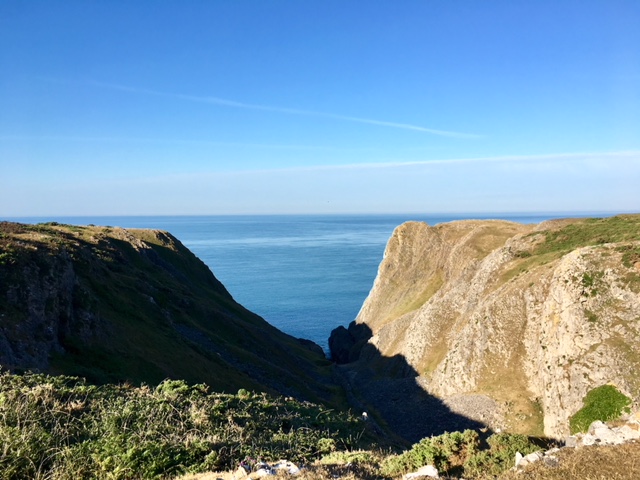
Ram’s Grove

Leaving friendly Geoff behind, we worked our way around the coast to Ram’s Grove. It is a deep v-shaped valley dropping steeply to a shingle beach. Just before we dropped down, Ian found an animal water trough with a pipe of fresh water feeding it, so we were able to fill all of our bottles etc.

Ian was quickly in the sea, soon followed by Stephen, cooling off. I went in up to the waist band of my trunks but could not bring myself to take that final plunge. The temperature contrast was too great.
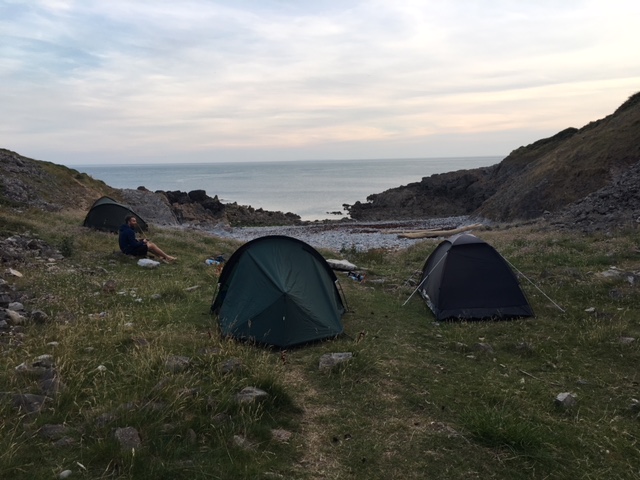
Our wild camp

We set up our tents on the four flattest patches of grass we could find, only pegging them down minimally as there was very little soil under the grass. Then we set about supper, a variety of pre-cooked meals that only needed to be heated in their sachets in boiling water for about five minutes. Very tasty and perfectly adequate.

After that there was not much to do. There was no sunset to watch as we were hemmed in by the steep valley sides. Stephen sent his drone up to film it and us in our secret little world.
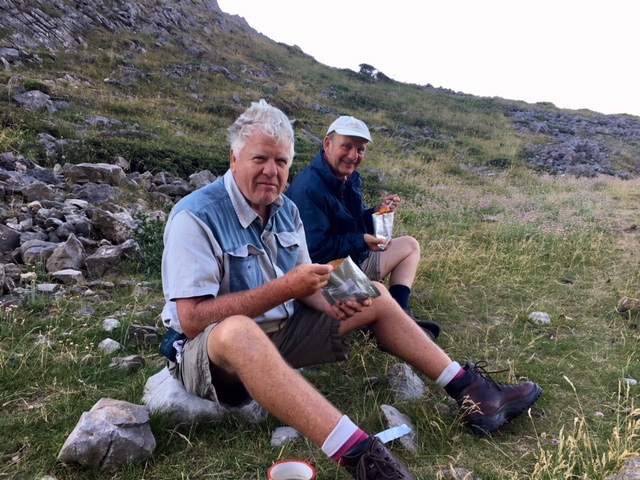
Rob and Ian enjoying their All Day Breakfast

Sleep was not too bad but I tended to alternate from hot and clammy to cold and clammy. The sheep that had been around us all night ensured that we did not linger in our tents by bleating loudly as soon as it was light. There was no point in lingering, and the more walking we could achieve in the relative cool of the morning, the less we would have to do in the stifling heat of the afternoon.

We climbed out of our valley at 7.00am and headed east to Port Eynon, just in time for the cafe opening, and a welcome coffee.
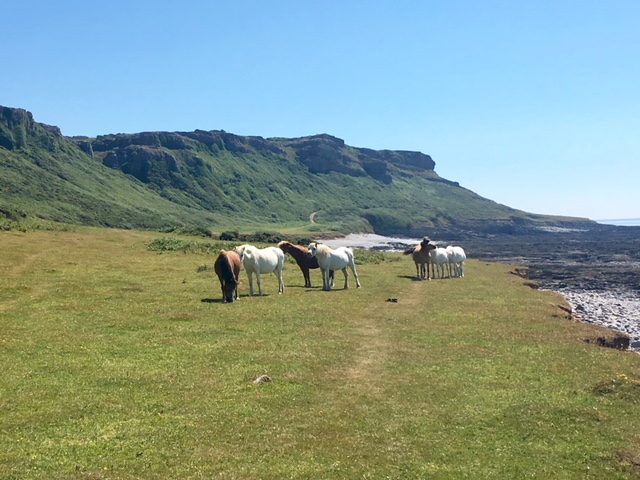
The walking became much easier from this point. The coast is less indented and the path follows a contour above the rocky coastline. We were able to make much better forward progress. I was walking a little ahead of the others and as I climbed up the path something caught my eye. There, just a couple of feet ahead of me, an adder slithered off the path where it was sunning itself into the undergrowth at the side. It was about a metre long and looked very healthy, with a good set of distinctive markings.
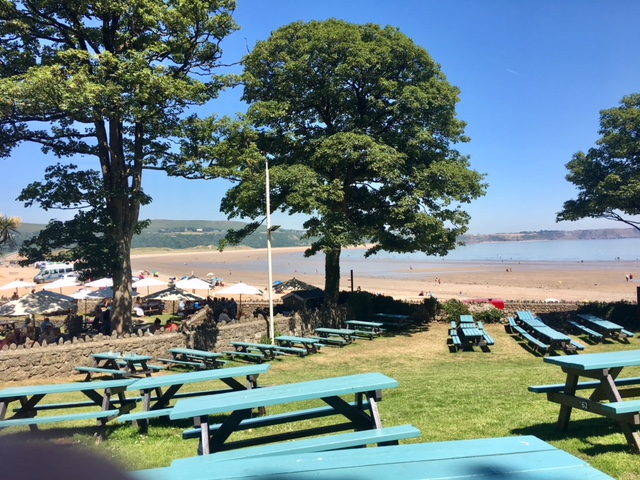
Our lunchtime view

As we rounded the headland towards Oxwich Bay a very large grey seal was luxuriating on a rock at the water’s edge, while another bobbed about in the sea nearby.

Once round the headland we were in lovely woodland, a welcome respite from the sun. There were some steep sections of up and down through the woods but we eventually emerged past the church to the Oxwich Bay Hotel, where we decided to have a long lunch.

After lunch, all we had to do was walk across the expansive bay along the beach to our campsite on the other side. It was a relief to be able to walk barefoot in the warm water lapping gently on the sand. In contrast, the hot, dry sand of the dunes we had to climb in order to reach our site, really burnt our feet.

I now have to make a confession. In my plan for this walk I had intended for us to camp at Three Cliffs Bay, but that campsite is not marked on the map. The only one marked is a little west of Three Cliffs at Nicholaston Farm. We stayed at the wrong site. In all honesty, I don’t think we had enough energy to go much further and the climb up to Three Cliffs Campsite was much steeper and longer. As it was, Nicholaston Farm had excellent facilities but not a great deal of flat land! There wasn’t much for us to choose for supper in the shop. We were restricted to buying the last two chicken curry pasties, a tin of beans and half a dozen eggs. It was a forty minute walk to the nearest pub and none of us fancied that.
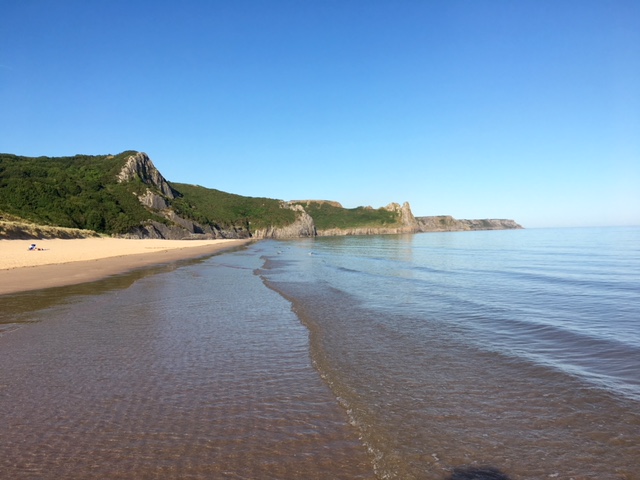
Looking towards Three Cliffs from Nicholaston

After we had set up camp, all, with the exception of Rob, went back down to the beach for a swim in the beautiful evening light. The water felt much warmer and I enjoyed swimming around, although there were a number of purple/blue jelly fish that concerned me. There were also some monster ones washed up at the water’s edge that I couldn’t determine whether they were dead or alive.

Back at camp we ate our mixed bag of food and I boiled the eggs for the next day’s lunch.
After a much better night’s sleep than I was expecting on a sloping pitch, we were again up early. This time it was cawing crows that were our morning call.
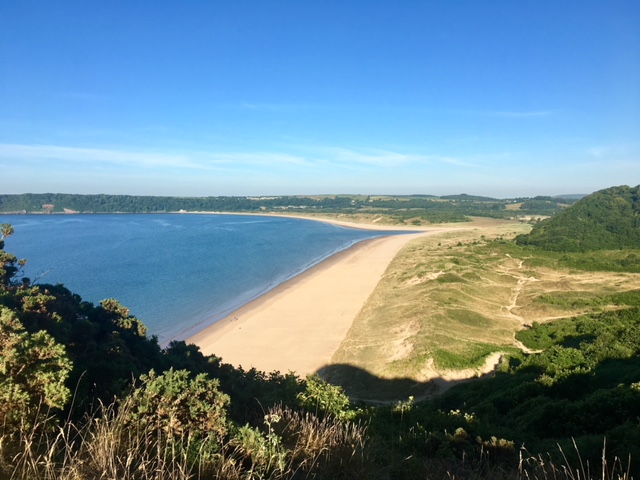
Looking across Oxwich Bay on our last day

We were again away by 7.00am. Unfortunately the tide was in so we could not go down to the beach to enjoy the full splendour of Three Cliffs Bay. We could only enjoy it from above and from the landward side.

The route took us across the golf course at Pennard Burrows just as a tournament was getting underway. Balls were flying everywhere and we had to stop occasionally and watch the action before continuing. This brought us into Southgate where we stopped at the cafe/shop at West Cliff. There we had a coffee, followed by another coffee, followed by a bacon buttie, or other similar delight. Why we needed it, I don’t know. We had had porridge a couple of hours earlier, before we left the campsite.
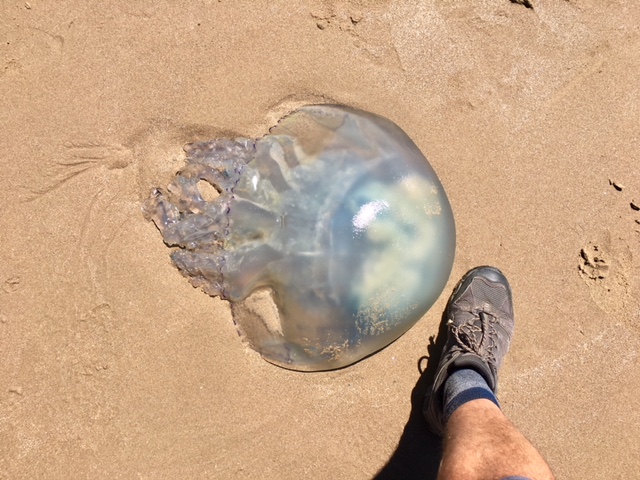
An unwelcome beach companion at Caswell Bay

The remainder of the walk alternated between clifftop walking descending to sandy bays and climbing again. We were seeing more people along this stretch of coast as we got nearer to Mumbles. We also saw aspects of coastal tourism that is so disappointing. Caswell Bay is a beautiful sandy beach. Monstrous flats have been built overlooking it and at the hub of the bay there are kiosks selling nothing but junk food and tat. There were queues of people willing to gorge themselves on this rubbish served in polystyrene containers. Yuk!

From Caswell Bay the path is laid to concrete and unforgiving on the feet, but, at least, progress was quick. Stephen and I went on ahead so that we could organise a taxi to take us back to Llanmadoc to pick up the car before returning to collect Ian and Rob from the pub on the pier later. It was getting hotter and hotter, with heat also radiating off the white concrete and parched verges.
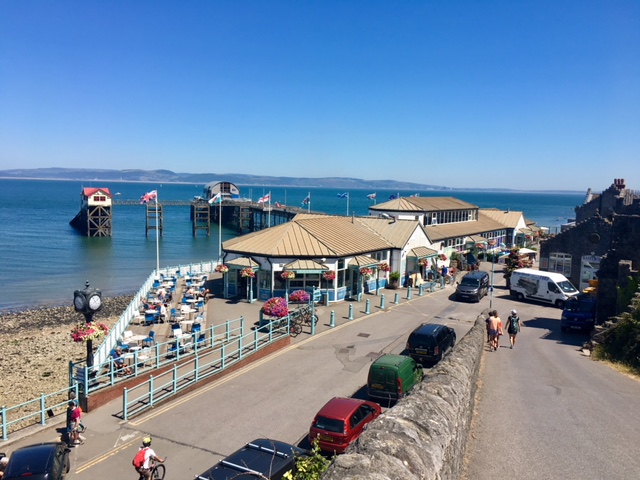
Mumbles Pier

We reached our destination, Mumbles Pier at 2.00pm, rang for a taxi, which arrived within five minutes. Sally, on who’s drive we had parked, asked me if I could promote the St Maddox Centre where her son worked. It caters largely for children but during the winter months it is quiet and would benefit from adult groups using it as well. It is worth a thought. More information can be found on www.stmadoc.co.uk. It might be something to consider and we would certainly see another side of the Gower’s nature in the winter.
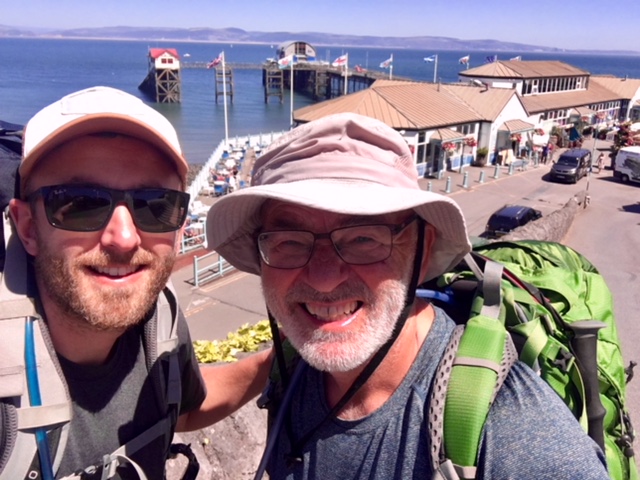
Precious time with Stephen

We had had three magnificent days, seeing the Gower Peninsula at its very best. The beaches are stunning and some of them are as good as anywhere in the world. I would be tempted to repeat this three day walk, but I know, what we have experienced can probably not be repeated. I am grateful to Ian, Rob and Stephen for their excellent company; we did a lot of laughing. The walk was also enhanced by the friendly and interesting people we met along the way, from Sally who rescued us at the start, to Angharad Wynne and her Dreaming the Land group, and Geoff, who inspired us to fulfil our desire to wild camp. We certainly have some memories to treasure.

Offa’s Dyke, Sedbury Cliffs – Newcastle-on-Clun

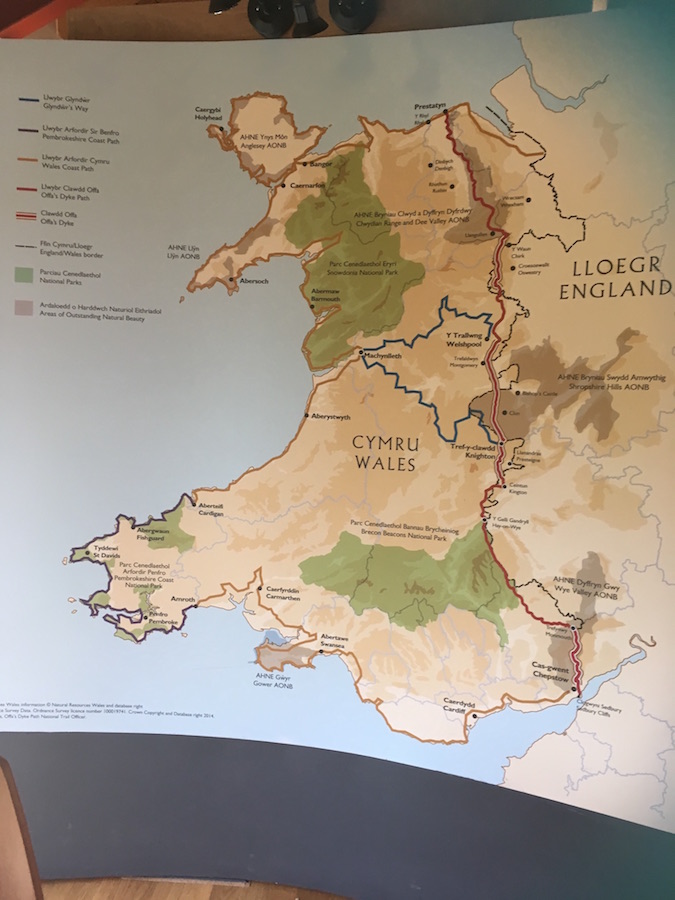
Offa’s Dyke Path

It would seem, as things stand at the moment, that we might be heading for a good summer. After the long winter, which brought its own special pleasures, it will be very welcome. I hope that writing this is not going to be the kiss of death to July and August. But we were blessed with super weather while walking the southern half of Offa’s Dyke, an area well known for depositing rain.

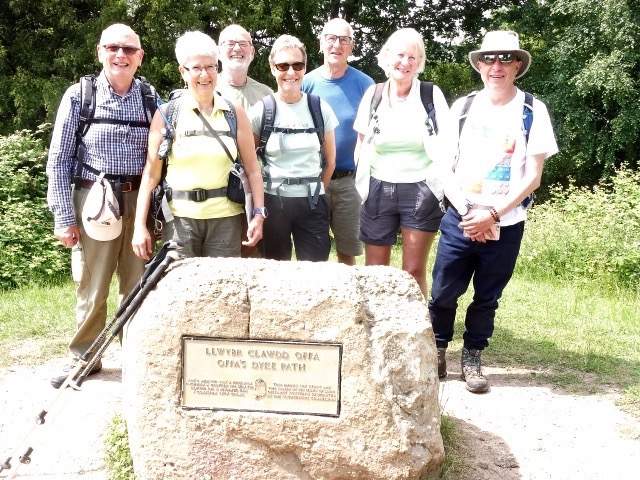
The starting line-up

Having established camp at the Rising Sun in Pandy, we all met up at Sedbury Cliffs, Chepstow and the official start/finish of the 177 mile trail that runs along, either side of the modern England/Wales border. Marking the start with a photograph we headed off on woodland ridges overlooking the silty waters of the River Wye. Occasional breaks in the trees afforded us views across the valley at Wintour’s Leap and later overlooking the ruins of Tintern Abbey. We were walking through ancient woodland, which, with its very steep westerly slope, formed a natural barrier to the marauding Celts!

Eventually we dropped down off the hills into the riverside village of Brockweir where the day’s walk ended in the Brockweir Inn.

Returning to Brockweir the next morning, in glorious sunshine, we continued along the riverbank for three miles before climbing back up to the forested ridge. Views were restricted by the density of the forest, but it gave us welcome respite from the intense sunshine.

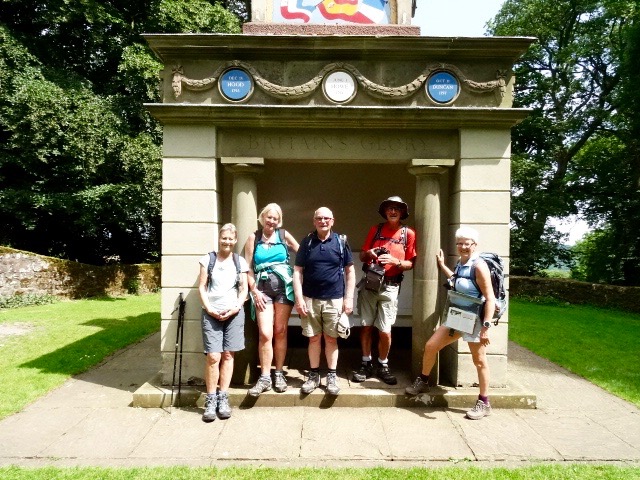
The Naval Temple

We descended briefly to Lower Redbrook for lunch by the river, before climbing yet again, through pastureland to Kymin. At the top of the hill is a round house, built by the gentlemen of Monmouth as a place to meet and dine. The adjacent Naval Temple was built in 1800 to commemorate the naval victory in the Battle of the Nile in 1798, and other similar naval battles. Admiral Nelson visited it in 1802.

We descended into Monmouth where we took a little time out in Wetherspoons before continuing through more delightful woodland and countryside to Lower Hendre where we picked up the waiting minibus.

If the first two days had been dominated by woodland walks, the third day was very much about walking across pasture and arable land, of rolling countryside and just the odd hint of history. It was extremely pleasant walking.

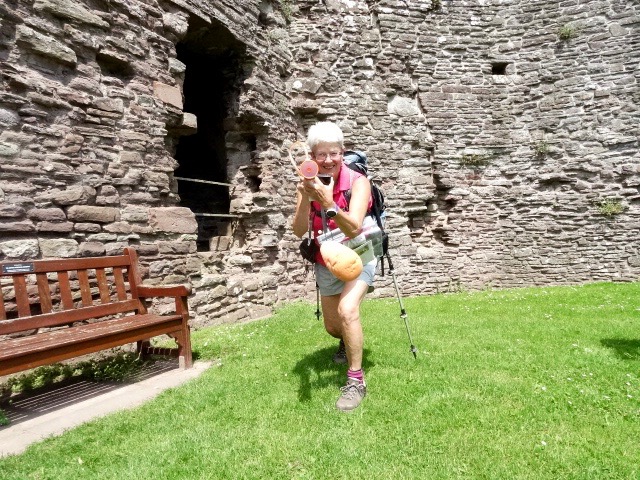
Claire, the hot shot!

For lunch we sat on grass surrounded by an ancient moat, where once had stood a medieval Manor House. Unfortunately, for the next couple of miles the path was diverted along a lane because of overhead power line work, but as this gave us the short side of a triangle to walk, nobody really complained. This brought us to White Castle, which is one of the castles that featured on the Three Castles Way. When we visited it a few years ago there was an entry charge but that now seems to be a thing of the past. It is the largest of the three castles, the other two being Skenfrith and Grosmont. Inside we found a child’s toy gun which gave Claire some fun as she shot David and me with a large, orange sponge bullet!

From White Castle we skirted around the eastern and northern slopes of the Skirrid, taking a welcome detour into the Hunters Moon Inn at Llangattock Lingoed, originally built to serve the stonemasons building the adjacent church. Soon afterwards, we walked into camp.

The long Black Mountains ridge

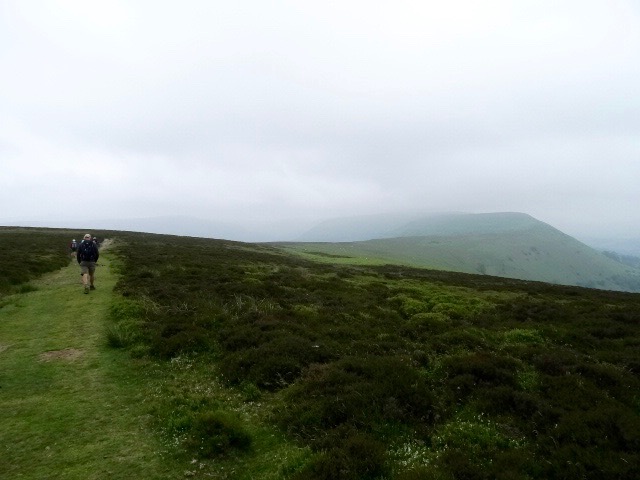
Our final day’s walk before we moved camp saw us climbing out of Pandy on the the long, open moorland path that took us the length of the Black Mountains towards Hay. Although this took us to the highest point along the whole of the Offa’s Dyke trail, it is not necessarily the most interesting, and the fact that for much of the day cloud hung about just above our heads meant that whenever there were possible far reaching views, they were limited. Quite a strong breeze kept the temperatures down, making it perfect walking weather. We made very good time and were back at the minibus at the foot of Hay Bluff, at 2.00pm. Plenty of time for us to call into the bar at Llanthony Priory for some refreshing tea!

That night we ate in the Oldest pub in Wales, the Skirrid Mountain Inn, where Judge Jeffreys supposedly condemned some of those before him to hang from the hook in the ceiling of the bar. No hangings on this evening, just good food and beer.

Rockbridge camp

While the group walked with David to Newchurch, I transported all the kit to our next base at Rockbridge Caravan and Campsite just outside Presteigne. This was a perfect site. We had a flat pitch on the banks of the tranquil River Lugg. The camp facilities deserved a 10/10 score and the manager, Steve, was really welcoming, friendly and helpful.

Having set everything up with help from Paul, Angela and Annie, I travelled to Newchurch to meet the group. They had, again, made good time and I found them sitting in the church yard drinking tea. Inside the church there is a help yourself cafe for passing travellers. What a great idea to make the church accessible to all.

It is very satisfying to see people’s reactions when you introduce them to their home for the next few days. Rockbridge certainly ticked everybody’s boxes and it even surpassed the excellence of the two sites we used on the Jurassic Coast last year.

If we had thought the walk was stunning so far, the next two days were going to surpass all our expectations. The first day was relatively short, taking us to Kington. Firstly, we climbed out of Newchurch up to the open moorland of Disgwylfa Hill, which gave us views over hills with a lot of walking potential and deserving of further investigation. I’ll save that for another day.

We soon found ourselves in Gladestry before the climb up on to the Hergest Ridge, a long ridge of open moorland and outstanding views. The dominant hills are those of the Radnor Forest which rise in excess of 2000 feet.

From our lunch stop by nine monkey puzzle trees on the top, the guide book tells us that from this vantage point we could see fifteen counties. Unfortunately the guide book did not name them so most of our lunch break was spent agonising over them. We got nowhere near the fifteen and now that I am home I’m not going to waste my time trying to name them all. It is sufficient to say that the view in every direction is stunning and, in the perfect conditions we were experiencing, far reaching.

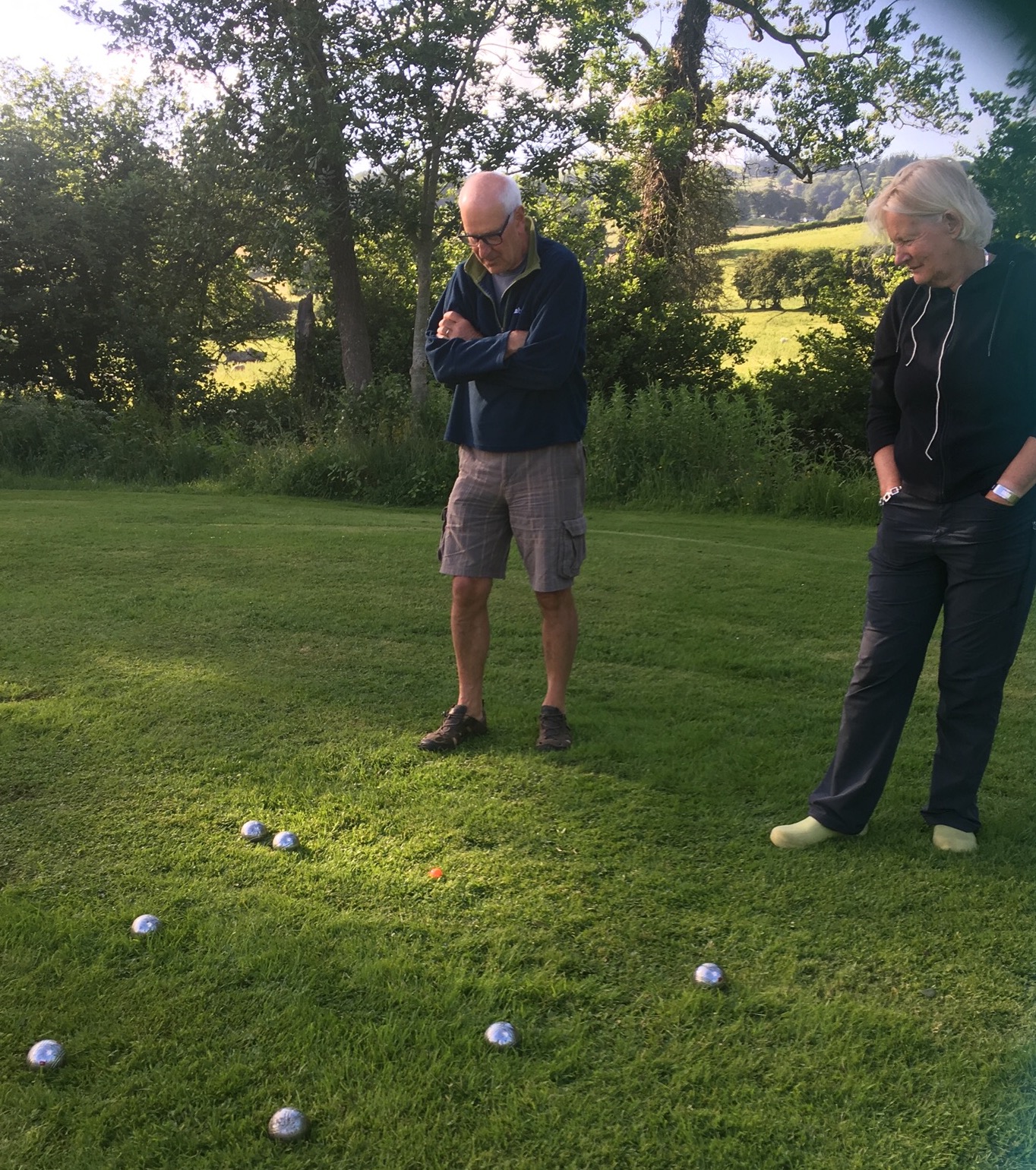
Keen competition!

Our descent into Kington followed and we treated ourselves with tea and cake in the Border Bean Cafe before heading back to camp for games of Kubb and Boule in the glorious evening sunshine.

David and I convinced the group that we could walk from Kington to Knighton on our penultimate day as it was only about 12 miles. During the course of the walk I was consulting my Cicerone map when Kath peered over my shoulder to read that it was actually 14 miles. Oops!

Any mistrust they might have had with us soon dissipated by the sheer beauty of the walk and the countryside we were experiencing. Singing rousing songs also helped make sure they remained cheerful. Despite it being two miles longer than they were expecting, we reached Knighton in good time, arriving at the Offa’s Dyke visitor centre at bang on 4.30, the time when they stop serving tea and cakes. However, the girl behind the counter was so obliging she made us tea and served us lovely portions of chocolate sponge cake. My plans to be abstemious on such occasions seems to have deserted me, but I deserved it. I had, after all, walked two miles more than anybody had expected!

A trig point selfie on the summit of Cwm-sanaham Hill

A slight deterioration in the weather greeted us for our last walking day. It must have been Tina’s fault, who joined us for the last day. A touch of overnight and early morning rain meant, that for the first time during the week, I needed to wear boots in order to keep my feet dry. Until the weather improved the long grass was going to hold droplets that would quickly soak through trainers. Also, gone were the clear views that we had so enjoyed so far. The first half of the walk up to the ridge above Knighton and along to Cwm-sanaham Hill was lovely, and, although we were walking along visible stretches of the dyke, much of the path beyond was tedious under foot. It was strewn with masses of sheep poo, which we tried our best to avoid. Nevertheless, we made good progress and reached the minibus, parked in the village hall car park in Newcastle-on-Clun, in time for a late lunch. We preferred to sit on the dry seats of the bus in preference to the wet grass.

That evening we ate in the Royal Oak in Presteigne to celebrate the end of an excellent week’s walking. It didn’t quite have the atmosphere, or the sense of history of the Skirrid Inn, but the food was good.

We had walked 89 miles in perfect conditions. I wonder, when we walk the northern half, in early September, whether we will be able to say the same. The weather is usually good the week schools go back. Let’s hope that is the case this year.

The Last Phase

Remarkably, despite being out in the field for seventeen days we had only seen nine schools. In the concluding four days we would be visiting a further eight schools.

During our last evening in Lelep we were joined by the Deputy Chairman and Deputy Director of the SWC (Social Welfare Council). They are a government organisation with the function of checking on all NGOs and INGOs in Nepal. This visit, by such important people, was part of an accreditation of our and REED’s work.

Before we left Lelep, we took the two visitors from the SWC to look at the girl’s hostel. Not only are the facilities unsatisfactory, but we wanted to share our concern with the lack of pastoral care for the girls. They agreed with our concerns and vowed to speak to the Ministry of Education on their return to Kathmandu, to lobby for a full time carer and improved facilities. I hope they live up to their word.

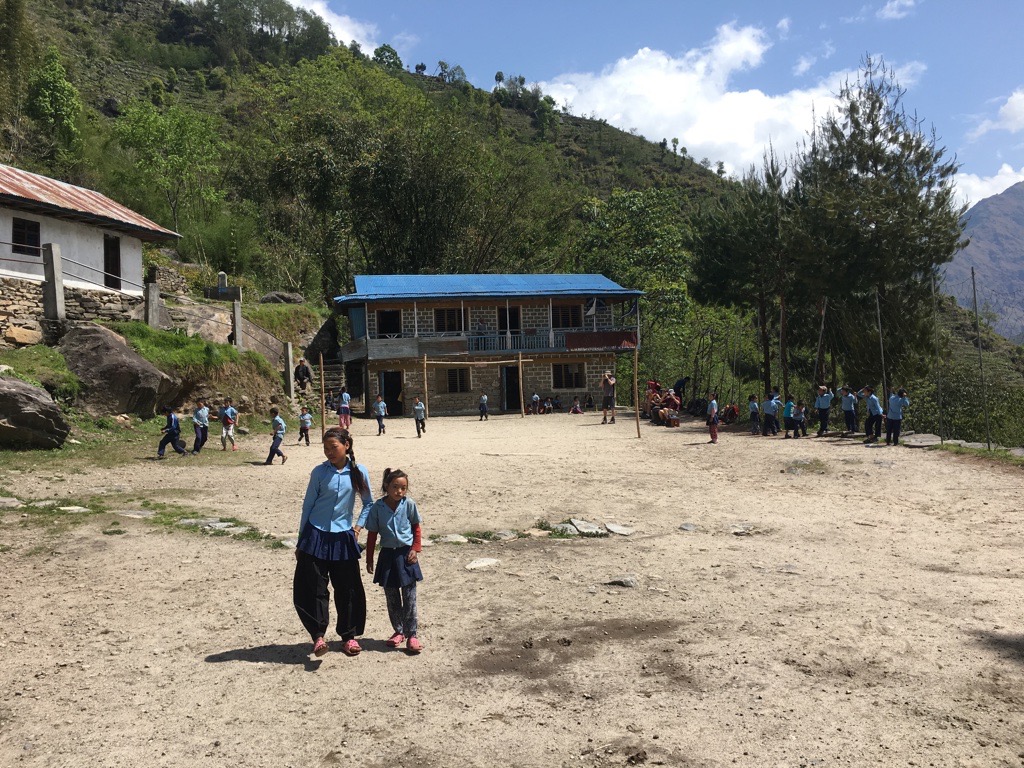
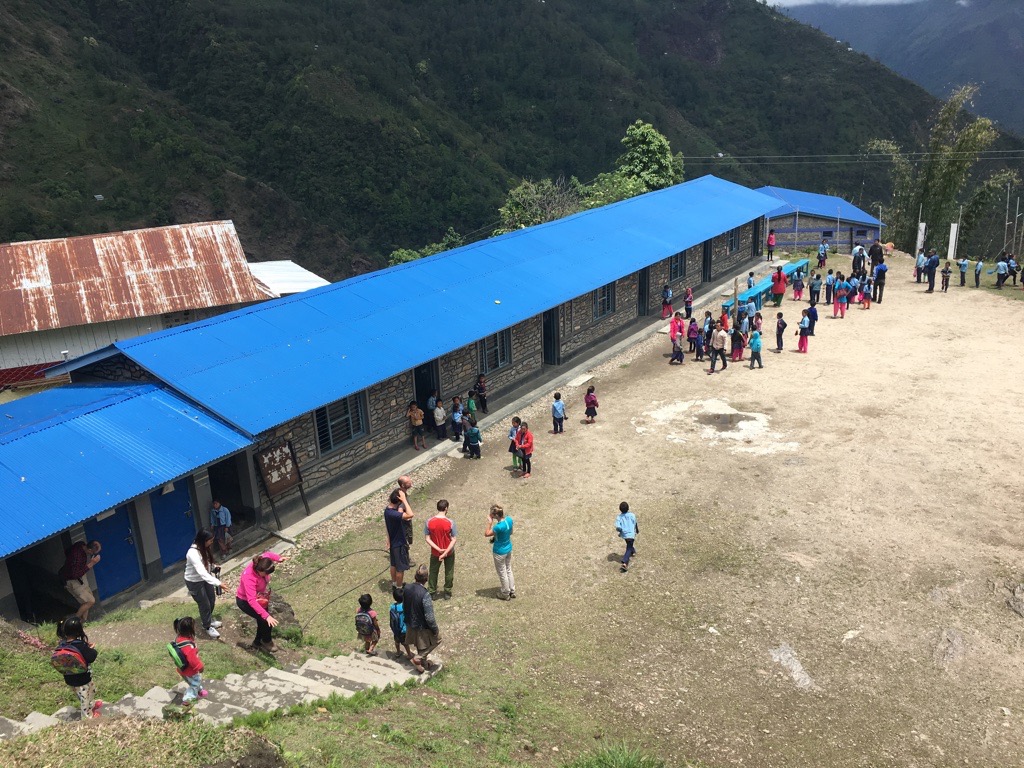
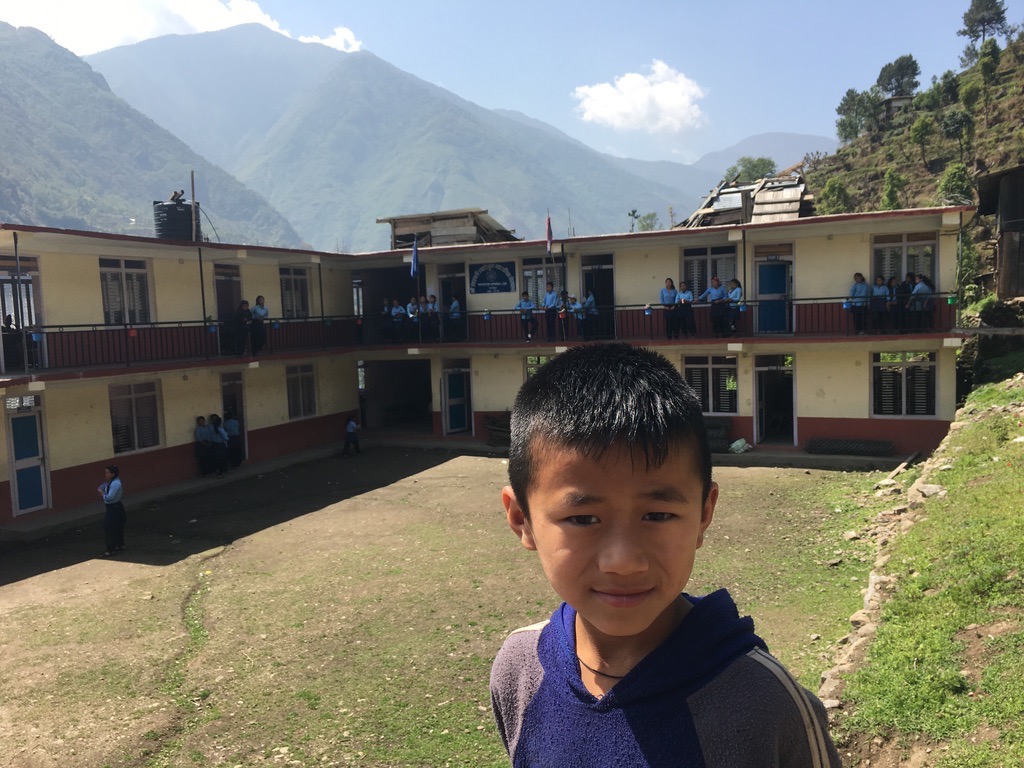
Feeling rested, particularly in my case, we climbed out of Lelep to find a path that generally contoured around the hill overlooking the Timor River far below. After about two and a half hours we reached Sabriti Basic School, a lovely school for a little over fifty children. When we arrived the children were playing on the playground and I was interested to see that there were two games of football taking place. One of the games consisted of girls only. Whilst this is not perhaps uncommon on school playgrounds in the UK, it is the first time I had encountered such activity in Nepal. The school continues to make progress as it embraces the skills and child friendly approach so ably taught by the REED team. The school now benefits from a fresh water supply, part of last year’s initiative to make sure that every school has access to water. On my previous visit I was concerned for the safety of children as they came out of their classrooms as there was a significant vertical drop from the narrow walkway, without any protection. There is now a very sturdy fence, ensuring that children, in their eagerness to go to play, do not fall and hurt themselves.

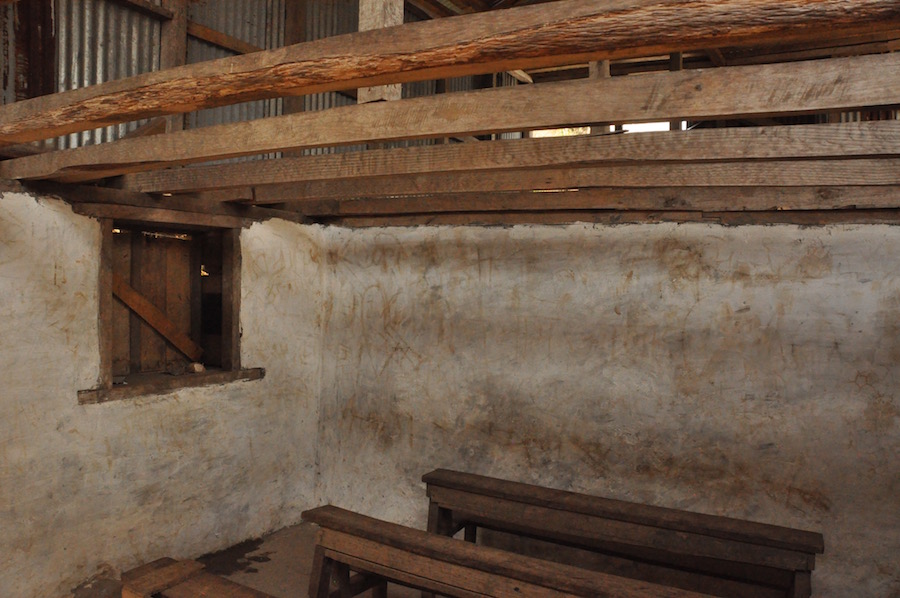
The dismal environment of Mohendra School

Whilst Sabriti School is flourishing, the next one we visited, barely an hour further along the track, is in a very sorry state. Mohendra Basic School once had 165 pupils, but because of poor leadership by the head, now has 23, a decline that has occurred in just a few years. Two years ago I gave the head a dressing down. Then he had to write a letter of commitment ensuring that he would improve his performance and that of the school. Unfortunately, nothing seems to have improved and I gave him another serious dressing down in front of all there, including those from the SWC. The head has a serious drink problem. In most other countries he would be out of a job but, for some reason, he cannot be replaced. Sadly, until he is replaced, he is letting down the community and children within its catchment area.

From Mohendra, we climbed steeply up the terraces of maize and potatoes for several hundred metres to Deurali Basic School. Deurali has a great sense of community and there were lots of people waiting for our arrival. There were some REED trainers working with staff on the concept of MGML (Multi Grade Multi Level) teaching, where children are all taught in the same room by a number of teachers. We visited the workshop. At first it appeared to be quite noisy, but then you began to appreciate that it was focused noise and that the children were not distracted by what was going on elsewhere in the room.

Deurali was another of the schools damaged in the earthquake and all the children were gathered in the single, large classroom that has been built. It is quite large and lends itself to this style of teaching. Everything we saw impressed us.

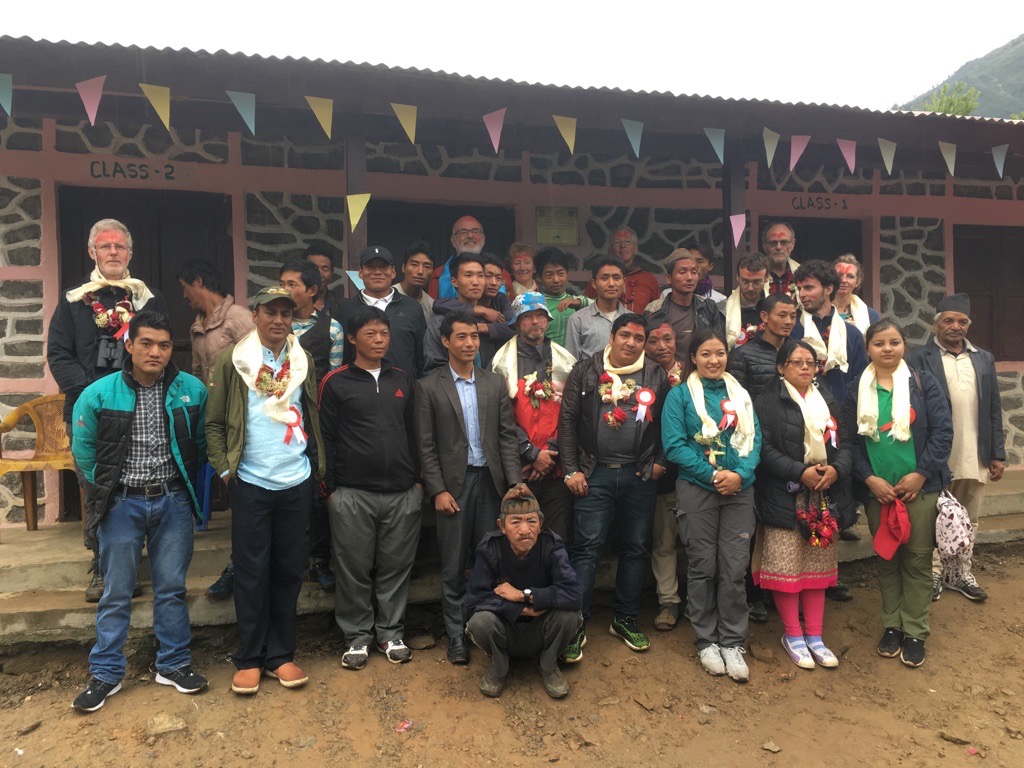
Once the training had finished the opening ceremony of the new building took place. Unfortunately, it started to rain so the formal gathering had to take place in another part of the school, across the playground. By the time the formalities were finished, the rain ceased and we were able to go outside under the makeshift shelters that had been erected. As was now the tradition, great pots of rice and goat meat were produced for the whole community. We chose, without offending, to decline the food.

Our distinguished guests from the SWC left us after the ceremony, well pleased with what they had seen and with the work of the Himalayan Trust UK and REED. If ever we need support from them in the future, I think it would be guaranteed.

That night, instead of putting tents up on to a wet and muddy playground, we all slept on the floor in the new classroom. It was one of the best night’s sleep of the whole trip.

The five classroom block built by the Gurkha Welfare Trust

The following morning we left Deurali to wend our way on a beautiful walk to Sundevi Secondary School. The walk took us through a variety of landscapes from terraced fields, to cardamon plantations to thick forest. The walk was made all the more interesting because it was wet and there were thousands of leeches just waiting to latch on to us. Roma popped into a house as we passes and collected lumps of rock salt for each of us so that we could fight back. It was very funny watching a paranoid group walk, constantly checking their footwear and legs for leeches.

By the time we reached Sundevi School, the weather had brightened up. A tour of the classrooms and of the lessons taking place, confirmed that this school is performing well, giving the students the best possible start in life.

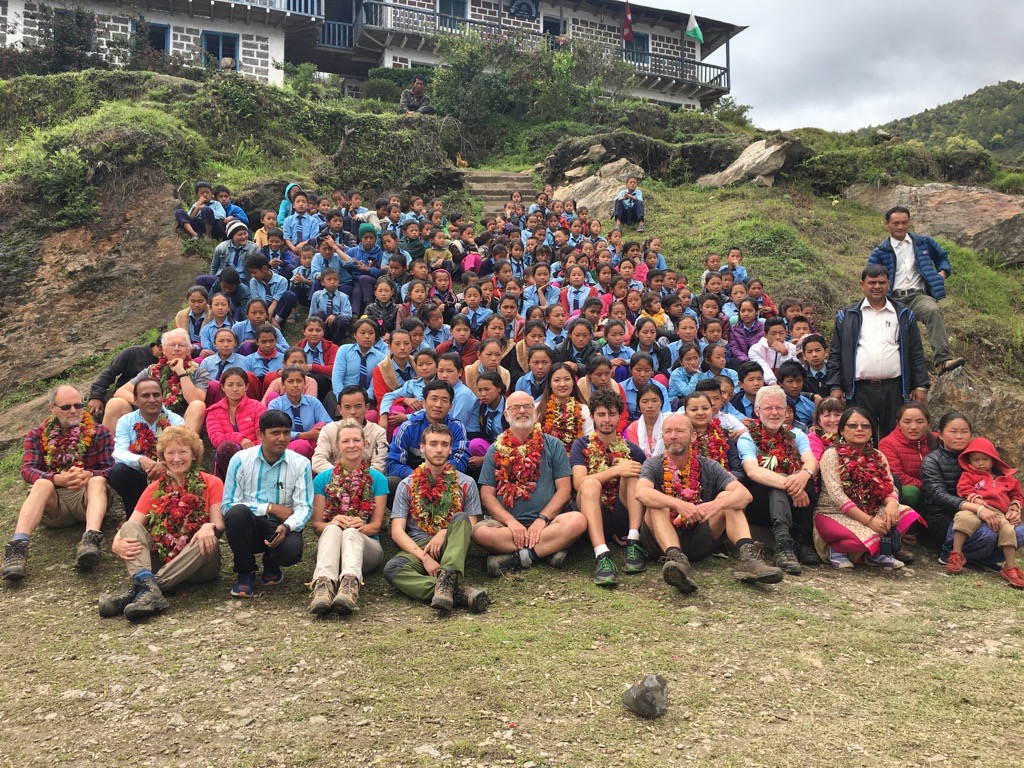
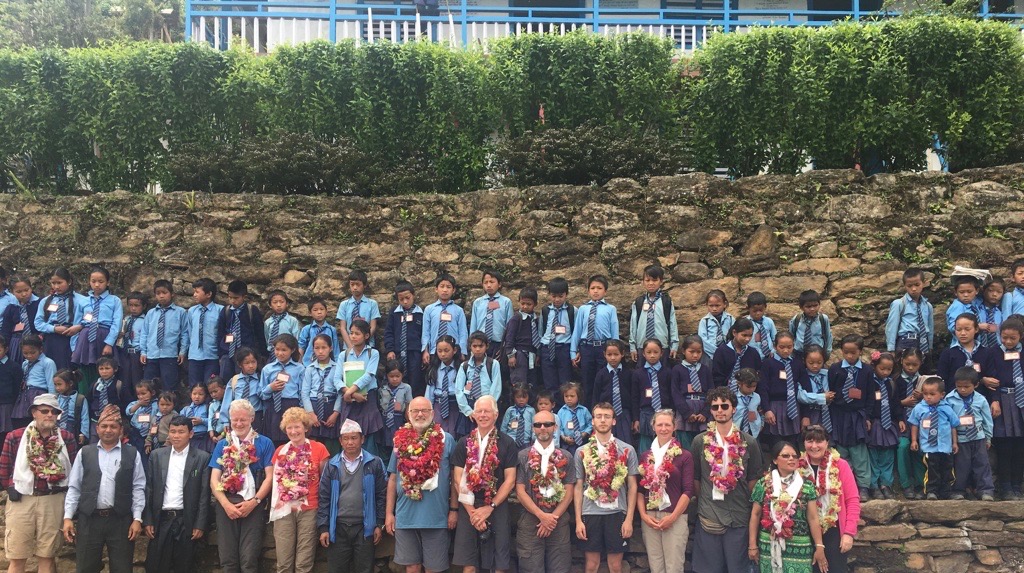
To mark our visit, nearly every child in the school had made a garland. Each child, in turn, presented their garlands to us as we sat in a line in front of them. We were fairly heavily weighed down by the time the procession was finished.

From Sundevi, we could see our next school visit, Bipudham but in order to get there we had to descend steeply for about an hour before climbing for a further three quarters of an hour. It was a slippery descent and we had to take care not to fall.

One of the bright new classrooms

Bipudham School is situated on a little plateau on the edge of a ridge stretching down towards the Timor River. It too was damaged in the earthquake and we were going to experience yet another opening ceremony. Unfortunately, shortly after we arrived, it started to rain and the proceedings were moved into one of the temporary learning centres we built in the immediate aftermath of the earthquake. I was disappointed to see that the school, despite the fact that we had built them some new classrooms, were still using the TLCs, now looking a little worse for wear after nearly three years of use.

Amongst the parents attending the ceremony was a mother who was very drunk. She staggered about the school, making a nuisance of herself. One cheek was heavily swollen, probably as a result of a drunken fall. Later in the proceedings she sat on a bench hugging a girl, her daughter. What chance does that girl have with a mother that is incapable of looking after her properly? The mother would be in no fit state to provide a meal. At least there was going to be food available after the ceremonies were completed.

The school certainly benefits from the new classrooms we have built, and we saw evidence of improvement in the teaching. However, this school has a weak head and you get the impression that that weakness is holding the rest of the staff and the children back.

Having avoided the rice and goat meat we took our leave and descended to Chhiruwa for the night, where we were to stay in the lodge I have used frequently in recent years. We had more rain in the night. There had been hardly a day during this trip where we had not had rain. This is the wettest part of Nepal but the pre-monsoon rains seem to have come early this year.

Early the next morning we visited the Phoktanglung Health Post. Nothing has changed here in the last three years, apart from the personnel looking after it. Each time I have visited they have requested a birthing centre and nothing has materialised. Since my last visit they have had a fatality during childbirth so I am hoping, that once Yamphudin is finished, we can give some attention to this particular need. It will not cost anything like the money we have put into Yamphudin.

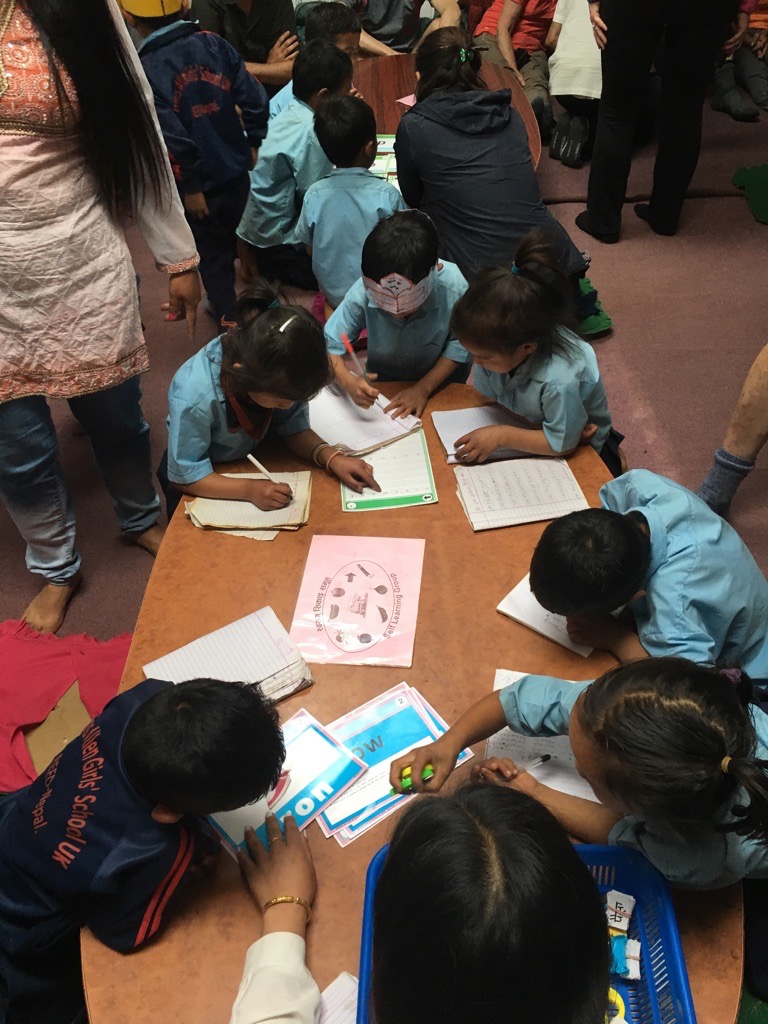
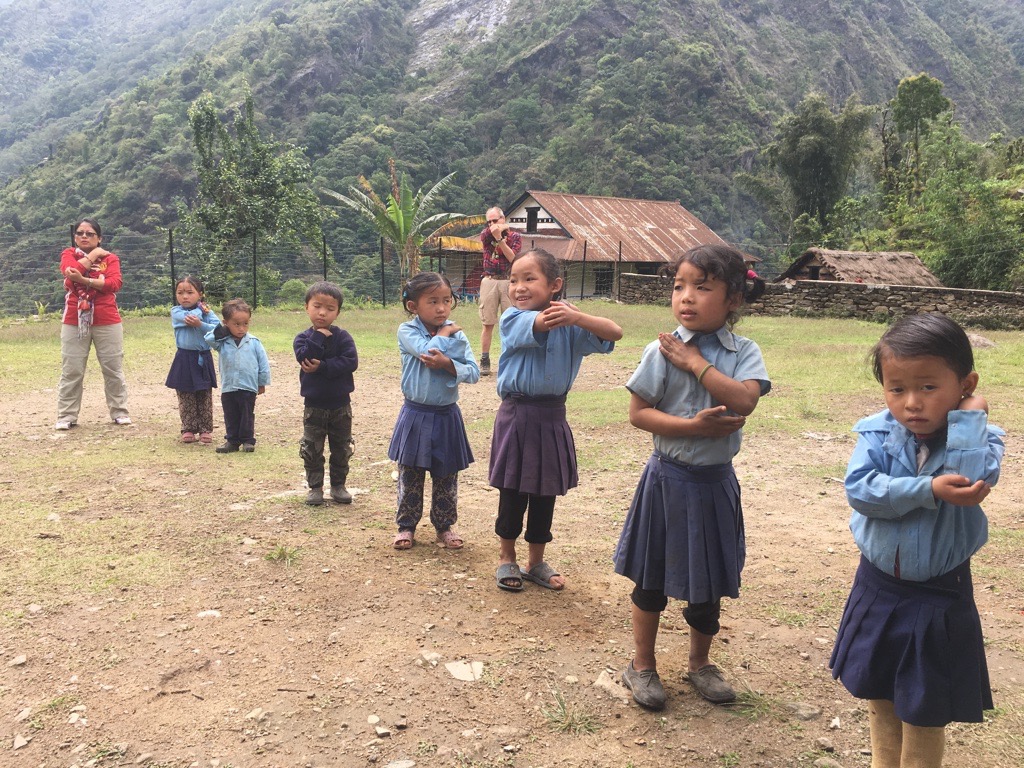
While Kate and the rest of the team stayed on at the health post, Tim, Mike and I went down to Phoktanglung School. We arrived in time for assembly on the playground. This was led by one of the older girls, but even so she could not have been any more than ten years old. She fulfilled her role with confidence as she first led the assembly and then the brain gym activities. Upon the conclusion the children set about going to their classrooms but before they settled to their work they swept out the rooms while other children litter picked around the playground and others filled buckets for the toilets. At no time did a member of staff have to tell them what to do. This was a daily routine and was very impressive.

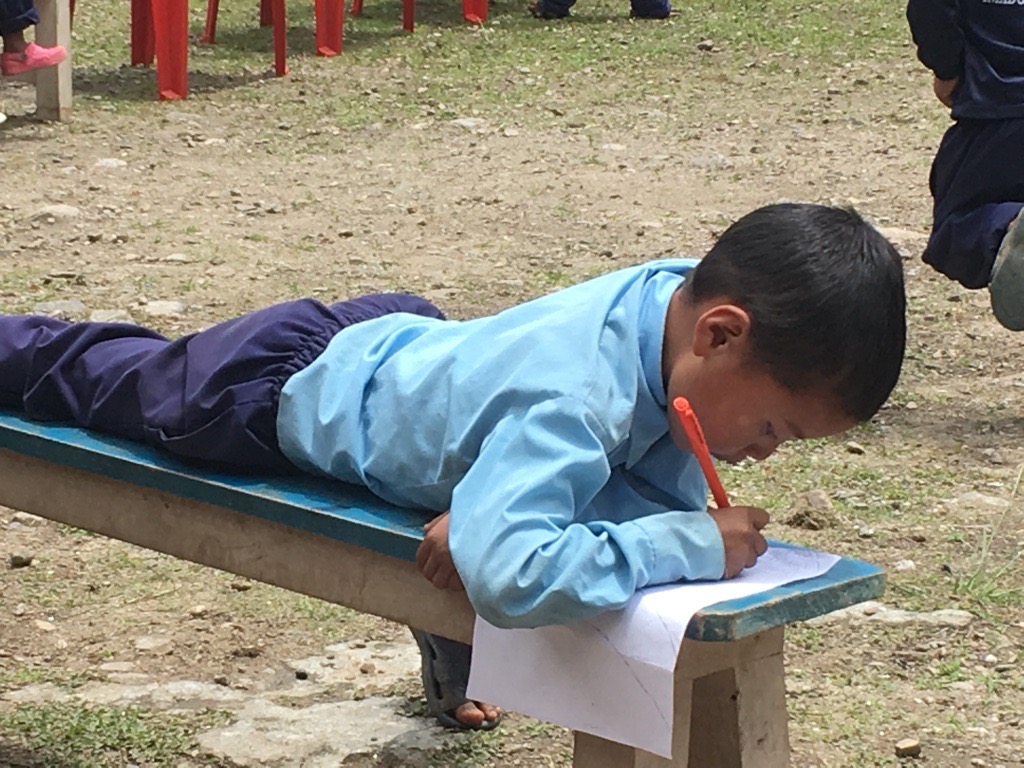
This young man does not want to miss out on his classwork just because we are visiting.

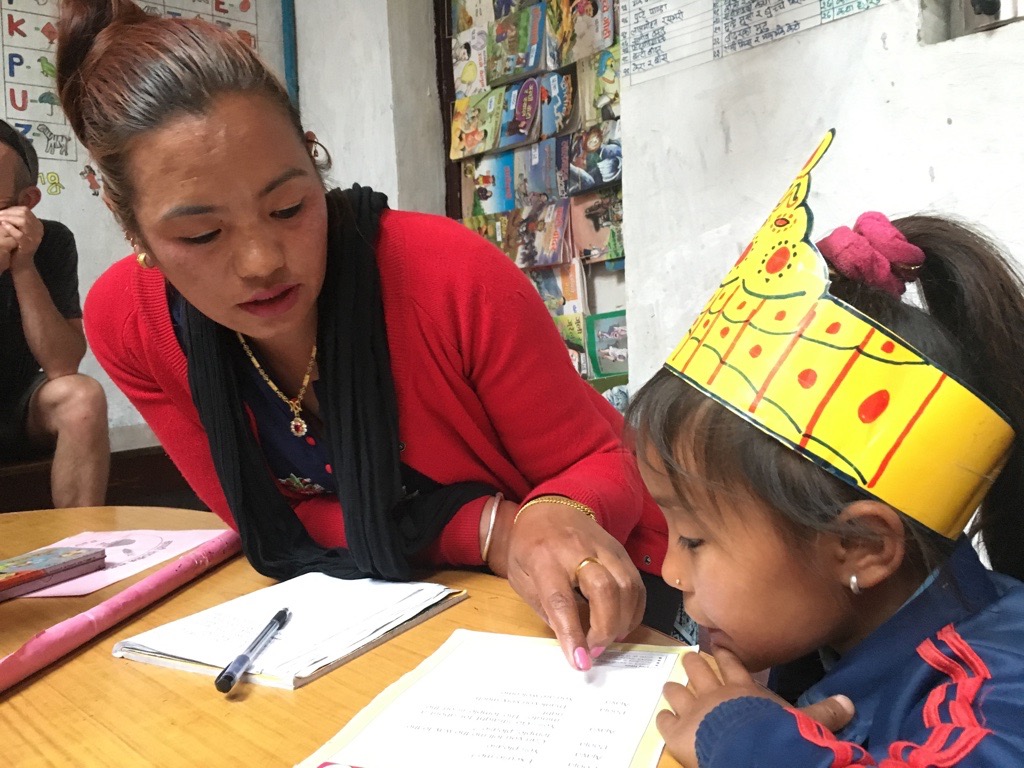
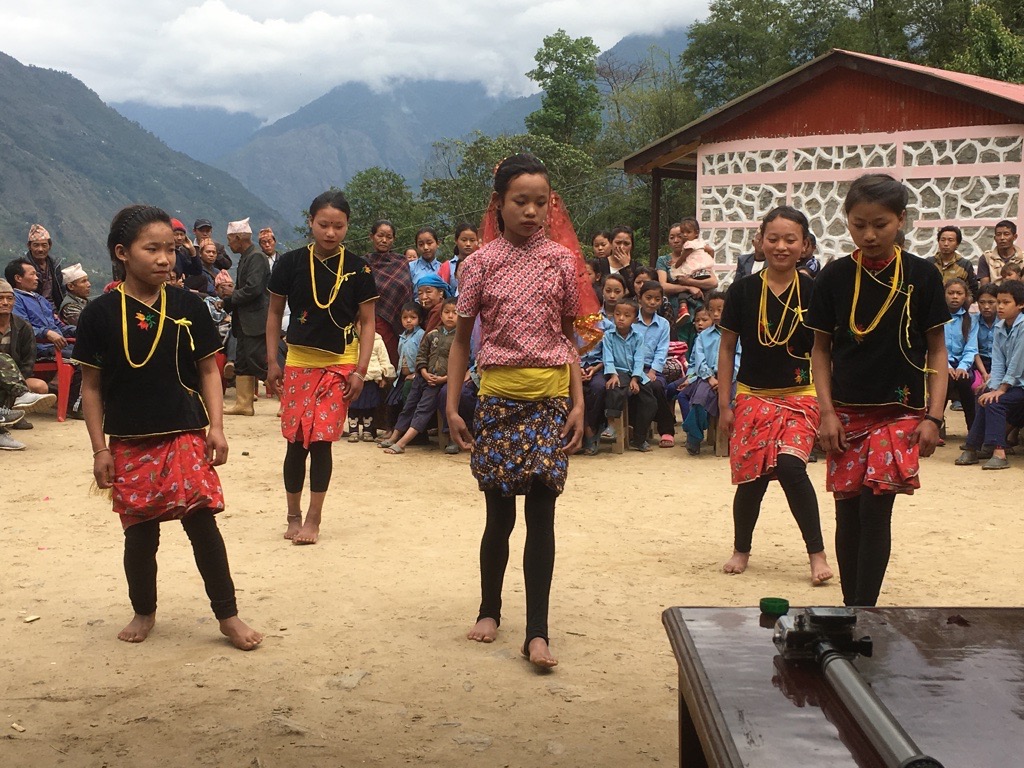
Having observed some lessons, the school then wanted to give us a short cultural show. Just before it started the Chairman of Phoktanglung Rural Municipality visited the school. During the show there was one member of staff who was particularly impressive, the ECD teacher. She seemed to be efficiently involved in all aspects.

This school relies very heavily on community contribution, having only one government allocated teacher. All other staff are paid for from the interest raised from a community fund. It means that they get paid only a fraction of the normal rate. I seized my opportunity after the presentation was over and went to speak to the chairman of the PRM, asking him to use his influence to improve the remuneration of the teachers in this school. He gave me a positive response without any guarantees.

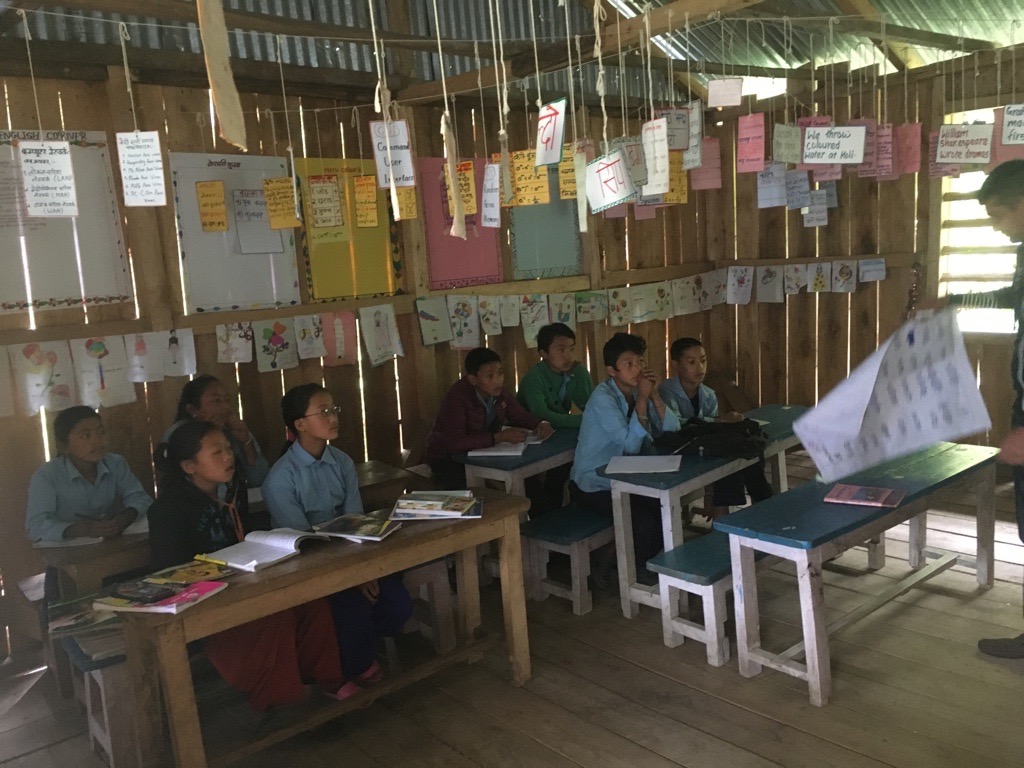
A Sewalung lesson

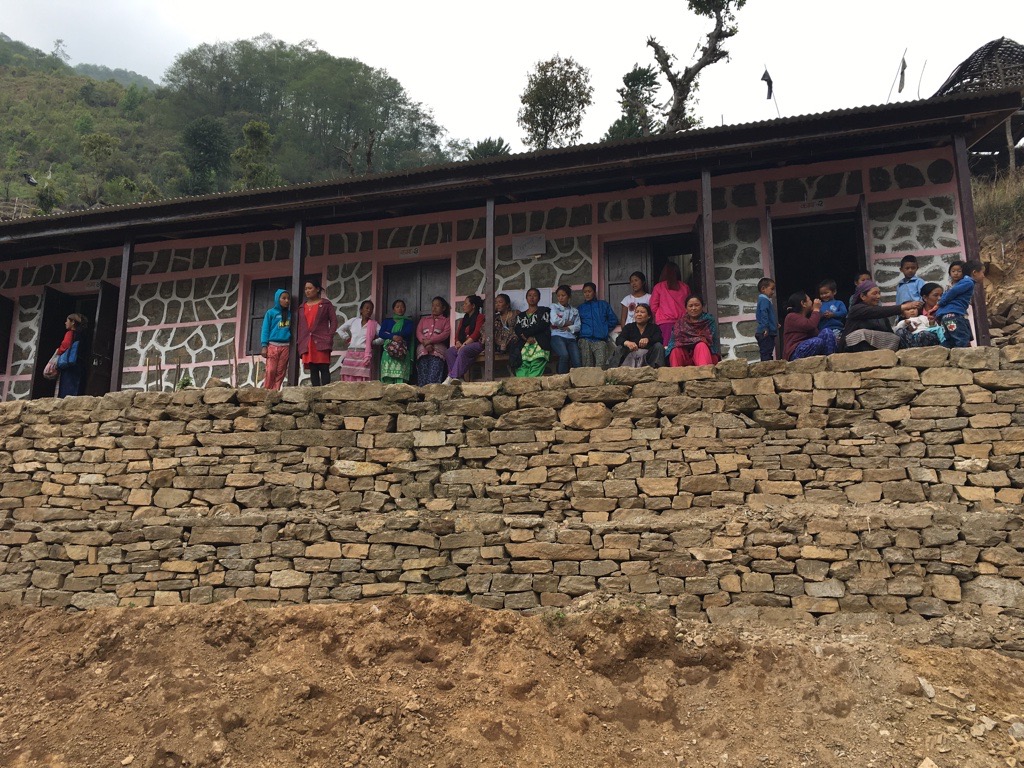
From Phoktanglung we headed up hill for an hour or so to reach Sewalung School. They too had had a rebuild programme following the earthquake, so this would be our fifth building opening ceremony. When we arrived the children were still in lessons so we had the opportunity to observe some lessons in the new classrooms we had built and also in the government funded classrooms that were under construction when I visited the school in 2016. In 2016 the school was in a sorry state. There had been significant damage to many of the school buildings but they were still having to use them out of necessity, along with a neighbouring building that was not really suitable. Then all the classrooms were dark and the teaching was uninspiring. Now, they have bright and airy classrooms and the teaching was much improved.

I remember there being a weak head teacher in 2016. He has now left but has been replaced by a similarly weak head, appointed based on his years of service to the school rather than his quality of teaching and leadership. At least the Key Teacher is good and there are others who are self motivated to work for the benefit of the children.

Embarrassingly, I suggested that we might have some noodle soup before the formal celebrations started. Unfortunately the formalities started before the soup arrived, so, when it did come, we sat there in full view of everybody eating noodle soup. These events, despite their formality are actually fairly relaxed and chaotic so I doubt for a minute that anybody was surprised or shocked by our eating lunch.

After about two hours, during which there were a lot of speeches, the longest being from the Chairman of the Rural Municipality, who spoke for seventeen minutes and which Rajendra translated for us in just forty seconds, the event came to a close.

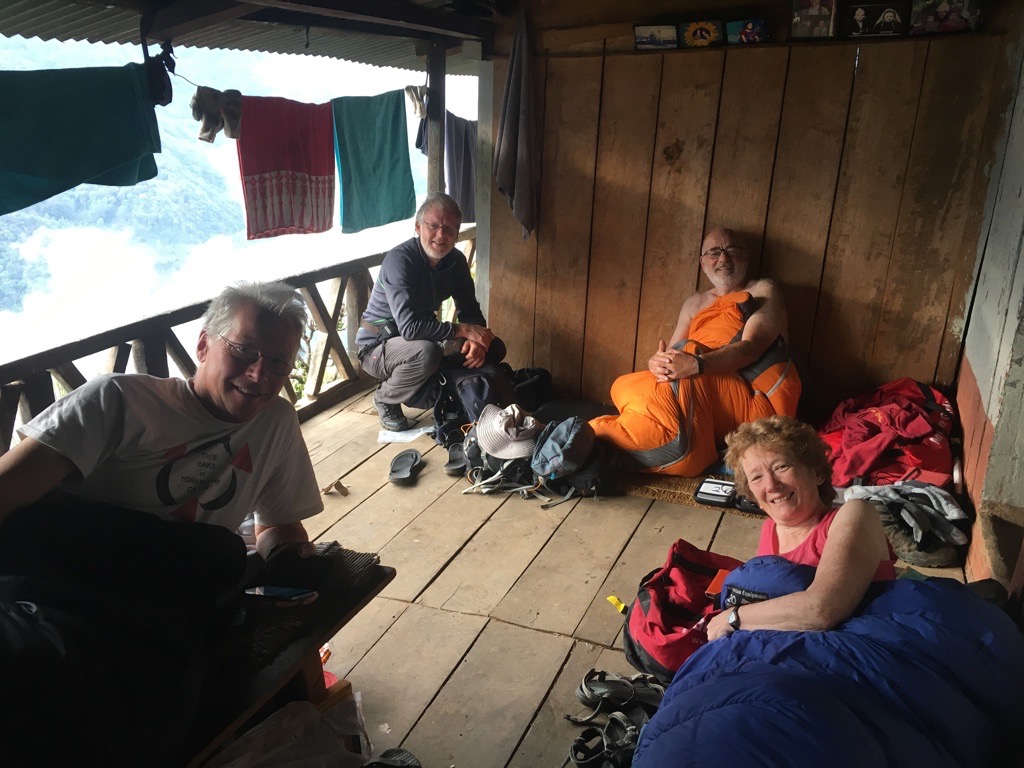
Climbing up further from the school, we eventually reached a path that contoured high along the hillside. After about an hour we reached our overnight accommodation, the house belonging to one of the Sewalung teachers, where Tim and I stayed in 2016. The difference this time was that there were ten of us, plus Rajendra, Passang, Sujata and eight porters. There was a surprisingly large amount of space available to fit us all in, although Tim, Kate and I elected to sleep on the upstairs veranda. That produced one of the best night’s sleep of the trip.

My last speech of the trip!

We were only about twenty minutes from our last school, Rani Basic School, in my mind the best school of all those we work in. Despite it being a Saturday nearly all the children turned up to enthusiastically greet us and show us, with pride, their school. After the usual assembly and brain gym, all ably led by the children, we were able to observe a number of lessons that were both engaging and informative for the children. They also have a computer suite and there I observed, with the use of a programme projected on to a wall, a geometry construction lesson. It was all really good.

Afterwards, we all gathered on the playground again for us to be festooned in so many garlands that they weighed heavily and the strings cut into the back of our necks. As we listened to the speeches the clouds cleared from the high mountains and we were treated to super views of Jannu at the western edge of the Kangchenjunga massif. Eventually there were no more speeches to be made or dances to be performed. It all came to an end and we began the long, knee jarring descent to Siwan 1000 metres below. After three hours it was good to finish. Despite all my trouble earlier in the trek, in these last few days I had felt much better and much more able to cope with the endeavour needed to visit these remote schools. This trek, unlike most is unusual. A normal visitor who embarks on a trek gradually gains height by following a recognised route up a valley to a high point. On reaching that high point they either turn round and return the same way or continue down the other side. We were not having it that easy. In order to visit a school we might have to climb anything up to 1000m to then descend before visiting the next school. And all the slopes were steep, the temperature and humidity levels high. Mike and Ann, who have done a number of treks with me, maintain that this is the hardest they have ever done! Well done, everybody!

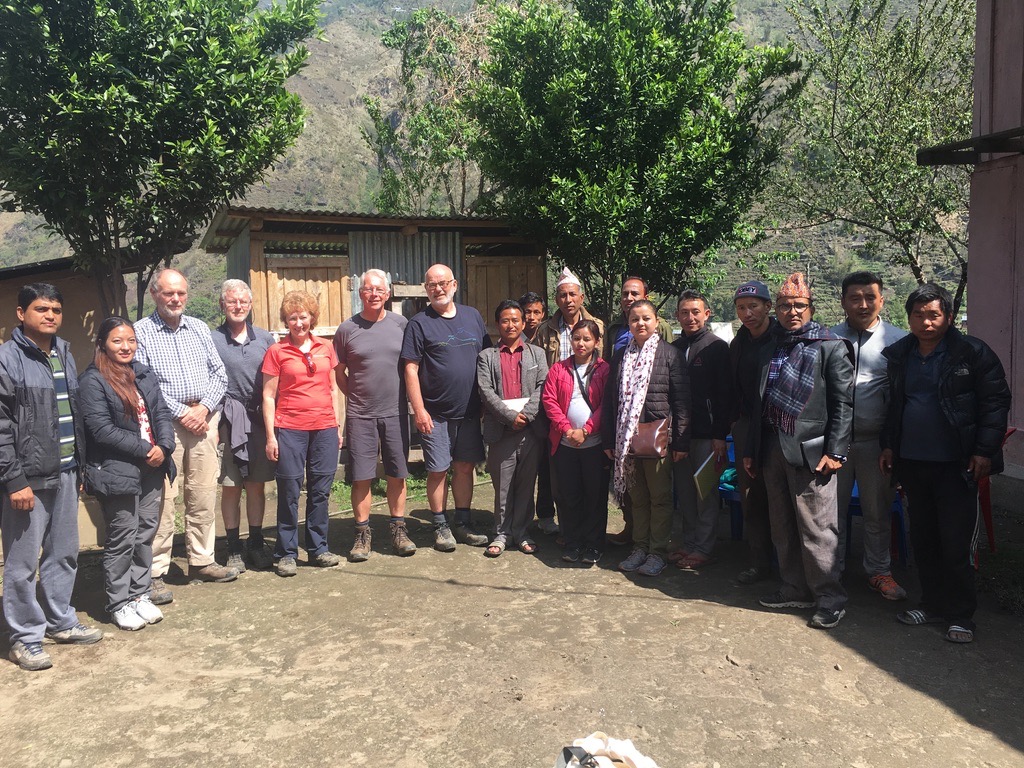
The full team of REED staff, porters and ourselves

The jeeps were there to meet us and take us back to Taplejung ready for the journey to Bhadrapur the next day. In fact we were only travelling as far a Ilam, so that we could then make sure that we got to Bhadrapur in time for the late morning flight.

The flight back to Kathmandu was remarkably on time, which gave us some time in the afternoon to do a bit of necessary retail therapy. Tim, Kate, Ian and I managed to eat in the Garden of Dreams before returning to our guest house in Patan.

Our last full day in Nepal was largely spent in meetings with REED where we discussed the various options for our future involvement. It has been made abundantly clear to us that there is a growing need for us to expand our work. At the same time, there are schools that need less input from us now that they have had the training. What they have learnt and the approaches to education that they have adopted are now part of each school’s culture. We have made a difference, and, as long as the schools are monitored and supported further when necessary, we can move on and give more children in these remote mountains the better opportunities in life that a quality education brings.

One of the problems I have wanted to solve is the provision of a midday snack for children so that they can focus on their learning in the afternoons rather than worry about their rumbling stomachs. We had looked at a number of ways we could do this but never found anything that was going to be guaranteed and cost effective. REED announced that they were going to make some savings in their budget so that they could buy every child a snack box. That would be about 2,100 snack boxes, costing NRs200,000 (£1400). They would then use the schools to educate the parents to send their children with a simple snack. I had NRs50,000 left in the trek kitty, so that immediately went to support the cost of snack boxes. While the problem is not entirely solved and there can be no guarantees that all children will be eating snacks, it is good to know that very soon every child in the schools where we work, may soon be having refreshments in the middle of the day, allowing them to concentrate on their afternoon lessons. All it requires now is some parental responsibility and cooperation.

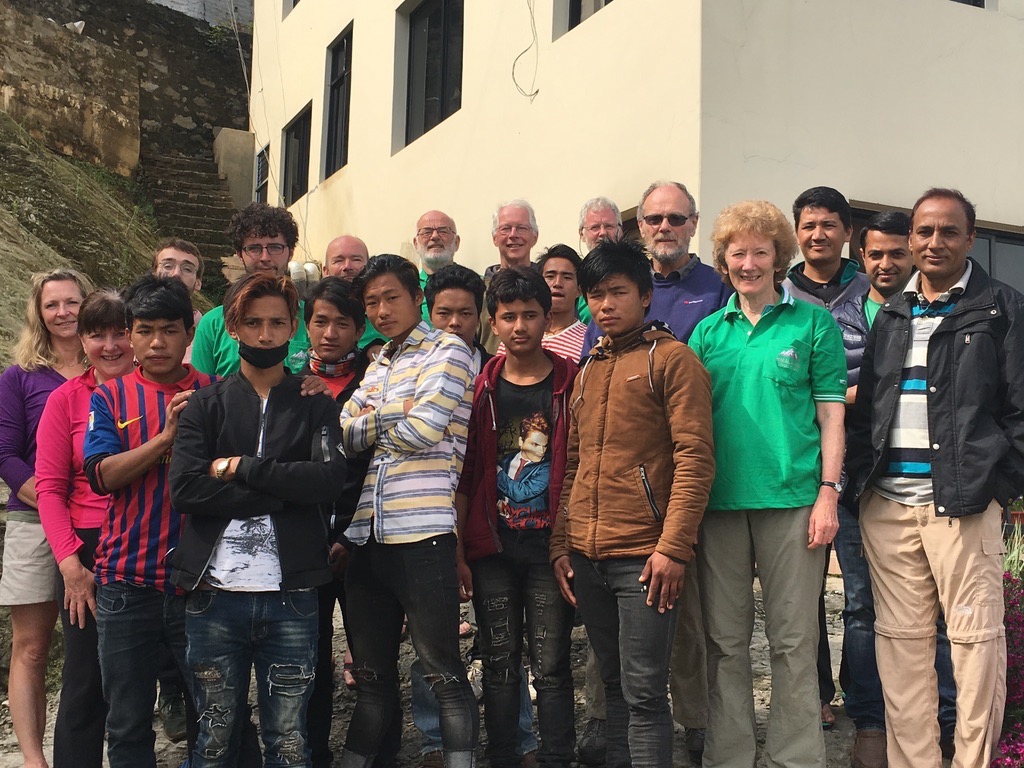
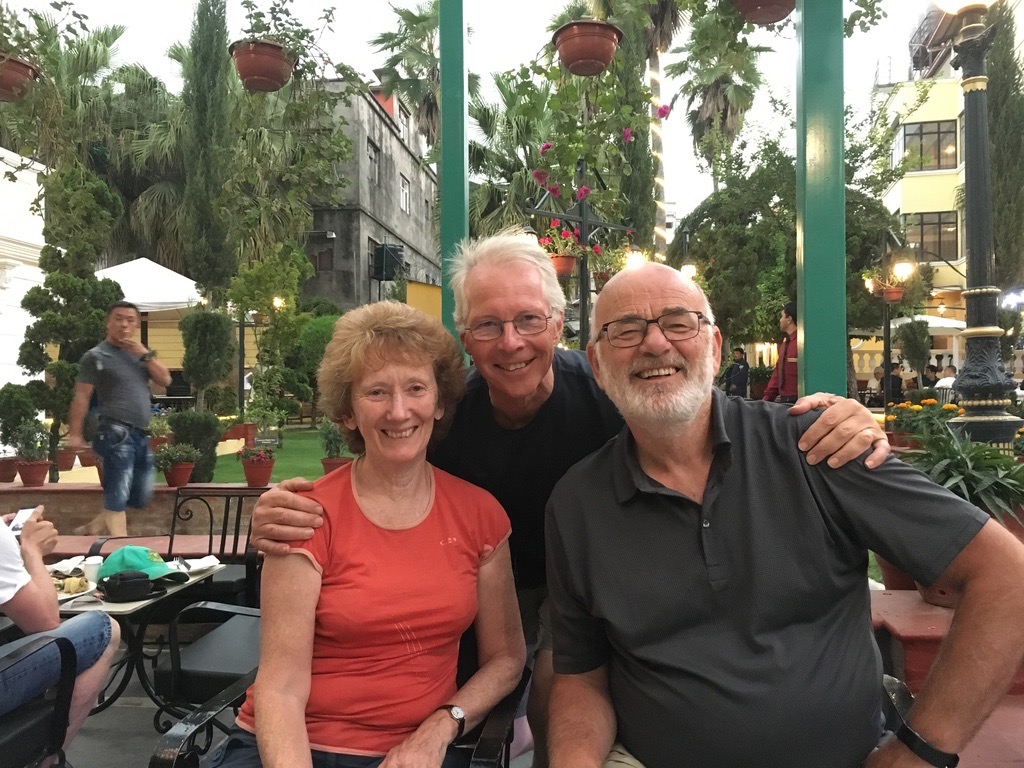
The three trustees

Despite the difficulties at times, this has been a superb trip. It gave me a great deal of pleasure to share what we do in this remote region with people who had little understanding of the problems associated with trying to provide quality education and health care. I hope it has opened their eyes and that, perhaps, they can find some way of supporting the Himalayan Trust UK to continue with this important work.


Deep into the Mountains

We delayed our departure from Taplejung until 10.00am so that we had time, hopefully, to get our washing dry. Unfortunately, the damp atmosphere that prevailed overnight meant that everything was still damp. It was also a good move as it took one and a half hours for breakfast to be served after ordering.

The drive to Tapethok was interesting, to say the least. Up to Suketar the road had a proper surface but beyond that for the next four and a half hours we were subjected to an increasingly bumpy ride as the, jokingly called road, was created more recently. At one point the driver, hardly more than a boy, became concerned about something behind him. He was looking at the rear off-side wheel. He should have been looking at the rear nearside wheel, for when he realised it the wheel was almost off. A little time was wasted while he tightened up the nuts. In places the road was nothing more than a collection of misshapen rocks randomly placed on a steep slope or mud filled ruts. Needless to say the going was slow. Nevertheless, it was beautiful the further we delved into the valley with the raging waters of the Timor River below. As we reached places we knew it was interesting to see where they had taken the road. Thankfully they did not try to take it through the centre of Chiruwa, but beneath it between it and the river. Soon after passing through Chirewa we reached Tapethok where we were to stay for the night. As we did so the rain began to fall. Seven could be accommodated in the lodge while three of us had to camp. We quickly put up the three tents before the heaviest of the rain in the hope that the inners would have an opportunity to dry out.

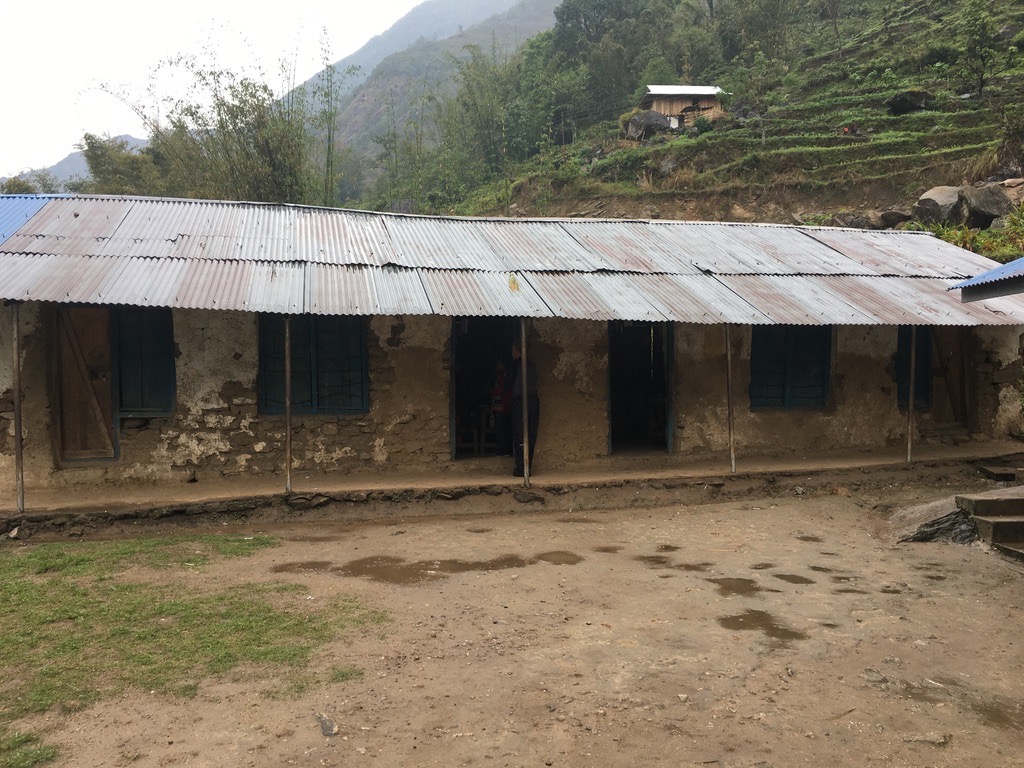
The dismal classroom building at Tapethok

After a quick noodle soup we headed off to Tapethok School before all the children went home. This is my third visit to this school in as many years and it does not really get any better. The school looks tired, the newer of the two buildings looks as if it will fall down at any minute. There is electricity but only to the office. The classrooms are wired up but there are no bulbs in sockets so ultimately the classrooms are very dark. Not ideal. There seems to be a lack of motivation among the staff, possibly because it was last thing on a Friday, or because there are only five teachers for the eight classes. The headmaster is basically a dull man and he runs a dull school. I think, with an inspirational head, this school could be much better.

It was good to see the newly installed water supply but much of the conversation we had was about how to provide children with a midday snack. This is becoming a common theme running through our visit. It is something that, I believe, is a major issue and one for which I would like to find a solution, so long as it does not detract from our core work.

The meeting over, we had cardamon tea and biscuits after we had been presented with numerous garlands.

That night, while most of the group slept in the lodge, three of us chose to camp and I had a really good, undisturbed night’s sleep.

We woke to clear blue skies and the promise of a lovely day, an opportunity to dry my washing and the tent. Although I succeeded in drying my washing, some of it had been wet for too long and smelt worse than it did before I washed it.

After breakfast Rajendra took Tim, Kate, Mike , Ian and me up to a place in the village where a meeting was to take place with the Chairman of the Rural Municipality. There have been a great many changes in Nepal in recent months, since a majority government was elected and there was a reorganisation of local politics with elected local leaders. No longer are there VDCs (Village Development Committees) but wards. Before we worked in Lelep, Ikhabu, Tapethok, Olangchungola and Yamphudin. They all, with the exception of Yamphudin, fall under the ward known as Phoktanglung. There are three other former VDCs now under the control of this new ward, Sawadin, Lingkhim and Khejinim, which do not benefit from the support of REED or HTUK. There is a plea that we include these three areas into our programme, which would support a further nineteen schools. I think REED, and Rajendra in particular, are under significant political pressure.
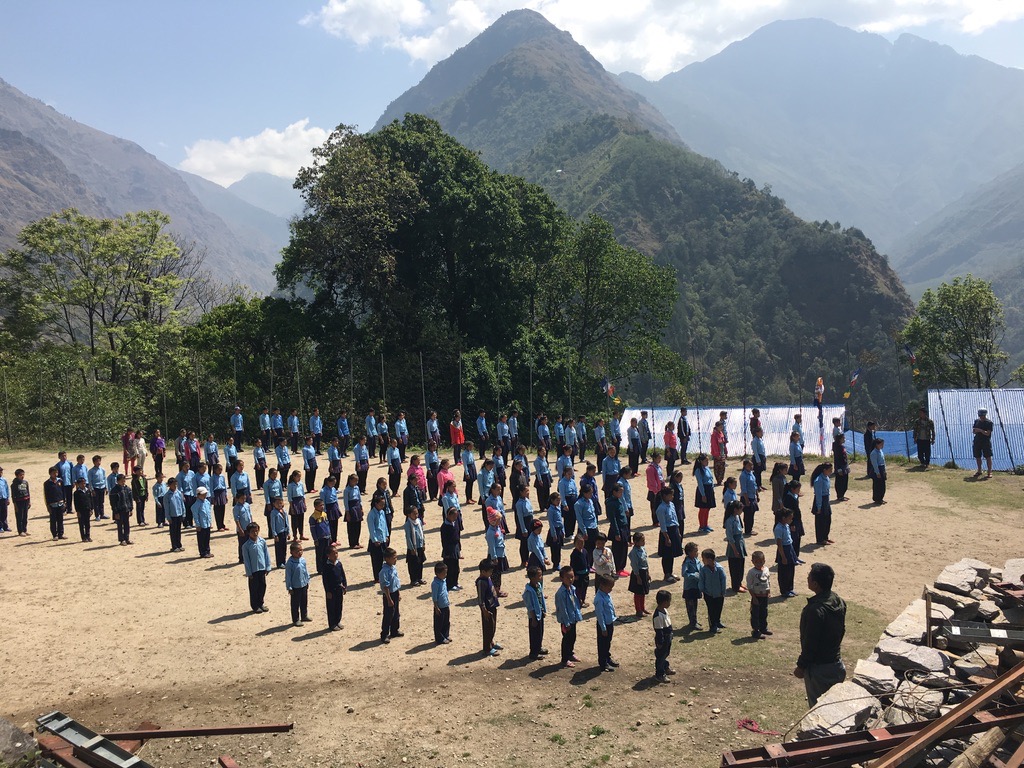
With the newly elected Chairman of the Phoktanglung Rural Municipality (on my left)

The elected chairman of Phoktanglung Rural Municipality is a young, committed politician, eager to make change for the better for all people within his remit. He is a parent at Sundevi School and has seen at first hand the benefits of REED’s intervention. Presumably he has political accountability to the electorate, and, as such, wants equal opportunity for all. This is far more important than devising a way to support a snack fund. HTUK is going to have to look very closely at what it does and how it does it within the serious confines of its financial capability.

One thing that was interesting is that he would be prepared to match fund any donation with governmental funding. I think it is important that the Nepalese Government, even at local level, should be involved in supporting their rural communities in every respect.
This then begs the question, what to do about Yamphudin? It falls under a different rural municipality and is only one of another nine wards, none of which we are working in. We cannot contemplate, from a financial point of view, to support so many more schools, despite pleas from Mamanke and Khewang for our support. Yamphudin, we know has good schools under good leadership. In a few months they will have a new health post. Is now the time to say to Yamphudin that you are well set up to stand on your own two feet?REED can continue to monitor for a period of transition but HTUK be considering moving out of Yamphudin once the work is complete?

It was a very interesting meeting and has given us a lot to think about as we plan our future involvement with the project. We may be forced to move in a direction we were not planning for, although we always knew there was a desire for us to expand.

Returning to our lodge and camp, we then visited the health post in Tapethok. I have always been impressed with this health post as it has always seemed to be efficiently run. The 24 year old nursing auxiliary midwife who showed us around was not only charming but also came across as extremely efficient and capable in her work. The sad thing is, that as a young wife, she has been posted to this remote clinic while she leaves a husband in Kathmandu. While she is excellent, the sooner we can train a local woman who is committed to living in the community, the better.

Lelep’s new building completed

Meetings over, we set out on the three hour walk to Lelep, initially walking along the side of the Tamor River, before climbing through woodland to the village of Lelep. The village is undergoing change. Many of the fields and terraces seem to be growing cardamon, a cash crop, rather than crops that will sustain the dietary needs of the community. The road will reach Lelep before the end of the year and, I believe, the community are preparing in advance the opportunity to get a cash crop out and the ability to have supplies brought in by road. Whilst it will be great for the community I fear for the environmental impact the road will have and how it will change the nature of these rural communities, not always for the best.

By late afternoon the sunny day had disappeared behind heavy clouds and another thunderstorm brought a soggy and violent end to the day.

I woke early after a good night’s sleep in my tent. It gave me time to have a cold shower and do some washing before the others woke up. Stupidly, I forgot my towel so I air dried while doing my washing.

Gradually, as 10.00am approached children started arriving at the school, intrigued by three tents on their playground.

Assembly

At 10.00 the oxygen cylinder chimed the start of school and the children lined up on the playground, positioning themselves an arm’s length of each other front and back. A speaker sprang into life and the children sang the Nepali National Anthem. A number of children were then selected to lead the brain gym, also set to music. Brain gym is a series of movements that mark the transition between free play and focused learning. When that was over a couple of older boys were called out to the front to remind us all about the importance of education.

Once assembly was over the children quickly and enthusiastically went to their various classrooms. However, before lessons could start the staff could spend ten minutes in the staff room preparing their lesson. It is worth knowing that, although term has started, the first two weeks are for registration. Not all children will show up and nor will all of the teachers. Hence, two or three classes could be combined until such time as all the teachers are present.

Lelep’s light, bright and airy classrooms

Once the classes were up and running we split up and visited each in turn. We observed an English class, two geometry classes, a social studies class discussing development, a class learning a new class song, a Nepali class and a class of younger children learning their English letter sounds and using them in simple words. Most of the teachers were animated and enthused the children. The children may have been subdued a little by our presence.

Having been round all the classrooms we adjourned to the office for a formal chat. I was able to congratulate the staff on their wonderful new building and that I wished all schools could have such a wonderful asset. All the rooms are light and airy. It was a shame that I was not able to see the electricity working but at least it was not through their fault but that of a transformer in the micro hydro-electric supply. They requested help with science, maths and English and when I asked if they would appreciate volunteers, they affirmed that they would.

I was horrified to learn that the hostel, which houses 30 girls, between the ages of 10 and 16, has no adult supervision beyond the school day. They have a cell phone so they can contact the head or another member of staff in the event of an emergency. They do all their own cooking and washing. I know Nepali children are much more self-sufficient than most western children, but I don’t think this is right.

We had spent a successful morning in the school and I left feeling much more optimistic about the school and the education it was providing.

As I left I caught my head on the bar above the gate, taking off a layer of skin just where I had taken a layer off in Kathmandu a few days previously.

With the health clinic staff

Appropriately we headed over to the health clinic to meet with the staff there. The same young woman that I had met on my two previous visits was still there. She upset me last year by saying that there would be no outcomes from our visit. Well, they got electricity from us last year. Unfortunately, it was also victim of the transformer malfunction. This time she was much more pleasant and is obviously doing a good job for the community. She is in a bizarre situation. Her home is in the Terai where she has a twelve year old son and a husband. She has hardly seen them in the last four years. Her male assistant comes from the far west of Nepal. It seems to be a crazy situation for I understand that there are similarly qualified people from Taplejung who work in other parts of Nepal at the insistence of the government.

We were amazed to hear that the clinic does not have its own water supply but relies on staff carrying buckets of water from the nearest source. When I enquired how much pipe they would need to have their own supply we were told 200m which would cost NRs12,000. That is nothing and I told her I would return after lunch with the money. I wasn’t going to get involved with the details of the concrete stand pipe and all the extras, the community could do that. Even if they don’t, the clinic will still have piped water.
After lunch I returned with the money. While I did that, Mike returned to the school to do some teaching. He thoroughly enjoyed himself and was found to be of interest to the dignitaries, press and TV who arrived en route to the school opening ceremonies due to take place the next day to celebrate the completion of the earthquake rebuild, to which we will also be attending.

For some days I have been gathering a fine collection of insect bites all over my body and legs. I think I have just found the source – ants! Tiny little brown ants. The bites are driving me mad. I would much rather have leeches on me.

In the morning we woke early as we had a busy day celebrating the ‘Build Back Better’ programme after the 2015 earthquake. A number of important big wigs were also staying in the lodge including the Resource Person, the DEO (District Education Officer) and a photographer and camera man from Kantipur, a Kathmandu television station.

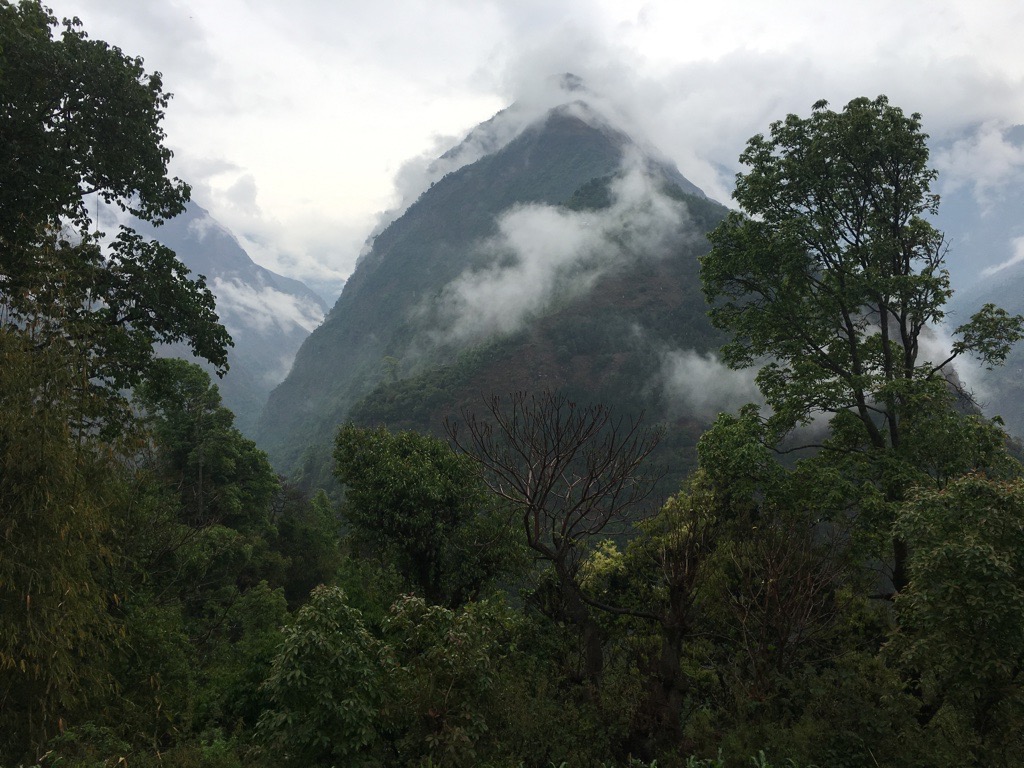
We set off after breakfast for the two hour climb up to Lawajin Basic School, a remote community a long way up the hillside. At first we zig-zagged through woodland until we reached the crest of a ridge, giving us exclusive views up the Olongchungola Valley towards the border with Tibet. Had cloud not been hovering at the head of the valley, we would have been able to see white peaks piercing the sky.

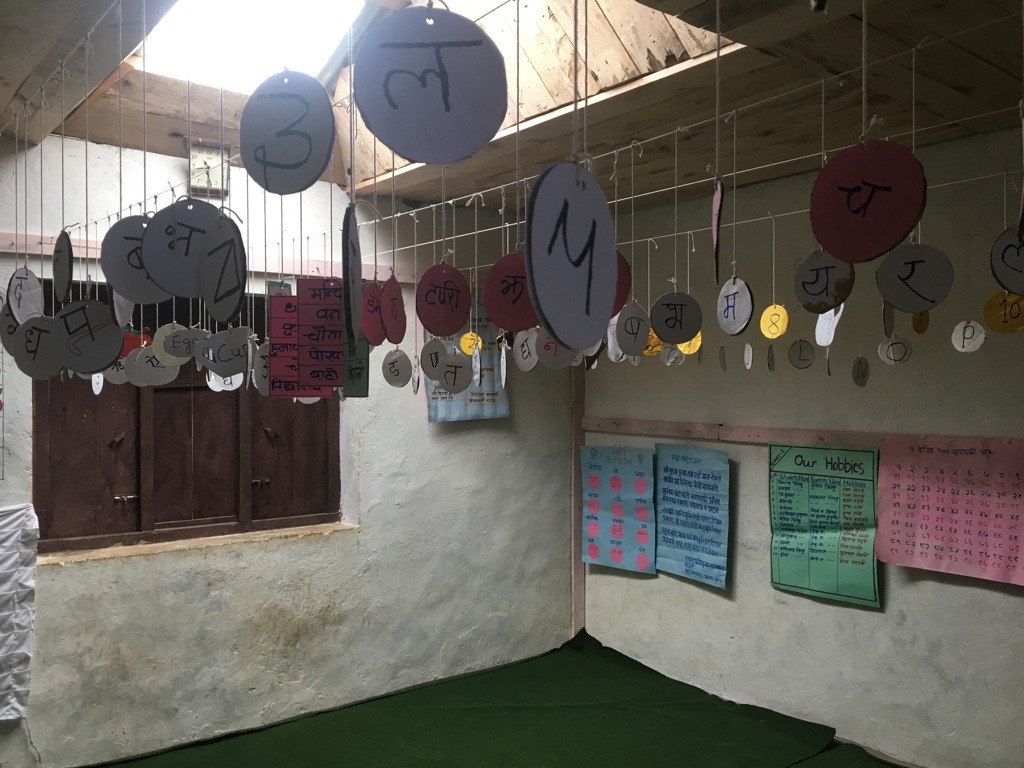
The climb continued at a more gentle gradient up to another high point from which we could see the village with the school at its heart. Music could be heard as they made preparation for us. After a lengthy flat section we dropped down to cross a stream by a suspension bridge. On the rise on the other side of the river scouts were waiting to greet us with khata scarves. They then led us towards the school but before we reached it a drummer and cymbalist, along with all the children from the school, came to guide us in. A welcome arch of newly cut foliage lead us on to the playground where a canopy had been erected to protect us from the sun. There was a lot of activity with furniture being placed once, then moved to another place, only to be moved a third time. The new building looked good and houses the office and one classroom. Inside, they are bright and airy with a central skylight that makes all the difference. The walls are painted white with instructive murals painted on them. Mobiles hang from the ceiling.

The Resource Person and the DEO await the opening ceremony

As we sat under our canopy we were plied with fluid, first a cold orange drink, followed by tea, sickly sweet Red Bull and beer. Fortunately the toilets were not too bad. Behind them was the new water facility, which did not appear to be connected, or, perhaps it had been disconnected temporarily by the group of women busy producing hot water and cooking a lunch for everybody. There was a lone goat tethered there as well and I feared for its well-being a little later in the day.

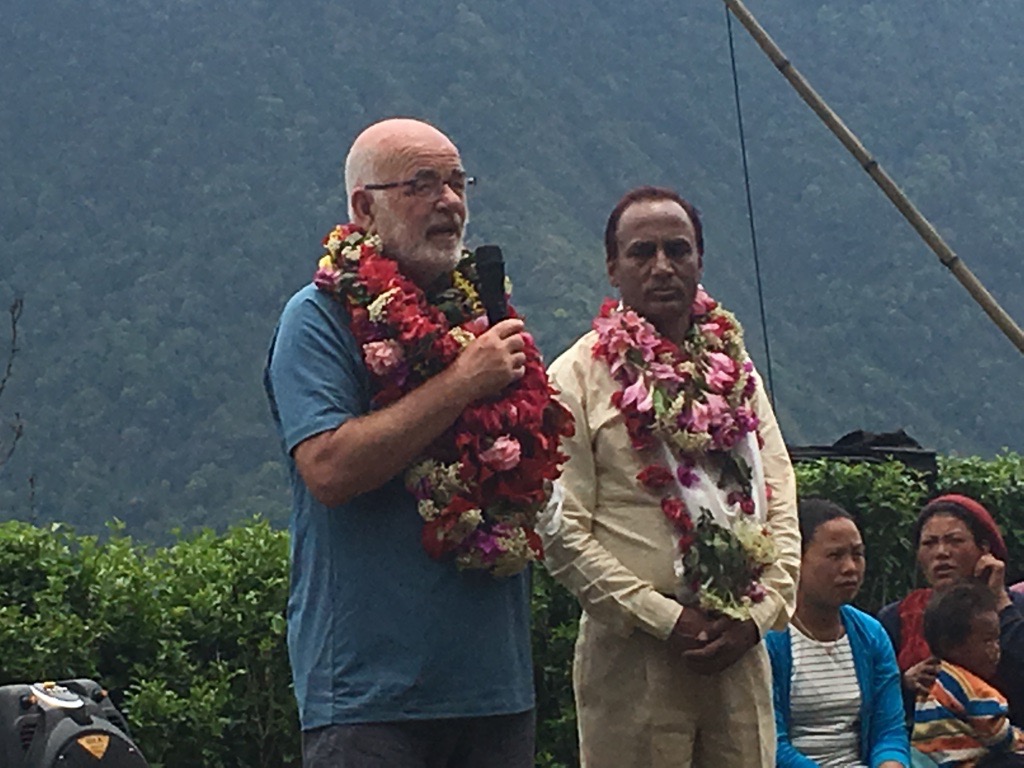
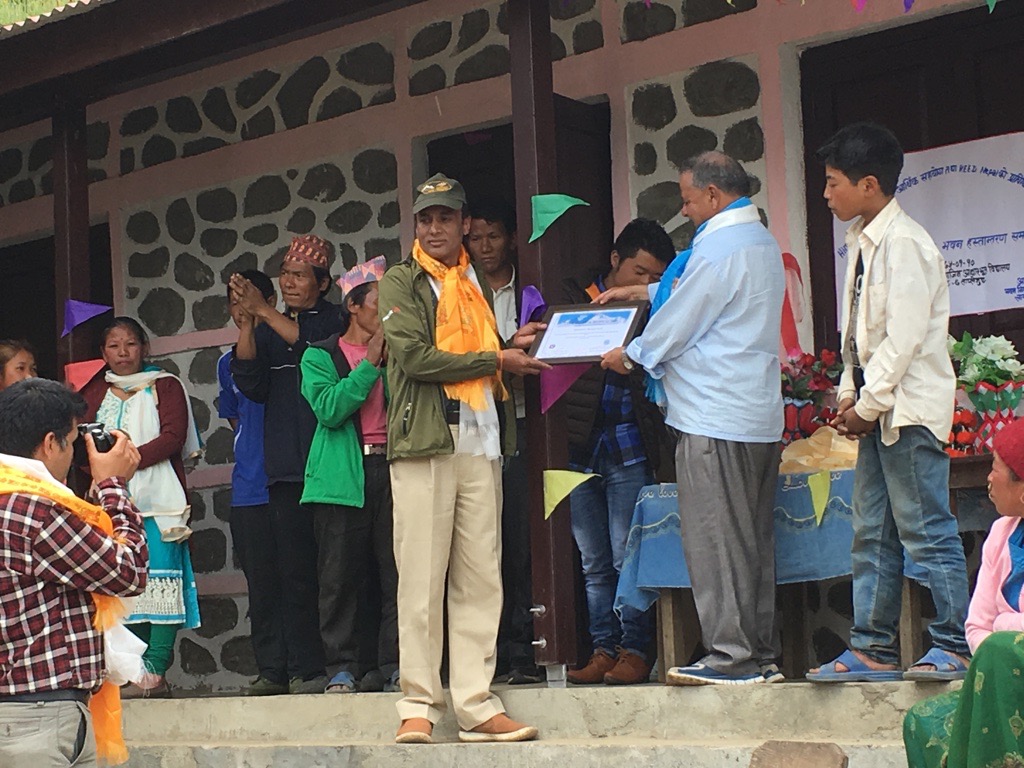
Eventually the proceedings started with a quiz for three teams of children, the questions based on their curriculum. There seemed to be very few taking a great deal interest. Afterwards there were all sorts of little acts of ceremony with the DEO cutting a ribbon, me reading out what was on the brass plaque, presentation of certificates to various people involved with the rebuild. There were speeches from the various dignitaries there, including me. I won the prize for the shortest speech while the DEO and the political leader of the ward were quite lengthy. Occasionally dances filled the gaps between speeches, giving the whole occasion an air of chaos and confusion, added to by the occasional malfunction of the sound system.

Presentation of certificates

After all the speeches and ceremony we were served a lunch of rice, dal and cauliflower. There was some fish on some plates, not mine, but as it was nearly all bone and no meat I did not mind. I also avoided the goat that was available.

During lunch one of the villagers came up to me to thank the Himalayan Trust. His son had received a scholarship from us and has now just graduated as a CMA (Community Medical Assistant). He was so very grateful to us for giving his son this opportunity and start in life.

After a bit more dancing, with audience participation, we were escorted down the path by the same drummer and cymbalist that greeted us.

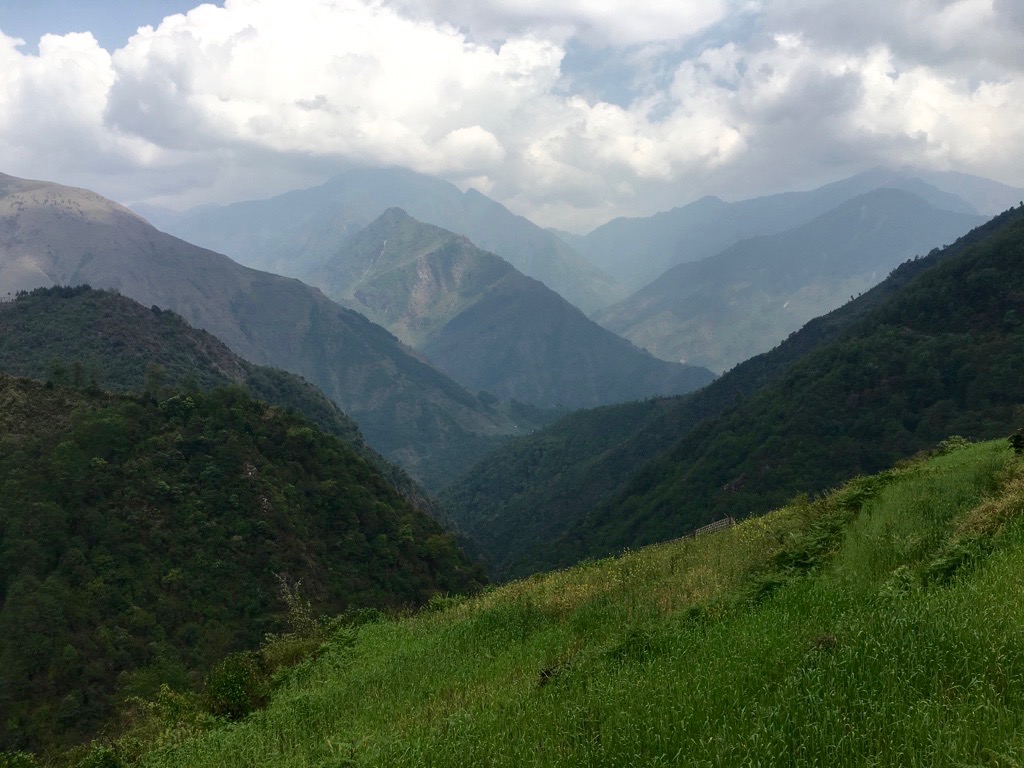
Beautiful layered landscape

We were heading towards Lungthung School, another victim of the 2015 earthquake. I had visited it in 2016 and was shocked by the extent of the damage. It was a lovely walk through a mixture of woodland and terracing. Until we dropped over a ridge that brought Lungthung into view, we had been able to hear the continuing party at Lawajin.
When we arrived there were many parents gathered on the playground waiting for something to happen. The children were still in class so we took the opportunity to see the new classrooms with children in them. They had been built to the same design as at Lawajin but there were six new classrooms. It was good to see both children and teachers enjoying this new facility.

After the tour, we went to sit on the playground where tables and chairs had been placed for us so that we could join the many parents. It was beginning to rain lightly as the headmaster started the proceedings, which followed a similar pattern to the morning session with lots of introductions and speeches. The head who was leading the programme didn’t altogether seem to know what was happening and kept referring to Rajendra for guidance. I was pleased that we were not being subjected to microphones being wired through karaoke machines. There was similarly a little dancing.
When it was all over a meal was served of flaked rice with goat. There had been no carving of meat but a hacking of the whole animal into small bits that included a lot of offal, splinters of bone and, on Harry’s plate, a tooth. Harry is vegetarian.
Again, I avoided the meat.

Despite the remoteness of this region, they all have mobile phones

We were supposed to camp on the playground but it wasn’t really very suitable as it was stony on loose soil. Instead, we stayed in two houses close the the school, the families sacrificing their bedrooms for us. I think my room belonged to the daughter of the house.
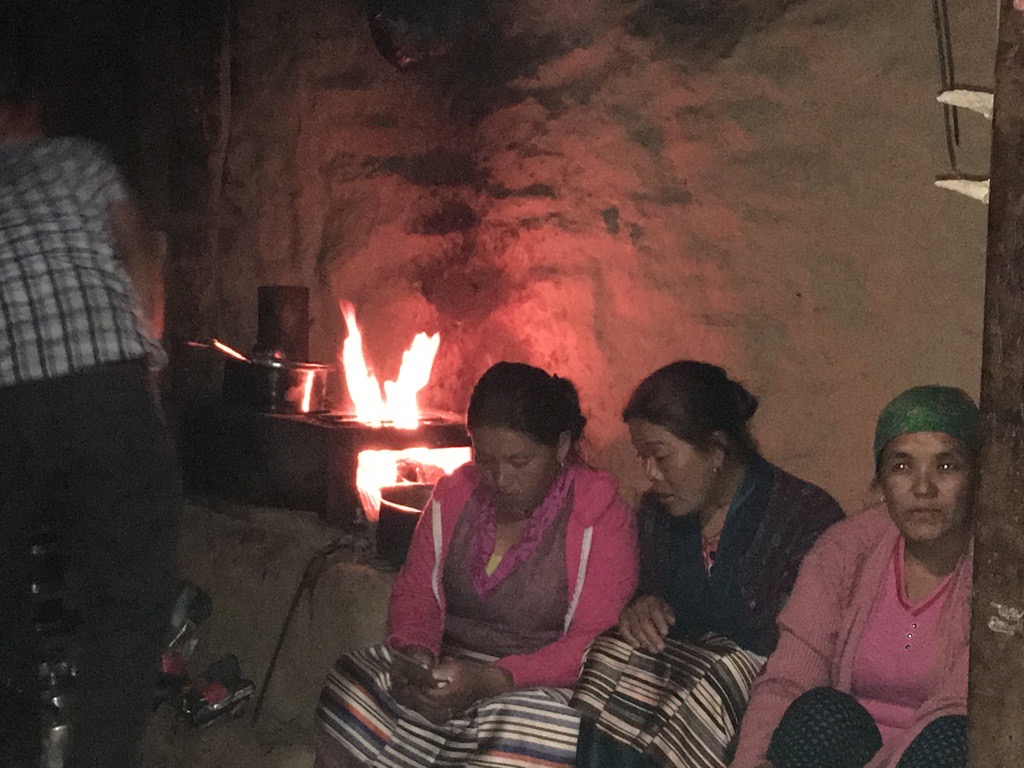
We spent the evening in the kitchen of one of the houses having fun with the family. You don’t get experiences like that on a normal trek.

That night it rained heavily so we were glad not to be camping.

Returning to Lelep

The following morning there were snowy peaks showing at the head of the Olangchungola Valley. After breakfast we walked back to Lelep in time for an early lunch, before heading across to two schools in the Hellok Valley. I decided not to go as I was having a bit of pain from my Achilles, but was more concerned about a bit of chaffage. It was only when I went to wash that I realised the extent of it, it having turned a bit nasty. Hopefully, plenty of cream will enable me to walk comfortably to Amjilosa tomorrow.

I’ve now got a cold! As I dressed and packed this morning and took down my tent I was sweating profusely and as I took my kit over to the lodge, I moved lethargically. I took a couple of paracetamol and hoped that I could cope with today’s walk from Lelep to Amjilosa, which included a steep climb at the end.

The route to Amjilosa and Ghunsa is up the left hand valley

I started quite well, the paracetamol having taken effect. I set the pace which suited me and knew would benefit the majority of the group. Jonathan is supremely fit and likes to race on ahead occasionally. The route up the valley towards Ghunsa is not easy. It is very undulating, crosses some difficult terrain where landslides had occurred during and since the earthquake. The noise from the river was deafening as the torrent raced and tumbled over a chaotic array of rocks, some the size of a house. It really was spectacular.

After a couple of hours I began to flag and questioned my ability to reach Amjilosa. I had absolutely no strength in my thighs. What made it so difficult was the fact that I could not find a rhythm; there were a lot of ups and downs and every footfall had to be planned. I was breathing heavily and sweating so much it poured off the end of my nose. I decided at the next stop I would take two more paracetamol. Kate also distributed some of the contents of my rucksack among other members of the group.

Jonathan enjoying the view on the way up to Amjilosa

We eventually reached the last settlement in the valley bottom before embarking on the climb up to Amjilosa. I drank a bottle of coke, tea, with sugar, water and noodle soup. After at least an hour’s rest we set off, crossing the river for a fourth and final time. I felt so much better following my sugary intake. Because it was steep I could find a rthythm, control my breathing and my temperature. I led most of the way up the zig-zag path. Amjilosa came into view and we were there. I did not think I would have reached it a few hours earlier. Now I have to psych myself up again for tomorrow’s challenging walk to Gyabla.
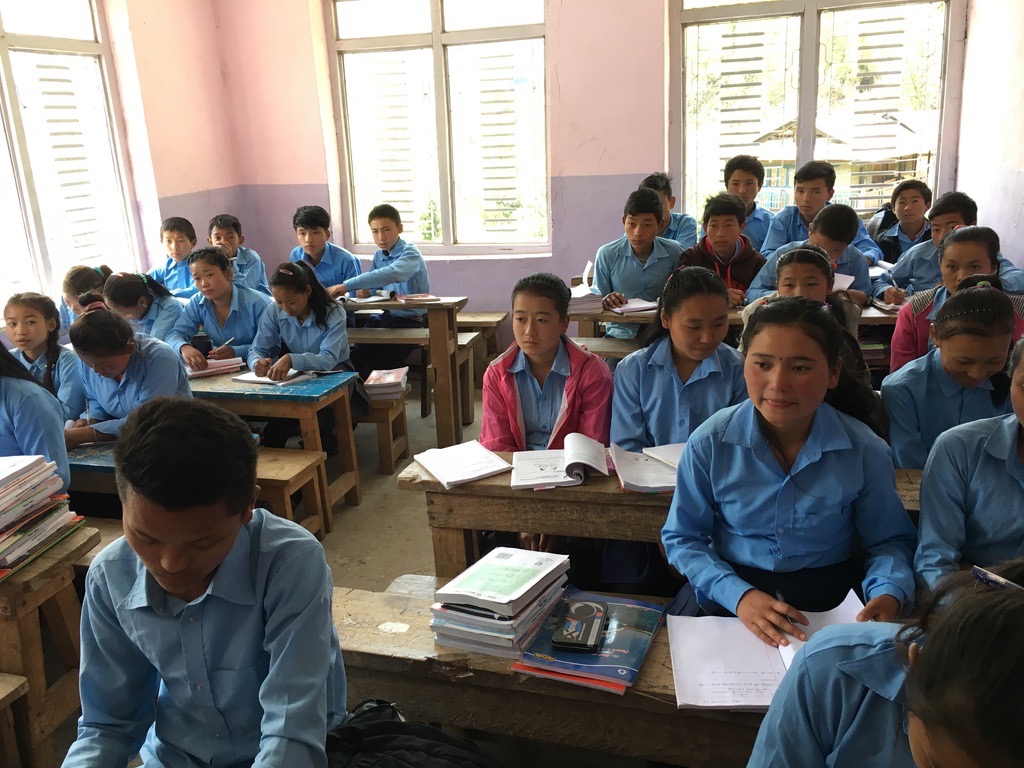
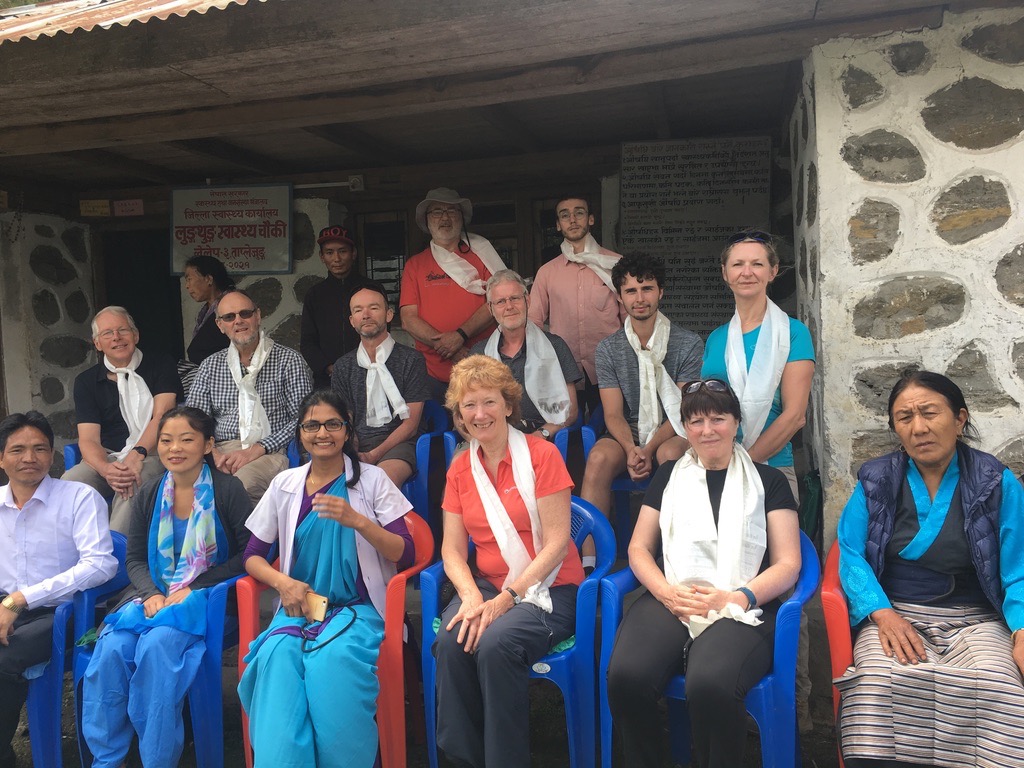
I lost my appetite in the evening. Dal bhat did not appeal to me one little bit. I hoped this was not a bad omen!

It was! In the early hours of the morning I had to make a dash for the toilet and again as the dawn light lit up the snowy peaks at the head of the valley. It did not take me long to decide not to go any further but to head back down to Lelep. At least there I can rest and I can spend a couple of days observing lessons in the school. So, while the rest of the group headed up towards Gyabla, I headed back down with my porter.

By the time I reached Lelep and the final climb up to the lodge I was at the limits of my endurance. I could not go another step. That feeling confirmed that I had made the right decision, along with the fact that I still had an upset stomach. Hopefully four days of not doing very much will see me right for the last phase of this trip.
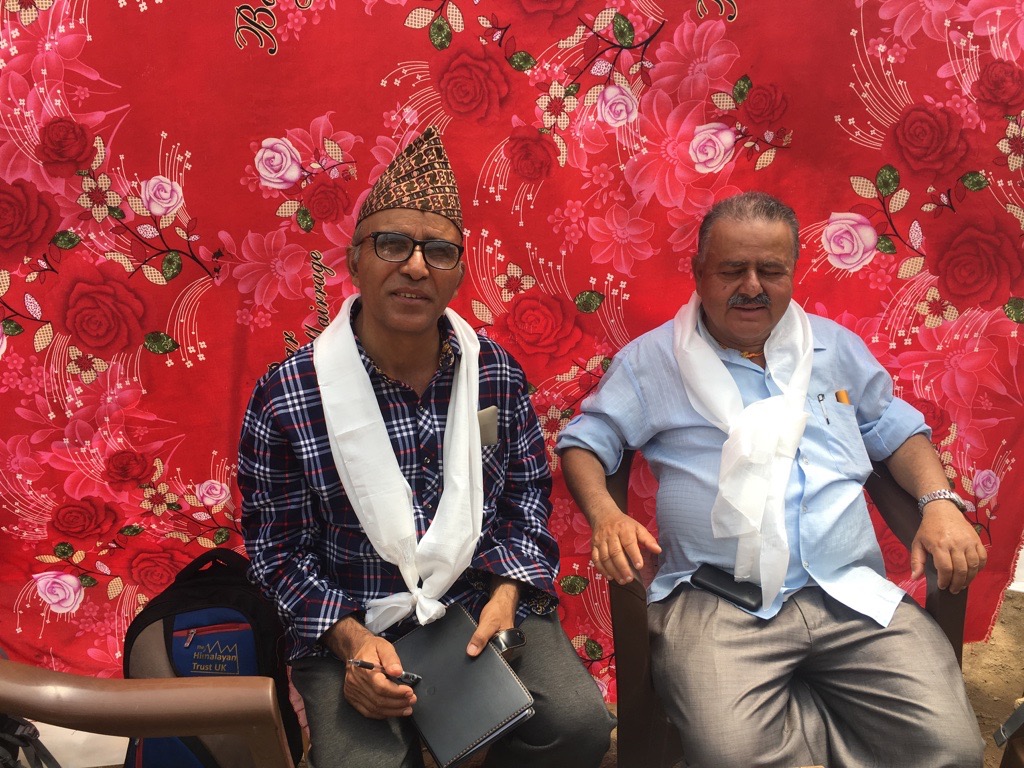
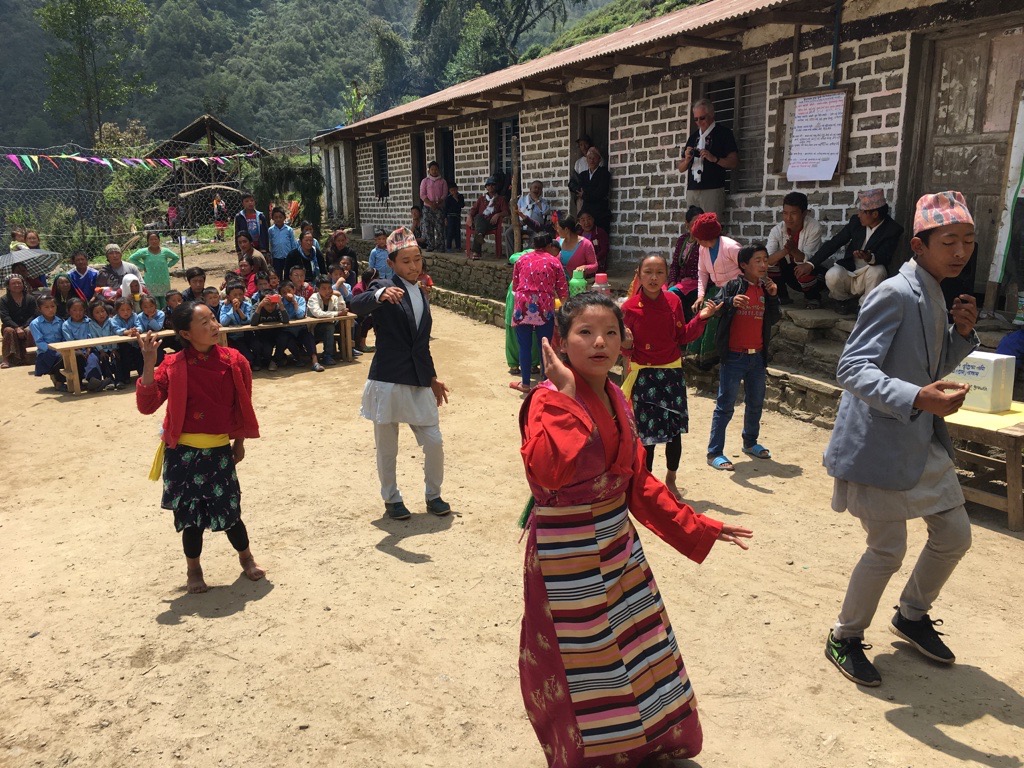
I spent over twelve hours in bed last night, mostly asleep but punctuated with visits to the toilet. I ate nothing in the morning, spending my time between reading and dozing. Premina persuaded me to have some noodle soup for lunch but within three hours that had passed through me. I have no energy and am beginning to wonder if I will be strong enough for the rigours of the next few days after the rest of the group return from Ghunsa.
It took at least 48 hours for the medicine from Lelep health post to kick in and for me to begin to feel as if I might be able to continue with this journey rather than return to Kathmandu early. One of the benefits is that I seem to have lost a significant amount of weight. My shorts no longer fit me snuggly! A great result but I would have preferred to have achieved it by normal means.

On my last lonely morning the whole village emptied. Roadworks have come to a standstill. Whilst the villagers want the road they do not want to lose any land to it. The road has reached a point where the landowner is adamant that it is not crossing his land. There is no compensation for loss of land or potential loss of income, so he is digging his heals in. The conversation started early this morning outside my lodge before moving on to the point where the work has come to a standstill. There was an eerie silence in Lelep. And when the people did return, nothing had been resolved. Stalemate, for the time being at least.

Early in the afternoon the group returned from their journey to Ghunsa. It was good to see them and to have some good humoured company. They had found the trek demanding and were ready for the opportunity to shower, wash some kit and to flop. Fortunately for them the next day, 1st May, was a rest day before the final phase of the trip, which would eventually see up back in Taplejung having visited a further eight schools.


Yamphudin

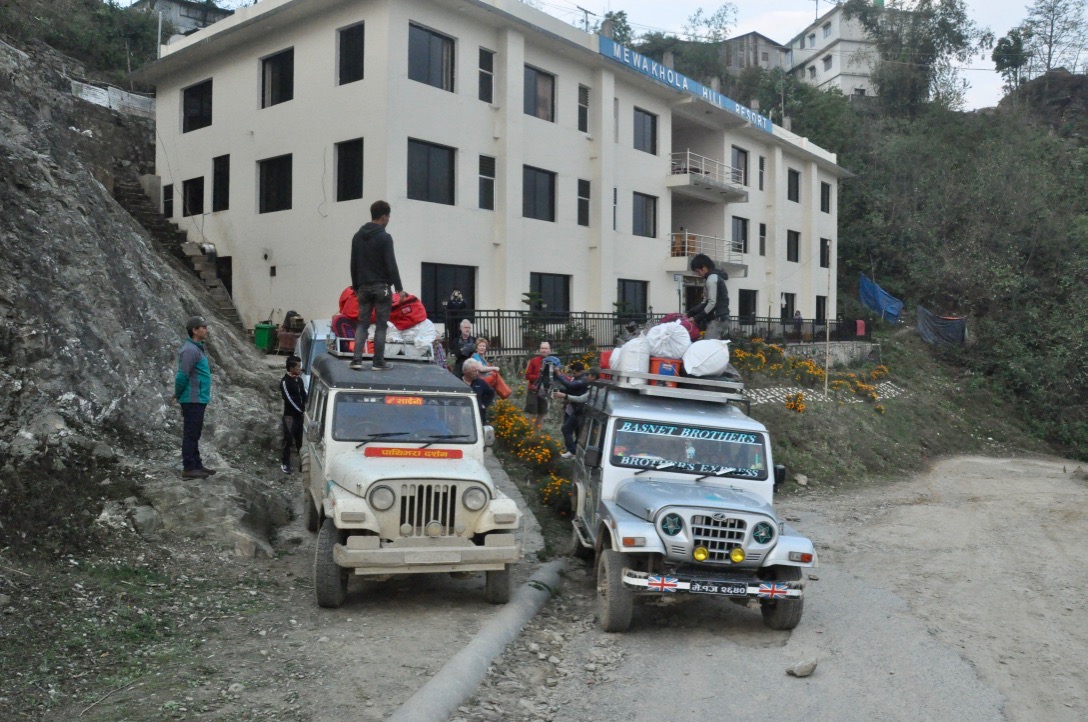
Jeeps at the ready

I had forgotten just how hard the first day is trekking from Hapukhola to Kewang!

The day started at 5.00am when the alarm went off, waking us so that we would be ready for departure at 6.00. Breakfast was coffee and three slices of lightly toasted bread but no butter and only luminous red jam after I had eaten my blank toast. It didn’t need either butter or jam as it was slightly sweet.

Two jeeps arrived with eight porters and the members of the REED team who were accompanying us and we loaded our kit on to the roofs of the two vehicles. The ten of us were to go into one while the thirteen Nepalis were to squeeze in the other.

The first 35km of the journey saw us retracing our route of Friday night towards Phidim. At the first opportunity we left the main road on to a side road that would take us to Hapukhola. Initially it was tarmaced but that soon ran out and we were treated to a rollercoaster ride for two hours as we descended one hill, crossed a river and climbed another. At times it was a really rough journey and I found there were times when I really had to concentrate hard, and I was in the front seat with Jonathan who had to sit with his legs either side of the gear stick, an experience he seemed to enjoy.

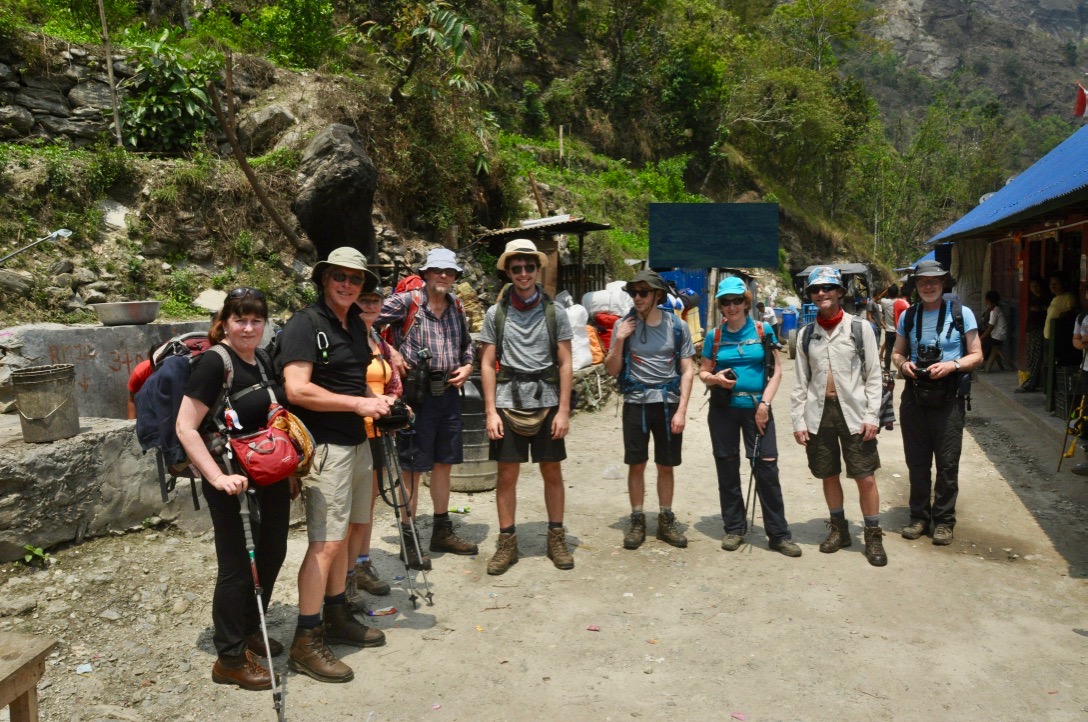
Ready for the trek

We arrived at Hapukhola an hour ahead of schedule, 10.30. Time for noodle soup before we hit the trail.

As the hottest part of the day approached, we set out climbing steeply for a while above the Hapukhola River. It was hot, and very humid. It did not take me long to realise that I was going to find it hard. To be honest, I had not really prepared myself for this trek. I had been more concerned about the paperwork preparation rather than any physical work, other than a couple of outings since I got back from Vietnam. I was also carrying far too much weight, not in my rucksack, but on my body. A wake up call, perhaps.

Having gained some height the path then contoured around the hill before dropping to another river, after which there was a long, steep climb up to Appdada. I really struggled on this climb, breathing very heavily as I pulled my frame up each painful step. Along with the physical difficulty, I was now struggling mentally with the task I was embarking on. Self-doubt. A cup of tea and some cake improved my physical and mental well-being for a while but the effects soon wore off as we climbed further but less steeply for the next two hours.

Mike trying to pick up a porter load during a brief rest

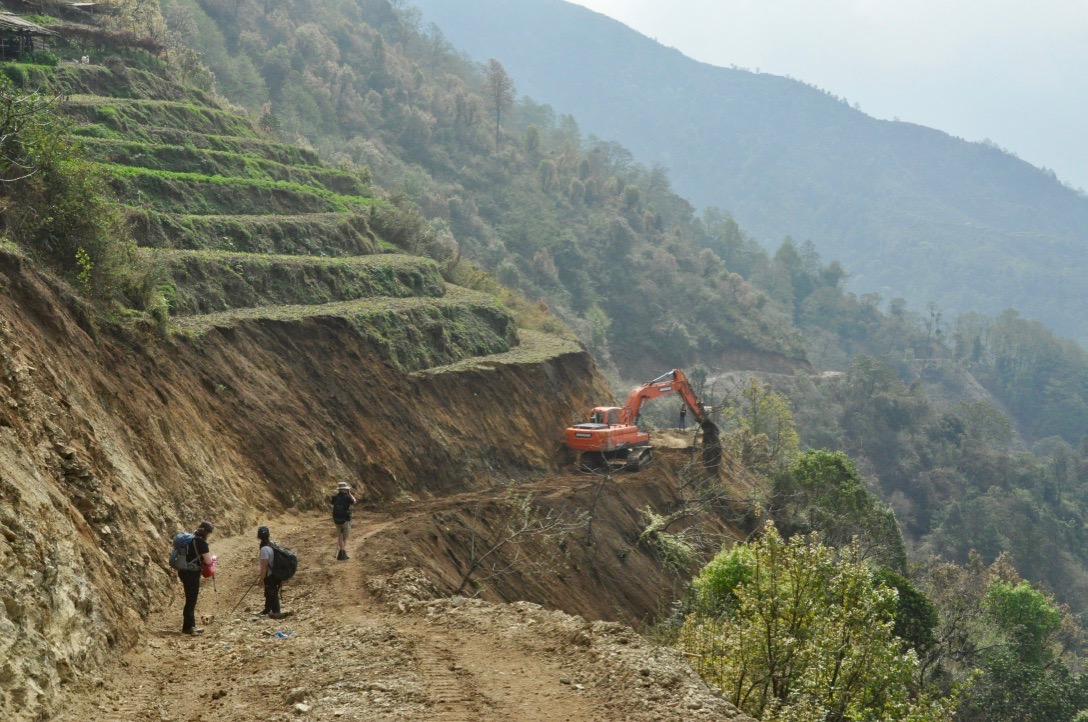
We eventually turned round a bluff, which marked the start of the village of Kewang. I had fond memories of this village when I visited and stayed there two years ago. It was a green and well-cared for village. Now a road has sliced right through the middle of it destroying anything in its path and laying huge tracks of land to waste. A giant monster has ravaged the land and left a desolate wasteland in its wake. And that is all it has done. Nothing more, and inhospitable to any vehicle that might be brave enough to attempt to travel on it. It will be many years before the road has anything resembling a surface and, thus will remain as an evil scar. If my mood was fairly black before, this site made it worse.

By the time we reached the school playground where we were camping night was approaching fast. It had taken us six and a half hours of hard graft to reach this point. Putting the tents up in the rapidly fading light proved to be interesting, but we succeeded. It was good to relax in the lodge and an early night was required after we had eaten.

The road was still playing on my mind. The people of Kewang want it, and I can understand that, but what will happen when the road reaches further villages? If tourism takes off in this area, Kewang will suffer. At the moment it is a natural overnight stopping point for those trekking towards Kangchenjunga. Once the road is fully functional, everybody will bypass the village in favour of going further towards their goal. With these thoughts I went to sleep to be rudely awakened by dogs barking at 1.15, disturbed by lightening and distant rumbles if thunder. Fortunately, the disturbance did not last long and I had a good night’s sleep.

Irreparable environmental damage

After breakfast, we set out on our journey to Yamphudin on the lovely path that once ran all the way through the village. It was not long before we hit the road again and the journey became a less pleasant trudge. This road took us to the summit of the first pass. Near the summit we came across the monster responsible for all the damage, a large digger slicing huge chunks out of a terrace already planted with maize, and spilling it on the downhill side of the road to make up the width.

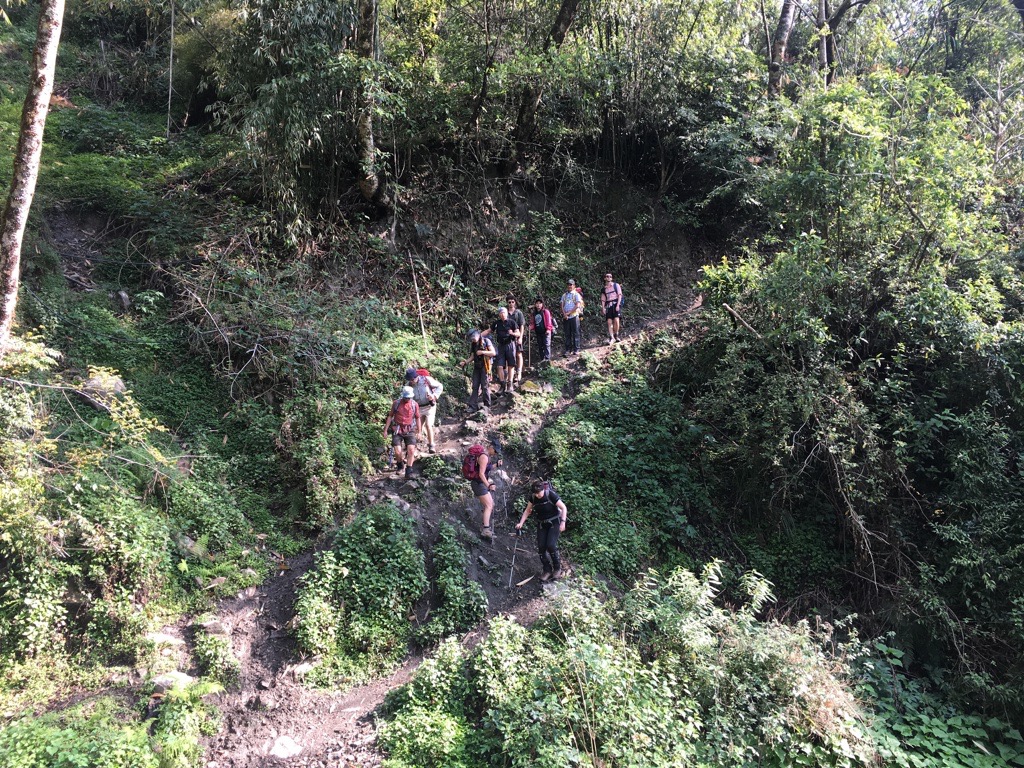
At the top we took a rest before heading down the other side. We thought we could now walk down the original path but we again found ourselves forced to follow the road until it ran out. Then we had to pick our way through steep, damp greenery until we could pick up the path below. It was slightly precarious.

Atmospheric scene at the top of the pass

Just before the next climb we stopped at a lodge for tea while watching the porters play Karam, a cross between pool and shove halfpenny. We spent at least half an hour there.
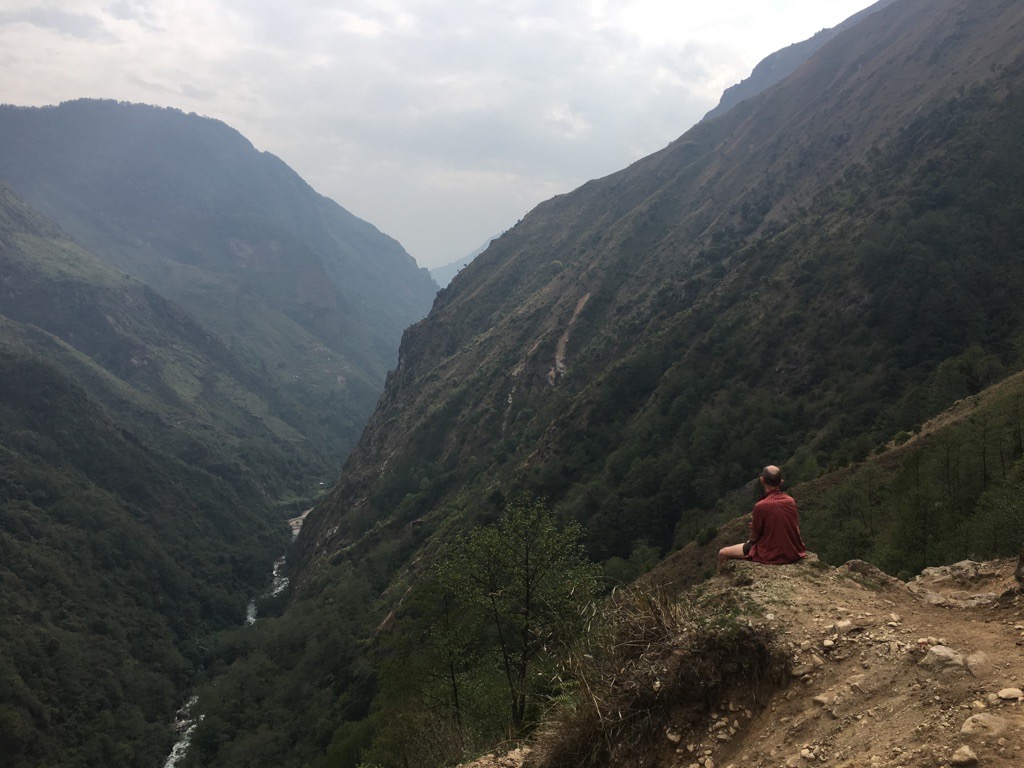
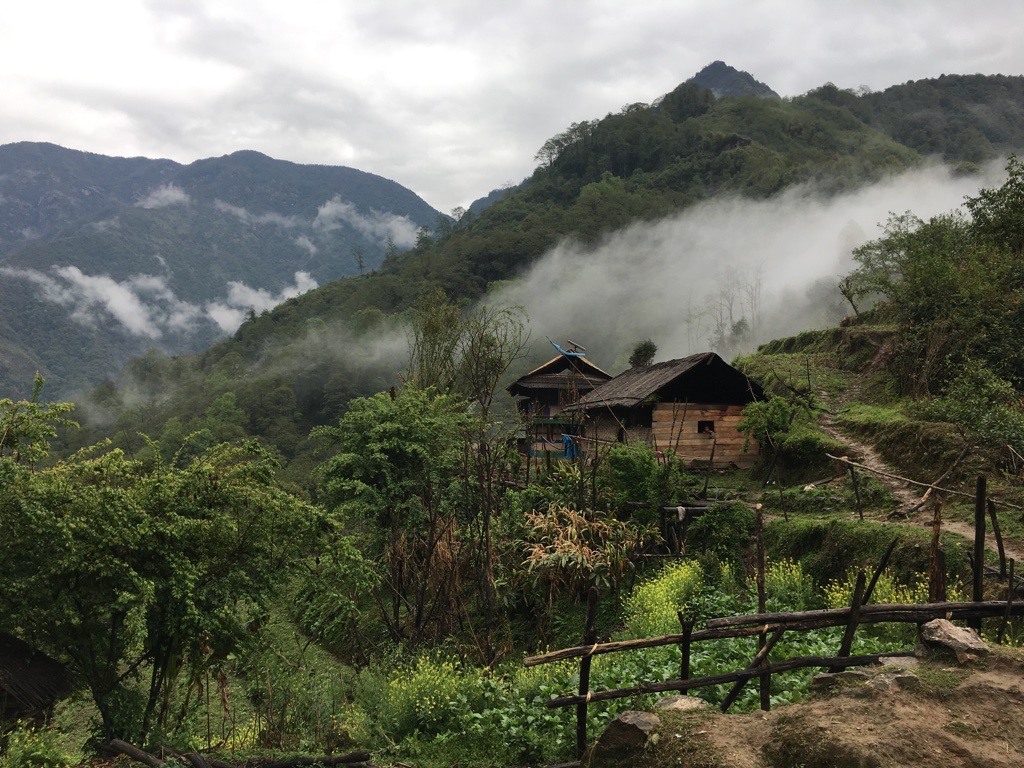
The next climb was not too long but, although I was walking better than yesterday, I was still slower and more laboured than I would have liked. At the top we could look down on Yamphudin below. The descent to get there was long and steep and took us through thick woodland, woodland we have been warned that will rapidly disappear with the building of the road.

We reached the village in time for lunch and then set about putting our tents up before it rained. We just about managed it.

The new health post under construction

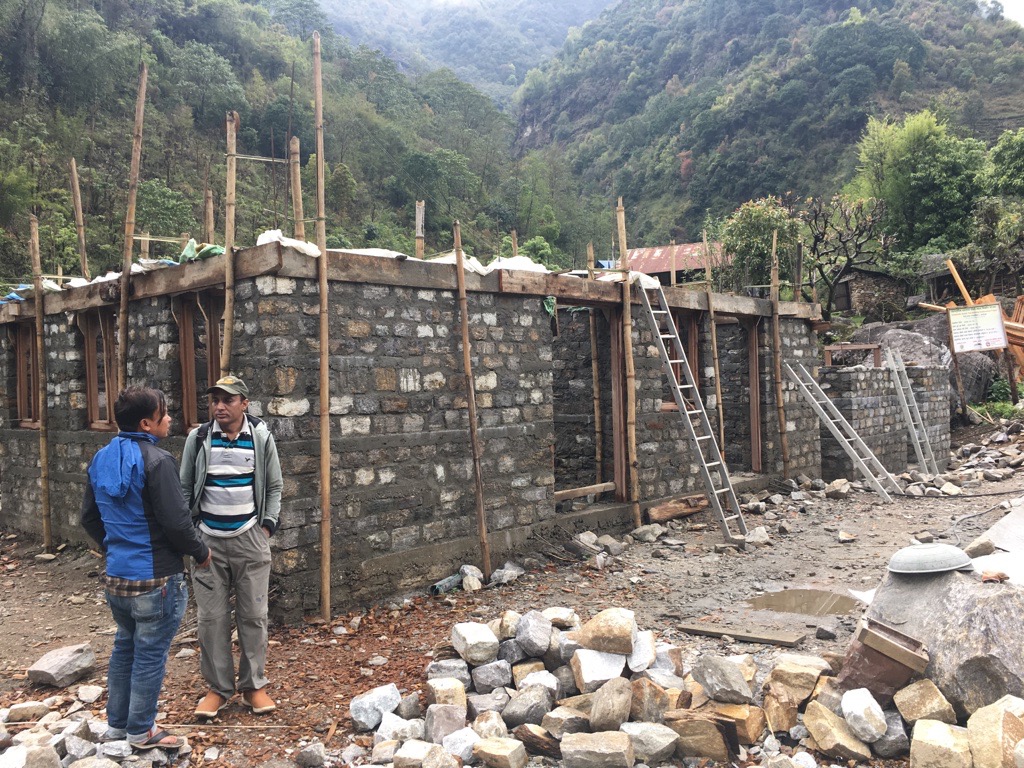
Later in the afternoon a number of us popped a little way up through the village to the site of the new health post that HTUK is building. They have got to above the windows and must soon be ready to start work on the roof timbers. It is going to be great and a super asset to this lovely community. We met the elderly lady who donated the land for the new health post, sitting on her porch. It is such a generous gesture as she is unlikely to benefit for very long from the facility but she will have bequeathed something very important for her community.

In the evening we had a lot of fun playing Chameleon in the lodge.

The next morning, immediately after breakfast, we headed up the steep path to Kangchenjunga Basic School. I soon began to realise that I was finding this very difficult and decided that I was committing my body to strenuous exercise when all it wanted to do was digest its breakfast. I really had no energy for walking up a steep hill and found I was breathing really heavily and needed to rest. I suggested the others went on ahead but Ian insisted on staying with me. A little further up Harry, Ross and Jonathan hung back to join me and Jonathan took my rucksack. Even without any weight on my back I still found it difficult despite being treated to some hazy views of distant glaciers and snowy peaks.

I was glad to have eventually reached the school. For a time I really thought I was going to have to turn back. I was feeling really disappointed with my performance.

Despite the fact that the school was not officially open, the majority of pupils turned up because of our visit. They were delightful and were very communicative and eager to practice their English. Their faces were open and smiling, happy children in their school environment. And what an environment, what a location with stunning mountain views from their own lofty position.

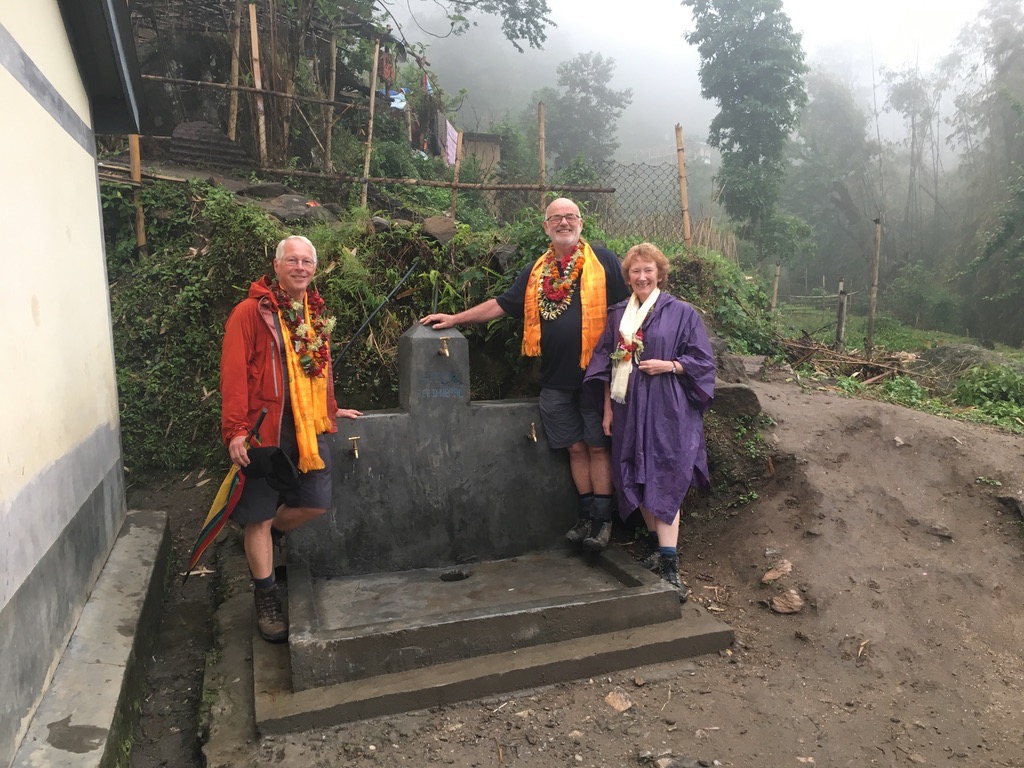
Kangchenjunga Basic School new water supply

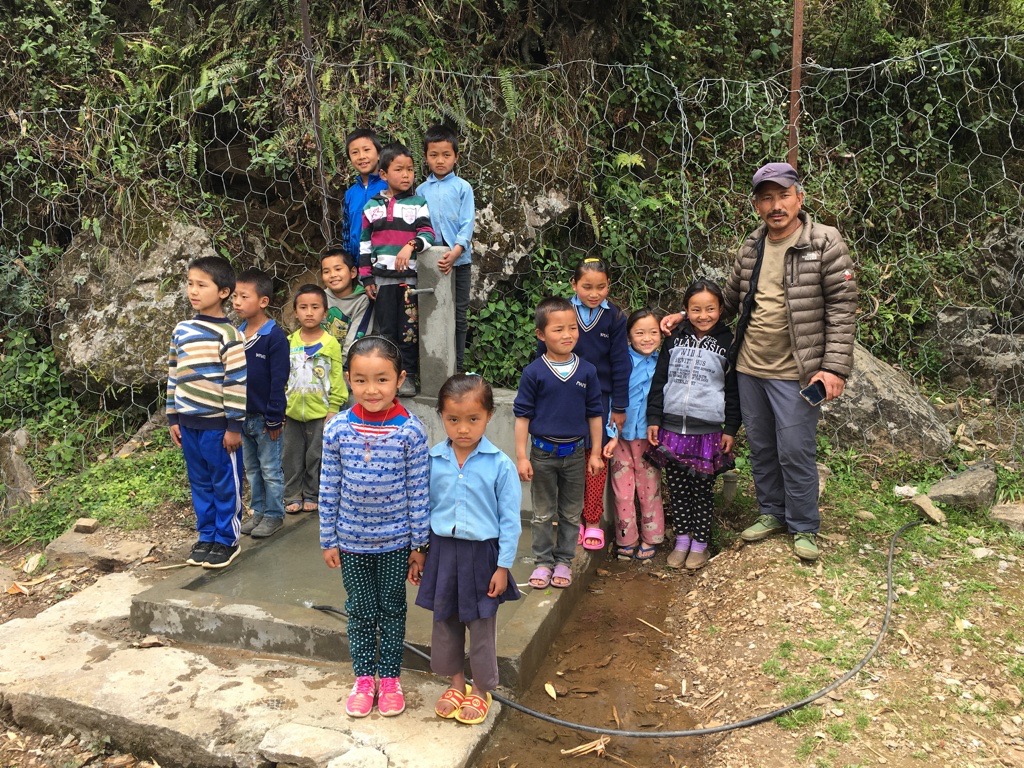
We sat on benches on the playground and met the head teacher, chairman of the SMC and parents over tea and biscuits. They are all very grateful for the support given by REED and HTUK. We were pleased to see the new water supply functioning. It appears that they managed to get somebody else to fund the 500m of black plastic pipe they needed, and with the community contribution in the building of the standpipe they had enough funds to rebuild the toilet, which was damaged in the earthquake.

Their concern now is that the children do not have a hot snack in the middle of the day. Some bring one with them to school but by the time they eat it it is cold. This is making some children ill in the afternoon. As there are only twenty children in the school, I don’t feel that it would cost a great deal to set up a snack fund, particularly if the facilities of the lodge just below the school could be used by a rotating mothers’ group.

After formal presentations and photos, we headed back down the hill for lunch.

In the afternoon we visited Kangchenjunga Secondary School, on whose playground we were camping. This school is ideally placed and has relatively good facilities, although the whole school could do with a new coat of paint. There were no children for us to observe but we toured round the classrooms. Very few have electricity and for those that do, it did not seem to work. I fear for the long term effects that dingy classrooms might have on the eyesight of the students. It was very hard to gauge the quality of the school without seeing teachers in action and children in situe.

At Yamphudin Secondary School

After the tour we gathered in one of the larger classrooms for a formal meeting. Quite a large crowd turned up, including the head, teachers, SMC members, parents, local officials and some residents, including teachers, from Kewang, a village outside our working area. There were many introductions, lots of garlands and a formal request for a snack fund. The way they envisage it working is the HTUK provides an initial sum of money that would be managed by the SMC. This money would be invested in order to provide interest, which would be used to provide daily snacks. The school would need to purchase some cooking items. In addition, local people would be able to take out a loan from the managed fund for which they would be charged interest so that the capital fund is maintained. I think this would work but I do feel that there would need to be investment in the fund from the community members, which would enhance it and, perhaps, reduce the amount of investment from HTUK.

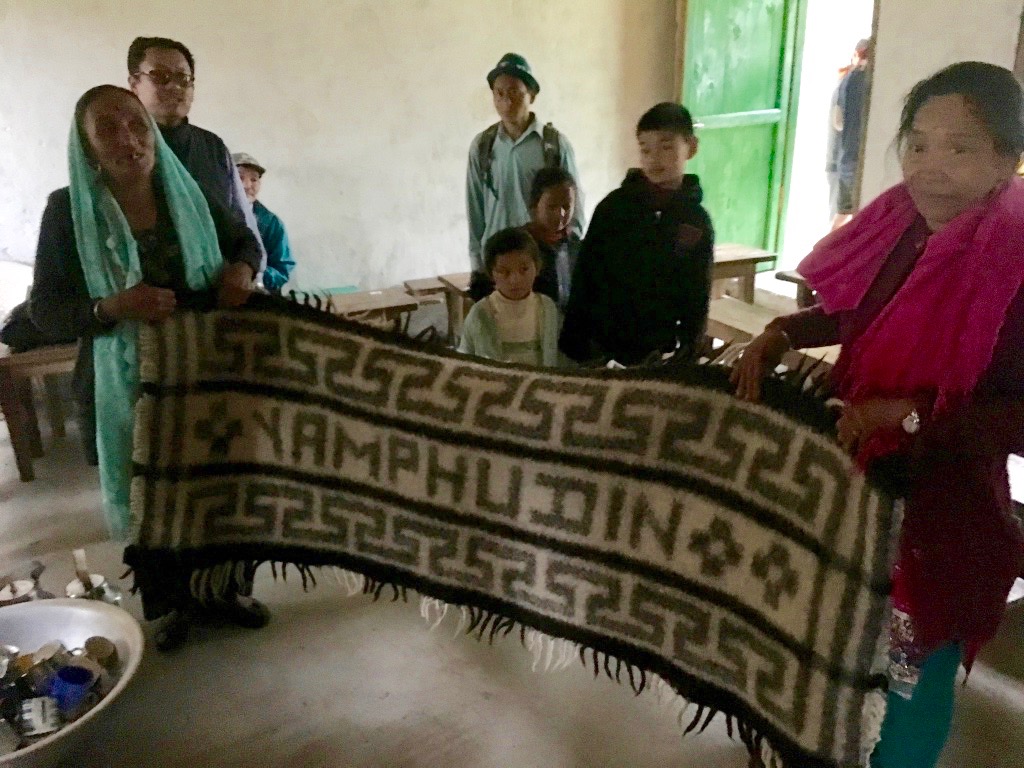
At the end of the event I was presented with a rug made from sheeps wool with the name, Yamphudin, woven along its length. The ladies who made it were there and they told me it had taken them three days to weave.

That night, and again the following morning I had an upset stomach, which possibly accounted for my disappointing performance going up the hill that morning.

Leeched!

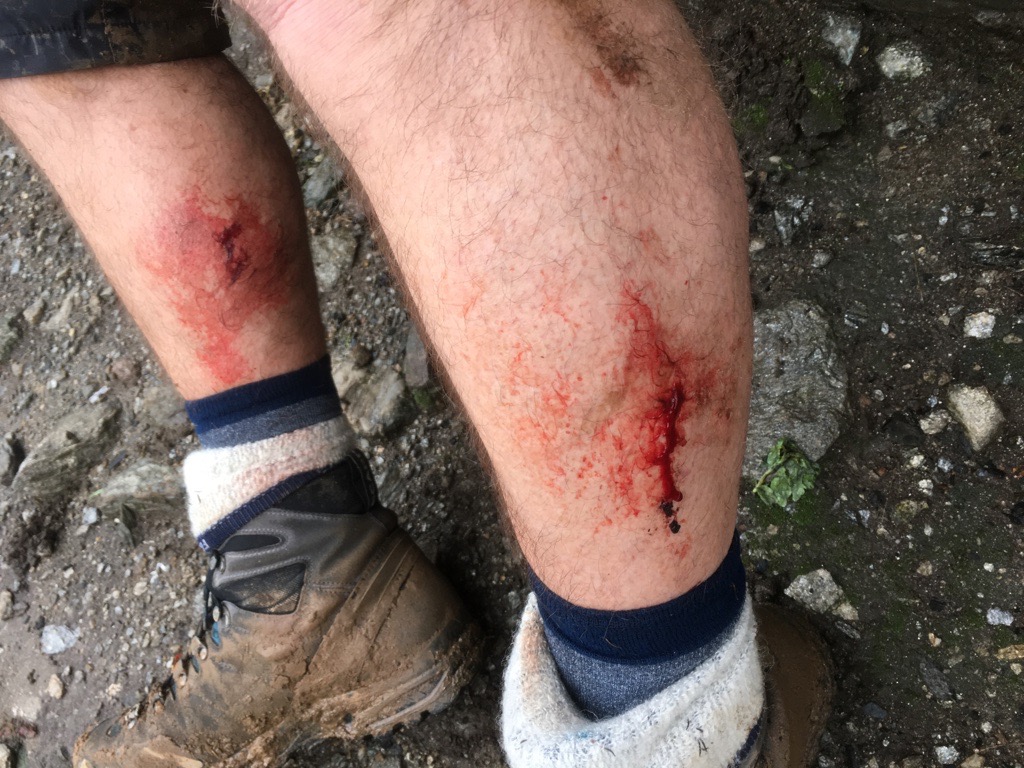
We had a lot of rain in the night and it continued for much of the day. Low cloud hung around the mountains and the rain was pretty constant. The wet weather brought out the leeches and several seemed to find their way inside my waterproof trousers. I had six in total. They always look much worse than they are. There is no pain involved, no after infection and once they have had their fill they just drop off. The wound just bleeds for a long time afterwards as they inject an anti-coagulant.

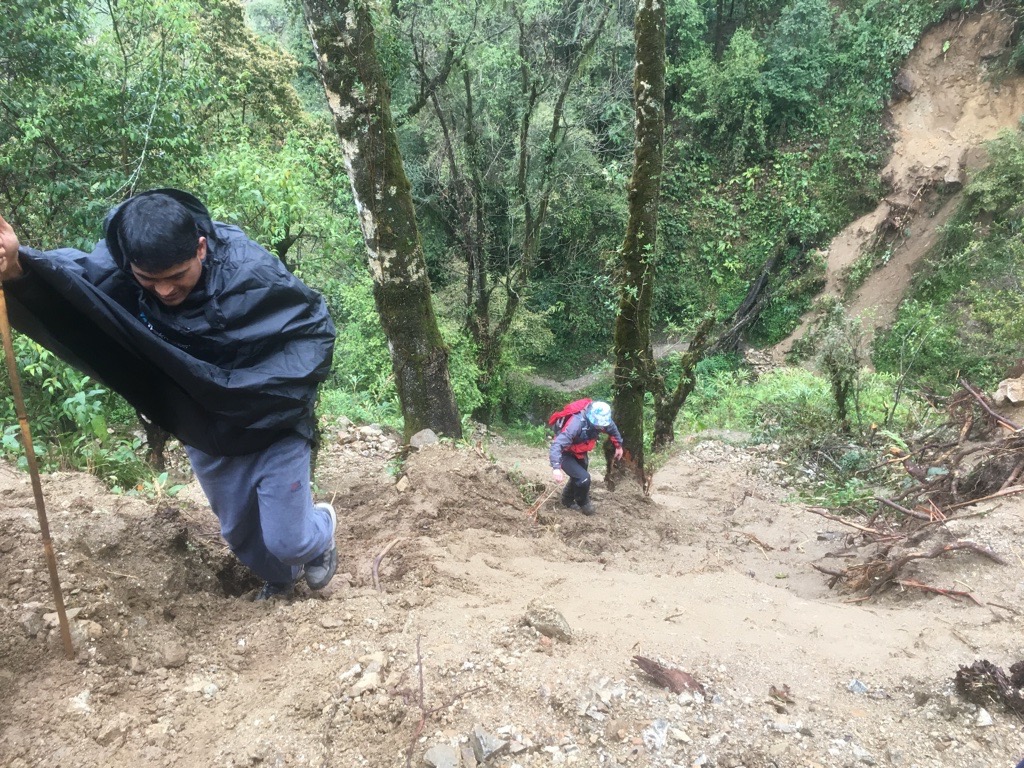
While we had been in Yamphudin the monster eating up the land to make a road had made rapid progress. Unfortunately, no consideration had been taken regarding the path we were walking on. It was now lost under tons of soil, rock and broken trees, discarded without care. Hence, we had to find our way over steep, very unstable ground that was looking for any opportunity to slip lower. It was quite precarious.

On a positive note, I was walking much better, I felt more energised and able to maintain my pace. I wasn’t quite as quick up the first hill as I was two years ago but speed is not the be all and end all. It is how you feel both physically and mentally, and I was feeling good.

That night, because we had a lot of wet kit and our tents were wet, we stayed in the lodge in Kewang, providing us with a little more comfort and an opportunity to dry things out a bit.

The last day of our walk out found us walking in really sultry conditions. It was incredibly humid despite the cloud. Eventually the sun did come out and then it was really hot. I still felt good.

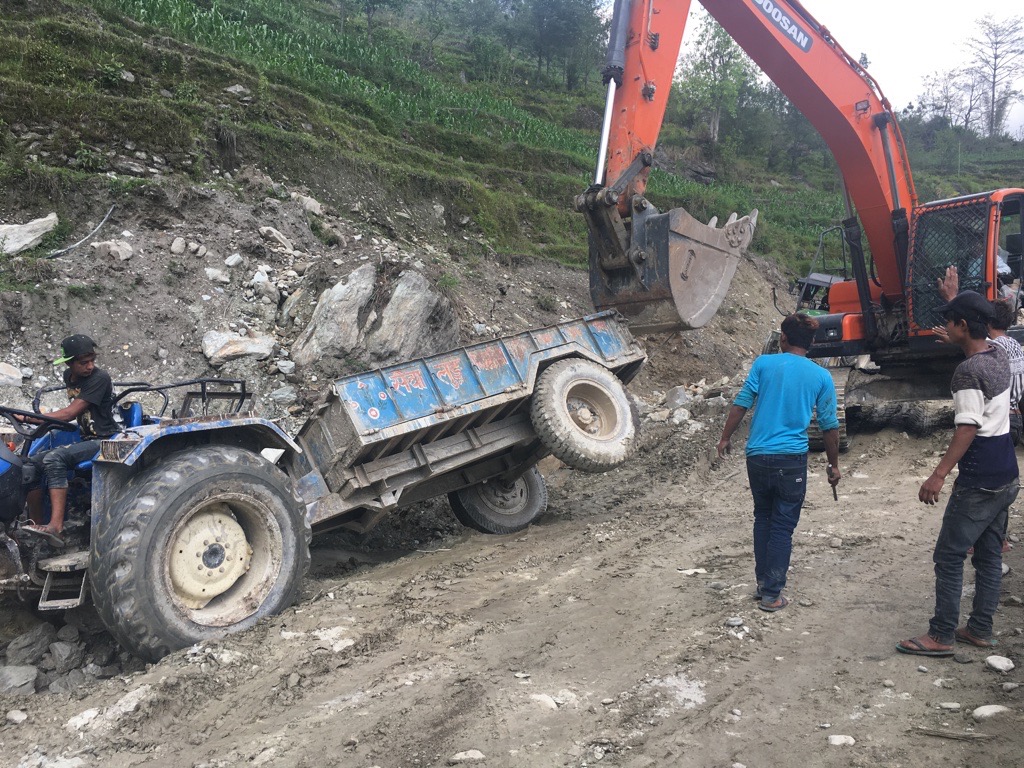
The jeeps were at Hapukhola to meet us and after a bowl of noodle soup we embarked on the bumpy ride back to Taplejung. It was not all plain sailing as the recent heavy rain had turned sections of the road into a very sticky mess. We came across a lorry stuck up to its axels in mud. A tractor and trailer that tried to squeeze by or move to the side, also got stuck and added to the mayhem. Meanwhile traffic waited either side for something to happen. I say traffic, there may have been four vehicles either side of the blockage. Eventually a digger came to the rescue and pulled the tractor out and then the lorry. Before any vehicles could continue their journey the huge ruts has to be filled. All a bit of fun that added an hour to our journey. Long before we got back to Taplejung more heavy rain fell from the skies.

When we got into the hotel there was frantic washing of kit in the hope that we could get it dry by the morning when we would start the next phase of our journey.

During the course of the last few days I have openly admitted that I am carrying too much weight, not in my rucksack but in front of me. I did not prepare adequately for a trek and I only have myself to blame. Kate came up with the idea of a sponsored slim, declaring that I should lose 15kg by Christmas. She drew up a formal agreement that I signed in front of witnesses. Struggling has really given me a kick up the arse. I will be much lighter by Christmas and the Himalayan Trust UK will benefit as a result.