Kyrgyzstan – Trek 1

A cloudless morning dawned with frost covering the tents and shimmering in the grass. Quite a few of the group had felt cold in the night but I had not been bothered by the temperature and had had my best night’s sleep since arriving g in Kyrgyzstan. In the clear morning light the mountains looked stunning.
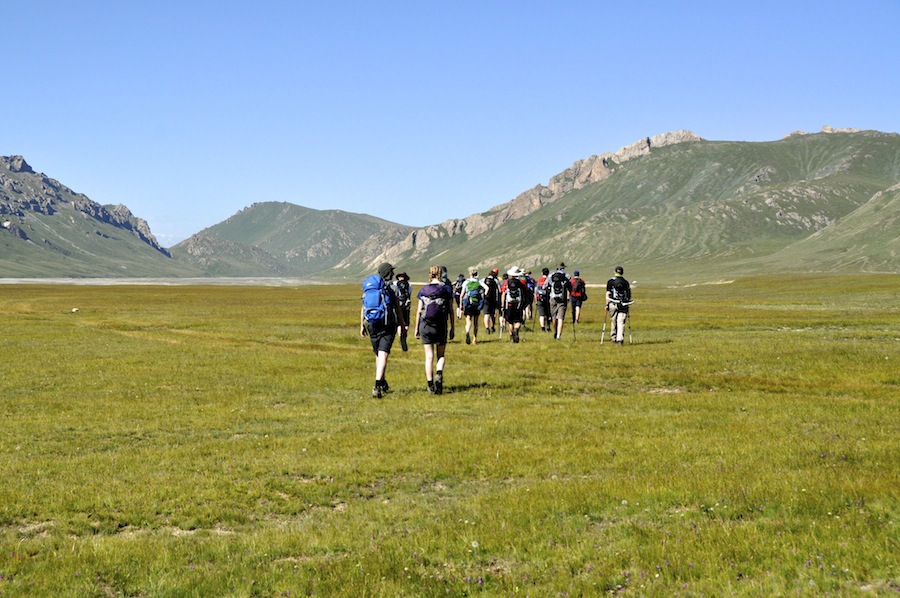
Heading out at the start of the trek

Heading out at the start of the trek

After breakfast we headed out along the valley with the river on our left. Along the way we passed a number of yurts where families cared for their flocks of sheep and goats, a few head of cattle and horses. These family summer homes are totally self sufficient but still manage to live a simple, nomadic lifestyle. At each one we passed we were given friendly waves, or they came over to shake our hands and willingly allowed us to take their photo. At each one there was an area of stained ground where the sheep and goats are corralled each evening behind a makeshift fence. Dogs guard these homes, barking constantly while we pass but not once did I feel we were threatened.
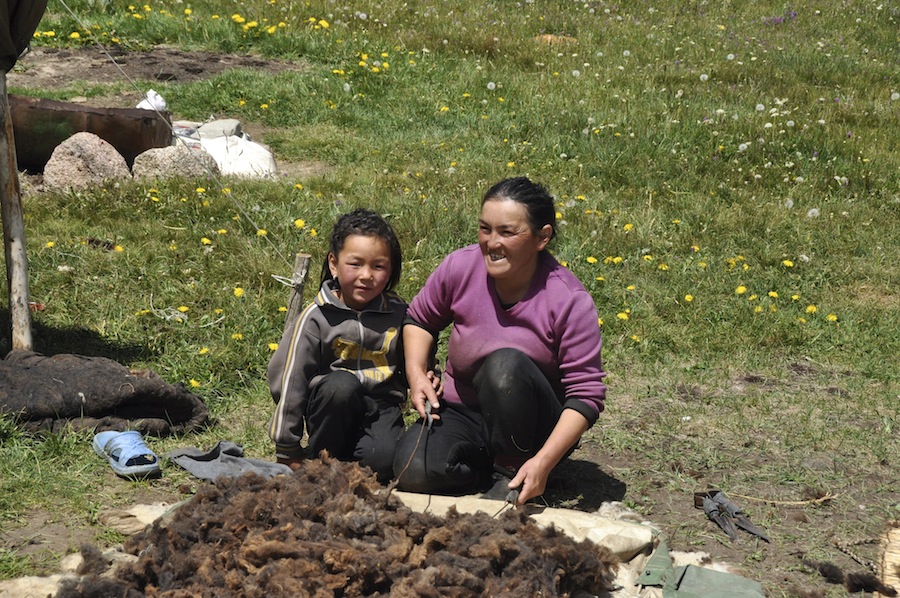
Beating the wool

Beating the wool

We came across a woman beating the brown sheep’s wool with two metal rods. Her daughter was beside her. They beat the wool fibres to break them down so that they can make it into felt, which provides them with clothing, bedding and carpets to keep them warm on the long cold nights of winter. When we asked if we could take their picture they preened themselves in preparation and posed for us. Not exactly what we wanted.
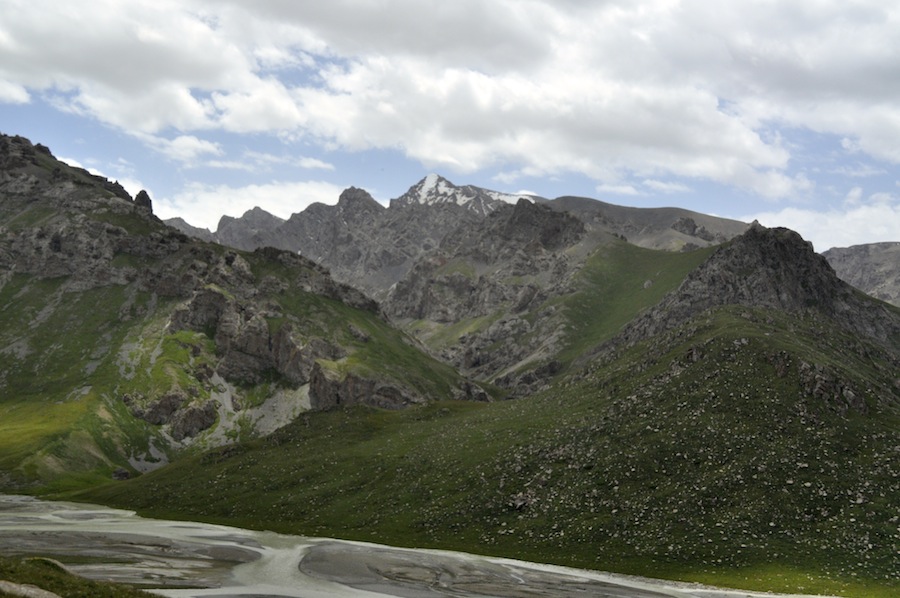
Dramatic landscape

Dramatic landscape

After a couple of hours we began a short, 250m, steep climb out of the valley, over a ridge into a much larger, wider valley. Immediately as we started to climb you realised you were at over 3000m and the breathing became instantly laboured. This was our first real test at altitude and it was quite a shock for some.

The descent, unlike the ascent, was long and gentle. The clear skies of the early morning had gone and the high mountains had cloud clinging to them, becoming more threatening with time.
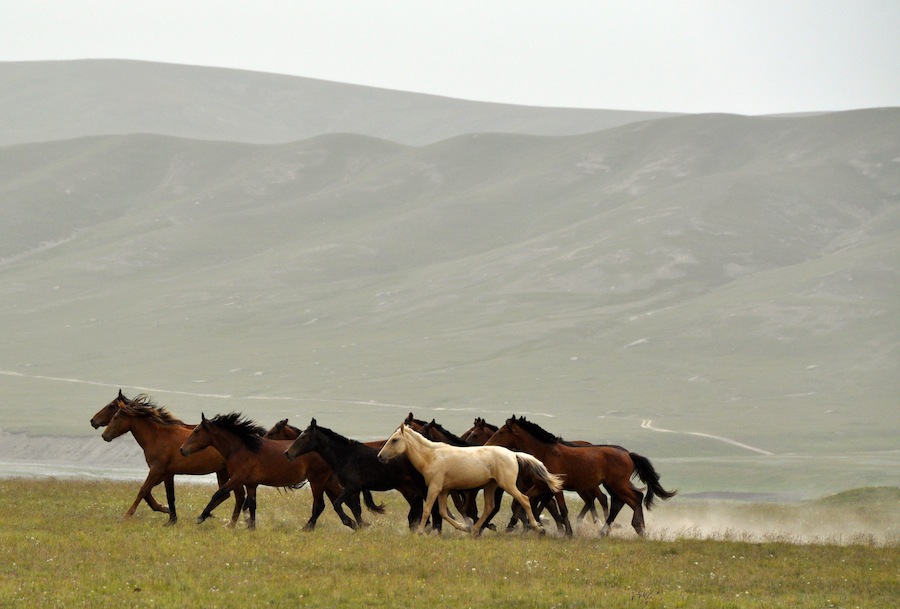
Horses run free in the open country

Horses run free in the open country

Distance can be very deceptive in this type of country; it is so vast that distances can be difficult to assess. We were camping in this valley, and although we could see the end of it it was impossible to say how far it was. We weren’t even certain where camp was going to be and Alex would occasionally veer off the path to gain a better view.

Eventually, after a much longer trudge than we expected, we reached camp requiring a river crossing to reach it. The clouds that had been building around the mountain tops had now gathered across the whole sky and thunder rumbled ominously. A storm was on its way and our priority was to get our tents up, and our kit stowed before it came.

Fortunately we were successful, but it was not long after that the rain came and confined us to our tents or the mess tent.

During the evening Alex chatted to me about plans for the next day. He advocated driving to the next camp because the rivers that we would have to cross were running much too high to make them both fordable or safe. Disappointed I had to accept his advice.

It rained all night not stopping until about six in the morning. At least it had meant that the night was warmer, so instead of cold keeping people awake it was the constant noise of the rain on the tents.

In order to get to camp we had to make a circuitous drive of 75km on rough unmade roads. This time I sat in the front of the lorry, affording me a much better view than sitting in the back. This is big country with wide, gently sloping valleys . In the distance, in every direction, are jagged snow capped mountains, now bearing fresh snow from the overnight precipitation. Skyscapes are huge. I have to admit here that this is not really what I was expecting. I was expecting more dramatic scenery in closer proximity to the high peaks. That is not to say that the scenery was not dramatic in its own right, particularly when we could see storms sweeping across the vastness of what was around us us. We occasionally drove into these storms and they were driven on strong winds with snow included in them.

We eventually turned into a particularly wide river valley. The view to the north looked as though the sea might be just beyond the horizon. This is a double landlocked country, so this impression was purely in the mind.
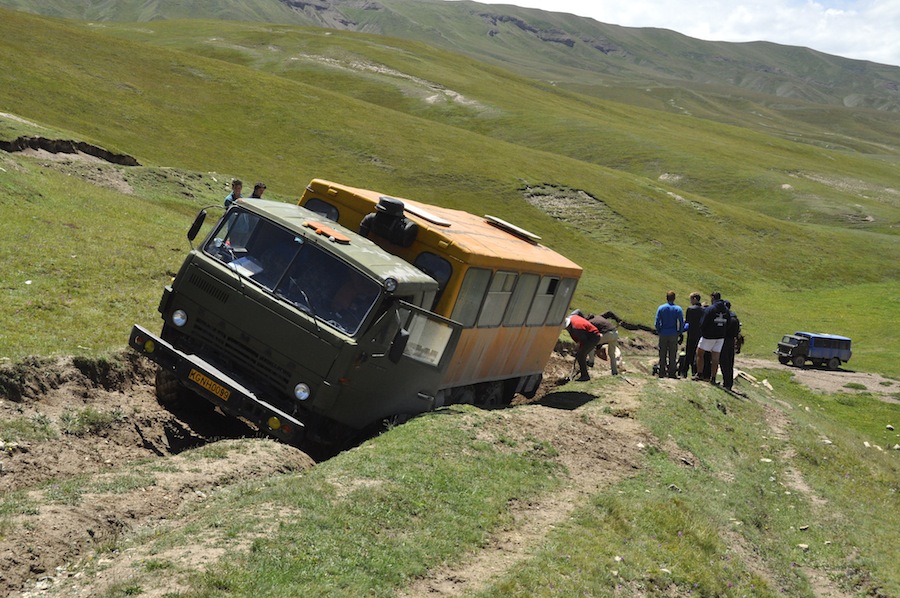
Our lorry temporarily came to grief

Our lorry temporarily came to grief

We needed to go into a side valley from this main one which required us to follow a track over a spur. Sitting in the front it was clear to me that the track was far too eroded for us to comfortably make it. There was a huge channel down the middle, I could see what the driver was trying to do, he was trying to get the wheels to straddle the chasm. Only it was too wide and the earth was far too fragile to hold the weight of the lorry. First we lurched to the right, towards the rising hillside, and to the left towards the descending hillside, before coming to a crunching stop. Those in the cabin might not have known that it was impossible for us to topple over and down the hill. We were wedged and going nowhere. Evacuating the group from the vehicle took some time while the crew set too with shovels to make it easier for the vehicle to be reversed down the track and back onto the valley floor. I was glad that mobile phones did not work here and that the students could not contact home and over dramatise the incident. It was quite exciting though.
Just below where the incident took place was an area of flat grass in the river bed. Clearly we were not going to get to the site we had set out to reach, so we pitched camp on this area and spent the afternoon enjoying some beautiful sunshine interspersed with sweeping thunder storms, some of which swept over us while others passed by without affecting us.
We are here for the next three nights and will be doing radial walks from here.
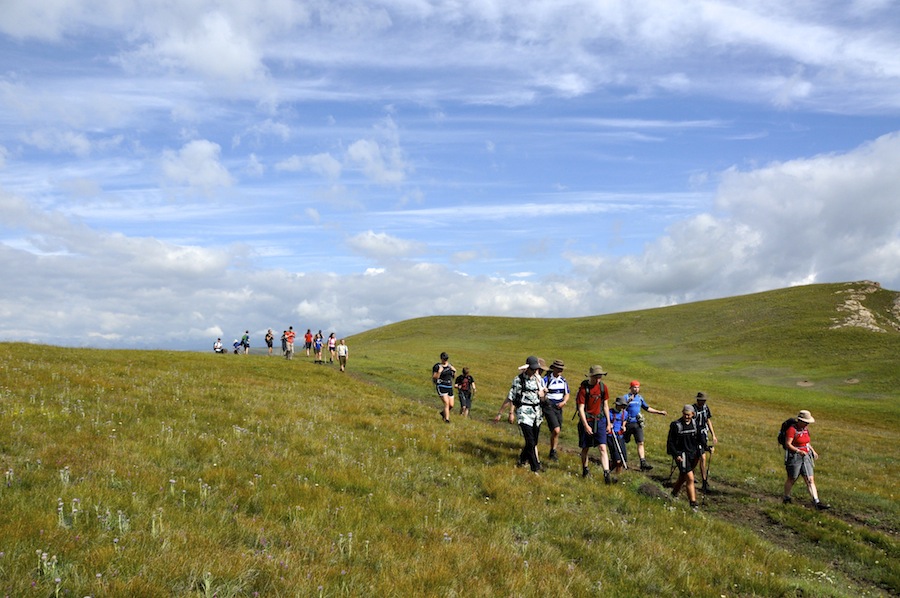
Setting out for the Kok-Kiya Gorge

Setting out for the Kok-Kiya Gorge

The title of this whole trek is Unknown Kyrgyzstan. It might well be Hidden Kyrgyzstan. Today it was going to reveal a secret beauty. The morning dawned bright and sunny with just a few clouds clinging to the mountain tops. By the time we set out for our walk to view the Kok-Kiya Gorge the clouds were already gathering to the north and heading in our general direction. We immediately climbed up from our river bed camp on to a plateau of rolling hills with occasional rocky outcrops. To the east, beyond the lush green plateau rose the jagged peaks that form the border with China.
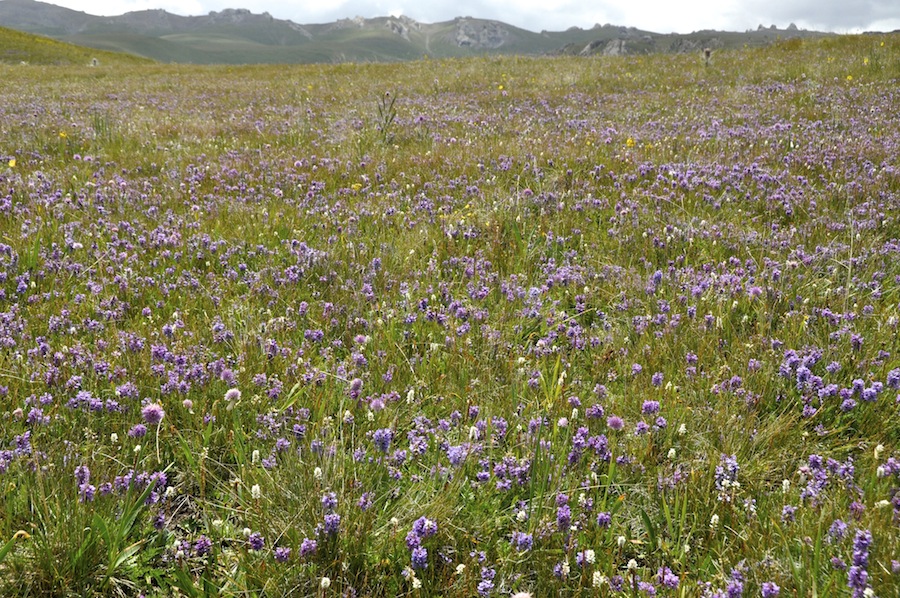
A colourful carpe

A colourful carpe

The whole area was covered in an array of flowers, purple being the predominant colour but not exclusively so. There were some beautiful yellow poppy like flowers, amazingly complex thistles, what appeared to be wild onions, dandelions and a more aggressive looking dandelion with spiked leaves.

The clouds from the north had now built up sufficiently for us to be hit by flurries of rain laced with sharp hail stones, driven on a keen wind. There was a coolness in the air, particularly noticeable when we stopped for a short break. I always imagined it would have been warmer than this.
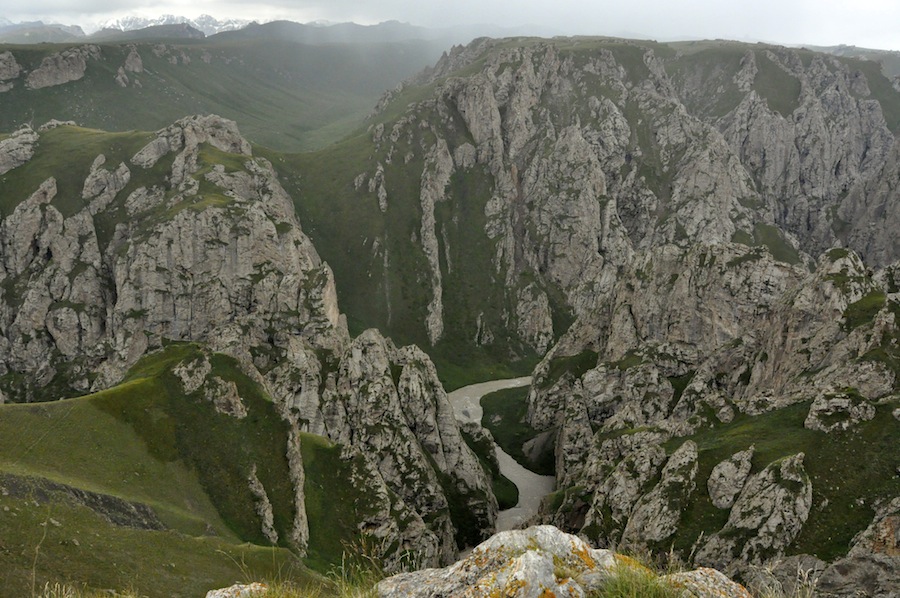
Kok-Kiya Gorge - Wow!

Kok-Kiya Gorge – Wow!

We eventually reached a cliff edge in this smooth landscape as we peered down into a wonderful limestone gorge and the Kok-Kiya River flowing 500m below us. It was stunning with many pinnacles of rock rising majestically from the sides of the gorge. We walked along the top edge of the gorge for some time, never failing to marvel at its splendour, eventually deciding on a rocky outcrop for lunch. The light in the gorge varied and when the sun hit the Rock the features stood out more clearly.

After lunch we returned to camp, arriving by mid afternoon, to rest up for the remainder of the day, in our tents when the keen breeze picked up with a shower or on the grass between showers when the temperature was significantly higher.

The next morning dawned bright but still with a few clouds around the higher summits. However, I instinctively knew that it would be more settled today, that we would not have any rain and that the views of the upper Kok-Kiya gorge would be amazing.

We set off as we did yesterday but then veered off climbing steadily on to the plateau. We were gaining height quicker than we did yesterday, the extra height meaning that there were fewer flowers at our feet.
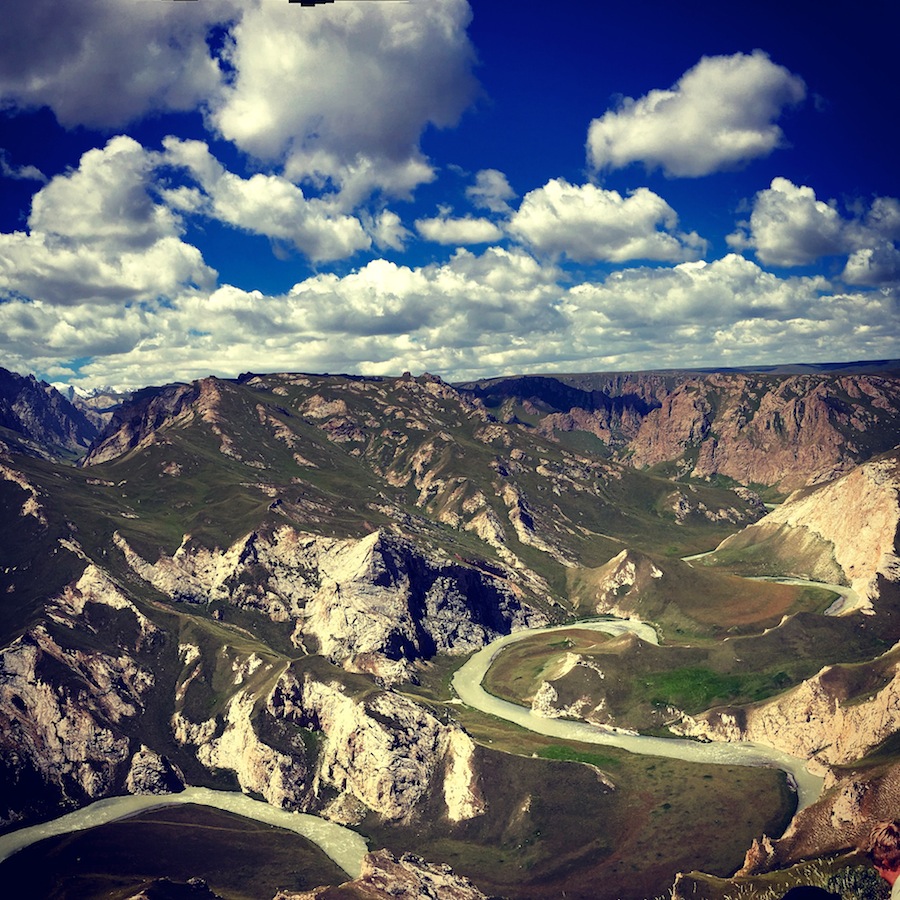
Even better views of the Kok-Kiya Gorge

Even better views of the Kok-Kiya Gorge

Reaching the edge of the gorge we were greeted with some amazing views of sculptured limestone interspersed with carpet-like grassy slopes.

To the south was an even more prominent viewpoint so we headed round to it. When we got there it was a little exposed in places so, having checked it out, I gave everyone the option of not going to the extreme point.

Below, the Kok-Kiya River snaked its way majestically around the floor of the gorge, flanked by pristine green pasture on either side. From here we were heading back to camp, about ninety minutes away, but I would rather have explored more, possibly dropping into the gorge to get a very different perspective.
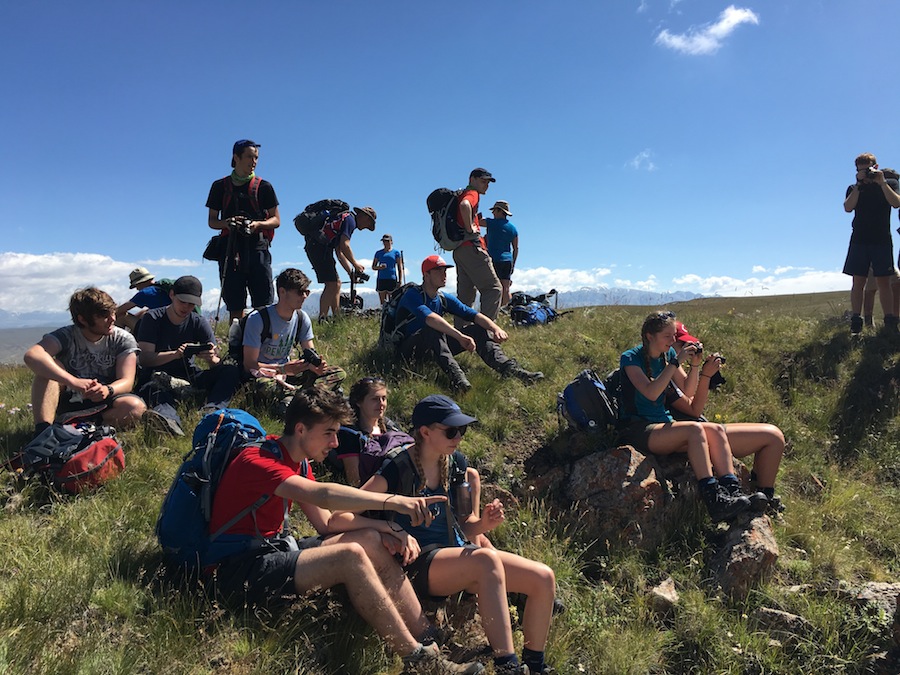
Enjoying the spectacle

Enjoying the spectacle

I couldn’t help think that not many people have seen the views I was seeing, certainly not from the UK. I also knew that had this been in the UK there would have been roads leading to it with car parks, gift shops and cafes. It would have been utterly spoiled. What we were seeing was as good as it could possibly be.

The afternoon was spent bathing in the river, washing clothes and relaxing in gloriously warm sunshine. This was punctuated by three soldiers riding into camp, having ordered those that were washing to return to camp. They were friendly enough and wanted to see our permits and passports, a fairly laborious affair but all done with good humour. By the time they had finished the sun had gone behind cloud and a stiff, cool breeze had blown up. Chris asked if he could take their photograph on their horses but they said ‘Niet’. He managed to get some surreptitious photos of them from over my shoulder as they left.
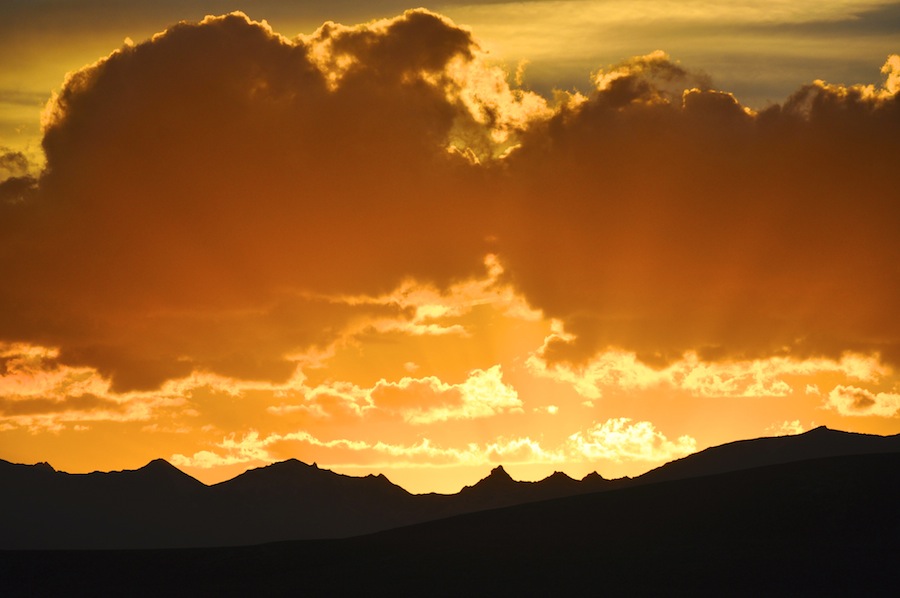
Fiery sky

Fiery sky

As quickly as it came the cool breeze ceased, the sun shone and temperatures rose so that it was warm well into the evening. The setting sun, with such big skies, was a real spectacle and brought the cameras out.

Tomorrow we move on and the story of the next few days will appear in Trek 2.

Sardines

Our transport - the sardine tin

Our transport – the sardine tin

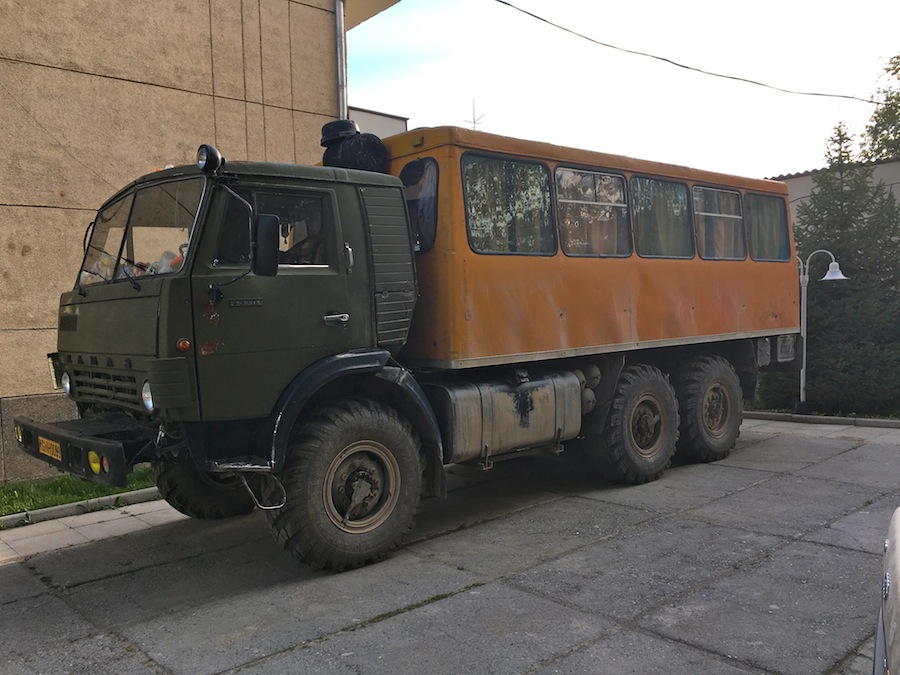
During breakfast Alex disappeared to do something indecipherable with the permits and we were to meet him at a petrol station on the edge of town. When we emerged from breakfast we discovered the blue lorry had gone and there were 26 kitbags stacked on the ground next to the orange truck with just enough seats for us and no room for luggage. Phone calls to the office in Bishkek provided no help and calls to Alex’s mobile remained unanswered. There was nothing to do but get everybody aboard and then stack the bags three high down the aisle and across the front of the cabin. A health and safety issue. We consoled ourselves with the fact that it was only a short journey to the garage where we would be able to transfer the bags into the blue lorry. That was the plan, anyway. What actually happened was, there was no room in the blue lorry, so we had to undergo the whole journey in very cramped conditions.

In terms of kilometres it was not a huge journey but these vehicles did not travel quickly (just as well in the circumstances), particularly up hill, and we had two passes to cross. The road was not metalled and in the latter stages of the journey it was really off road.

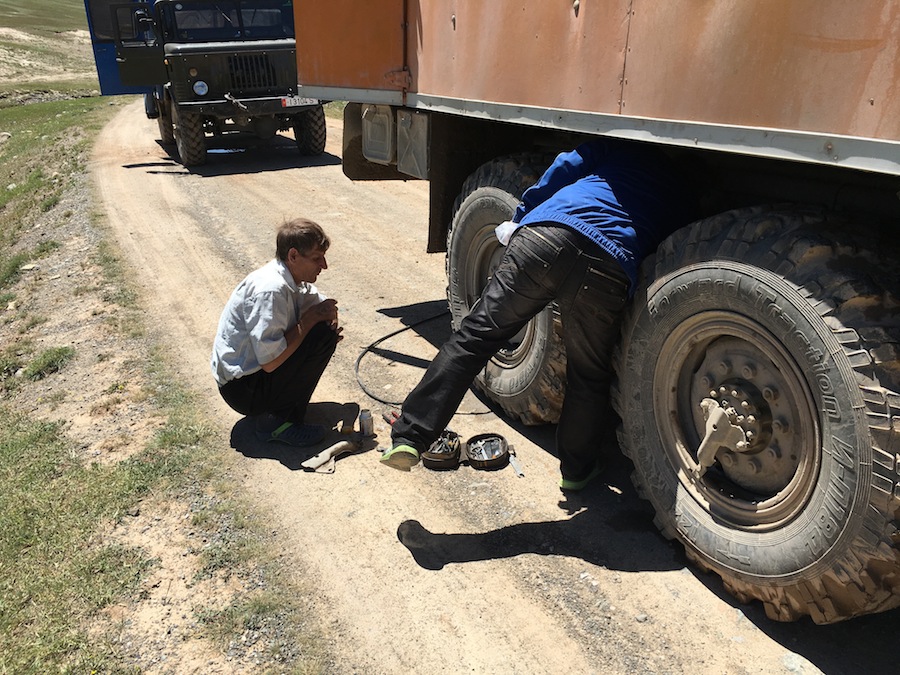
Sasha and Igor deal with the first breakdown

Sasha and Igor deal with the first breakdown

As we were entering an area close to the border with China, we had two passport controls to go through, 10km apart, where they very closely scrutinised our passports. This added at least an hour to the journey. Another hour was added by breakdowns, first to our vehicle that seemed to have a problem with one of its wheels, and then to the other, which had a huge dark stain of black oil on the road beneath the engine.

After seven hours we reached a place to camp, not the original place but that was still a further hour’s rough travel away. The chosen camp took the first day of trek away, giving us an extra day some time later in the itinerary.

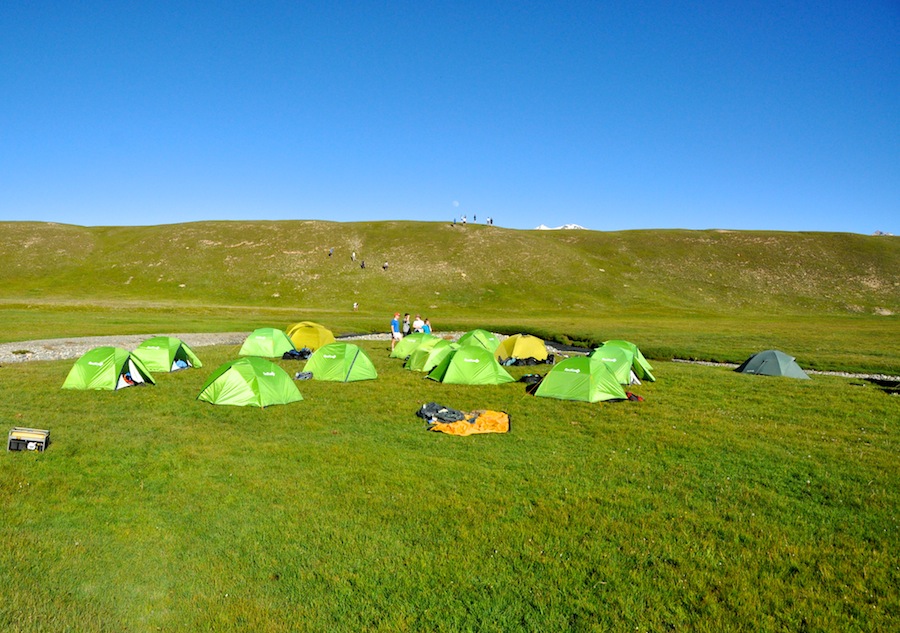
Our first camp

Our first camp

We pitched our tents in a beautiful spot adjacent to a river with mountains all around us, many of them snow capped. Beautiful warm sunshine shone from a cloudless sky. A perfect spot.

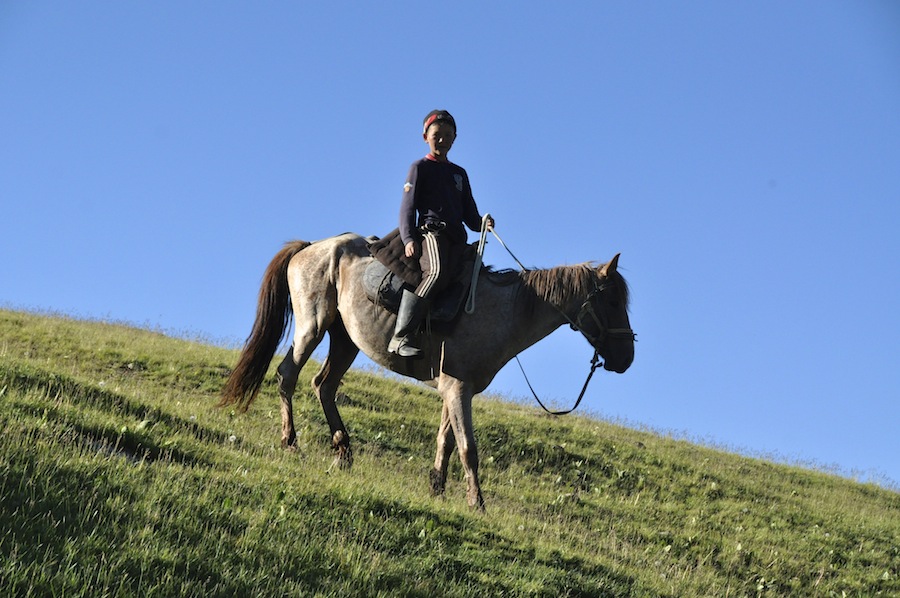
A little way downstream was a yurt where nomadic shepherds were living during the summer months. A man and several children came to see us, the children, all bar the youngest, able to speak some English. One of the children came into camp on his horse and allowed some of the group to ride his horse if they so wished. He was able to tell us that his home is in a village near to Naryn and that he is here helping his his family. He rode his horse from Naryn over two days, a journey that took us seven hours in a lorry.

Nomadic boy on his horse

Nomadic boy on his horse

The man clearly wanted to practice his English. His story was interesting. At the age of nine months his parents brought him to his grandparents living in the yurt. They could not look after him as they both worked. He remained with his grandparents in this remote yurt until he was six when he went to school in Naryn. He obviously did well at school and went on to university. He then went to Ankara and obtained a Masters in Turkish, returning to Bishkek to teach Central Asian Language. At the moment he is doing a PhD in the comparison between The Kyrgyz language and Turkish. From humble beginnings…. He was here to visit members of his family still living in the same yurt, living the simple life looking after their sheep and horses.

As the sun went down, the temperature dropped dramatically.

Naryn – Aruu Telek

Today we focused our attention on Aruu Telek, a home and a refuge for children and mothers. We had delivered a number of items to them yesterday but today we were to get involved, in much the same way as we did yesterday at Kadan.

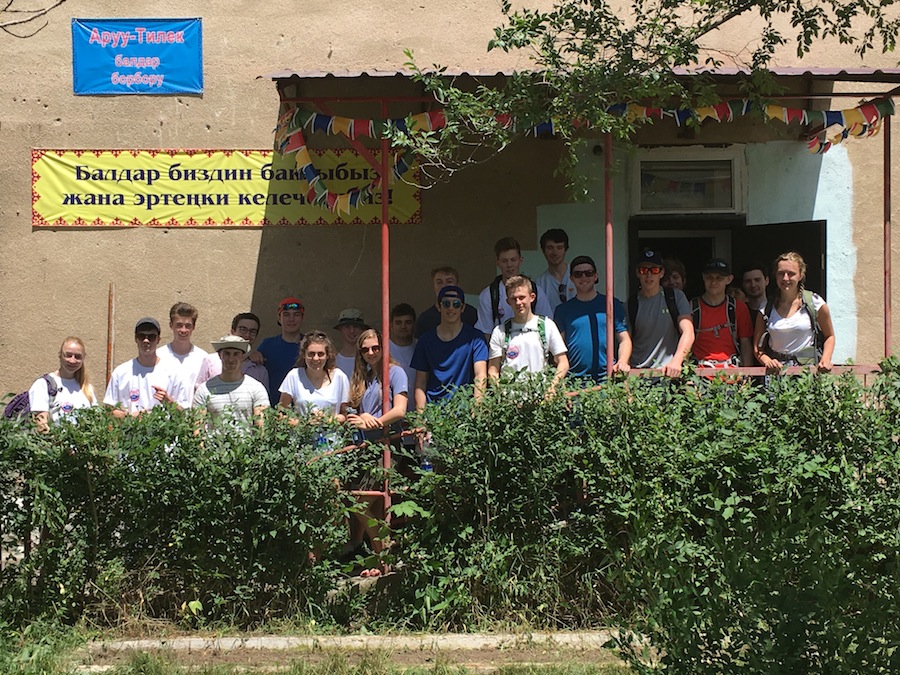
The team at Aruu-Telek

The team at Aruu-Telek

When we arrived we were ushered into a room where the director gave us an introduction to the work of the hostel. It has been in operation for two years and relies very heavily on public donation from home and abroad, as it receives no government funding. The people that use the centre, mothers and children, come from far and wide and tend to stay there for a relatively short period. Problems they encounter that makes it necessary for them to seek refuge are the obvious abuses, but also alcoholism, an inability to cope with the responsibilities of parenthood, a wide range of circumstances. She expressed her gratitude to us and then asked if we could work on three things for the centre:

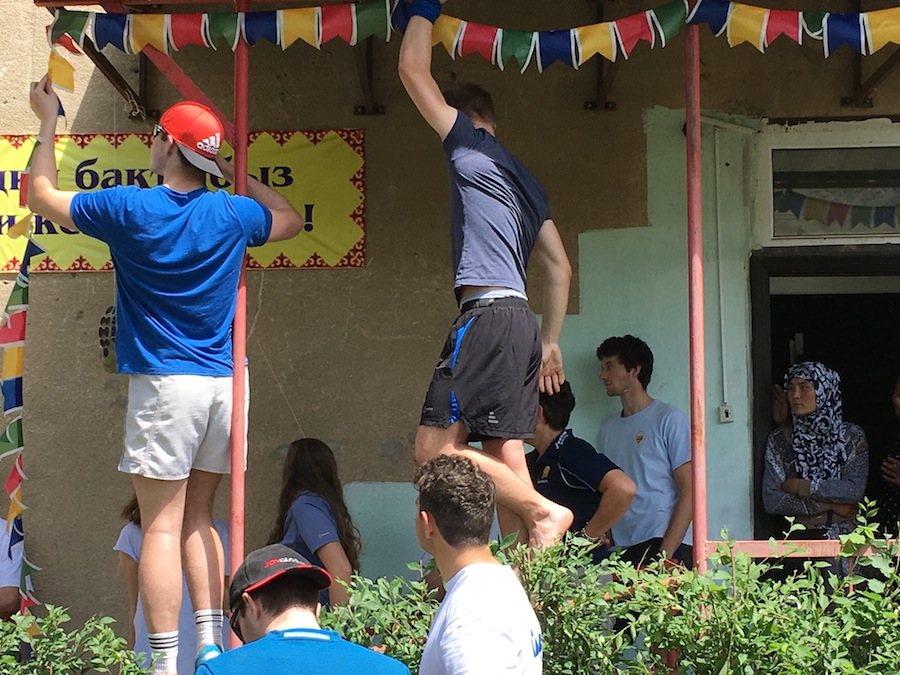
The flags being hung around the entrance to Aruu-Telek

The flags being hung around the entrance to Aruu-Telek

Group 1, she wanted them to make flags to go around the entrance,

Group 2, to set up the play room by laying the rug, making the ball pool and running machine, setting up the TV and washing machine, while

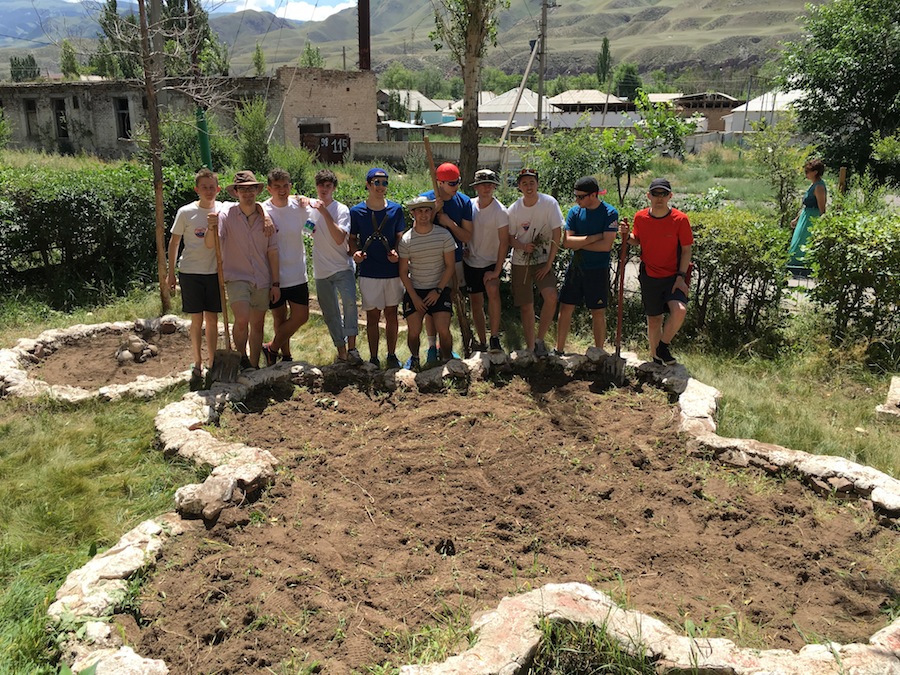
Group 3 worked to tidy up the garden.

The tidied garden and team

The tidied garden and team

All the materials were provided for the flag making, the setting up of the play room was easy, but the gardening had to be done with only two shovels, a pair of sheers and a wheel barrow. All three teams worked exceptionally well and by lunchtime all was done. To be honest, if we had had more tools and appropriate tools we could have done a better job in the garden, but it was not to be. I did offer to buy some plants to add instant colour to the garden in the newly revealed flower beds but Alex, our guide, suggested they could do that for themselves.

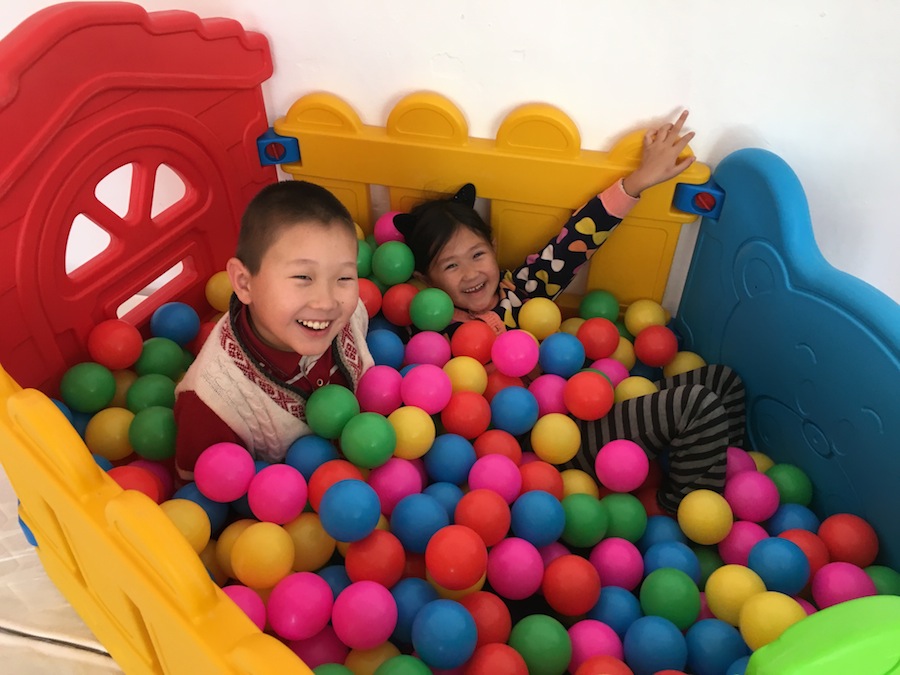
Enjoying the new ball pit

Enjoying the new ball pit

There were a number of mothers and children in the hostel and it was good to see the instant joy on their faces as they played with the new equipment.

After lunch we said farewell to out two minibus drivers as, tomorrow, we head off deeper into the Celestial Mountains in large trucks for the start of our trek. Bring it on!

Naryn

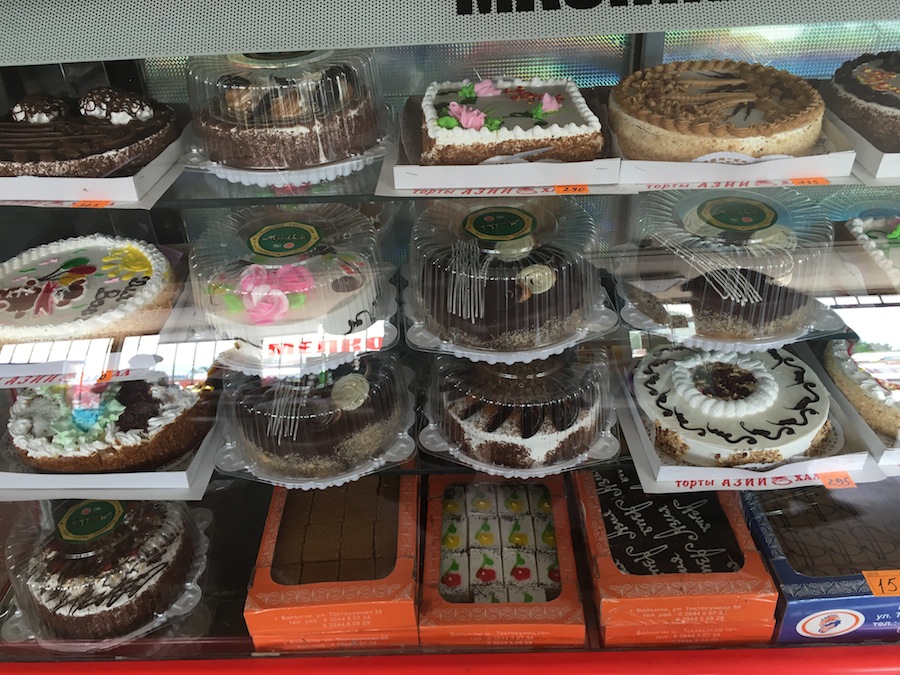
Cakes!!

Cakes!!

Leaving Bishkek after breakfast, we drove to Naryn, a journey of about seven hours. Firstly, we headed east following the Kyrgyzstan/Kazakstan border, briefly entering the latter for about a quarter of a mile. We then headed into the mountains, climbing steadily and stopping in Kochkor for lunch. Just before we reached the home stay where we were lunching we had a chance to explore the busy market town, a hub for the surrounding countryside. Cakes galore in the small supermarkets and I rued the fact that nobody in the group had a birthday. I did find a small bakery with its tandoor style oven producing delicious flatbread, far to delicious not to buy some to devour just before lunch.

Another three hours of steady climbing brought us to Naryn and Celestial Mountains Guest House, our accommodation for the next three nights while we embark on projects in two homes for disabled children.

Wandering around Naryn it soon became clear that there is not a great deal here beyond a fast flowing river, a few small supermarkets in a row selling identical products with independent fruit and veg stalls outside. We were keen to find a bar but none were apparent. Giving up I went back to the house. Shortly afterwards Chris and Alice came back with the news that they had found one.

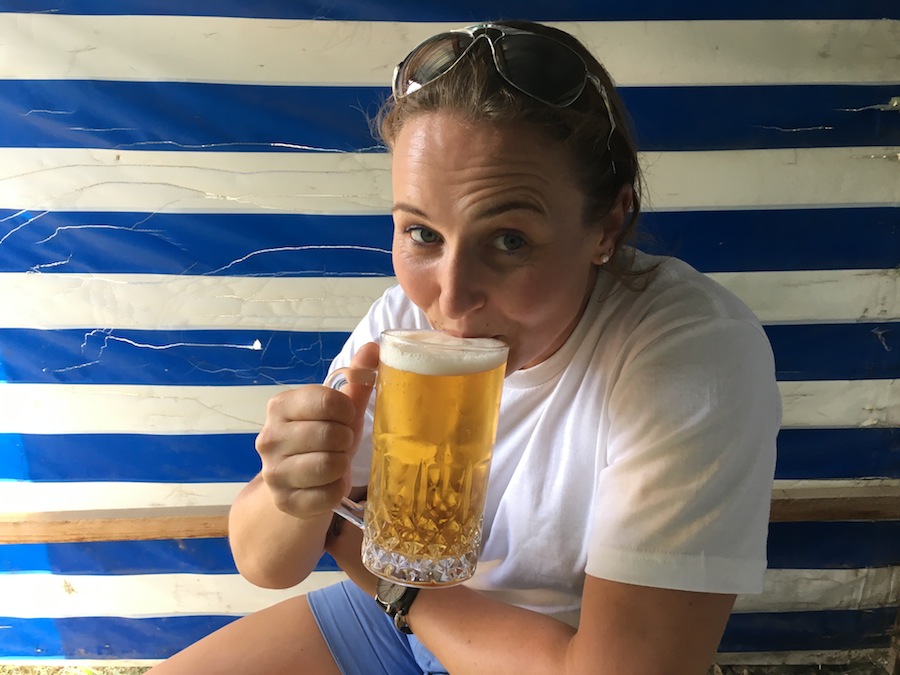
Alice's first ever beer

Alice’s first ever beer

This proved to be a fairly surreal experience. Entering a yard we were faced by two inflated palm trees. Around the edge of the yard were booths with shower curtains across the doorways. Plastic clothed tables with basic wooden chairs were in each booth. Having been ushered into a booth we had some difficulty getting the message across that we wanted beer. Alice, not being a beer drinker, wanted something else but it was impossible to make ourselves understood, so Alice had to have beer.

As we began to enjoy the drink a microphoned announcement introduced a singer to recorded backing music. Conversation was rendered almost impossible but it all added to the quirkiness of the situation.

The following morning we set about achieving our Naryn objectives by visiting two homes/schools/support centres for disabled children. A van full of items we had funded had followed us from Bishkek. I have to confess that I was a little nervous about what to expect. Was it going to be too upsetting? Were we going to be faced with severely disabled children in dire conditions? I was prepared to withdraw if it turned out to be too distressing.

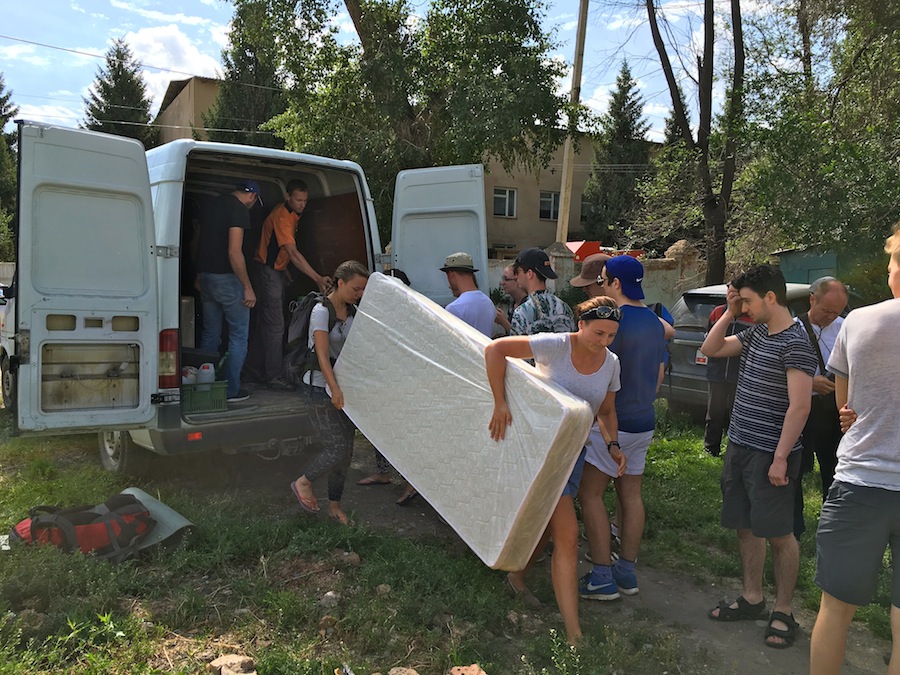
Unloading the van

Unloading the van

The first centre, Aruu Telek, was delightfully decorated but no children. None are resident but there is opportunity for both children and their mothers to stay in times of need. Here we delivered mattresses, a ball pit and a sack of balls, a large rug, a television and a washing machine. During our conversation with the director, she requested that when we returned the next day we might like to tidy up the garden, cut the shrubs and bushes and generally make the place look tidier and more welcoming.

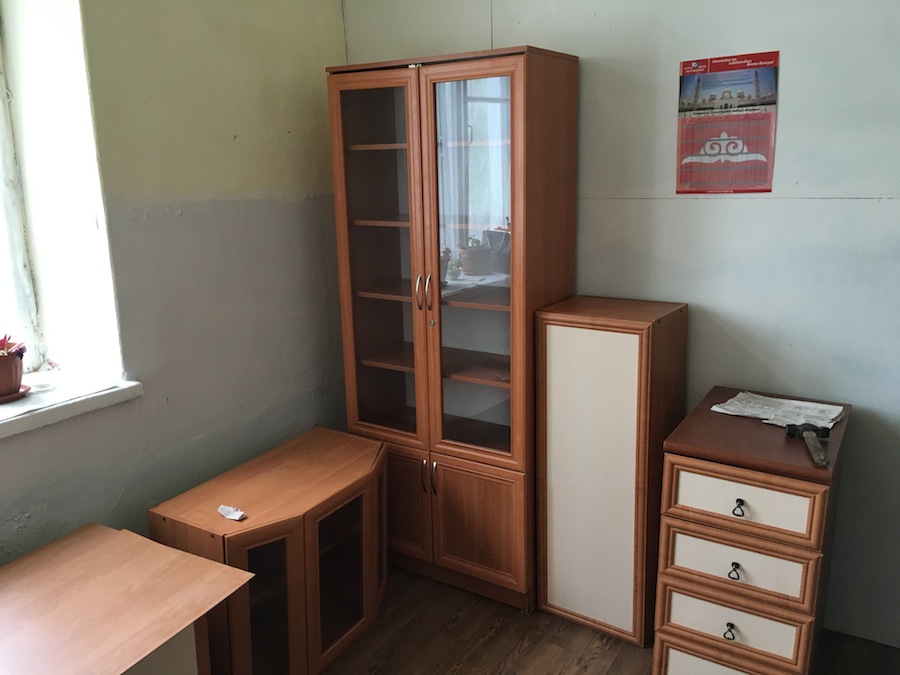
We then moved on to the second centre, Kadan, where we delivered lots of flat packed kitchen units, flat packed shelving units, a huge rug, a music centre, projector, mattresses, and lots of toilet pans.

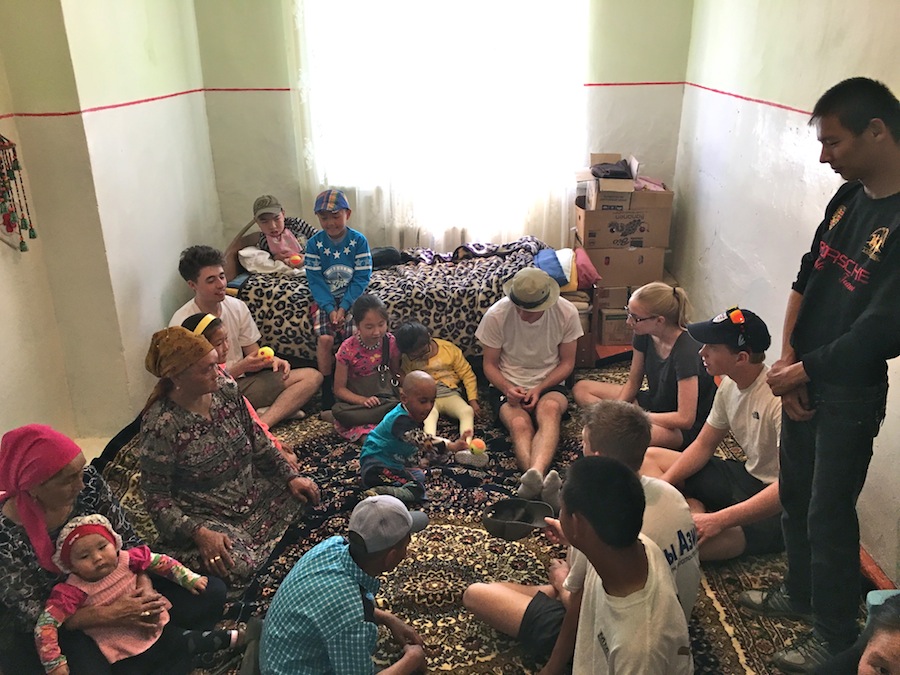
Playing with the children at Kadan

Playing with the children at Kadan

The children, with varying degrees of disability, and the staff were there to meet us. I immediately felt comfortable. Despite their disabilities the children were a joy, so happy to see us, to play and have fun. The King’s students waded in, got down to their level on the floor and played. It was great to watch.

It was decided that our task for the day was to build all the flat packed units, a mammoth task as the instructions were in Kyrgyz and impossible to understand. Organising themselves into teams they set about it with very limited tools. A Sigg bottle made a very good hammer! Each team planned their approach, laid out all the various components in order and worked superbly well.

Some of the kitchen units

Some of the kitchen units

By lunch time they had broken the back of the work. But before we could go for lunch the director wanted to thank us for everything. Part of the thanks included an eighteen year old boy with cerebral palsy singing a song for us. He sang beautifully. This was followed by another boy, again with cerebral palsy but more severely so, performing a sitting dance. It was really enjoyable, yet very moving, to hear and see their appreciation.

When we returned after lunch many of the children had gone home and it was not long before all the units were completed and put in place. They had done a fantastic job. I was really very proud of their achievements and the wholehearted way of their approach, a real credit.

Tomorrow, gardening.

Arriving in Bishkek, Kyrgyzstan

I don’t know how Magda does it. What is it about her that makes people fall ill on a flight, not just on one flight, but two? I have flown with many doctors over the years but it only happens to Mags. First, on the flight from Birmingham to Istanbul one of the flight attendants was taken ill and an appeal went out for a doctor on board to make themselves known. It was a genuine case and the poor girl had to be met by an ambulance and medics to be evacuated before we could disembark.

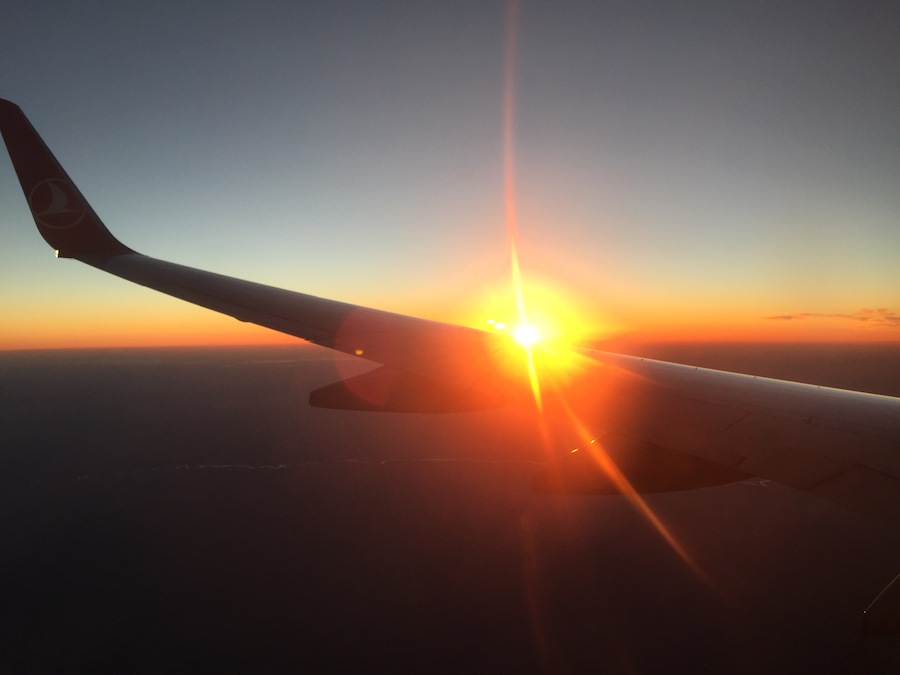
Sunrise en route to Bishkek

Sunrise en route to Bishkek

Then, after a few relaxing hours in a spacious restaurant/bar, we flew on to Bishkek , where Mags was called for again to help a woman who was probably nothing more than overcome by the heat on the plane. It was uncomfortably hot. Remarkably, the woman was married to the man sitting next to her, a doctor, but she did not want to disturb him.

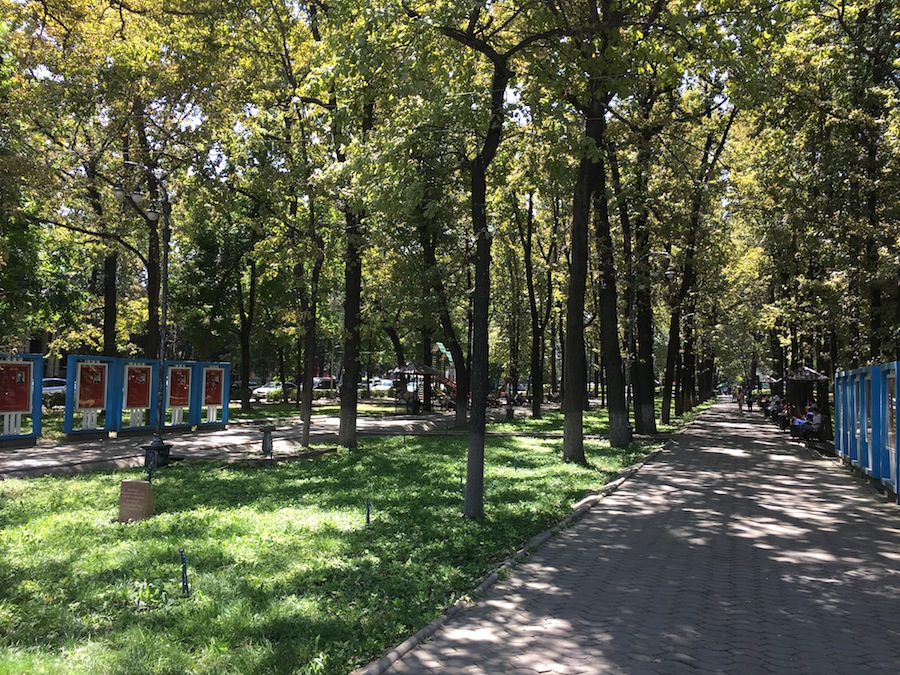
Arriving in Bishkek, a little bleary eyed at dawn we passed through the airport efficiently into pleasantly warm sunshine, to be met by our guide, Ramil. The forty five minute drive into town took us along a tree lined road, behind which stood half built houses in scrubland. As we neared town the density of the trees increased and I was struck by just how green Bishkek is. There are lots of shady avenues, tree filled parks and colourful flowerbeds well tended and irrigated.

Arriving at the hotel we were made most welcome and, despite it being only a few minutes after 7.00am, our rooms were ready. We could also enjoy a good breakfast before resting for a couple of hours.

While the rest of the group enjoyed some rest, I went to the Asia Mountains office in the basement to meet Natalie, my Kyrgyz contact and pay her the money for the wide range of items we had bought for the two orphanages in Naryn and the children’s cancer ward in Bishkek. Our US$5267 had bought a ball pit and balls, child massage mats, furniture, carpets, kitchen equipment, 2 televisions, a projector, bed pans, various picnic outings and 10 air conditioning units for the children’s cancer ward. We achieved so much with our money, and it will make a difference to the lives of so many children.

At 10.00 a money changer came to the hotel and then we went on a tour of the city with Ramil, our guide.

The sun shone and the temperature was rising rapidly.

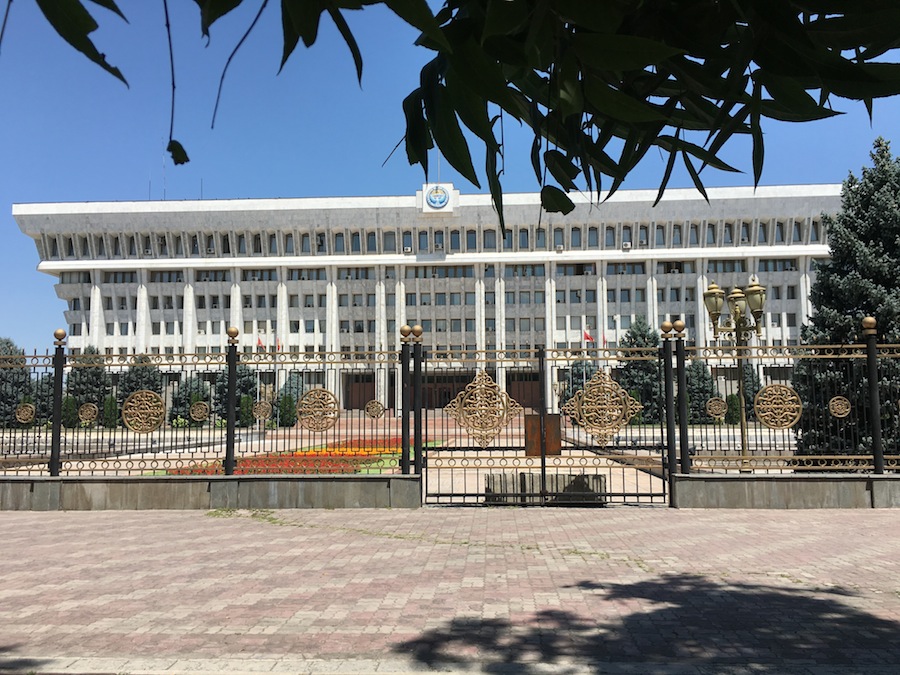
Parliament Building

Parliament Building

Bishkek is s city with very little history attached to it. It was first established in 1825 as Khokand Fortress to protect and oversee trade routes. In 1860 Russian forces helped destroy the fortress and so began Russian involvement in Kyrgyzstan, although the capital at that time was known as Pishkek. Russian control continued to increase over the next decades and in 1926 Pishkek was renamed Frunze, after a Bolshevik military leader that was born there.

When the Russians finally left Kyrgyzstan with the collapse of the USSR in 1991, the Kyrgyz renamed their capital Bishkek.

To the south jagged white mountains, the Kyrgyz Ala-Too range, rise steeply from the plain to heights of nearly 5000m. They create a stunning backdrop to Bishkek.

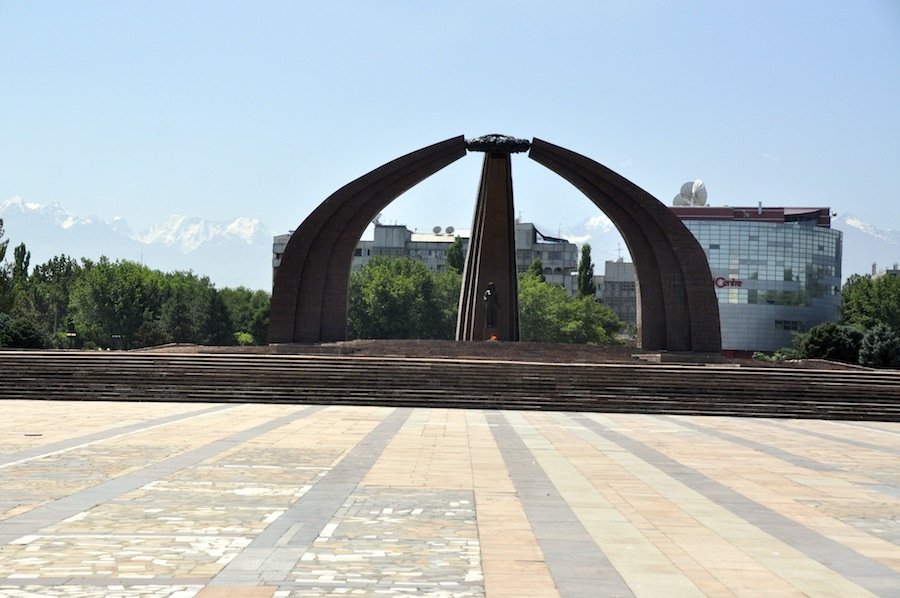
Victory Arch

Victory Arch

We visited first the Victory Arch, a design based on a yurt, which commemorates the end of the Second World War. 500,000 Kyrgyz fought alongside Russian troops. 200,000 died, which is quite a high proportion considering the modern day population of the country is six million. To one corner of the arch is a statue of men in conflict, to another the joy of their return, while in the middle burns a perpetual flame. Today, it is a place that wedding parties go to for photographs.

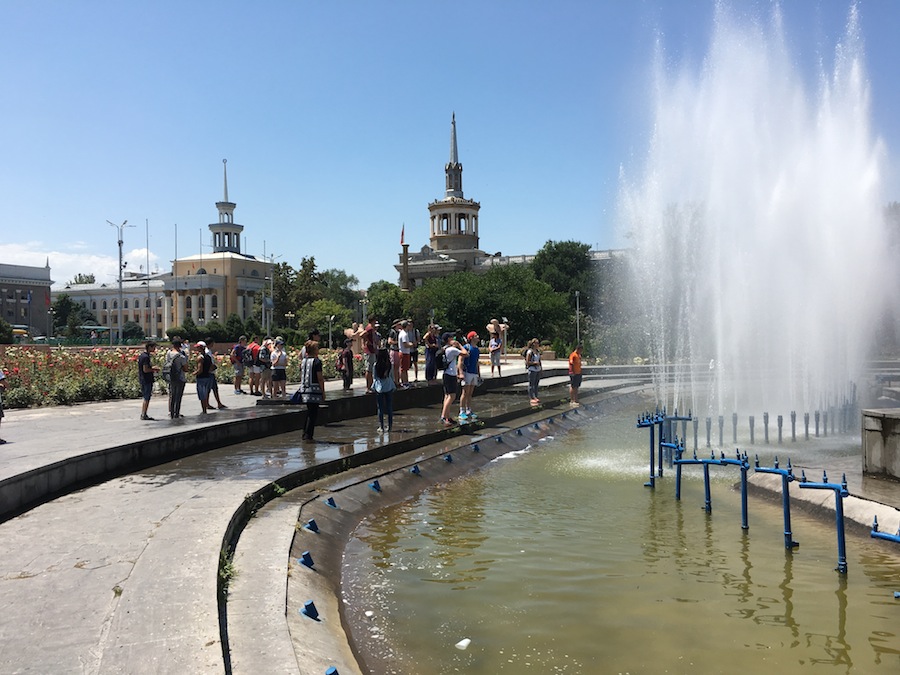
IMG_2201Moving on we walked through wooded parks and avenues to a variety of solid looking buildings, the opera house, art gallery, government building etc. Walking round highlighted the fact that Bishkek is a very green city with many flower beds, fountains and statues. All this greenery hides ugly Russian tenement blocks. These are gradually being replaced by more modern, architecturally more pleasing developments. There is certainly more development here than when I last visited four years ago. What I struggled to get used to was the way the traffic stopped as soon as I stepped on to a crossing.

Philharmonic Square

Philharmonic Square

I don’t know whether it is because it is summer but the people seem much more affluent; the women dress elegantly and with style, the men less so. Cars appear to be bigger, newer and cleaner. There are more people about, in shops and restaurants. It has a much better feel about it, although it would be fair to say, from my limited experience, it is a city with no heart, there is no high street, no thriving street with illuminated and enticing shop windows. Everything is hidden behind unattractive facades that are shopping malls with little more than upmarket market stalls inside. I guess, that it needs to be all under cover to keep people out of the extremes of winter and summer.

Having had our tour, lunched and shopped we returned to the hotel, struggling to keep going with the combination of a lack of sleep and temperatures we were not acclimatised to. A restful evening and an early night was needed by all.