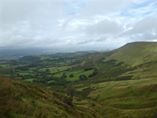
Albania, for so long a country steeped in mystery and intrigue, closed to the rest of world and yet, here I am, the result of watching Rick Stein on television. His short programme on the culinary delights of Albania showed me enough of the country to know that I wanted to go there.

Kruja
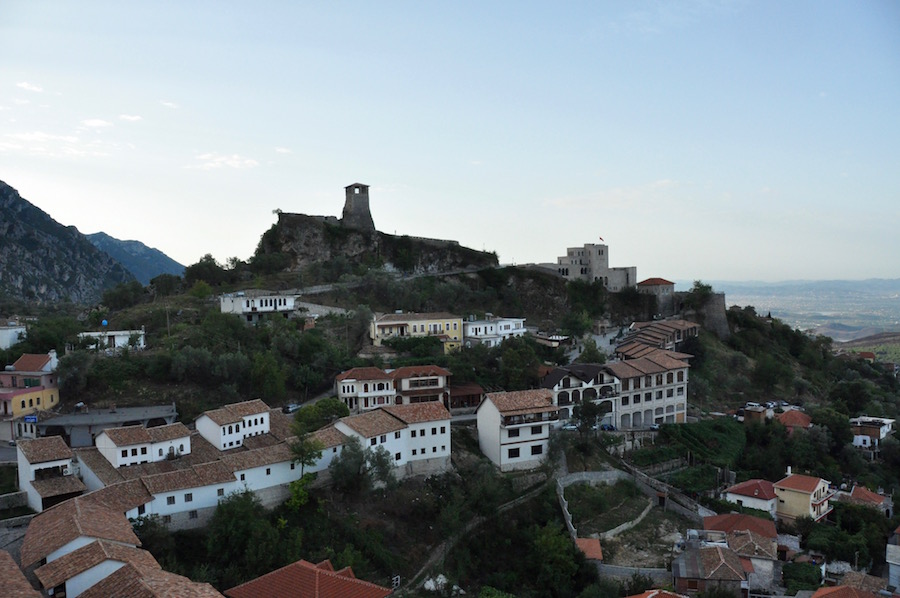
After a late night arrival I wake up at the Panorama Hotel Kruja, a forty minute drive from Tirana and half way up a mountain. My room on this brief overnight sojourn looks out on to pantiled roofs, ancient rock fortresses, a lot of new buildings and the valley below. The hotel is so new I feel as if I am the first visitor to my room it is so spotless. As I drifted off to sleep the night before I could hear the rhythmic vibration of a wedding party deep in the bowels of the hotel. It was as if the fabric of the concrete was absorbing the sound and distributing it throughout. It didn’t stop me from sleeping though.
Breakfast was taken on an open veranda overlooking the oldest part of the town. I was amazed by the birdsong ringing out so clearly until I discovered it came from a canary in a cage in the dining area. By the end of breakfast I could easily have rung it’s neck, it was so loud.

A steep, rocky ascent
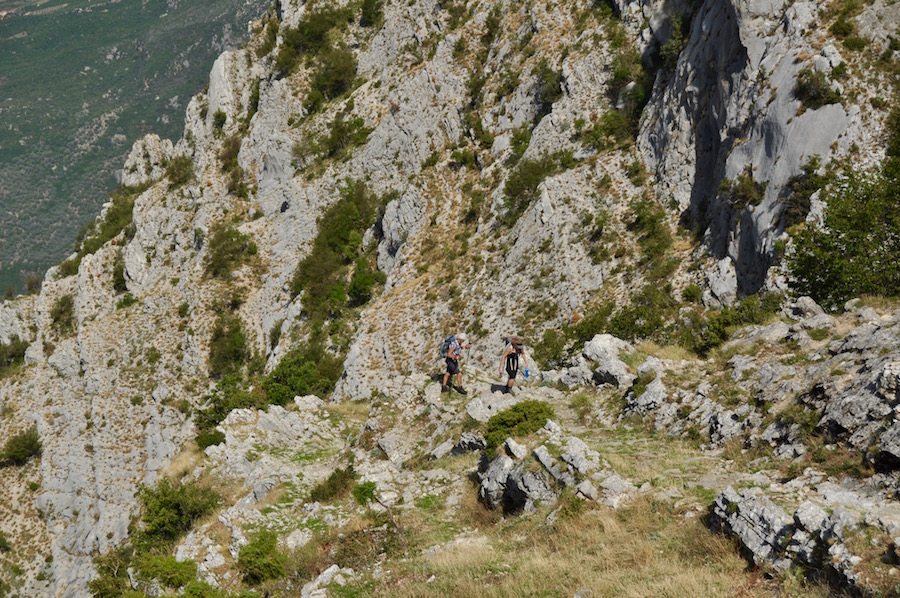
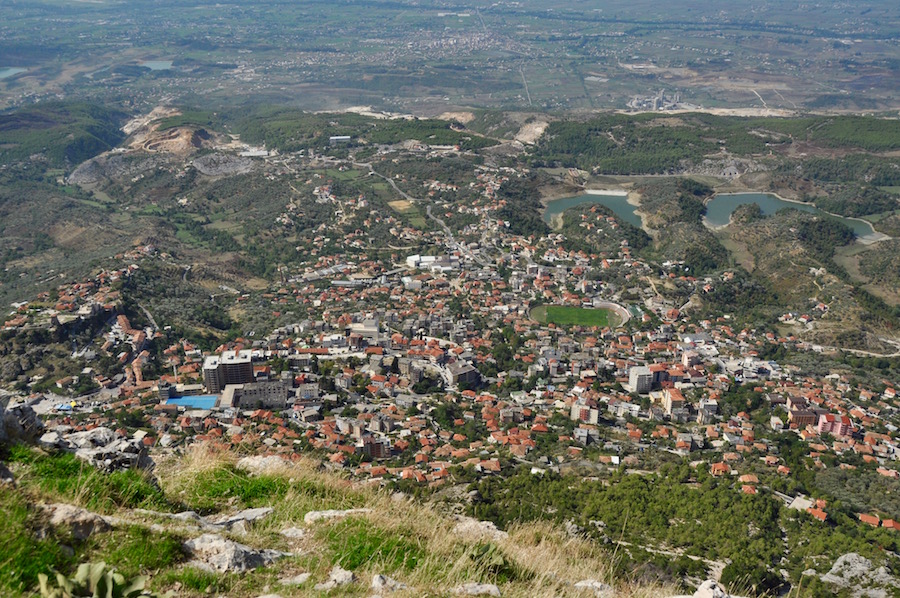
Our first walk was up the holy mountain of Tumenisht behind the town, a climb of about 600m up, what appeared near the summit to be, a shear face of limestone. As we set out on a steepening path the heat began to tell. There was not a breath of wind and the temperature was rising rapidly. It was also very humid. The stony path, once used by pilgrims to a cave near the top, zigzagged its way up the hill circumnavigating its way around outcrops of limestone. Only occasionally were we given some shade from a path side tree, although most of the vegetation was quite scrubby. All the time the view down to Kruja and beyond got more expansive and impressive. Regularly the sound of police sirens came up to meet us from the narrow streets of the town below as they made preparations for 140 delegates from NATO who were meeting in our hotel.

Looking down on Kruja and beyond
We eventually reached the cave of Bectasci Teqe, a Sufi Dervishes Sanctuary, where we came across more tourists and Albanians, all of whom had taken the easier, less strenuous, and less rewarding journey by a road that approached from the flanks of the hill. A derelict building looked out over the view and spoilt the environment of the summit. It flourished as a shelter and accommodation in pre-road days, when pilgrims would stay longer to eat or even stay overnight. It was all a bit disappointing apart from the view out across the coastal plain towards the Adriatic.The only blots on the landscape was an uncharacteristic, unfinished tower block overlooking our hotel and the oldest part of the town, that has been several years in construction, according to our guide, Hassan, and a number of ugly cement factories.
Returning to Kruja we were not sure whether we would be allowed to have lunch in the hotel, now occupied by so many important people and protected by an army of security personnel. Having been scrutinised closely by men in black suits and black ties we were allowed into a room for lunch. You could be forgiven for thinking that there might be a very important funeral taking place at the hotel rather than the most important military commanders in the world having lunch.
After lunch we boarded our minibus and began the journey north towards the town of Shkoder. There are no motorways in Albania so all traffic is confined, in the main, to single track roads. While, beyond the towns they are not very busy, there is plenty of evidence of a poor standard of driving with poor overtaking decisions unfolding before us, more wrecked cars at roadside scrapyards than you would expect for a country of only 2.9 million people, and memorials of flowers by the side of the road. Then you have to to remember that people in Albania have only really been driving for the last twenty five years, for before the fall of communism ordinary people were not allowed to own cars, or to drive.

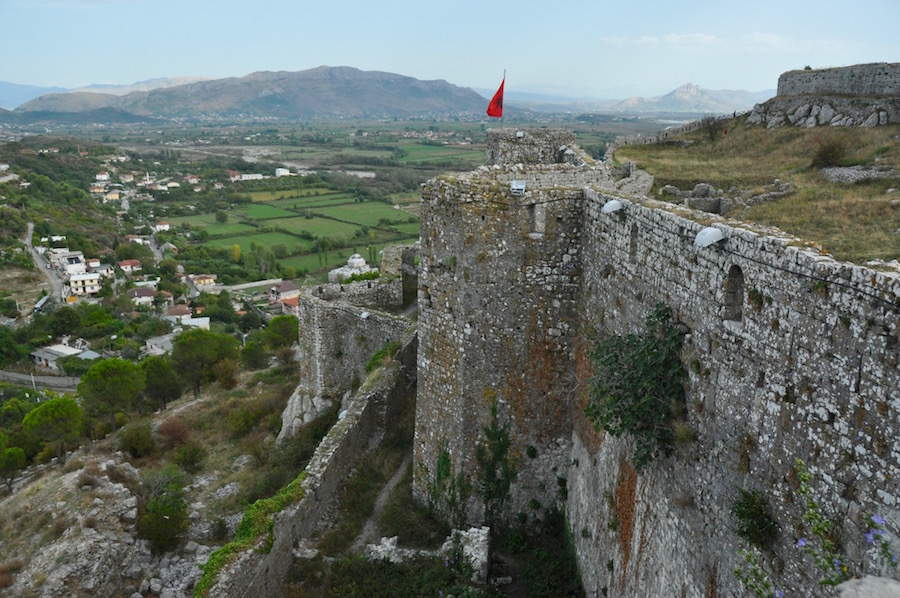
Shkoder from Rozafa Castle
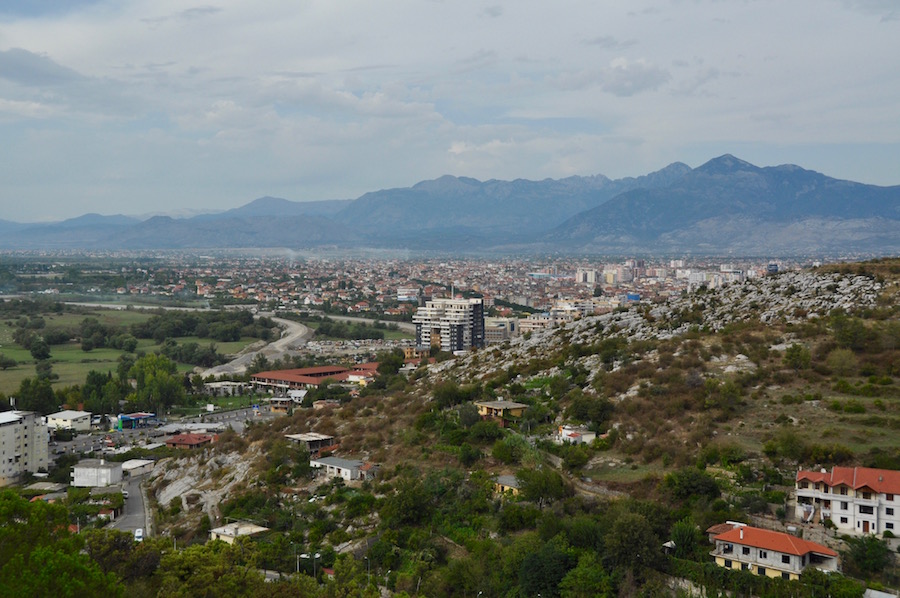
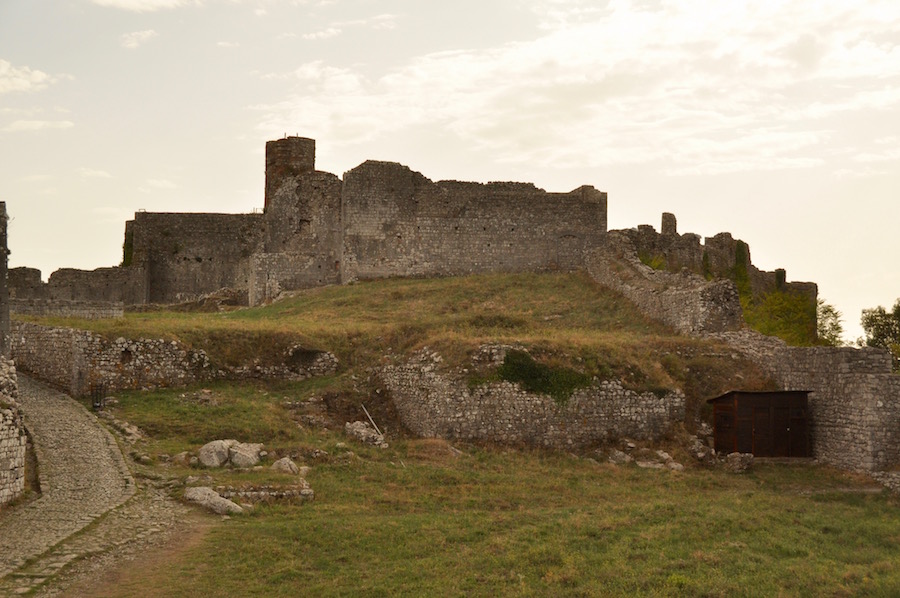
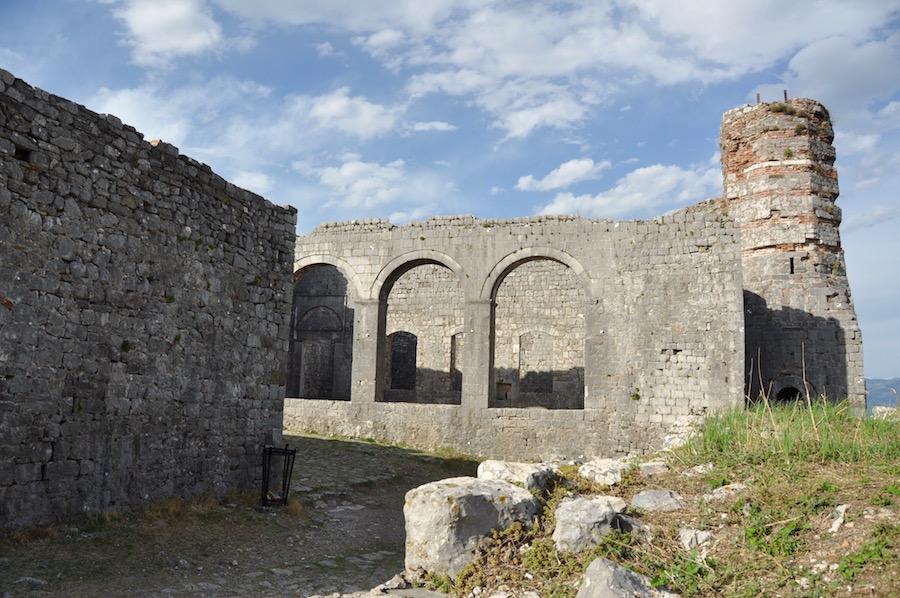
Just before we reached Shkoder we visited Rozafa Castle, an enormous hilltop fortification at the confluence of three rivers and overlooking the town on one side and Lake Shkoder on the other. The border with Montenegro runs through the lake and the far shore is fringed with mountains.
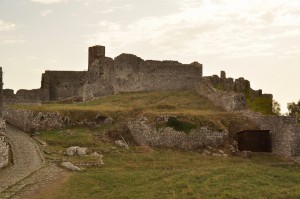
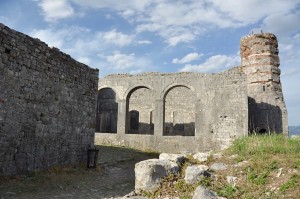
Whilst the castle is a must see tourist attraction I don’t think they have yet made the most of the monument. There are a few information boards but the majority of it looks rather scruffy. It clearly needs more investment for the development of the site into a living, working museum. It certainly deserves it, parts of it dating back to the 4th Century BC.
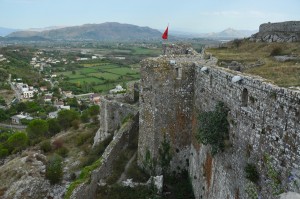 One of the most interesting aspects of the visit was ‘The Legend of Rozafa’, which tells the story of three young men, brothers, who were given the task of building a castle. By day they worked hard to build the castle walls yet each night, when they left, the walls would fall down. Day after day they built the walls. Night after night the walls would fall. One day, as they were working on the same walls once again, a wise old man approached them.
‘Day after day we work on this castle,’ they told the old man. ‘Yet every night the walls tumble down. We will never complete the castle. What must we do?’
‘I know what you must do but I cannot tell you,’ said the wise old man.
But the brothers pleaded.
‘Do you have wives at home?’ the old man asked.
‘Why yes, we do!’ the brothers answered.
 ‘The castle will only remain standing if one of your wives is sacrificed within its walls. Do not warn your wives, but whoever comes to bring tomorrow’s lunch will need to be sacrificed. You must build the stone walls with her within them. Only that shall prevent it from falling.’
The brothers all promised that none would tell their wives of the terrible fate that would occur to them the following day should she be the one to take their lunch over to them.
The oldest brother did not keep his promise and quietly told his wife of the fate that would befall her. ‘Keep away,’ he warned her.
The second brother did not keep his promise and warned his wife also.
Only the youngest brother kept his word.
 The following day, the mother of the brothers called the wife of the oldest son over and asked her to take over bread and wine for them.
‘Alas, mother,’ she said. ‘I cannot for I am unwell today.’
So the mother called the wife of the second son.
‘Alas, mother,’ she said. ‘I cannot for I am unwell today.’
The mother then called over the wife of the third son, who went by the name Rozafa.
‘Rozafa, please take over bread and wine for your husband and his brothers.’
‘But mother, I do not wish to leave my baby son. He needs me.’
‘We shall take care of him,’ said the oldest wife.
So Rozafa picked up the bread and wine and made her way to the site. As she approached the brothers looked up sadly and they explained what now must happen.
Rozafa did not protest and accepted her fate, asking only that she be built into the castle whilst still alive. Her plea continued, as she asked for her right eye to be left showing so that she might still see her son, her right breast to be exposed so that she might still feed her son, for her right hand to be exposed so that she may caress him and for her right foot to be left free so that she might still be able to rock her son’s cradle.
At the place where Rozafa was interred the walls are permanently damp with milk that still seeps from her breast.

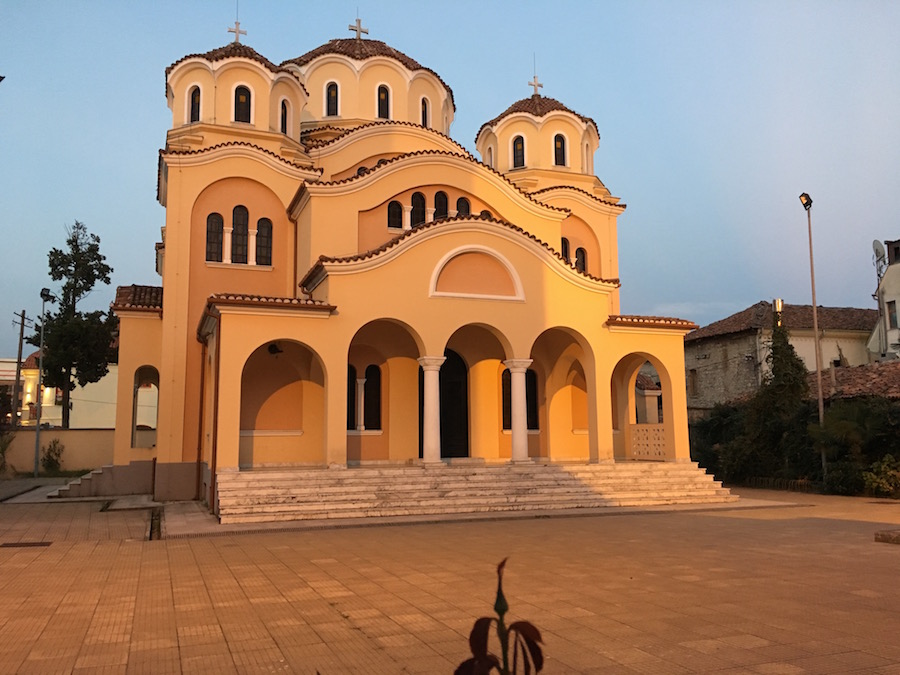
An Orthodox Church
Shkoder, the town, looked pretty unremarkable from the castle walls but, having established ourselves in the very smart Europa Hotel, we ventured out into town for our evening meal. From within, the town was much more pleasant with tree-lined pedestrianised avenues of smart restaurants and shops – not at all like the Albania we had imagined. We had learned already that Albania enjoyed religious tolerance, and it was clearly evident in Shkoder with a mosque adjacent to an orthodox church, adjacent to a catholic church. Throughout the communist era people were not allowed to follow their religion, certainly not openly, and many priests and imams were executed as a deterrent. Since the fall of communism there was an initial resurgence in religion, because the repressive restrictions were lifted, but in the intervening twenty five years it has tapered off. There is not the religious fervour of some countries and there seems to be a more liberal approach to the act of worship.

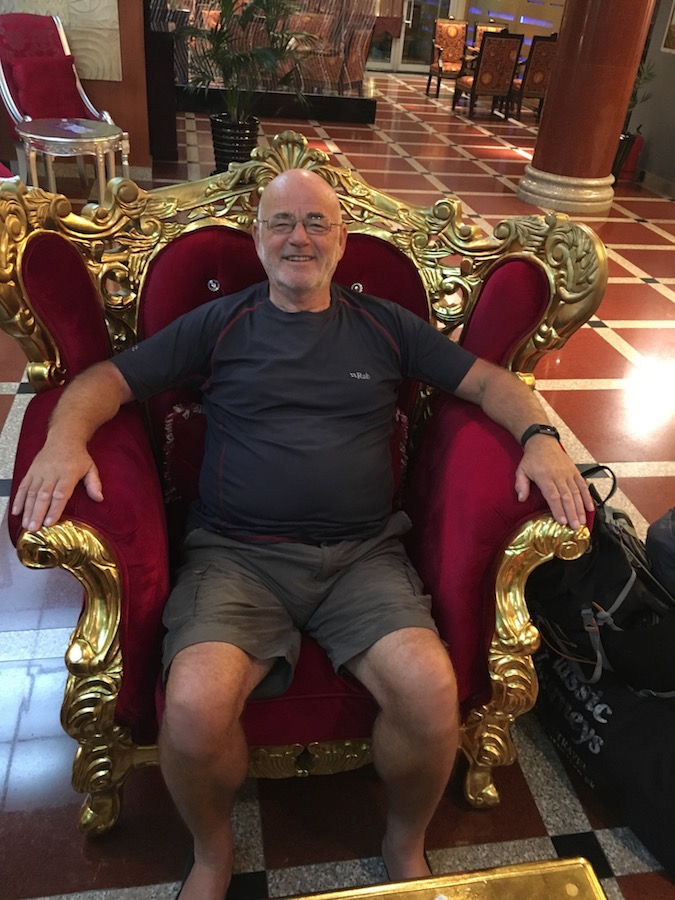
King John
The following morning was an early start as we were to be collected by a local bus at 6.15 for the journey to Lake Komani. As we waited we appreciated just how over-the-top some of the furnishings were in the hotel. There was an unnecessary opulence about the chairs in the reception area, which provided us with a little bit of early morning humour.
I was expecting to be travelling on an overcrowded local bus with chickens and goats but as it turned out we had a local minibus with just three other passengers. There was no overcrowding, just a strong smell of stale sweat leaking from the seats and no seat belts. Fortunately, I had a young Albanian man sitting next to me who had enough manly perfume on to counter any unpleasant smells. After only half an hour of travelling we stopped in a small town so that the driver and two elderly passengers could disappear for a few minutes to return with a box full of bags of sugar. I can only assume that they are heavily into jam making, which is probably the case as it is obvious from our brief experience in the lodge that they are largely self sufficient. They make their own butter, cheese, jam and honey, and I am sure a great many other things.
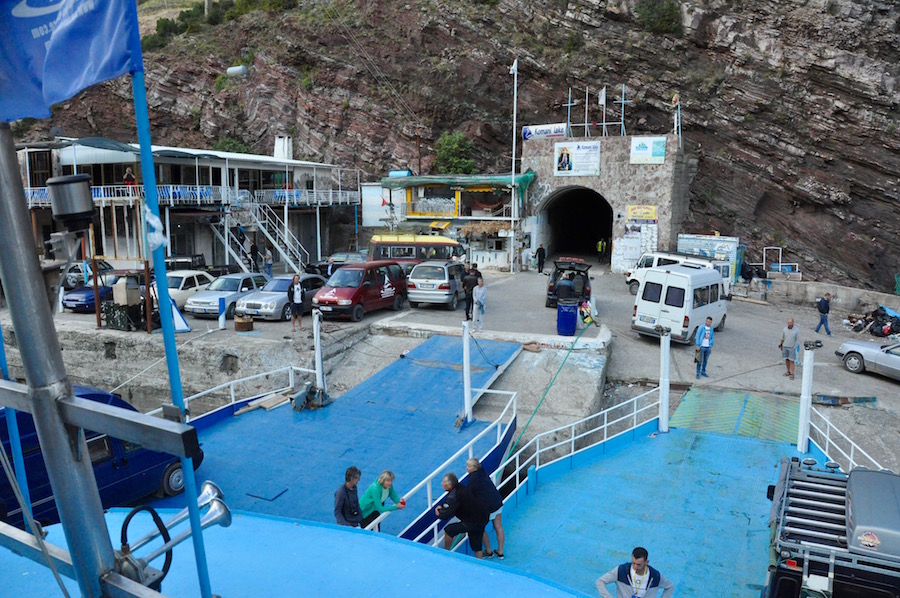
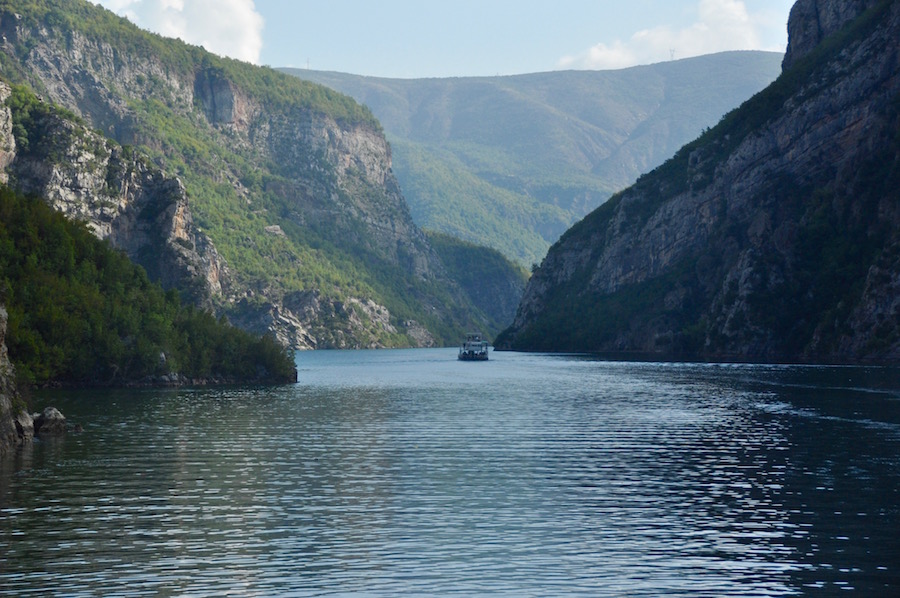
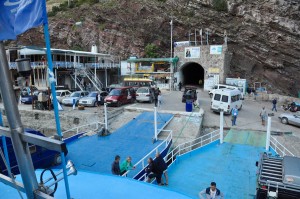 After nearly two hours we passed through a tunnel where the dam blocked the valley which created Lake Komani back in the late 70’s during the height of China’s influence in Albania. The lake is long and narrow as it snakes its way through what must originally have been a steep sided gorge. When it was created no people were displaced by it and we discovered, as we sailed up its length, that very few people live along its shores, because of the nature of the terrain on each side.
As we emerged through the tunnel to the small embarkation area there were two ferries waiting to receive passengers and vehicles. We were in good time so we were able to get the best places to sit at the front of the top, open deck. The early morning air was a little chilly, and while some retreated to the cabin below, I stayed put, wanting to take advantage of a great viewing spot. More and more vehicles arrived in the cramped jetty area, offloading their passenger who seemed to be favouring our boat rather than the adjacent one.
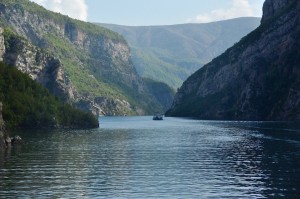 Eventually, after much shuffling of vehicles, both on the shore and on our boat, we headed off up the lake on a two and a half hour journey. It really wasn’t very wide at all; sometimes only about 50m wide and never more than 100m. On either side the rock walls and steeply wooded slopes rose out of the water to meet a clear blue sky, which, in turn, reflected in the water, also turning it blue. The only disappointment was that it was not a totally pristine environment. Every-so-often we would pass a number of plastic bottles that had found their way into the lake, presumably tossed into the water by those few people that live near the shore. With no roads, it is easy to understand that the disposal of rubbish might be difficult, but you would hope that those who live in this beautiful environment might also look after it.

Frog for breakfast!
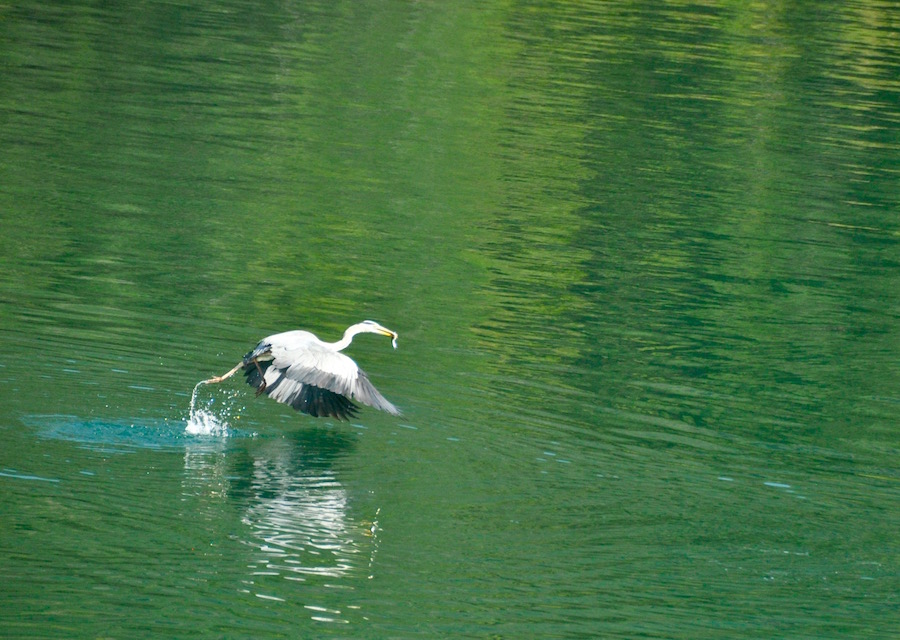
There was not a great deal of bird life on the lake, just the occasional duck and we saw frogs skimming across the surface, moving so fast that they hardly broke the surface with anything more than their feet. A heron fished by the side of the water was disturbed by our approach and flew off. As it did so it scooped up a frog and carried it off to enjoy elsewhere, away from noisy boats and prying human eyes.
The scenery never lost its drama for the whole length of the lake. As we neared the end a road ran along the shore and shortly afterwards we reached our destination and came ashore. A minibus was waiting for us to take us to Valbona. Although this was the end of Lake Komani, a little further up the valley another dam stretched across its width, creating another lake behind it.
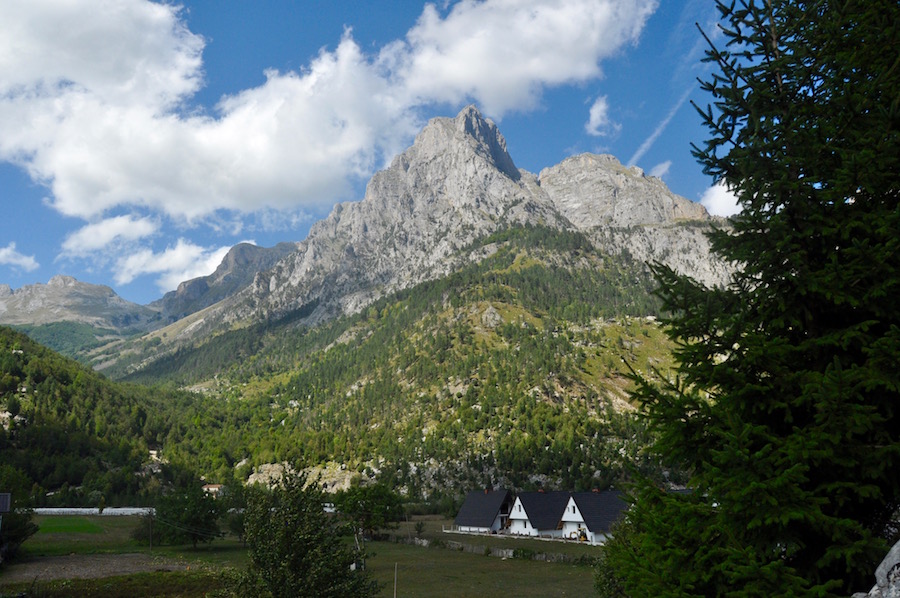
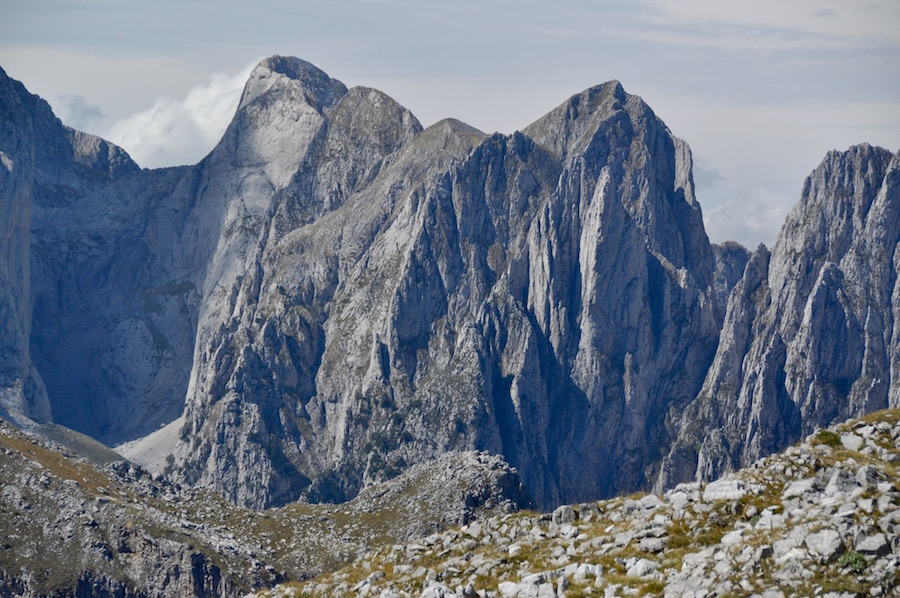
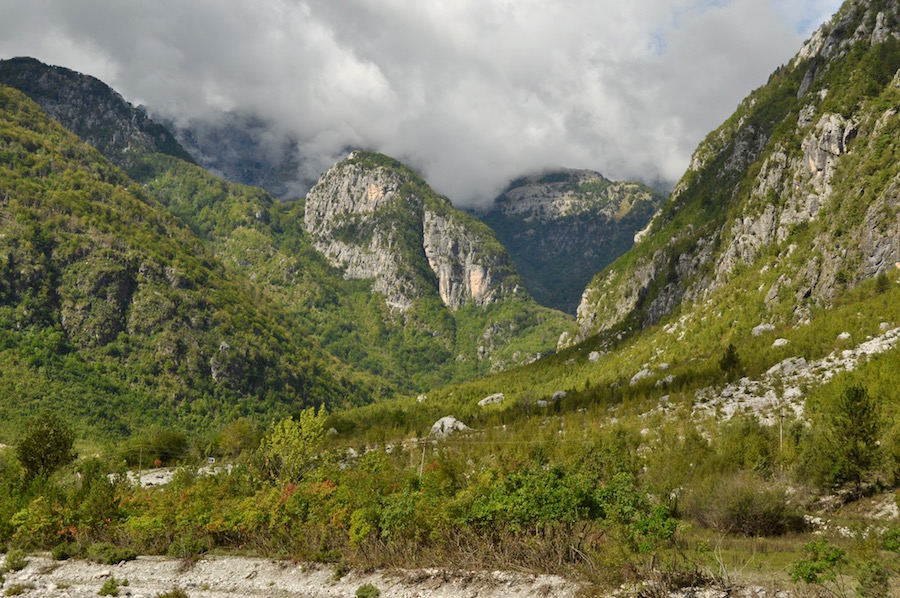
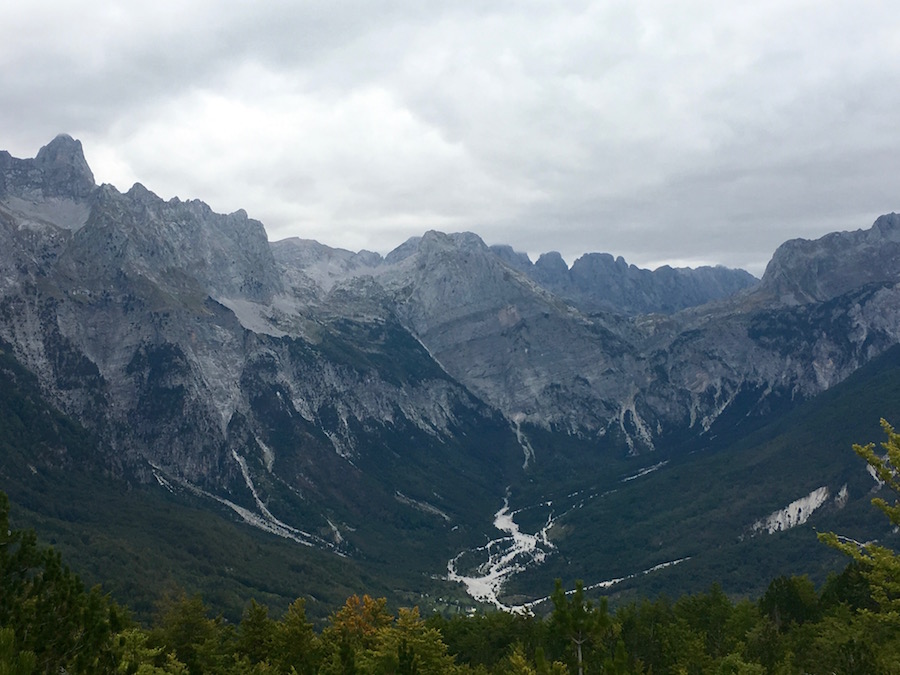
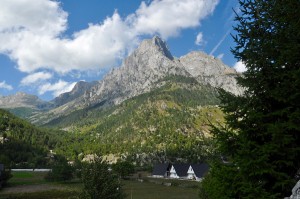 The journey into the heart of the Valbona region did not take long and we arrived at our lodge, Natyra, in time for lunch. I have to confess that I was expecting something a little more rustic, not a newly built house with adjacent accommodation, and with more being constructed. What I could not ignore was the beauty of the countryside around it. On either side of the narrow valley, steep slopes rose up to sheer limestone cliffs piercing the sky in a series of jagged ridges. At the head of the valley a wall of mountains ensured that only those fit and able would pass over into the next valley.
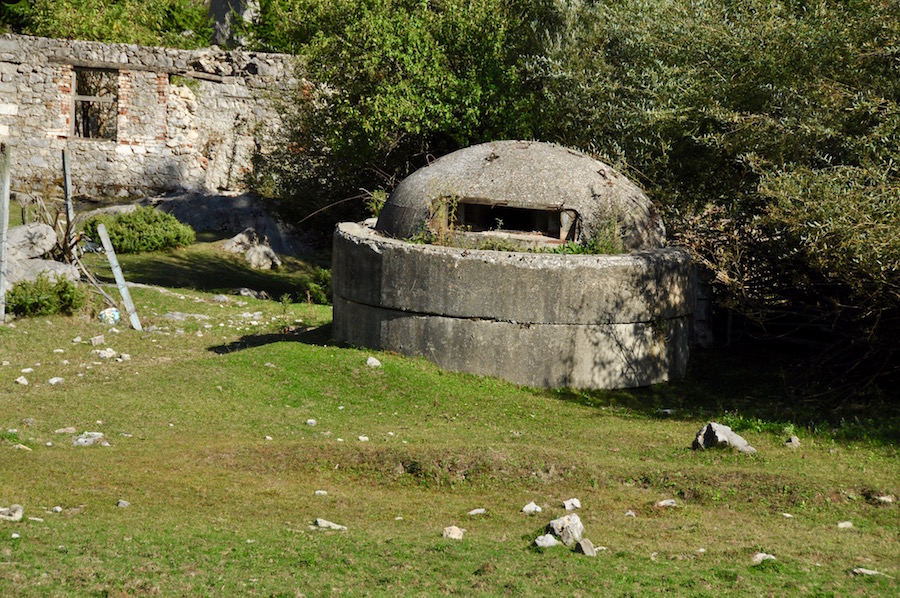
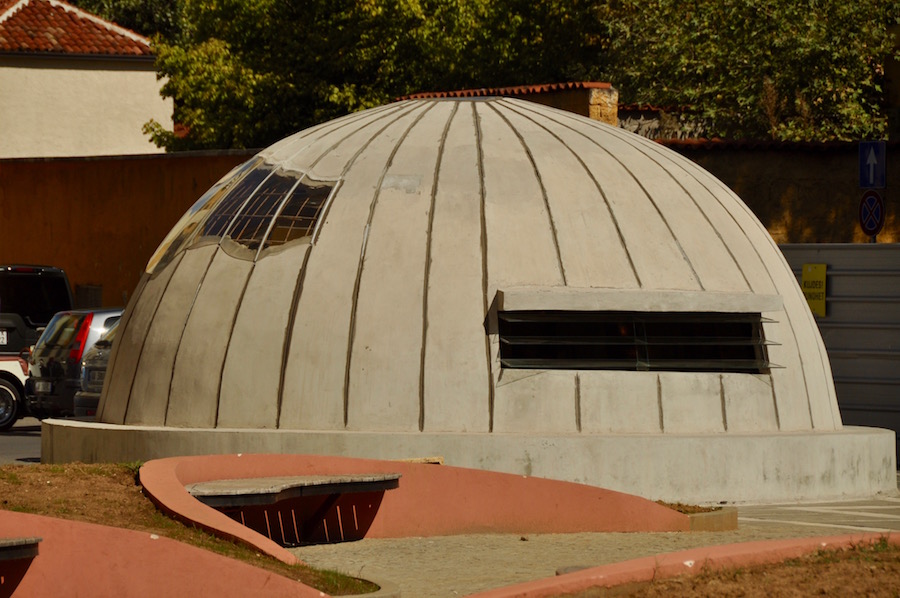
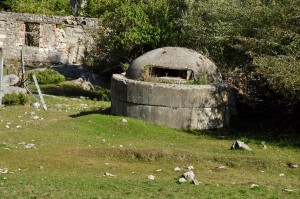 In the afternoon we explored the floor of the valley and came across a number of concrete bunkers, strange things to find in such a beautiful environment. However, when the Chinese lost interest in Albania in the mid 70s, after the death of Mao, the communist regime, without an international friend in the world felt vulnerable to attack from any quarter, so they embarked upon a programme of building bunkers that could withstand the harshest of attacks. Their aim was to build 250,000 but by 1983, while they failed to reach their target, they had still managed to build a staggering 174,000 bunkers. It was the expense of such a programme, which weakened the regime and began to slowly bring it to its eventual knees.
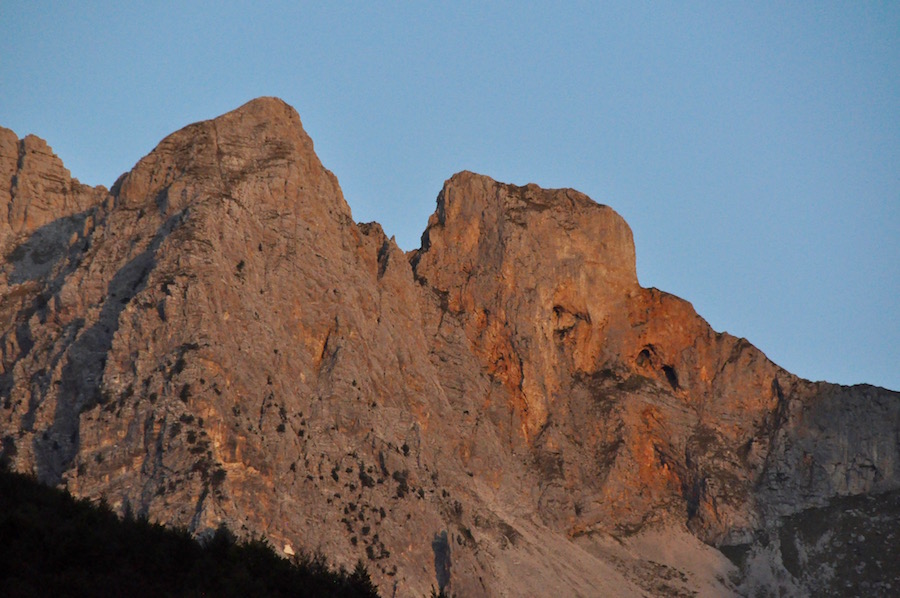
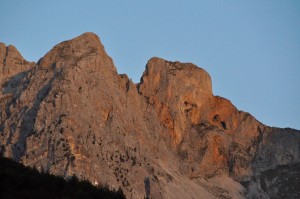 The following morning I sneaked out of my room early enough to catch the morning glow on the limestone crags, turning them orange. I had missed the evening glow, so I was determined not to miss the morning. It was not difficult as we had all drifted off to bed by 9.00pm and there are only so many hours you can sleep, or listen to the gentle breathing of your fellow room mates.

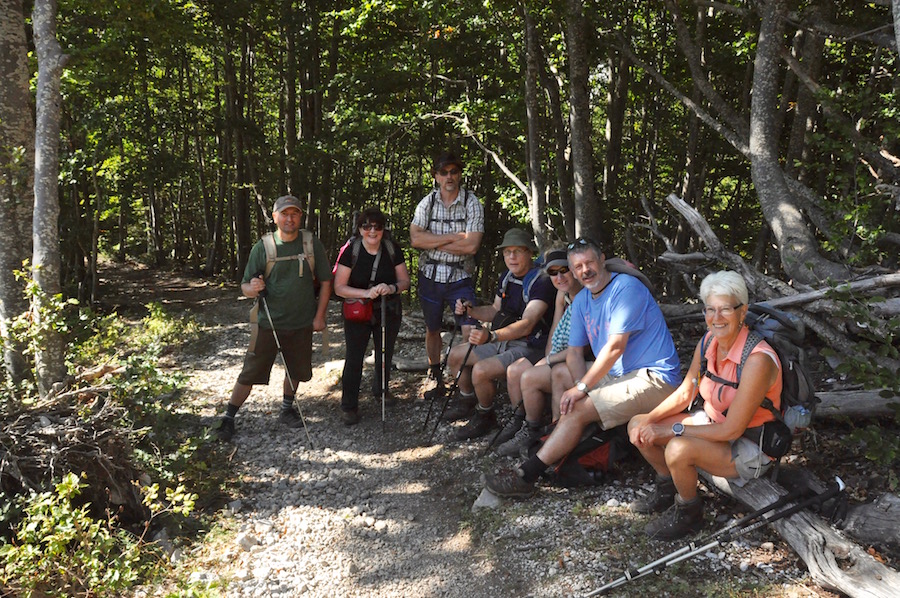
Taking a break
After a rather unsatisfactory breakfast of fatty doughnuts, we set out to to climb up to Qafa e Rosit, a mountain pass on the border with Montenegro known as Pyramid 18. Crossing the dry river bed we climbed gently up to the small village of Kikaj with just two houses. From there we climbed up through woods and across beautiful alpine pastures, eventually reaching a shepherd’s hut where we could buy a refreshing drink. It was fascinating to be served by a shepherd in this remote location wearing a suit. We had seen similarly dressed shepherds on our travels and they all seemed highly inappropriate, but they were all kept remarkably smart.

Wow!!
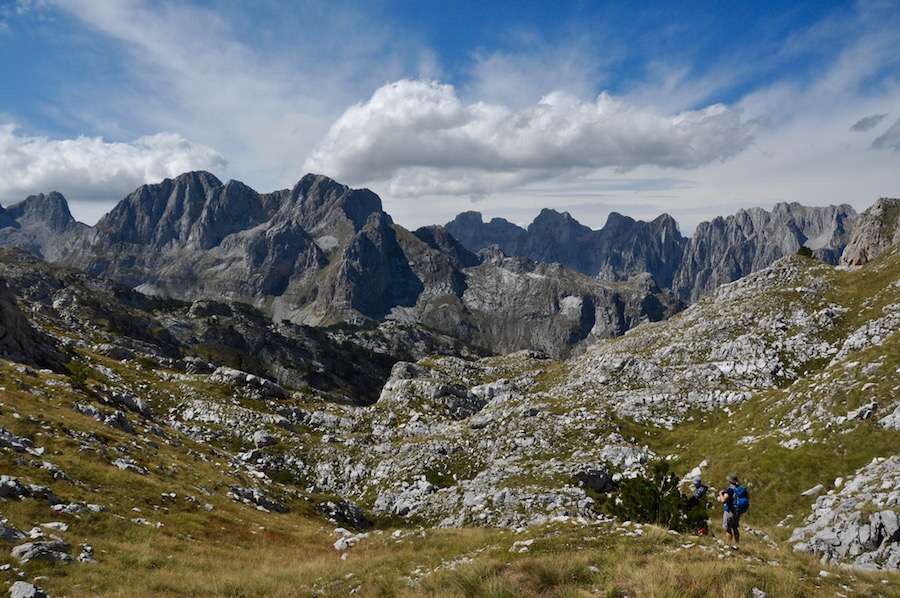
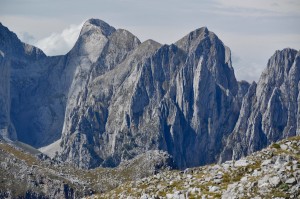
Three members of the group decided not to go higher, so while the rest of us continued upward, they began the descent. We were now on open, alpine hillsides, level with many of the craggy peaks we had gazed up at from the valley bottom. They were stunning. But, however stunning they were, we were not prepared for the view when we reached the top of the pass at a little over 2000m. As we reached its crest we were faced with a mass of spectacular rock faces and craggy peaks. It was a stunning view, impossible to turn away from. We were looking into a little corner of Montenegro with the furthest wall of mountains on the other side of the valley again being the border with Albania as it swept round in a huge arc. We were so lucky that the weather and conditions were perfect for us to enjoy such a vista.
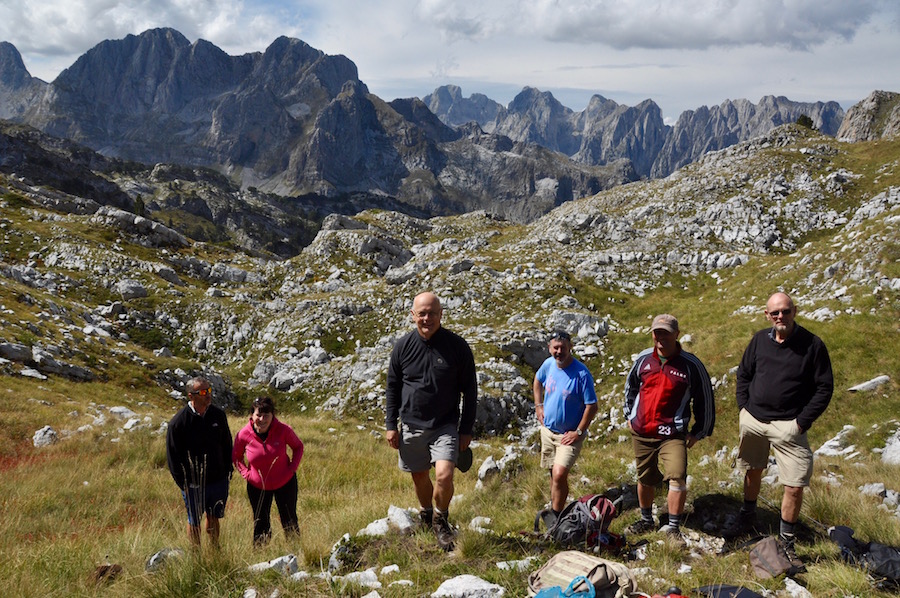
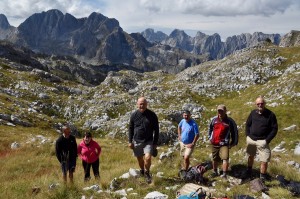 Dropping about 30m into Montenegro we sat on the grass in pleasant sunshine and ate our picnic lunch, pausing between bites of bread to take yet more photographs. I felt that those who had descended were missing a highlight but as Claire was not feeling too well, it was probably the right decision.
After more photographs we dragged ourselves away and started the descent, retracing our steps all the way back to our lodge. We again stopped for refreshment at the shepherd’s hut, drinking cups of wonderful mint tea.
 On the way down Fraser began to feel ill and by the time he reached the lodge he had been sick a number of times. What was happening to the group? What was the source of this illness? I could not think of anything that we had eaten or drunk in Albania. Certainly the food was a little different, a bit greasy at times but not sufficiently so to make us ill, I would have thought. It had to be something that was brought out with us or picked up on the plane.
I felt a huge surge of satisfaction by the time I got back to the lodge. We had climbed almost 1400m to one of the most stunning views I had seen and I felt that this was the best day walk I had had for a long time. I will never forget the splendour of those views.
That night it rained heavily and the night sky and surrounding hills were lit up by regular flashes of lightening. Thunder echoed around the peaks. The rain was so heavy it rattled on the roof above our heads. In the morning it was still damp and the mountains were wearing necklaces of whispy clouds. I was thankful that we had had such good weather for our hike the day before.
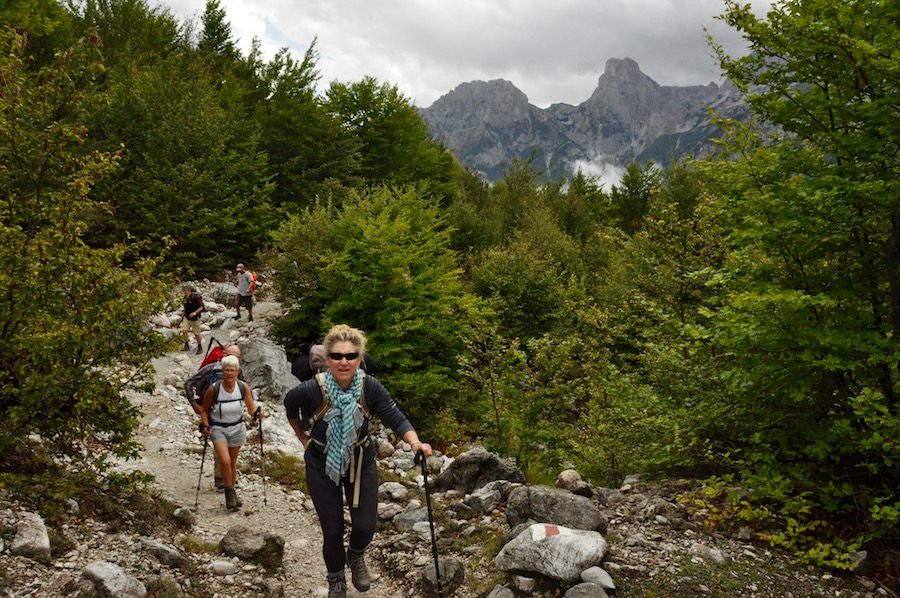
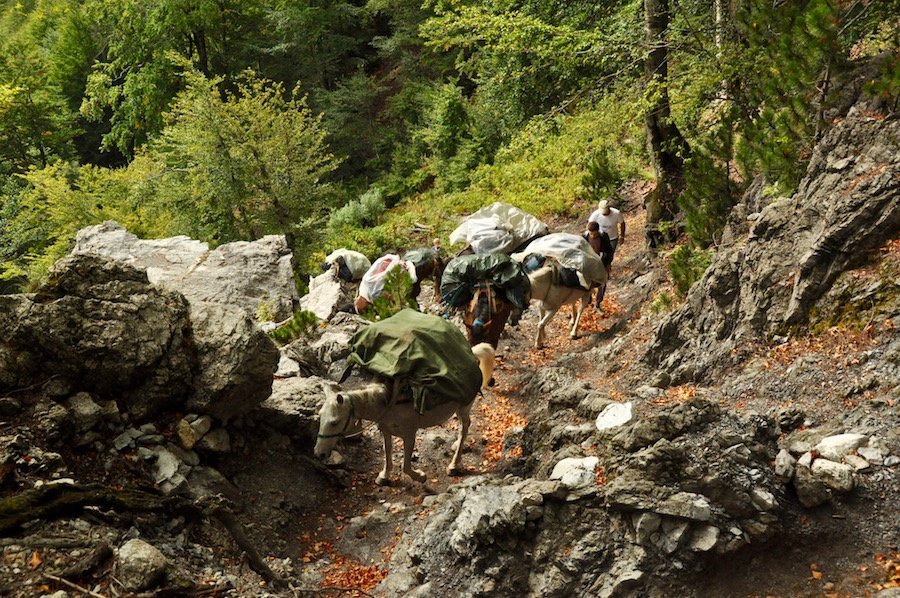
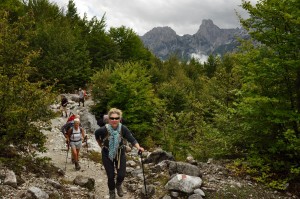 After another disappointing breakfast a local minibus took us up to the trail head, saving us about ninety minutes of road and river bed walking. There we met our mule team that were going to carry our kit over the pass to Thethi. It was still damp and it was necessary to don waterproofs, but after a while of steep climbing through woodland, the rain eased and it became far too hot to keep the waterproofs on. Fortunately, those who had been off colour the day before had made a remarkable recovery, and although Fraser was still a little delicate, he was able to cope with the walk.
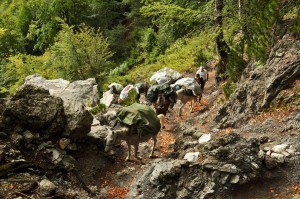 The climb continued steeply until we reached another shepherd’s hut serving refreshments, where we rested for a while. The gradient continued to be quite steep but we at least felt we were making some vertical progress as the valley below us opened out. Above, it was impossible to see where the path was leading us as there seemed to be cliffs of limestone blocking all access to the summit. Occasionally we would see a cleft and think that was where we were heading, only to find that the path then veered away from it. Eventually the path took us under the cliffs on a narrow path with a fairly steep drop below us, until we rounded a corner, and there was the pass. As we reached the summit a cold wind hit us and it was best to rest on the Valbona side while we waited for the group to reassemble.
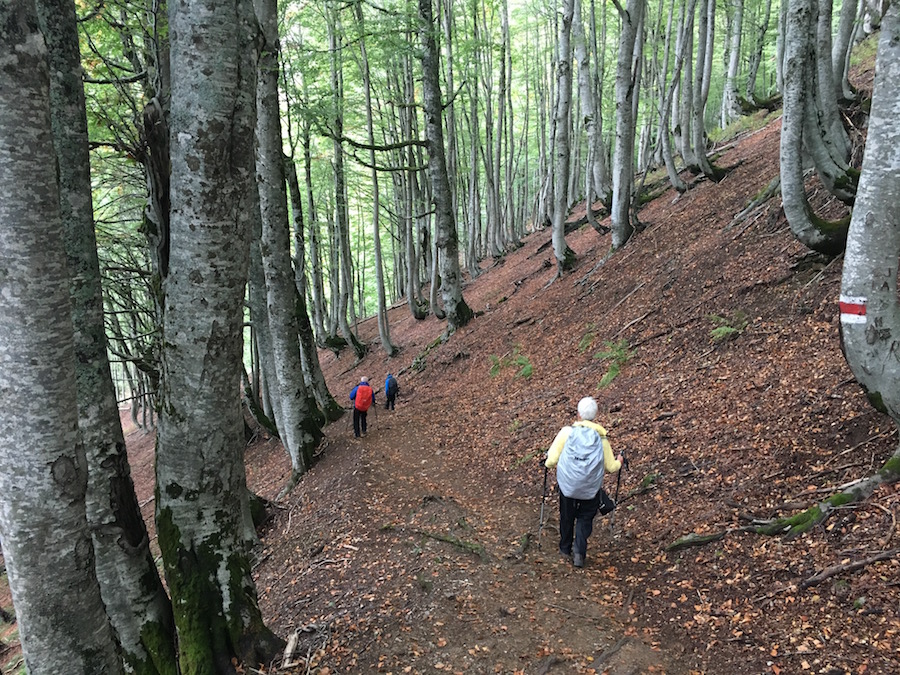
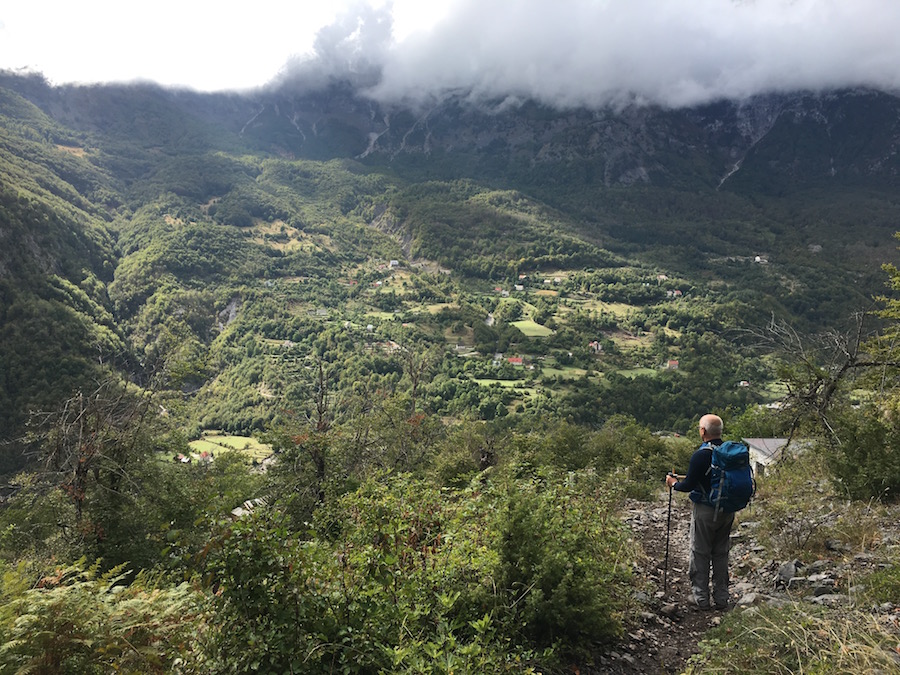
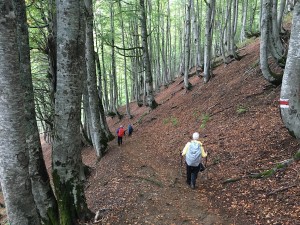 Unlike the Valbona side of the pass, the Thethi side was forested almost to the top. The descent took us into an amazing area of beech forest on a steep slope. All the trees had a bizarre bend in the trunk just above ground level. I can only assume that the young trees initially grew at right angles to the slope but in their quest for light turned to the vertical. Walking through this beech forest it was hard to imagine that we were in Albania; we could so easily have been back home – beech trees, rain, temperate environment. It really was beautiful walking. It did not have the wow factor of the day before but we were all very privileged to be able to walk in such beautiful surroundings.
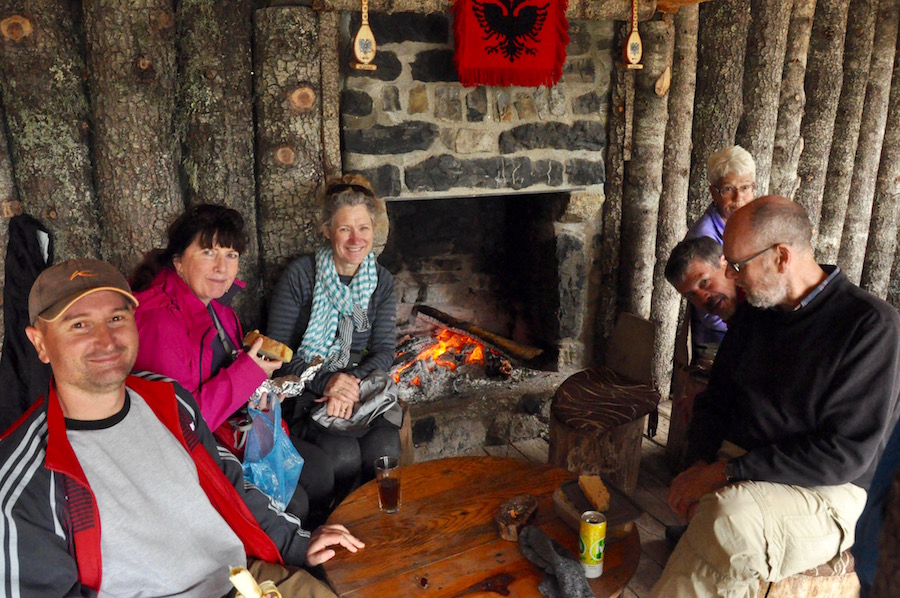
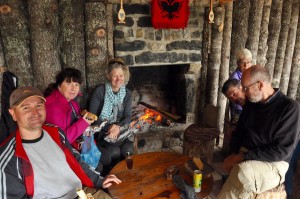 Just below the forest we came across another shepherd’s tea shop, but this one was very much an up-market affair with a welcoming log fire, tables and chairs crafted out of logs and a very clean toilet. While we rested and took refreshing drinks the rain returned, allowing us to linger and luxuriate longer until the rain eased and we were able to resume our journey down hill.
As we neared the floor of the valley we joined a stoney track and were almost immediately confronted by a JCB. To the side of it the vegetation on the downward slope had been disturbed and there were tyre marks leaving the road. Peering about 50 feet down the slope we could just make out a minibus through the branches and leaves. It had reversed over the edge and down the slope. The JCB was trying to manoeuvre in order to attach a line to it and pull it back up on to the track. We learned that the two occupants, brothers, were unharmed and that the undergrowth had slowed its fall until, eventually a couple of trees caught it before too much damage could be done.

Steve looking down on Thethi
On reaching Thethi, we were again surprised by the amount of development that had occurred recently, with new lodges being built, replacing the traditional building with their wood tiled roofs. There was even a very smart tourist information office, although I don’t think it was open, possibly because the season was quickly drawing to a close.
It was certainly colder in this valley and we were grateful for the log fire in the living/dining room of the lodge. The accommodation was in dormitory type rooms with five beds in each room, although there were only three to a room with an adjacent bathroom. It was comfortable, but quite basic; the windows did not shut properly, there was nowhere to hang anything and just about every pipe connection in the bathroom leaked. As the afternoon progressed into evening, both Rupert and Mike began to feel unwell, confirming that whatever it was that had affected Claire and Fraser was being passed around the group. Those who had so far remained healthy felt there was a sword of Damocles hanging over them.
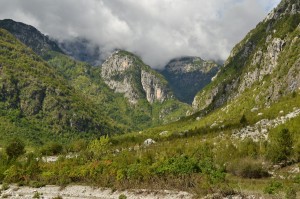 The following morning the weather had improved slightly, although it was still rather cloudy and cold. Hassan tweaked the itinerary and suggested that we walk down valley for a couple of hours before climbing up to have a look at Blue Eye, a pool in a mountain river, tucked deep in the mountains. It seemed like a good idea, as going high we would almost inevitably end up in cloud and see very little. Fortunately Rupert had recovered but we left Mike behind to continue his recovery.
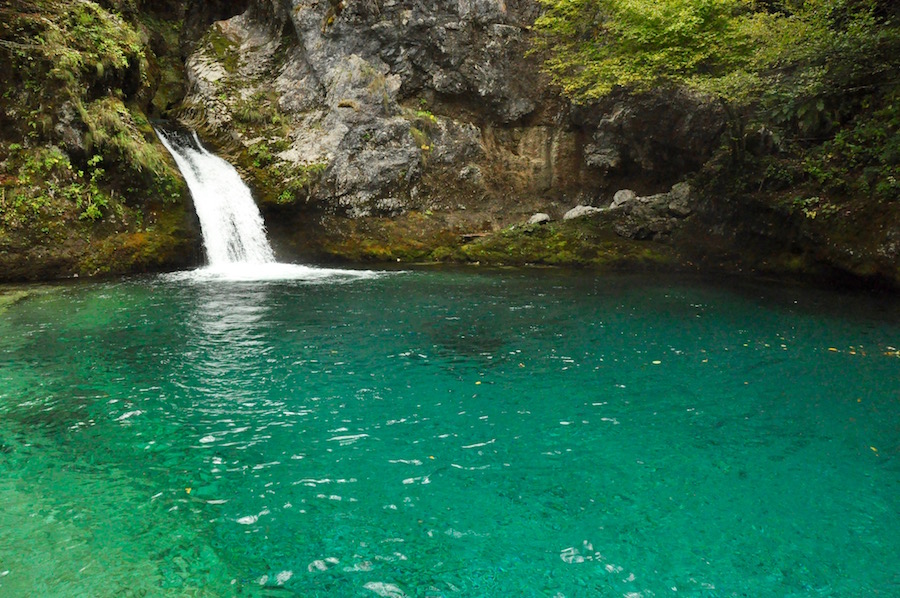
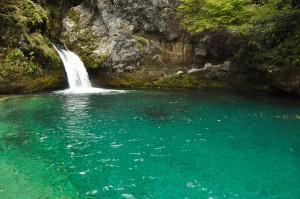 The walk down valley, dropping about 400m was pleasant and without difficulty, a bit of a relief after two strenuous uphill days, On reaching a small, largely deserted village, we turned into a side valley via an interesting small gorge with fascinating limestone formations smoothed by fast flowing, swirling water. This lead us up through scrub and woodland to a perfect pool of clear, blue, deep water fed by a single water shoot. It looked incredibly inviting but we weren’t fooled, having seen a couple of Dutch lads shivering, having been in for a quick dip.
Returning to the main valley by the same route, we then returned to Thethi on the stoney road on the opposite side of the valley to which we had descended. With the exception of the pool, this was the least spectacular of our walks but, in a way, I was pleased. My right achilles had become increasingly more painful as the week went on, although it appeared to be more noticeable on an easier walk. I almost decided there and then that I would not go on the short walk the following morning before we returned to Tirana. That is what I did and was joined by Steve who now was suffering a little as the sword of Damocles had fallen upon him.

A final look at the wall of mountains at the head of the Thethi Valley
After lunch on our last day in the mountains a minibus picked us up for the journey to Shkoder. According to the itinerary we should have been walking this route towards the village of Boga, but as it involved a very lengthy climb lasting several hours, Hassan decided there were not enough hours in the day to achieve everything. So, we let the minibus take the strain and drive us around many hairpin bends higher and higher. On reaching above the tree line the views opened out and we alighted from the bus to enjoy these last precious views before we began the descent toward Shkoder. Now that we were above the tree line we felt rather more exposed and the road hugged the hillside with a 1000 foot, very steep drop into the valley below. On the other side of the pass the road was newly tarmacked with safety barriers etc. It will only be a matter of time before the Thethi Valley is served with a tarmac road, making it more accessible to all.
In Shkoder we transferred to a newer, smarter minibus for the journey to Tirana, where, on arrival, we checked into our hotel, Villa Tafaj, very close to the centre of town.

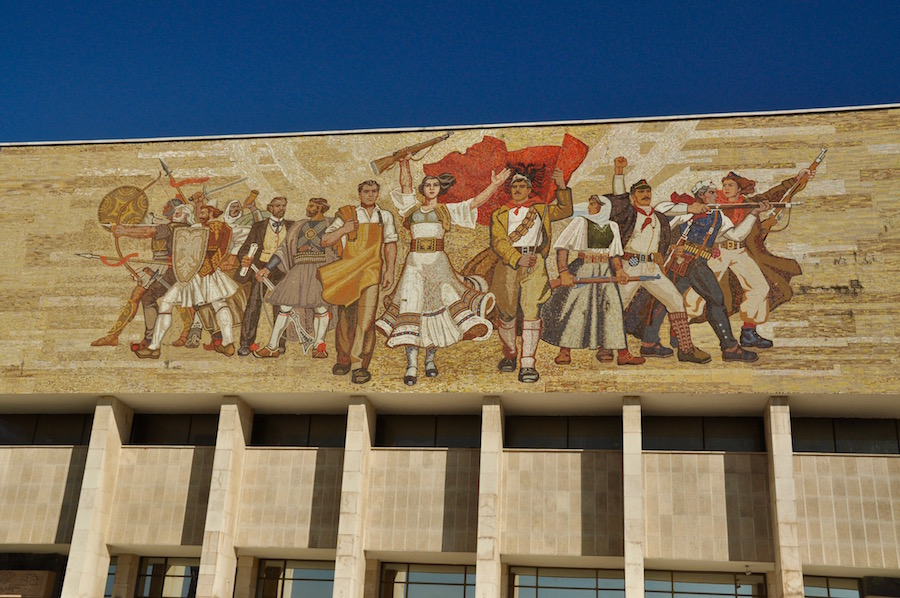
The mosaic above the museum entrance depicting the history of Albania
Our last day was upon us but as our flight was not until midnight, we had plenty of time to enjoy the sights of Tirana. In the morning Hassan gave us a guided tour of the city centre, taking us first to the square in front of the museum. Here, a large stage had been set up for a concert that evening. From there we visited the statue of Skandaberg on his horse, the mosque, the clock tower and, most interestingly, the museum of the communist era held in an expansive underground bunker. Underneath tons of reinforced concrete we learnt about the power held by the communist regime, about the way they suppressed everything that was normal in life, murdered and tortured opponents and finally were overcome by the strength and determination of the people. The most chilling aspect of the whole display were the filmed interviews of people who had lived through the torture. Hopefully it is behind them and that the lessons learnt by the experiences of those dark years will never be forgotten.

The Bunker Museum
The rest of the day was largely free so people went off and did their own thing, filling in the time to departure as best they could.
What did I think of Albania? I thought it was a stunningly beautiful country with sophisticated city centres and rural areas that are beginning to prepare for a positive future. I’m not sure I fully agree with Rick Stein’s assessment of Albanian cuisine but I am sure it will improve as the sophistication of Tirana and other cities spreads further and deeper into rural areas. I was disappointed and surprised by the lack of wild animal and bird life. We never saw a single bird of prey.
Our guide, Hassan, did everything he could to make our trip memorable and his love for the mountains came across strongly. His English was excellent, making it so much easier to understand the history, the geography and the legends that surround this fascinating part of the world. I think Albania, in the not too distant future will be one of the hot destinations of Europe as more and more people experience its treasures and report back. Would I go again? I most certainly would.
Thanks must also go to my fellow travellers, who, despite some health problems, were very good company. The conversation was interesting and varied and I thoroughly enjoyed beating them all at Uno! Here’s to the next time.
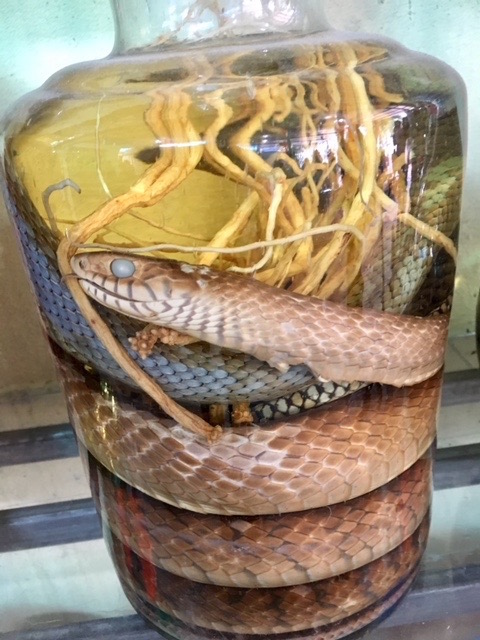 En route we stopped at a road restaurant for coffee. Vietnamese coffee is quite strong, and because they use condensed milk, very sweet. In one corner a number of men were smoking a bamboo pipe through a bucket of water. We were alerted to it by a strange gurgling sound. On a shelf there were some interesting bottles of fermenting liquid. The largest contained a snake and some roots, while a second had a number of lizards and a third, birds. It looked revolting and not something I would be prepared to knowingly try. We were learning quite quickly that the Vietnamese eat a lot of things that we would not consider as edible. If they don’t eat them, animals, as far as the Vietnamese are concerned, have medicinal properties. It seems no animal is safe. The fact that we did not see any wild animals in the countryside from the bus or during our trek suggests that there might mot be very much. We similarly saw few birds.
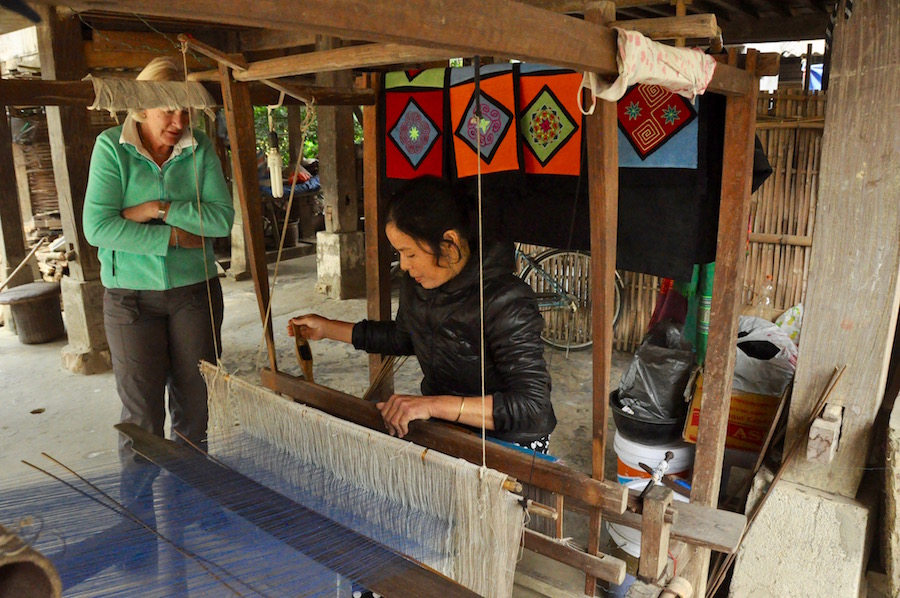
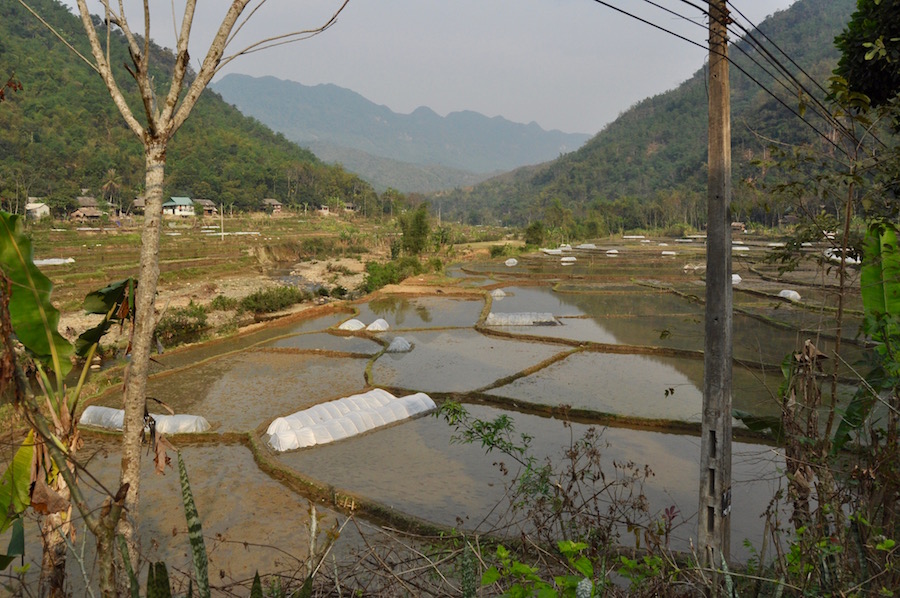 The walk was easy going, largely up a wide track that took vehicles. To our left the land rose quite steeply with plenty of trees and clumps of giant bamboo. To our left there were flooded paddy fields being prepared for the next sowing. In the corners of some of the paddies were cloches of young, fresh rice plants, waiting to be sown. There is very little mechanical assistance in this area; the individual paddies are far too small to allow that. Water buffalo pull a wooden plough back and forth to prepare the ground beneath the water, the walls are repaired by hand and, when the time comes for planting out it is all done by hand, largely by women bent double for hours on end. All the time these tasks require them to be knee deep in mud and cold water. This is a twice yearly occurrence as the climate allows two crops a year. Occasionally we saw someone wearing wellingtons, but on the whole, they were bare foot.
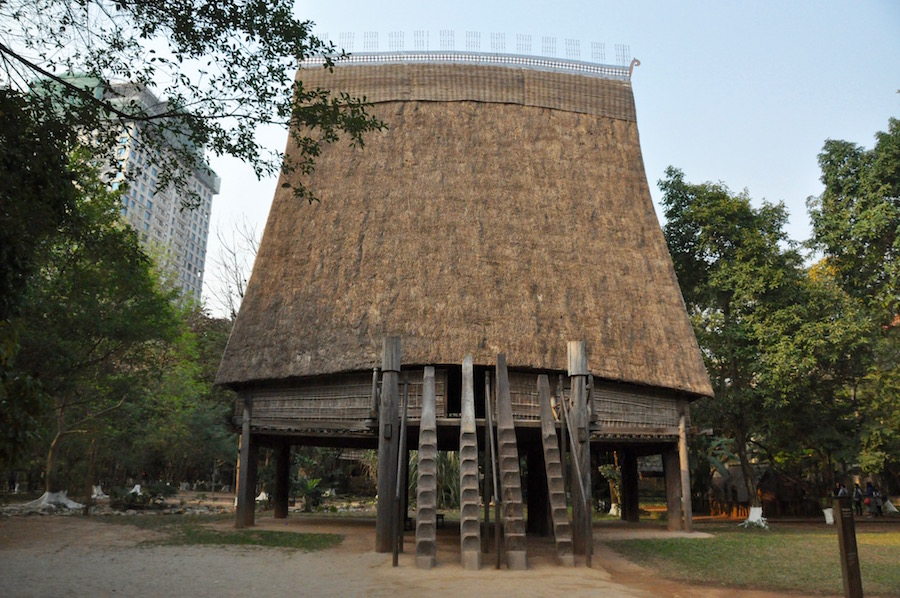
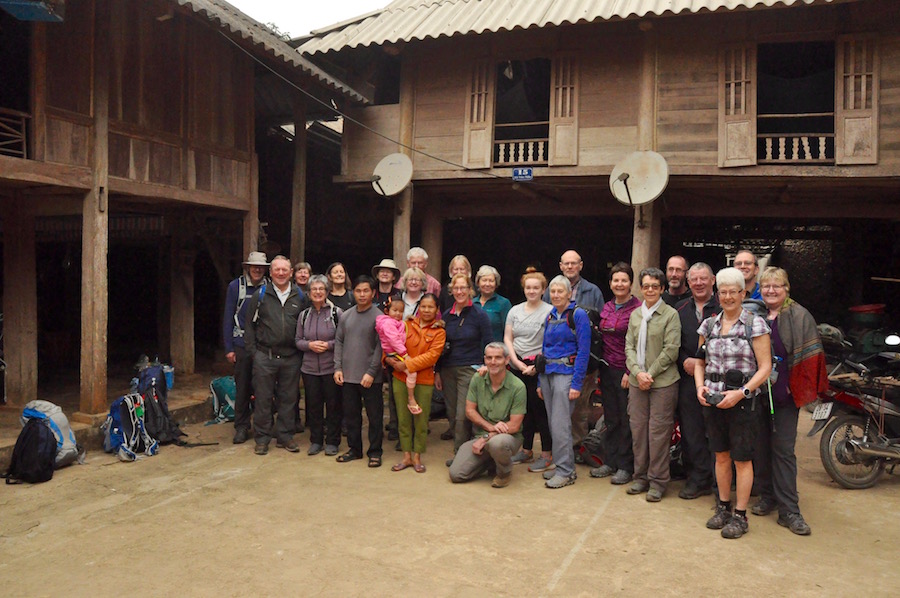 We eventually arrived in the village of Ban Hang where our homestay was. It was, again, a lovely village of stilted houses, all well-kept and cared for. They are quite large structures. They needed to be to cater for 23 of us. However, we could not enjoy the privacy of private rooms, there only being two large sleeping areas, so we split into a boys’ room and a girls’ room, for decencies sake. On the floor we had a sleeping mattress with a pillow and blankets to supplement our sleeping bags. Hanging above each mattress was a mosquito net, just in case. It was all rather comfortable and friendly.
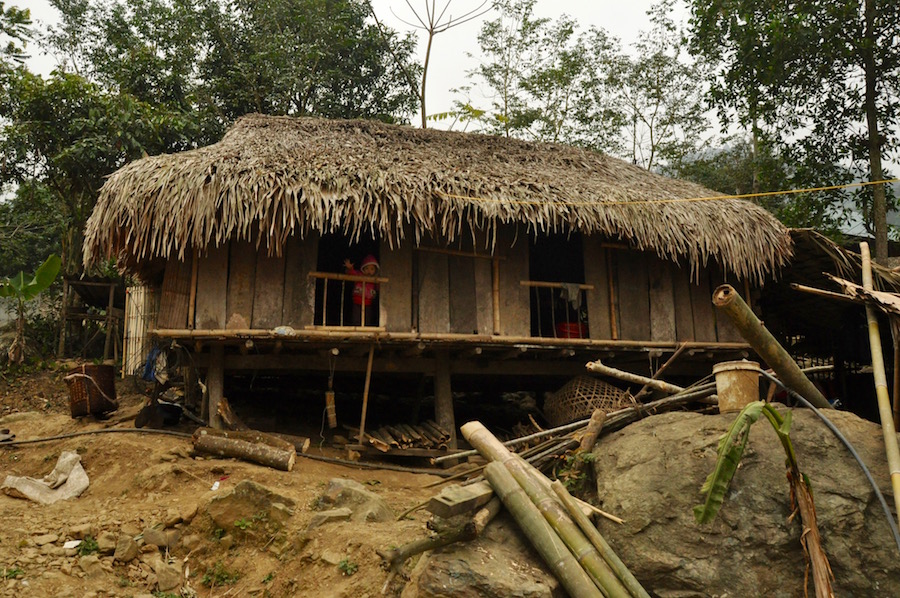 The following morning after much hand shaking with our hosts we set off. It was cloudy again and the steep forested slopes all around us looked as if they were steaming. We soon left the road and walked along footpaths, through villages, skirting along the edges of paddy fields, crossing streams and climbing small hills. Mr T would stop us to show us points of interest in villages. Little did we know, until he showed us, that many of the houses have coffins stored beneath them ready for the day when a householder should die. They were usually in houses where there were elderly people. This forward planning is not such a macabre idea. Without it, a corpse may lie waiting for many days for a coffin to be delivered from a town some distance away. Strangely, it is probably very reassuring for the eventual recipient, to know that all their affairs, once they have gone, are taken care of.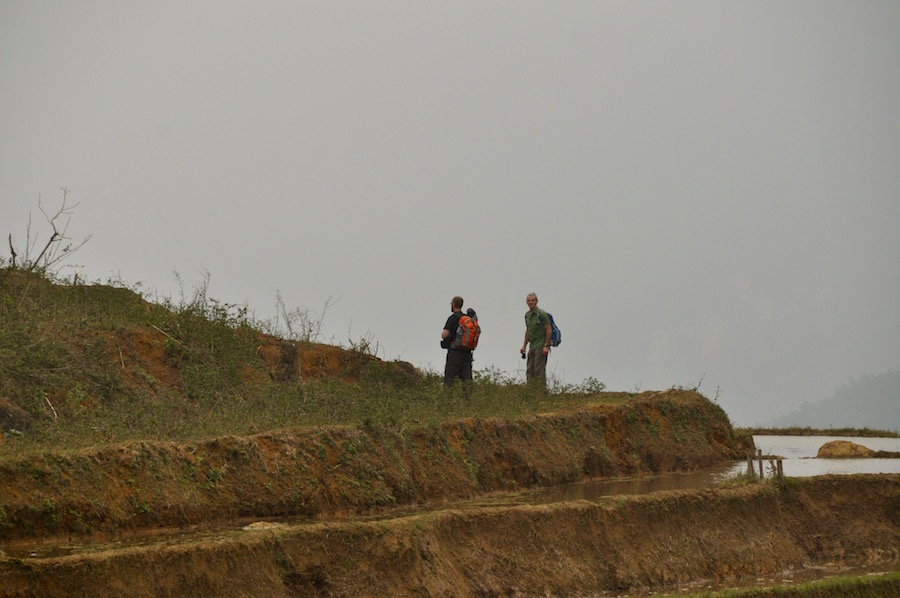
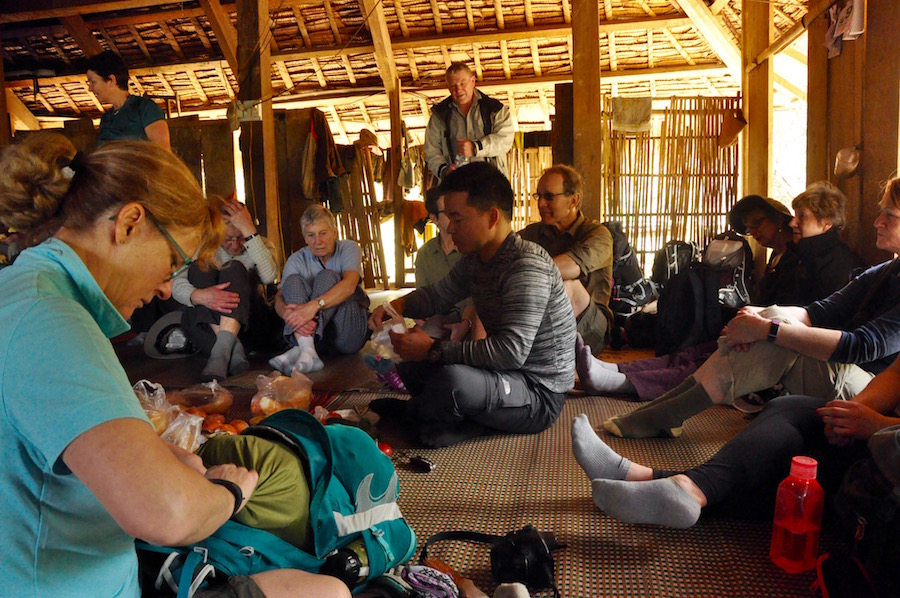
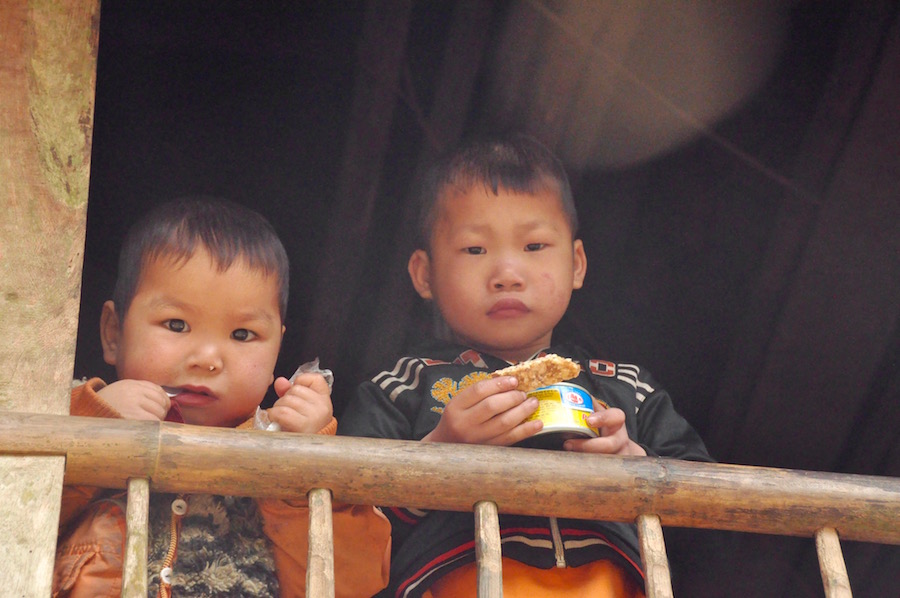 The family were rewarded for their hospitality with, not only a payment, but with any leftover food from our picnic. A real bonus when you have a young family to feed.
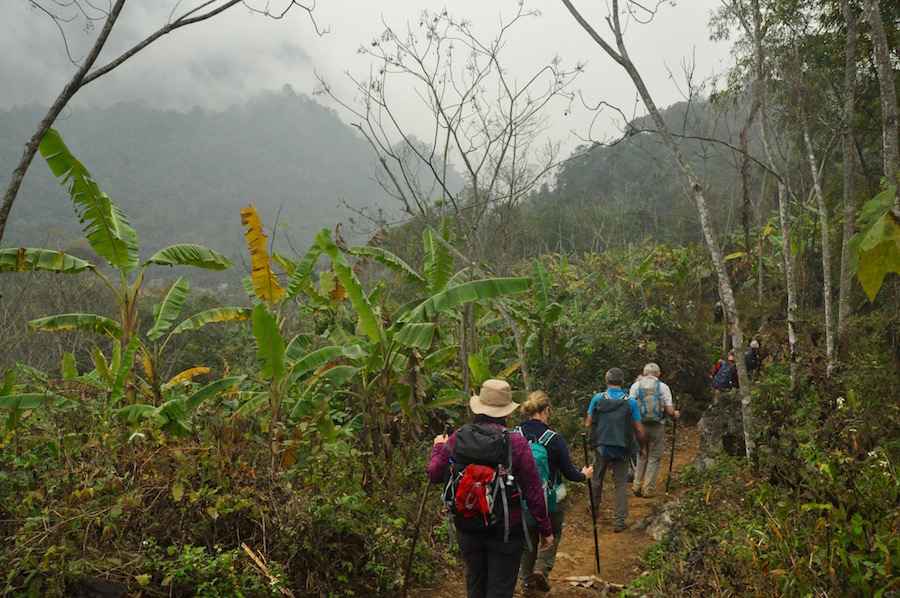 We had had some rain in the night and as we set off there was still a dampness in the air. It had made the path, largely made up of clay, very slippery. Mr T cut us all staffs to help us stay upright. As most of the walk in the morning was downhill they became essential. At one point I was walking near the back of the group when there was a cry from ahead and a call for help. Pauline had become a victim of the slippery path and fallen about fifteen feet down the slope through all the undergrowth. Or had she been pushed by Angie? There were no witnesses. Mr T ran back from ahead and was able to rescue Pauline and bring her back to the path. Fortunately, Pauline was unhurt and seemed remarkably calm considering what had just happened to her.
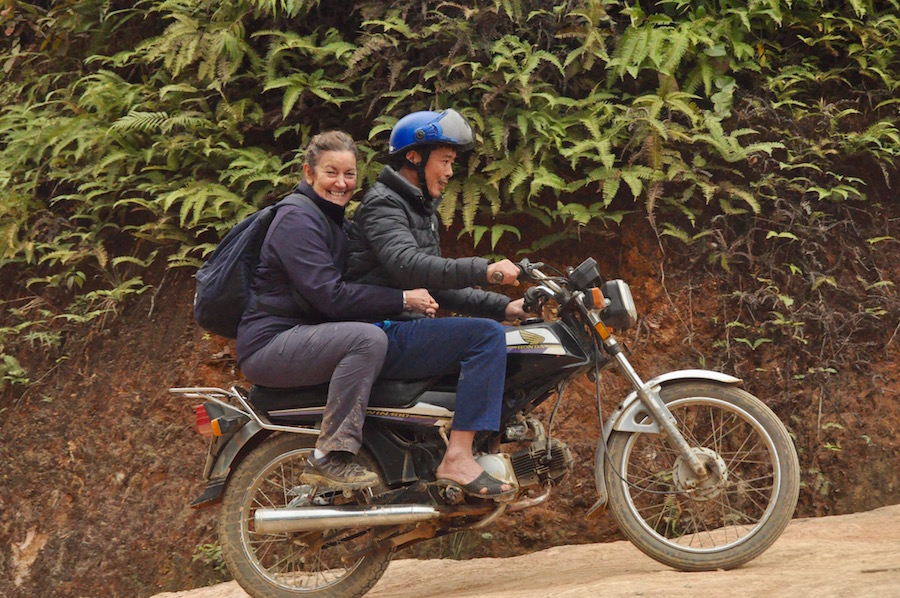 After lunch we continued our journey following the valley along a newly laid concrete road, so new the concrete was still very wet. After an hour or so we veered off the road to start the climb up to Hieu Village. At this point a few took advantage of a motorbike ride up the hill to the village. The remainder of us enjoyed the walk running parallel to a series of small waterfalls until we reached our delightful homestay in a really beautiful area of thatched, stilted houses, fish ponds, palm trees and happy, smiling faces.
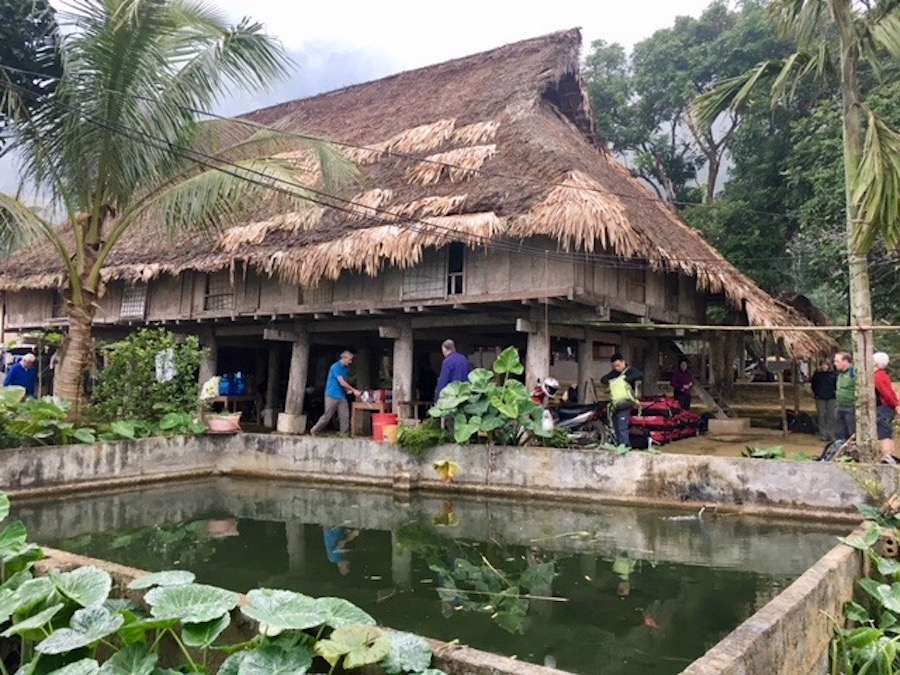 After a surprisingly quiet night (I think the fear of what might happen had put the snorer off) we set off back to the town of Pho Doan where he had lunch the day before, but by a different route. As we descended into the town the street was lined with colourful stalls, on either side, selling all items for the Tet Festival. Friendly faces greeted us from every stall.
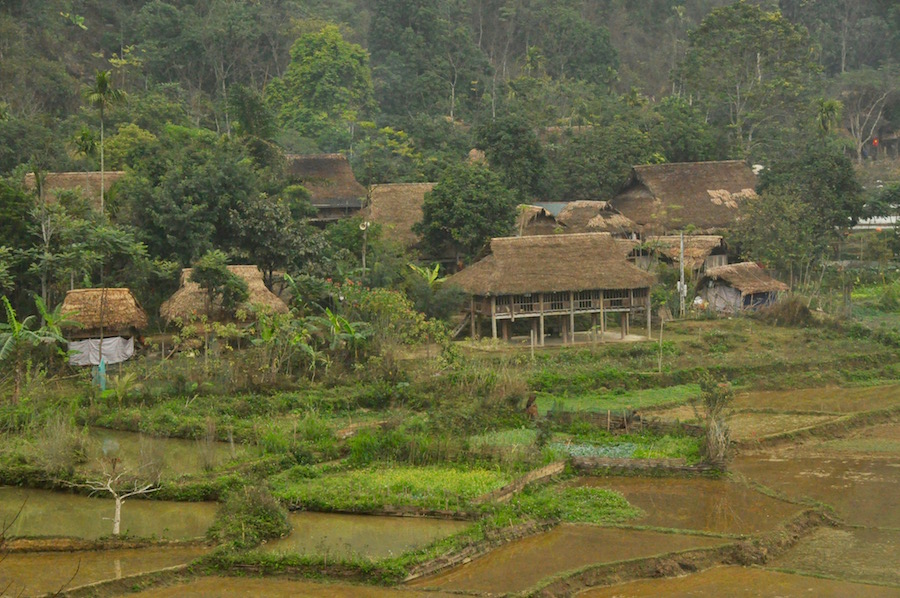 The trekking had been really enjoyable and far too short. The rural communities might not have a great deal, and their work might be hard, but they don’t have many of the hang-ups that city dwellers have. There is a peace and serenity about them as they tend to their paddy fields, their chickens and pigs. My only disappointment is that we did not see the sun during our trek, we did not see the hills at their best, but we did see enough to lure me back at some point in the future.